



















Honoring the Legacy: Martin Luther King Jr Day 2026 and Why His Dream Still Matters

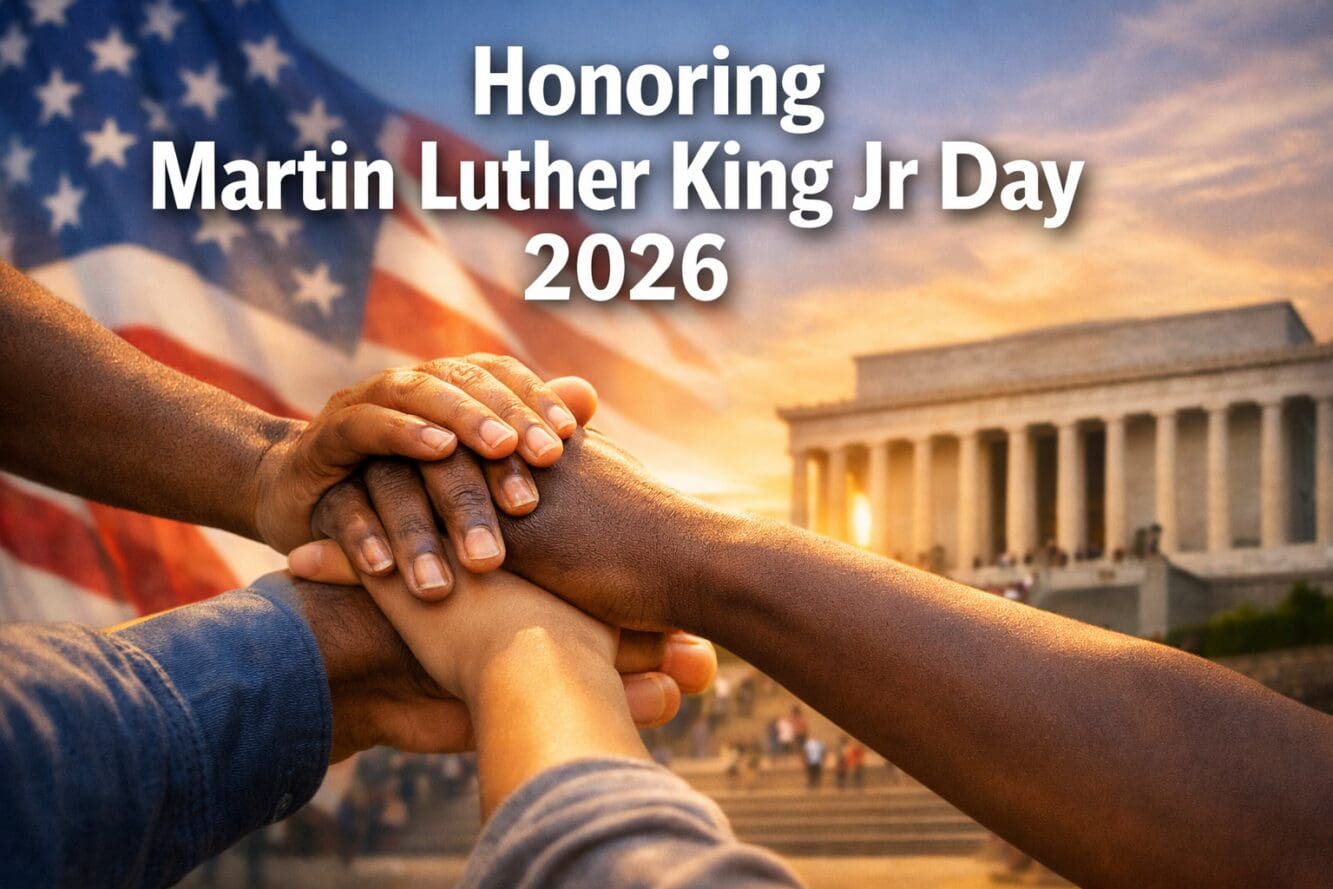
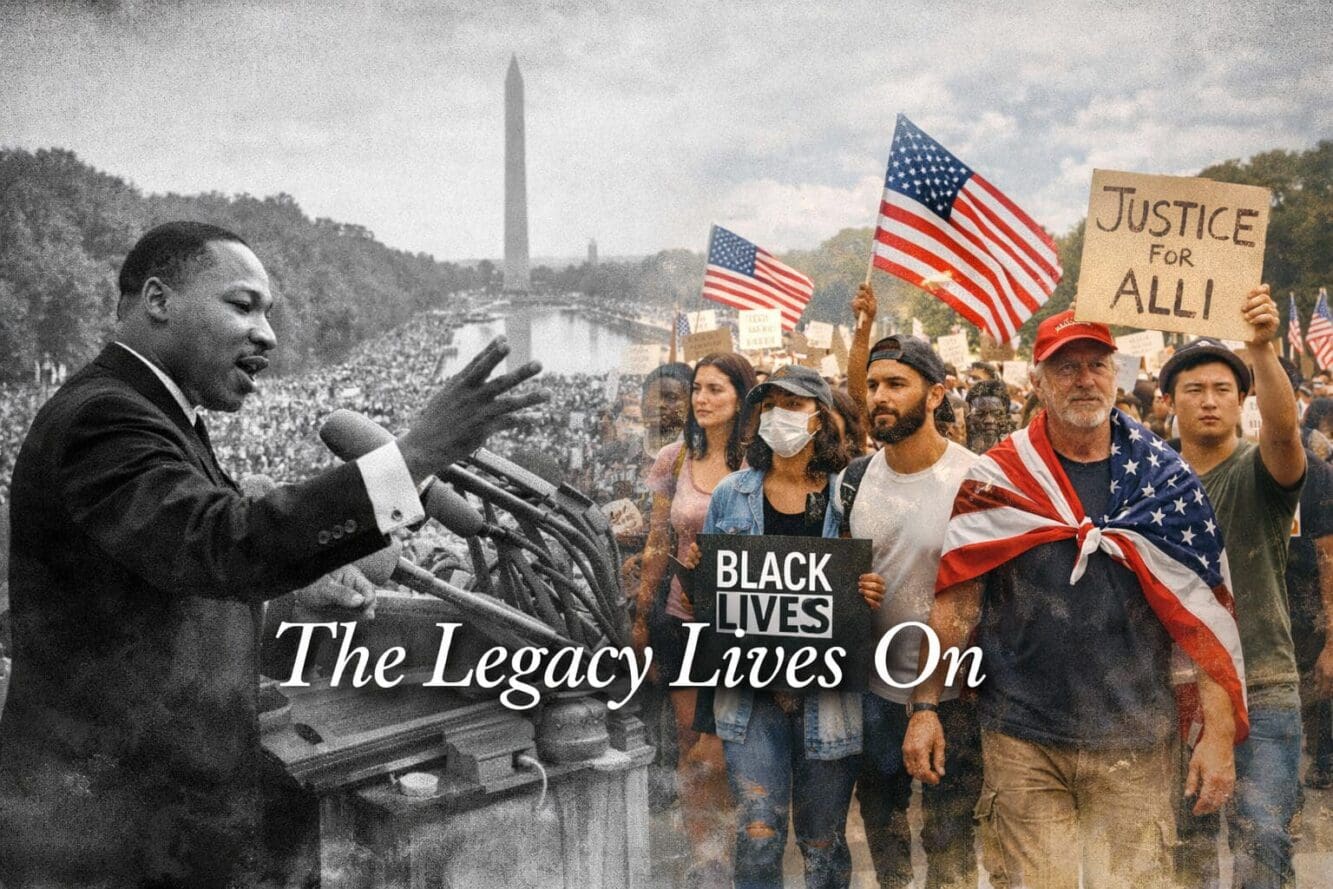
On a sweltering August day in 1963, a Baptist minister stood before 250,000 people at the Lincoln Memorial and shared a dream that would echo through generations. More than six decades later, Martin Luther King Jr Day continues to remind Americans—and people around the world—that the fight for equality, justice, and human dignity remains as relevant today as it was when Dr. King first raised his voice against injustice. Every third Monday of January, communities across North America and beyond pause to honor a man whose words and actions fundamentally changed the course of history.
Martin Luther King Jr Day represents far more than a federal holiday or a day off work. It stands as a living testament to the power of nonviolent resistance, the importance of moral courage, and the ongoing journey toward a more just society. For Canadians observing from across the border, for seniors who remember the civil rights movement firsthand, and for younger generations learning about Dr. King’s legacy, this day offers an opportunity to reflect, recommit, and take action.
Key Takeaways
- Martin Luther King Jr Day is observed annually on the third Monday of January, honoring the civil rights leader’s birthday (January 15, 1929) and his transformative impact on American society and human rights worldwide
- The holiday became a federal observance in 1986 after years of advocacy, making Dr. King the only non-president with a dedicated federal holiday
- The day emphasizes service and action rather than passive commemoration, with the motto “A Day On, Not A Day Off” encouraging community involvement
- Dr. King’s philosophy of nonviolent resistance and his vision of equality continue to inspire social justice movements globally in 2026
- Observing this day provides opportunities for education, reflection, and meaningful community service that honors Dr. King’s enduring legacy
The Journey to Making Martin Luther King Jr Day a Federal Holiday
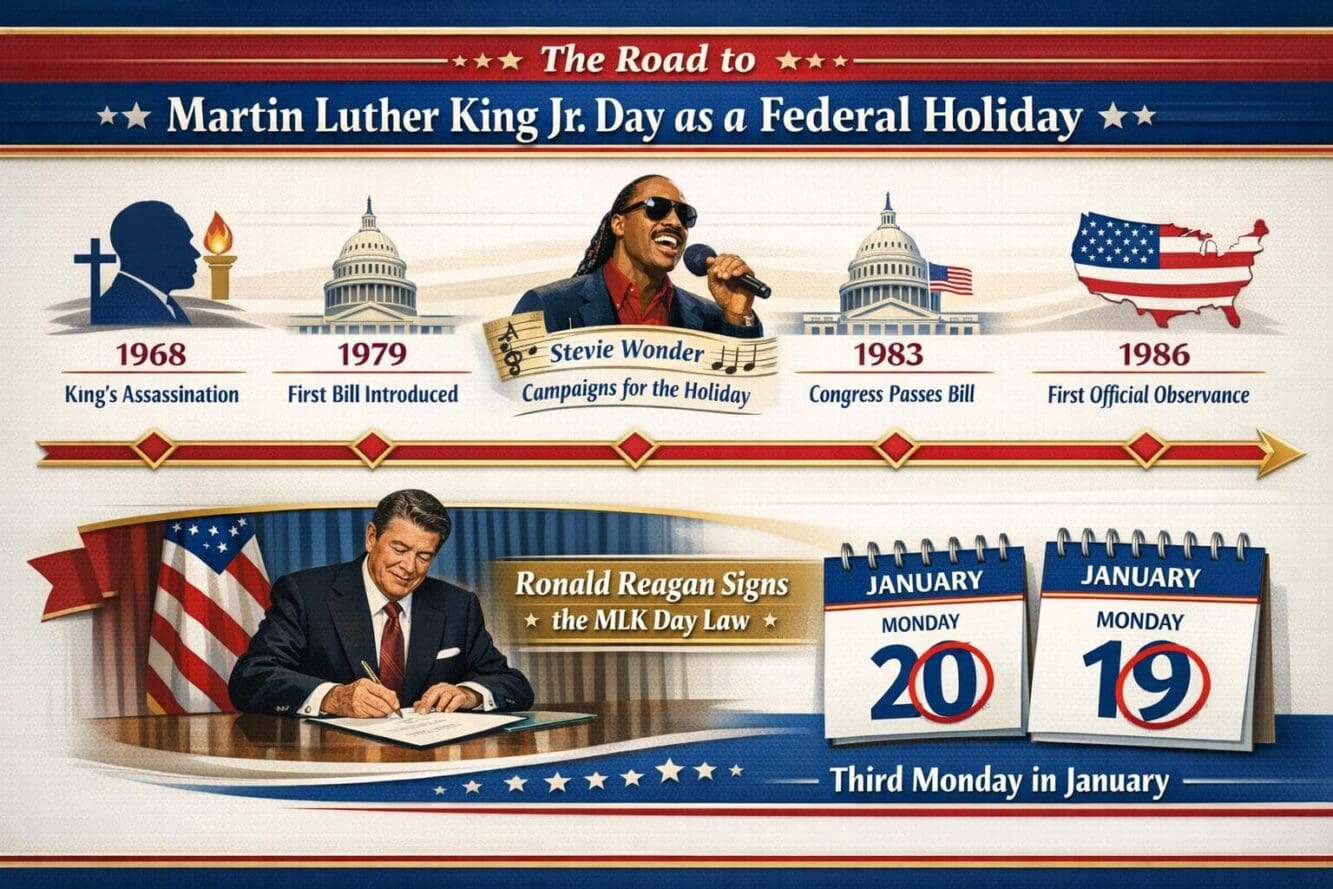
The path to establishing Martin Luther King Jr Day as a federal holiday was neither swift nor simple. After Dr. King’s assassination on April 4, 1968, in Memphis, Tennessee, Representative John Conyers introduced legislation just four days later to create a federal holiday in his honor. However, it would take nearly two decades of persistent advocacy before the dream became reality.
The campaign faced significant opposition from those who questioned whether a civil rights leader deserved such recognition or who disagreed with Dr. King’s methods and message. Yet supporters persevered, gathering six million signatures on a petition—one of the largest petition drives in U.S. history at that time. Musician Stevie Wonder played a particularly influential role, releasing his song “Happy Birthday” in 1980 to support the cause and performing at rallies nationwide.
The Historic Signing
On November 2, 1983, President Ronald Reagan signed the legislation establishing the third Monday in January as Martin Luther King Jr Day. The first official observance occurred on January 20, 1986. However, it wasn’t until the year 2000 that all 50 states officially recognized the holiday—with some states initially combining it with other observances or resisting its adoption altogether.
Key milestones in the holiday’s establishment:
| Year | Milestone |
|---|---|
| 1968 | First legislation introduced by Rep. John Conyers |
| 1983 | President Reagan signs holiday into law |
| 1986 | First official federal observance |
| 1994 | Congress designates it as a National Day of Service |
| 2000 | All 50 states officially observe the holiday |
This journey itself reflects the persistence and determination that characterized Dr. King’s own work—a reminder that meaningful change often requires sustained effort across years and even decades.
Understanding Dr. King’s Revolutionary Philosophy and Its Relevance Today
Martin Luther King Jr. didn’t simply advocate for civil rights; he articulated a comprehensive philosophy of social change rooted in nonviolent resistance, moral courage, and universal human dignity. Drawing inspiration from Mahatma Gandhi, Christian theology, and American democratic ideals, Dr. King developed an approach that challenged injustice while refusing to dehumanize opponents.
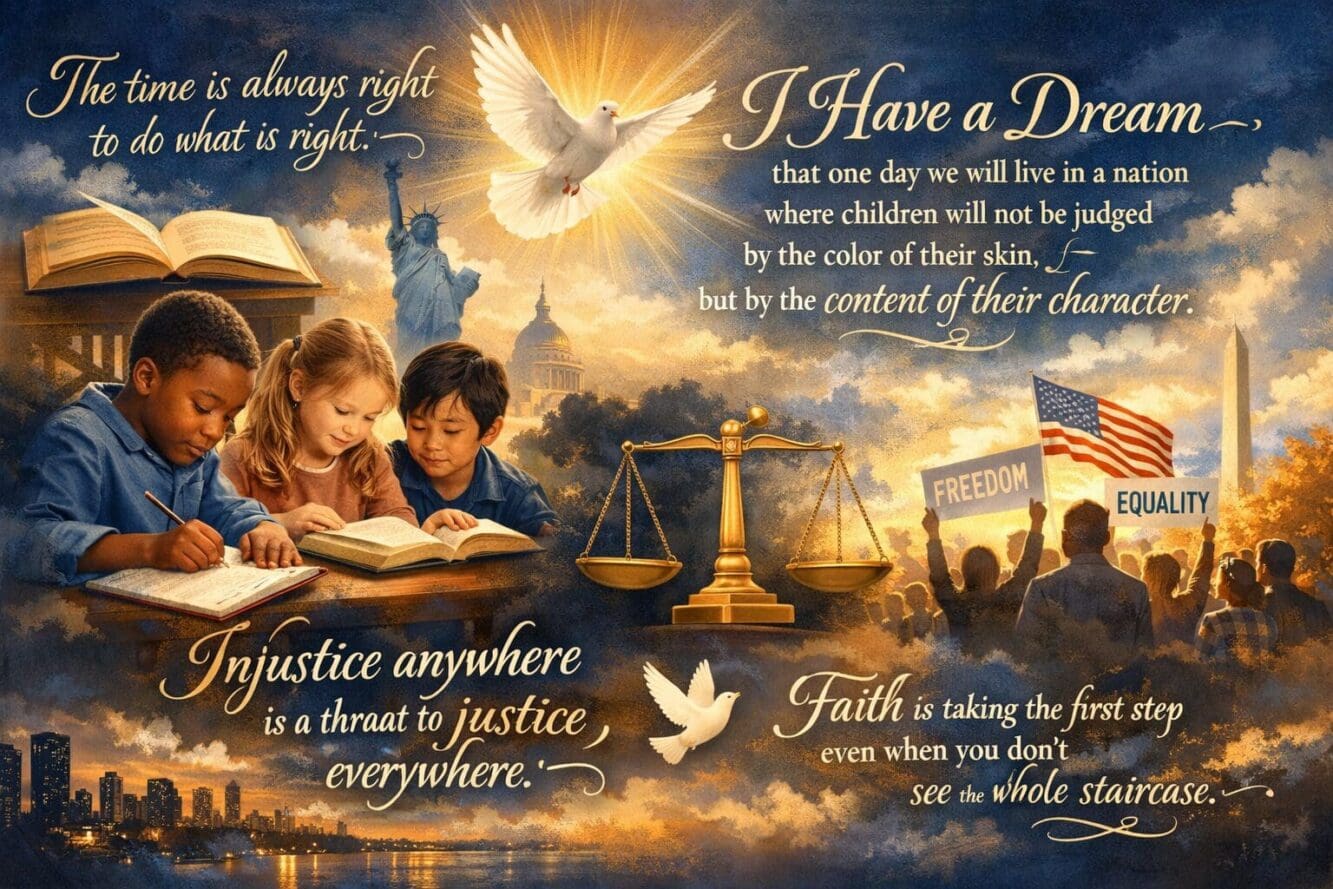
His famous “I Have a Dream” speech, delivered during the March on Washington for Jobs and Freedom on August 28, 1963, crystallized his vision of an America where people “will not be judged by the color of their skin but by the content of their character.” Yet Dr. King’s work extended far beyond this single moment. He organized boycotts, led marches, endured imprisonment, and consistently spoke truth to power—all while maintaining a commitment to nonviolence that distinguished the American civil rights movement from many other revolutionary struggles.
Core Principles That Endure
Dr. King’s philosophy rested on several foundational principles that remain powerfully relevant in 2026:
- Nonviolent resistance as a moral and strategic choice that transforms both oppressor and oppressed
- The interconnectedness of justice, recognizing that “injustice anywhere is a threat to justice everywhere”
- Economic justice as inseparable from racial justice—a focus often overlooked in simplified narratives
- The moral arc of the universe bending toward justice, but only through sustained human effort
- Love as a transformative force capable of breaking cycles of hatred and retaliation
These principles speak directly to contemporary challenges. Whether addressing systemic racism, economic inequality, environmental justice, or global conflicts, Dr. King’s framework offers guidance for those seeking change without perpetuating cycles of violence and dehumanization. Much like the Buddhist principles of inner peace and resilience, Dr. King’s teachings emphasize the power of maintaining moral clarity and compassion even in the face of opposition.
“Darkness cannot drive out darkness; only light can do that. Hate cannot drive out hate; only love can do that.” — Dr. Martin Luther King Jr.
For seniors who witnessed the civil rights era firsthand, these words carry the weight of lived experience. For younger generations, they offer a roadmap for addressing the injustices of their own time.
How Communities Observe Martin Luther King Jr Day in Meaningful Ways
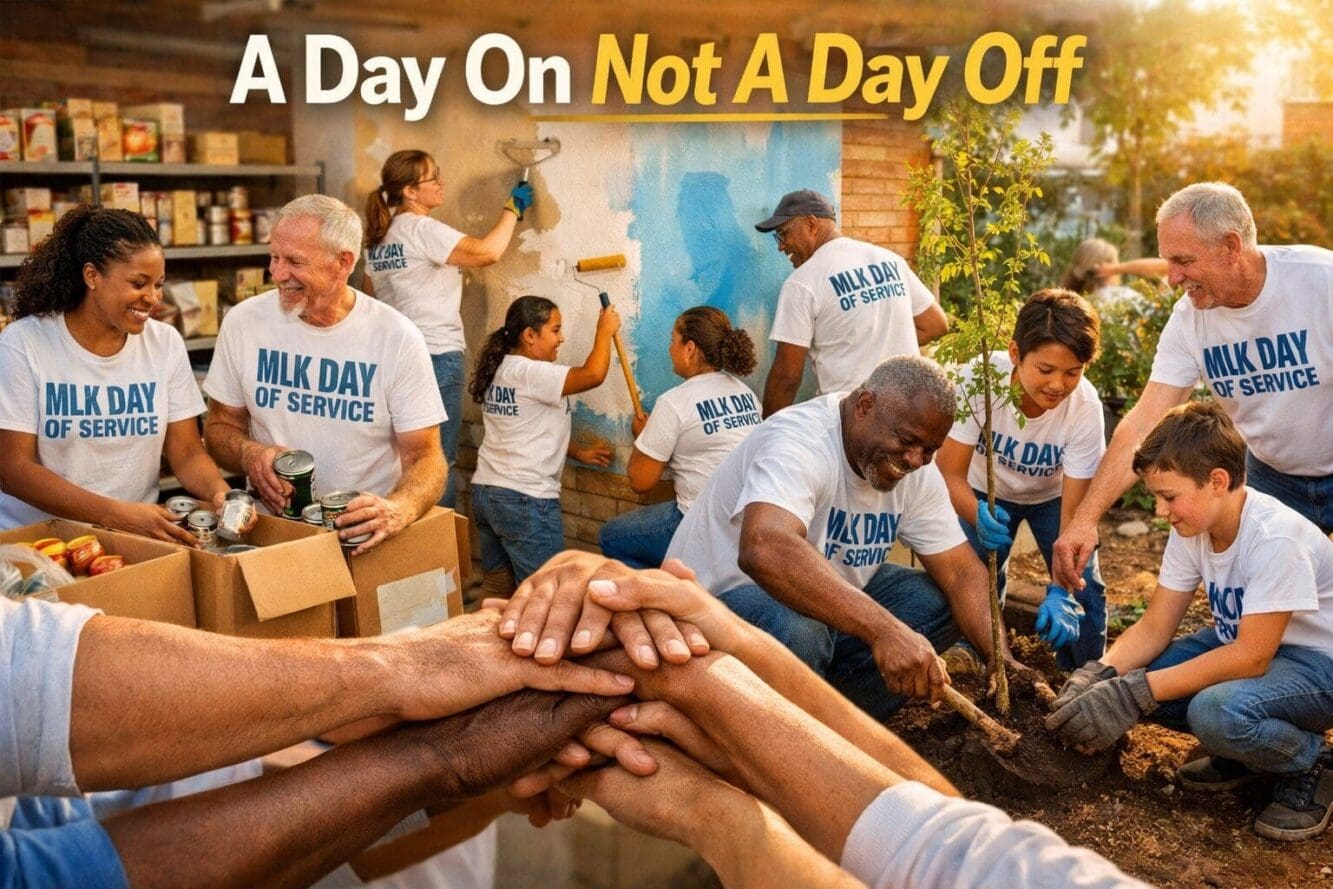
Martin Luther King Jr Day has evolved into much more than a commemorative occasion. In 1994, Congress designated it as a National Day of Service, embracing the motto “A Day On, Not A Day Off.” This transformation reflects Dr. King’s own emphasis on action and service as essential expressions of faith and citizenship.
Across North America, communities mark the day through diverse activities that honor Dr. King’s legacy while addressing contemporary needs:
Service Projects and Volunteerism 🤝
Thousands of organizations coordinate service projects on and around Martin Luther King Jr Day. These initiatives range from food drives and community clean-ups to tutoring programs and building affordable housing. The Corporation for National and Community Service (now AmeriCorps) helps coordinate many of these efforts, connecting volunteers with opportunities to make tangible differences in their communities.
For those interested in community wellness and connection, this day offers perfect opportunities to engage with neighbors and contribute to collective well-being. Many organizations specifically design projects accessible to seniors and people with varying physical abilities, ensuring everyone can participate.
Educational Programs and Reflection
Schools, libraries, museums, and community centers host educational programs exploring Dr. King’s life, the civil rights movement, and ongoing struggles for equality. These programs often feature:
- Documentary screenings followed by community discussions
- Guest speakers who participated in civil rights activism or continue social justice work today
- Interactive workshops on nonviolent conflict resolution and community organizing
- Art exhibitions celebrating African American culture and civil rights history
- Intergenerational dialogues connecting those who remember the 1960s with younger activists
Marches and Public Commemorations
Many cities organize commemorative marches that retrace routes from historic civil rights demonstrations or highlight contemporary justice issues. These peaceful gatherings embody Dr. King’s method of public witness while creating spaces for community solidarity.
In Canada, while Martin Luther King Jr Day isn’t a federal holiday, many communities—particularly those near the U.S. border and major urban centers—hold observances recognizing Dr. King’s influence on global human rights movements. Community events and gatherings often emphasize connections between civil rights struggles in the United States and ongoing work for Indigenous rights, racial justice, and inclusion in Canada.
Personal Reflection and Learning
For individuals unable to participate in organized events, Martin Luther King Jr Day offers opportunities for personal growth and education:
- Reading Dr. King’s writings, including his “Letter from Birmingham Jail” and “Where Do We Go From Here: Chaos or Community?”
- Watching documentaries about the civil rights movement
- Supporting organizations working for racial and economic justice
- Having honest conversations about race, privilege, and justice with family and friends
- Committing to ongoing education about systemic inequality and how to address it
Much like developing morning habits that promote well-being, observing this day can become part of an ongoing practice of growth, awareness, and positive action.
The Ongoing Relevance of Dr. King’s Vision in 2026
More than half a century after Dr. King’s death, his vision remains unfulfilled in many respects—yet his framework for achieving it grows more relevant with each passing year. In 2026, communities worldwide grapple with challenges Dr. King identified but which persist in new forms: systemic racism, economic inequality, militarism, and environmental degradation.
Contemporary Movements Building on King’s Legacy
Modern social justice movements explicitly draw on Dr. King’s methods and philosophy while adapting them to contemporary contexts. Activists organizing for criminal justice reform, immigrant rights, LGBTQ+ equality, climate justice, and workers’ rights frequently cite Dr. King’s example and teachings. His emphasis on coalition-building across different communities and his insistence that all justice struggles are interconnected resonate powerfully in an era of intersectional activism.
The Black Lives Matter movement, indigenous sovereignty struggles, campaigns for living wages, and efforts to address climate change all reflect core principles Dr. King articulated: that dignity is universal, that systems can and must change, and that ordinary people possess the power to transform society through organized, persistent action.
Challenges and Unfinished Work
Honest observation of Martin Luther King Jr Day requires acknowledging how far society still must travel to realize Dr. King’s dream. Racial disparities in wealth, education, health outcomes, and criminal justice persist. Economic inequality has widened dramatically since the 1960s. Political polarization threatens the democratic institutions Dr. King sought to reform and perfect.
Yet this unfinished work doesn’t diminish Dr. King’s legacy—it underscores its continuing urgency. As he wrote from Birmingham Jail, “We are caught in an inescapable network of mutuality, tied in a single garment of destiny. Whatever affects one directly, affects all indirectly.” [1]
Global Impact and Recognition
Dr. King’s influence extends far beyond American borders. His philosophy of nonviolent resistance inspired anti-apartheid activists in South Africa, democracy movements in Eastern Europe, and human rights advocates worldwide. In 2026, people across the globe recognize Martin Luther King Jr Day as an opportunity to recommit to universal human rights and dignity.
For international readers and Canadians observing this day, Dr. King’s legacy offers both inspiration and challenge. His methods proved that ordinary people can confront powerful systems and win. His moral clarity demonstrated that justice movements need not compromise their principles to achieve practical victories. His example shows that leadership can emerge from communities most affected by injustice.
Practical Ways to Honor the Legacy
Observing Martin Luther King Jr Day meaningfully requires moving beyond passive commemoration to active engagement. Consider these approaches:
In Your Community:
- Volunteer with organizations addressing poverty, education gaps, or racial justice
- Attend or organize community dialogues about local justice issues
- Support businesses owned by people from marginalized communities
- Advocate for policies that advance equity in housing, education, and criminal justice
In Your Personal Life:
- Examine your own biases and privileges honestly
- Build relationships across lines of difference
- Consume media created by diverse voices
- Teach children about civil rights history and ongoing justice work
- Practice the stress-relieving and centering techniques that sustain long-term activism
In Your Workplace or Organization:
- Advocate for diversity, equity, and inclusion initiatives
- Create space for honest conversations about race and justice
- Ensure hiring and promotion practices are equitable
- Support employees who engage in community service and activism
Conclusion: Carrying the Dream Forward
Martin Luther King Jr Day in 2026 arrives at a moment when Dr. King’s vision feels simultaneously more distant and more necessary than ever. The challenges he identified—racism, poverty, militarism, and what he called “the giant triplets” threatening human civilization—persist and in some ways have intensified. Yet his methods, his moral clarity, and his unwavering faith in humanity’s capacity for transformation remain as powerful today as when he first articulated them.
This day calls each person to ask: What am I doing to advance justice? How am I serving my community? Where am I standing when others face oppression? These questions don’t have simple answers, but they demand honest engagement.
For Americans, the holiday offers an opportunity to reckon with the nation’s history and ongoing struggles while drawing strength from the courage of those who came before. For Canadians and international observers, it provides a chance to recognize shared challenges and draw inspiration from a movement that changed history. For seniors who remember the civil rights era, it’s a moment to share stories and wisdom with younger generations. For youth, it’s an invitation to carry forward a legacy that belongs to them.
Dr. King once said, “The arc of the moral universe is long, but it bends toward justice.” He also made clear that this bending doesn’t happen automatically—it requires human hands pulling with all their strength. Martin Luther King Jr Day reminds us that we all have hands, we all have voices, and we all have the capacity to contribute to the ongoing work of bending that arc.
Take Action Today
Don’t let this day pass as merely another holiday. Choose one concrete action:
- Volunteer with a local organization addressing injustice
- Educate yourself by reading Dr. King’s writings or learning about civil rights history
- Start a conversation about race, justice, and community with family or friends
- Support organizations working for equity and human rights
- Commit to ongoing engagement beyond this single day
The dream Dr. King articulated remains unfulfilled, but it also remains achievable. Each person who chooses service over apathy, justice over indifference, and love over hate brings that dream closer to reality. That is the true meaning of Martin Luther King Jr Day—not just remembering what was, but actively creating what can be.
As you reflect on Dr. King’s legacy, remember that lasting change often comes from small, consistent actions rather than grand gestures. The civil rights movement succeeded through thousands of ordinary people making daily choices to stand for justice. In 2026 and beyond, that same power remains available to anyone willing to use it.
Let this Martin Luther King Jr Day mark not an ending but a beginning—of deeper understanding, stronger commitment, and more meaningful action. The dream lives on, but only if we carry it forward together.
References
[1] King, Martin Luther Jr. “Letter from Birmingham Jail.” April 16, 1963. The Martin Luther King, Jr. Research and Education Institute, Stanford University.
[2] “The King Holiday and Service.” Corporation for National and Community Service. AmeriCorps, 2026.
[3] Carson, Clayborne. “Martin Luther King, Jr.: The Making of a Mind.” The Martin Luther King, Jr. Research and Education Institute, Stanford University, 2023.
[4] “The History of the Martin Luther King Jr. Federal Holiday.” National Archives and Records Administration, 2025.
[5] Branch, Taylor. “Parting the Waters: America in the King Years 1954-63.” Simon & Schuster, 1988.
Much Appreciate You Sharing This Post - It Helps MUCH!!!