


















How Seniors Can Train for Better Endurance After 70: A Safe Cardio Progression Plan | GEORGIANBAYNEWS.COM

Only 28 percent of adults over 70 meet the minimum weekly aerobic activity target, yet those who do report fewer hospital visits and more independent years. That gap is not about willpower. It is about not knowing how to progress safely. How seniors can train for better endurance after 70 comes down to one principle: build stamina gradually, using a structured, safe cardio progression plan rather than guesswork.
This guide lays out exactly how to move from easy walking to longer, low-impact cardio sessions, how to monitor exertion along the way, and what warning signs mean it’s time to pull back.
Key Takeaways
- Adults 70+ should aim for 150 to 300 minutes of moderate aerobic activity weekly, or 75 to 150 minutes vigorous, based on tolerance.
- The “talk test” is the simplest way to gauge safe intensity without equipment.
- Progression should increase duration before intensity, in small weekly increments.
- Combining endurance work with strength and balance training produces the best overall results.
- Any safe increase in activity, even below guideline minimums, provides measurable health benefits.
Why Endurance Training Matters After 70
Cardiovascular fitness does not have to decline sharply with age. Research shows that older adults who engage in regular aerobic activity maintain better heart and lung function, improved blood pressure, and higher daily energy than inactive peers [1]. Endurance training also supports independence by making everyday tasks like climbing stairs or carrying groceries feel easier.
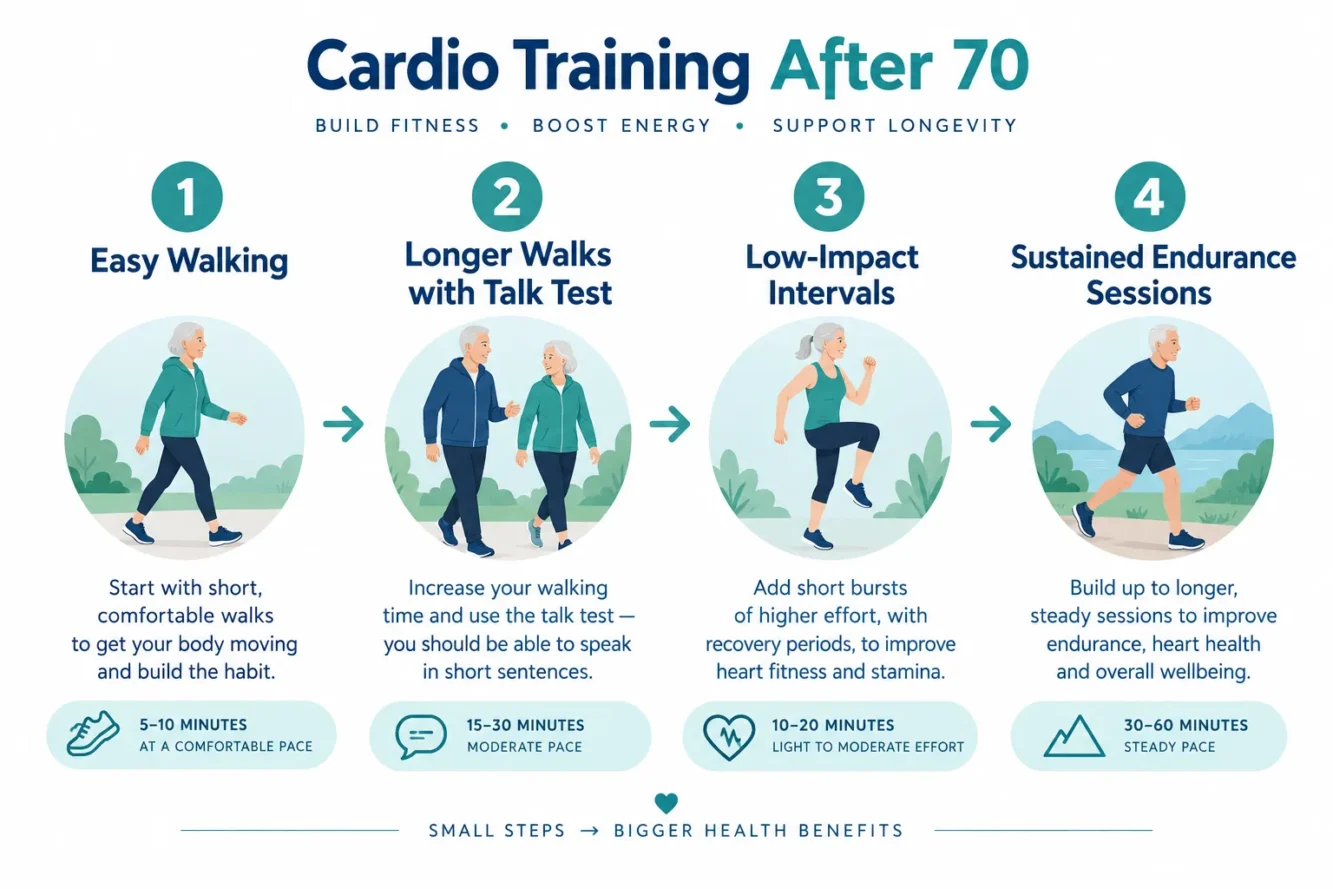
The World Health Organization and the CDC both recommend 150 to 300 minutes of moderate-intensity aerobic activity per week for adults 65 and older, or 75 to 150 minutes of vigorous activity, combined with strength and balance work [2][3][4]. These numbers are ranges, not rigid rules, more is generally better, but any amount above sedentary behavior helps [5].
Understanding Safe Intensity: The Talk Test
A reliable way to measure safe intensity without a heart rate monitor is the “talk test.” At a moderate pace, a person should be able to talk but not sing. At vigorous intensity, only short phrases should be possible [6][7]. This simple check lets seniors self-regulate during every session.
| Intensity Level | Breathing | Talk Test | Example Activity |
|---|---|---|---|
| Light | Easy | Can sing | Slow stroll |
| Moderate | Noticeably harder | Can talk | Brisk walk |
| Vigorous | Hard | Few words only | Fast cycling |
How Seniors Can Train for Better Endurance After 70 with a Structured Progression Plan
The safest cardio progression plan for previously inactive seniors starts small and builds gradually. A practical, evidence-aligned structure looks like this [8][9]:
- Weeks 1-2: Walk 10 to 15 minutes, 3 times weekly, at a light-to-moderate pace.
- Weeks 3-4: Increase to 20 minutes, 4 times weekly, keeping the talk test in moderate range.
- Weeks 5-8: Extend sessions to 30 minutes, 4-5 times weekly, introducing gentle inclines or slightly faster pace.
- Weeks 9-12: Add light intervals, 1 minute slightly faster, 2 minutes easy, repeated several times within a 30 to 40 minute session.
Increase duration before intensity. Only after duration feels comfortable should pace or resistance increase [10].
Best Low-Impact Modalities for This Age Group
Not all cardio is equal for joints and recovery. The most recommended endurance modalities for seniors are low-impact and whole-body in nature [8][10]:
- Brisk walking outdoors or on a treadmill
- Water aerobics or swimming
- Stationary cycling
- Elliptical machines
- Dancing or structured movement classes
These options reduce joint stress while still elevating heart rate meaningfully.
Combining Endurance with Strength and Balance
Endurance alone is not enough. Guidelines consistently emphasize a multicomponent approach, pairing aerobic work with strength training twice weekly and balance exercises to reduce fall risk [3][4]. A well-rounded week might include three cardio sessions, two strength sessions, and daily balance practice such as standing on one leg while brushing teeth.
Safety Considerations for Chronic Conditions
Seniors managing arthritis, heart disease, or limited mobility should modify intensity and modality rather than skip activity altogether [7]. Water-based exercise is often gentler on joints. Those on heart medications should discuss target heart rate zones with a physician before increasing intensity [1].
Warning signs to stop immediately include chest pain, dizziness, shortness of breath beyond normal exertion, or irregular heartbeat. These symptoms warrant medical evaluation before resuming training [1][7].
Recovery and Monitoring Progress
Recovery matters as much as the workout itself. Seniors should notice how they feel the day after a session, persistent fatigue or soreness lasting more than 48 hours suggests the progression moved too fast. Logging minutes, perceived effort, and recovery quality weekly helps fine-tune the plan without overreaching [9].
Conclusion
How seniors can train for better endurance after 70 is ultimately about patience and consistency rather than intensity. Following a safe cardio progression plan, starting with short walks, applying the talk test, and gradually extending duration before intensity, builds real stamina while protecting joints and the heart. Pair endurance work with strength and balance training, watch for warning signs, and remember that any safe increase in activity delivers meaningful benefits in 2026 and beyond. The next step is simple: choose one low-impact activity, commit to three sessions this week, and let the body set the pace for growth.
References
- Circulationaha.107.185650. ahajournals.org.
- What Counts. cdc.gov.
- Physical Activity Recommendations 65years. who.int.
- Older Adults. cdc.gov.
- Index. cdc.gov.
- Physical Activity Guidelines 2nd Edition. cdc.gov.
- P425. aafp.org.
- Physical%20exercise%20guidelines. aging.arizona.edu.
- Fitforduty Fitforlife 022010. dcp.psc.gov.
- Physical Activity Guidelines for Older Adults. healthdirect.gov.au.
Meta Title: Senior Endurance Training After 70: Safe Cardio Progression Plan
Meta Description: Learn how seniors can train for better endurance after 70 with a safe, step-by-step cardio progression plan backed by expert guidelines.
senior fitness, endurance training, cardio for seniors, exercise after 70, low-impact cardio, aerobic exercise guidelines, healthy aging, fall prevention, strength and balance training, walking program for seniors