



















Ponds and Fountains: Compact Water Features for Pollinator Support in Urban Canada

Last updated: February 27, 2026
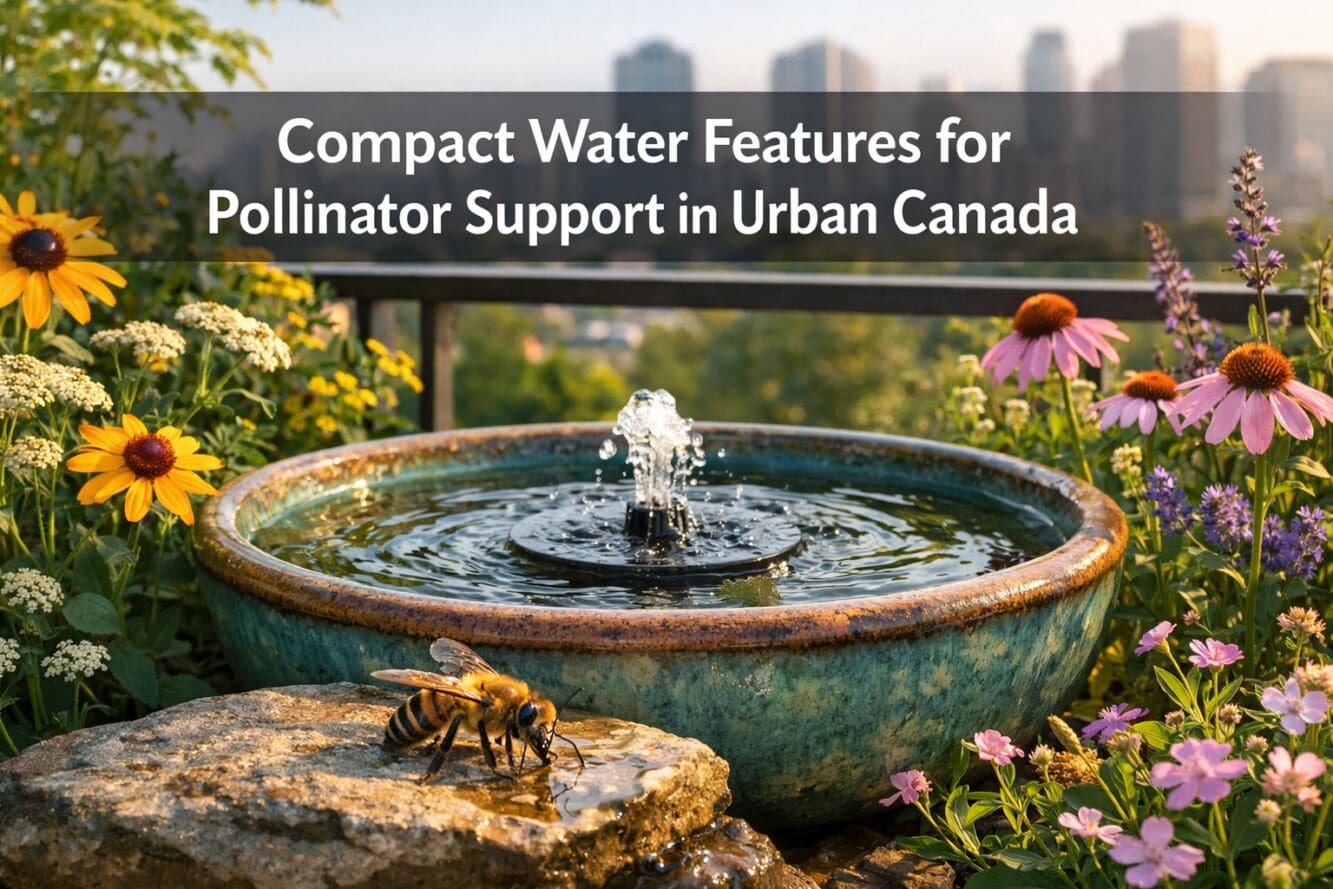
Small water features can make a measurable difference for pollinators struggling in Canadian cities. Bees, butterflies, and hoverflies all need accessible water to survive, and most urban environments don’t provide it. The concept behind ponds and fountains as compact water features for pollinator support in urban Canada is straightforward: even a shallow dish with landing stones or a small recirculating fountain gives pollinators a safe place to drink and cool down without the drowning risk of deep, slick-sided containers.
This guide covers how to build small-scale ponds and fountains that attract wildlife to balconies and backyards, which plants to pair with them, and how to winterize everything for Canadian conditions.
Key Takeaways
- Pollinators need shallow water with safe landing surfaces; deep, smooth-sided containers are drowning hazards.
- A functional pollinator water feature can be as small as a 12-inch ceramic dish or a half-barrel pond.
- Solar-powered bubblers prevent mosquito breeding and keep water oxygenated without electrical hookups.
- Native Canadian plants like marsh marigold, blue flag iris, and Joe-Pye weed make ideal companions for pond edges.
- Winterizing is essential: drain small containers, sink flexible liners below the frost line, or bring features indoors before the first hard freeze.
- Balcony setups work well using lightweight containers, potted marginal plants, and battery or solar pumps.
- Avoid pesticides, copper-based algaecides, and chlorinated water near pollinator features.
- Placement matters: partial sun (4 to 6 hours) keeps algae manageable while attracting the most pollinator activity.
Quick Answer
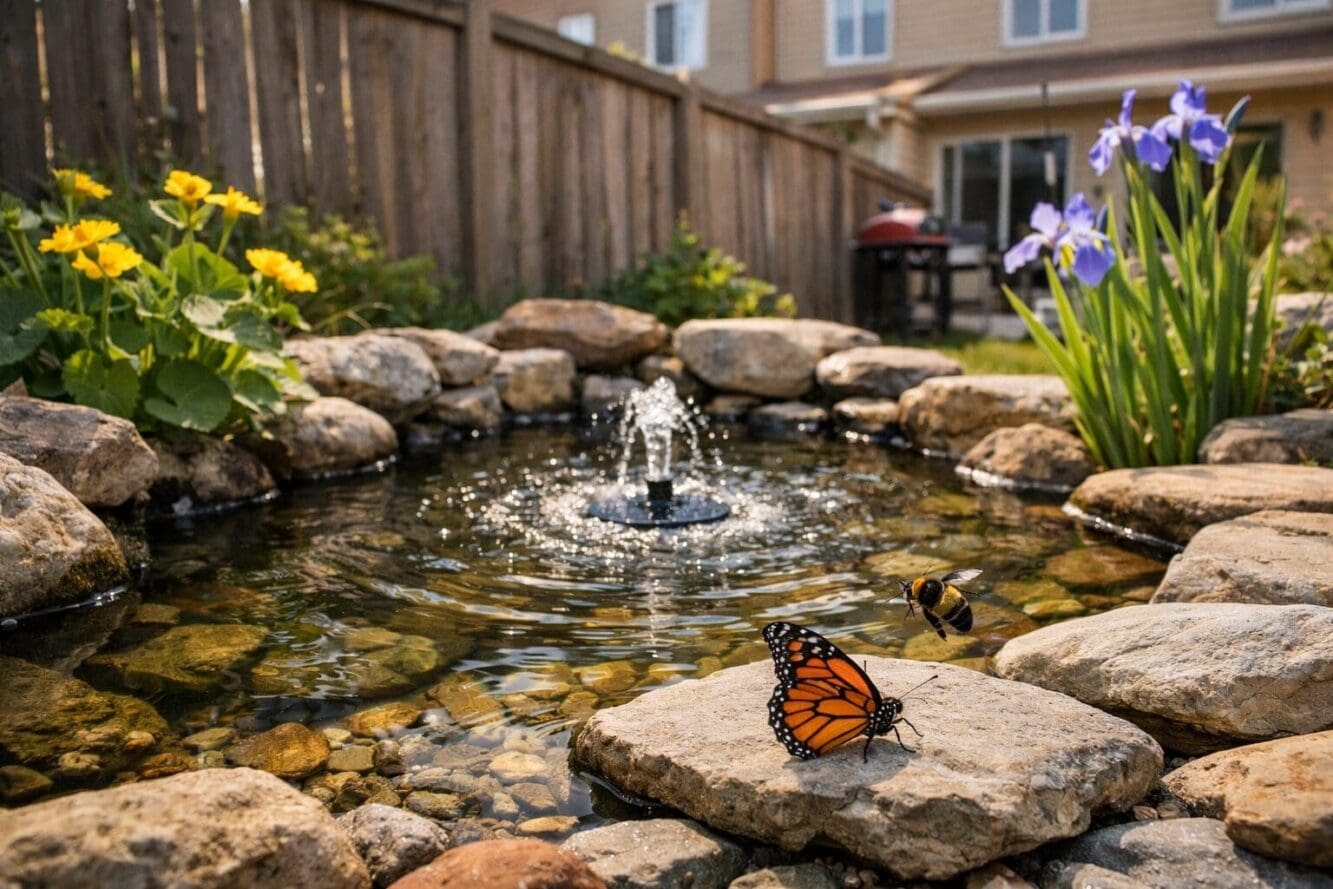
A compact water feature for pollinator support doesn’t need to be expensive or complicated. A shallow container (2 to 4 inches deep) filled with clean water, a few flat stones for landing, and a small pump or bubbler to keep water moving is enough to serve bees, butterflies, and other beneficial insects in any Canadian urban setting. Pair it with native moisture-loving plants, and the feature becomes both a water source and a habitat anchor.
Why Do Pollinators Need Water Features in Canadian Cities?
Pollinators drink water, use it to regulate body temperature, and in the case of some bee species, mix it with pollen to feed larvae. Urban environments in Canada present a specific problem: impervious surfaces like concrete and asphalt drain rainfall quickly, and manicured lawns offer few natural puddles or damp soil patches.
Key reasons urban pollinators struggle to find water:
- Storm drains remove standing water rapidly after rain
- Chlorinated municipal water in birdbaths can deter or harm insects
- Large bodies of water (pools, decorative fountains) have steep sides that trap small insects
- Pesticide runoff contaminates puddles near treated lawns
A well-designed compact pond or fountain solves these problems by offering clean, shallow, accessible water with safe edges. For communities already working to protect local waterways like Georgian Bay, supporting pollinators through water access is a natural extension of environmental stewardship.
What Types of Compact Water Features Work Best for Pollinators?
The best pollinator water features are shallow, have textured or rough surfaces for grip, and include some form of water movement. Here are the most practical options for urban Canadian spaces.
| Feature Type | Best For | Approximate Cost | Space Needed |
|---|---|---|---|
| Shallow dish or saucer | Balconies, windowsills | $5–$20 | Under 2 sq ft |
| Half-barrel pond | Small backyards, patios | $60–$150 | 4–6 sq ft |
| In-ground mini pond | Backyards with soil access | $100–$400 | 6–20 sq ft |
| Solar bubbler fountain | Patios, decks, balconies | $25–$80 | 2–4 sq ft |
| Recirculating rock fountain | Backyards, front gardens | $150–$500 | 4–10 sq ft |
Decision rule: Choose a dish or solar bubbler if working with a balcony or rental property. Choose a half-barrel or in-ground pond if there’s yard space and a desire to grow aquatic plants alongside the water feature.
Common mistake: Using a deep, smooth-glazed pot without landing stones. Bees and butterflies can’t grip glazed ceramic and will drown in water deeper than about 1 inch without a ramp or rough surface to cling to.
How to Build a Small Pollinator Pond for a Canadian Backyard
Building a functional pollinator pond takes an afternoon and minimal materials. Here’s a step-by-step process for a basic in-ground or above-ground setup.
Materials Needed
- Container: half whiskey barrel, galvanized tub, or flexible pond liner (for in-ground)
- Flat stones, pebbles, or rough-textured rocks
- Dechlorinated water (let tap water sit 24 hours, or use rainwater)
- Small solar pump or bubbler (optional but recommended)
- Native marginal plants in mesh pots
- Sand or pea gravel for the bottom layer
Step-by-Step Process
- Choose a location with 4 to 6 hours of sunlight. Full shade discourages pollinator visits; full sun accelerates algae growth.
- Prepare the container. For in-ground ponds, dig a hole slightly larger than the liner or container. For above-ground setups, place the barrel or tub on a level surface.
- Add a 1- to 2-inch layer of pea gravel to the bottom. This gives beneficial bacteria a surface to colonize and helps filter the water naturally.
- Place flat stones so they break the water surface. Stones should create a gentle ramp from the rim down into the water, giving insects a way to approach and leave safely.
- Fill with dechlorinated water to a depth of 2 to 4 inches. Deeper sections (up to 8 inches) can support aquatic plants, but always maintain at least one shallow zone.
- Install a solar pump or bubbler if using one. Even a small amount of surface agitation prevents mosquito larvae from developing.
- Add native plants in mesh baskets around the edges or in the shallow zones. (See the plant companions section below.)
- Top off water regularly during hot summer weeks. Evaporation can drain a small feature in days during a Canadian July heat wave.
When temperatures climb during summer, knowing where to find water refill stations can help keep both people and pollinator features supplied.
Which Native Plants Pair Best with Ponds and Fountains for Pollinator Support in Urban Canada?
Native moisture-loving plants serve double duty: they stabilize pond edges, filter water naturally, and provide nectar and pollen right next to the water source. This combination of water and food in one spot is what makes compact water features so effective for pollinators.
Recommended native plant companions for Canadian pollinator ponds:
- Marsh marigold (Caltha palustris): Early spring bloomer, tolerates wet feet, attracts early-season bees. Hardy to Zone 3.
- Blue flag iris (Iris versicolor): Canada’s native iris. Grows in shallow water or saturated soil. Provides structure and late-spring blooms.
- Joe-Pye weed (Eutrochium maculatum): Tall, late-summer bloomer that draws butterflies and native bees. Plant at the pond edge, not submerged.
- Swamp milkweed (Asclepias incarnata): Critical for monarch butterflies. Prefers moist soil at pond margins.
- Cardinal flower (Lobelia cardinalis): Bright red blooms attract hummingbirds and long-tongued bees. Needs consistent moisture.
- Water mint (Mentha aquatica): Vigorous grower (contain in a pot to prevent spreading). Flowers attract many pollinator species.
For balconies: Use potted versions of Joe-Pye weed, swamp milkweed, or cardinal flower placed directly beside the water dish or fountain. Even one or two flowering native plants near a water source significantly increases pollinator visits.
“The combination of clean water and nearby native flowers creates a micro-habitat that urban pollinators will return to repeatedly throughout the season.”
How to Set Up a Balcony Water Feature for Pollinators
Not everyone has a backyard. Apartment and condo balconies across Canadian cities can still support pollinators with a compact setup.
Balcony-specific considerations:
- Weight limits: Check building guidelines. A half-barrel of water weighs roughly 100 to 150 pounds. A shallow ceramic dish with stones weighs under 10 pounds.
- Drainage: Place the feature on a tray to catch splashes. Avoid letting water drip to lower balconies.
- Wind exposure: High-rise balconies get more wind, which increases evaporation and can blow lightweight features over. Use a heavy, low-profile dish.
- Power: Solar bubblers eliminate the need for electrical outlets. Most units designed for birdbaths work well in containers as small as 10 inches across.
Quick balcony setup:
- Use a glazed ceramic saucer (14 to 18 inches wide, 2 to 3 inches deep)
- Fill the bottom with river stones and pebbles, creating uneven surfaces above the waterline
- Add dechlorinated water to just below the top of the stones
- Place a clip-on solar bubbler in the center
- Position 2 to 3 potted native plants (swamp milkweed, asters, or bee balm) within arm’s reach of the dish
This setup costs under $50 and takes about 15 minutes to assemble.
How to Prevent Mosquitoes in Small Ponds and Fountains
Mosquito prevention is the most common concern with any standing water feature, and it’s a valid one. The solution is simple: keep the water moving.
Effective mosquito prevention methods:
- Water movement: A solar pump or bubbler that creates surface ripples prevents female mosquitoes from laying eggs. Even intermittent daytime operation is effective because mosquitoes prefer perfectly still water.
- Mosquito dunks (Bti): Bacillus thuringiensis israelensis is a naturally occurring bacterium that kills mosquito larvae but is safe for bees, butterflies, birds, pets, and humans. One dunk treats up to 100 square feet of water surface for 30 days. Available at most Canadian garden centres.
- Regular water changes: For very small features (dishes, saucers), dumping and refilling every 3 to 4 days breaks the mosquito breeding cycle, which requires 7 to 10 days of standing water.
- Stock with mosquitofish or native minnows: Only practical for larger in-ground ponds (20+ gallons). Not suitable for containers that freeze solid in winter.
Mistake to avoid: Adding bleach or copper pennies. Both are toxic to pollinators and beneficial aquatic organisms.
How to Winterize Compact Water Features in Canadian Climates
Canadian winters are the biggest challenge for outdoor water features. Freeze-thaw cycles crack ceramic, burst rigid containers, and kill plants that aren’t properly protected. Communities across the country, from those celebrating Canada Day in Collingwood to residents in Edmonton and Halifax, all face the same winterizing question.
Winterizing by feature type:
Small Containers and Dishes
- Drain completely before the first hard freeze (typically late October to mid-November in most of urban Canada)
- Store ceramic and glazed containers indoors or in a garage to prevent cracking
- Clean and dry solar pumps; store with batteries removed
Half-Barrel and Above-Ground Ponds
- Remove plants and bring hardy species indoors in pots, or heel them into garden soil
- Drain the barrel and flip it upside down, or move it to a sheltered location
- If the barrel is too heavy to move, stuff it with insulating material (straw, burlap) and cover with a tarp
In-Ground Ponds
- Ponds deeper than 18 inches and sunk below the local frost line can often overwinter with a floating de-icer or air stone to maintain a gas exchange hole in the ice
- Remove pumps and store indoors
- Cut back dead plant material to prevent decomposition under ice, which depletes oxygen
- Hardy native plants like blue flag iris can overwinter in the pond if the roots are below the frost line
Timeline for most of urban Canada:
| Task | Timing |
|---|---|
| Stop feeding aquatic plants | Early September |
| Cut back marginal plants | Late September to early October |
| Remove and store pumps | Before first hard freeze |
| Drain small containers | October to November |
| Install de-icer (in-ground ponds) | Before ice forms |
| Restart features | After last spring frost (April to May) |
For those who enjoy outdoor activities and events through the warmer months, the restart of a pollinator water feature in spring is a satisfying signal that the season has arrived.
What Are Common Mistakes When Building Pollinator Water Features?
Even well-intentioned setups can fail or cause harm. Here are the most frequent errors.
- Too deep, no landing zones. Any water deeper than 1 inch needs stones, sticks, or ramps for insect access.
- Using treated or chlorinated water without dechlorinating. Let tap water sit for 24 hours or use a dechlorinator drops.
- Placing the feature in full shade. Pollinators are most active in sunny spots. A feature in deep shade will attract few visitors.
- Ignoring algae until it takes over. Some algae is natural and fine. Excessive algae means too much sun, too many nutrients, or not enough water movement. Reduce by adding floating plants, increasing shade slightly, or cleaning the feature more often.
- Spraying pesticides nearby. Neonicotinoids and other insecticides contaminate water through drift and runoff. Keep a pesticide-free buffer zone of at least 10 feet around any pollinator feature.
- Forgetting to top off water in summer. A dry feature is useless. Check water levels every 2 to 3 days during hot spells.
Concerns about air quality and environmental health extend to the micro-level of a backyard pond: clean water and clean air both matter for pollinator survival.
FAQ
How small can a pollinator water feature be?
A single shallow dish (8 to 12 inches across, 1 to 2 inches deep) with a few pebbles is enough. Bees will find it within days if placed near flowers.
Do I need a pump for a pollinator pond?
Not strictly, but a small solar pump or bubbler prevents mosquito breeding and keeps water fresher. Without a pump, change the water every 3 to 4 days.
Will a small pond attract rats or raccoons?
Small, shallow features rarely attract mammals. Raccoons prefer deeper water with fish. If wildlife is a concern, use a dish that can be emptied at night.
Can I use tap water?
Yes, but let it sit uncovered for 24 hours to allow chlorine to off-gas. Chloramine (used in some Canadian municipalities) requires a water conditioner available at pet stores.
What’s the best time of year to install a pollinator water feature in Canada?
Late April through May, after the last frost, gives plants and the feature the full growing season. But a simple dish with stones can be set out any time temperatures are above freezing.
Do pollinator ponds attract wasps?
Wasps do drink water, but they’re also pollinators. A water feature won’t create a wasp problem. If wasps are a concern, place the feature away from dining areas.
How much does a basic setup cost?
A dish-and-stone setup costs under $20. A half-barrel pond with a solar pump and a few native plants runs $100 to $200. In-ground ponds with liners start around $200 to $400 depending on size.
Are there municipal bylaws about backyard ponds in Canadian cities?
Some municipalities regulate ponds over a certain depth (often 18 to 24 inches) or require fencing. Check local bylaws before installing an in-ground feature deeper than a few inches.
Can I keep fish in a small pollinator pond?
Fish in very small ponds (under 50 gallons) are difficult to maintain and may eat beneficial insects. For pollinator support, a fish-free feature is more effective.
How do I keep the water from turning green?
Add floating plants (like native duckweed in moderation), use a bubbler, avoid fertilizer runoff into the pond, and do partial water changes weekly. A small amount of green algae is normal and harmless.
Conclusion
Building a compact water feature for pollinators in urban Canada is one of the simplest and most effective conservation actions available to anyone with a balcony, patio, or backyard. The core requirements are minimal: shallow water, safe landing surfaces, some water movement, and native plants nearby.
Actionable next steps for 2026:
- Start with a single shallow dish and stones this spring, even before committing to a larger project.
- Source two or three native moisture-loving plants from a local nursery that specializes in Ontario, prairie, or coastal BC natives (depending on location).
- Pick up a solar bubbler, which typically costs $15 to $30 and eliminates the mosquito concern entirely.
- Mark the calendar for fall winterizing: late September for plant cutbacks, October for pump removal, and November for container storage.
- Connect with local pollinator groups or community events and gatherings to share what’s working and learn from others in the area.
Every small water feature adds to a network of urban resources that keeps pollinators alive and active. In a country where winters are long and summers are short, making the most of the growing season with even a modest pond or fountain is worth the effort.
Sources
- Pollinator Partnership Canada – “Selecting Plants for Pollinators: A Regional Guide for Farmers, Land Managers, and Gardeners in the Great Lakes/St. Lawrence Lowlands” (2017) – https://www.pollinator.org
- Government of Canada – “Pollinator Health” overview and native species guidance (2023) – https://www.canada.ca/en/health-canada/services/consumer-product-safety/pesticides-pest-management/growers-commercial-users/pollinator-protection.html
- Xerces Society for Invertebrate Conservation – “Habitat Assessment Guide for Pollinators in Yards, Gardens, and Parks” (2018) – https://www.xerces.org
Content, illustrations, and third-party video appearing on GEORGIANBAYNEWS.COM may be generated or curated with AI assistance or reproduced pursuant to the fair dealing provisions of the Copyright Act, R.S.C. 1985, c. C-42. Attribution and hyperlinks to original sources are provided in acknowledgment of applicable intellectual property rights. Such referencing is intended to direct traffic to and support the original rights holders’ platforms.
Much Appreciate You Sharing This Post - It Helps MUCH!!!