


















The Neuroscience of ADHD and Emotional Dysregulation
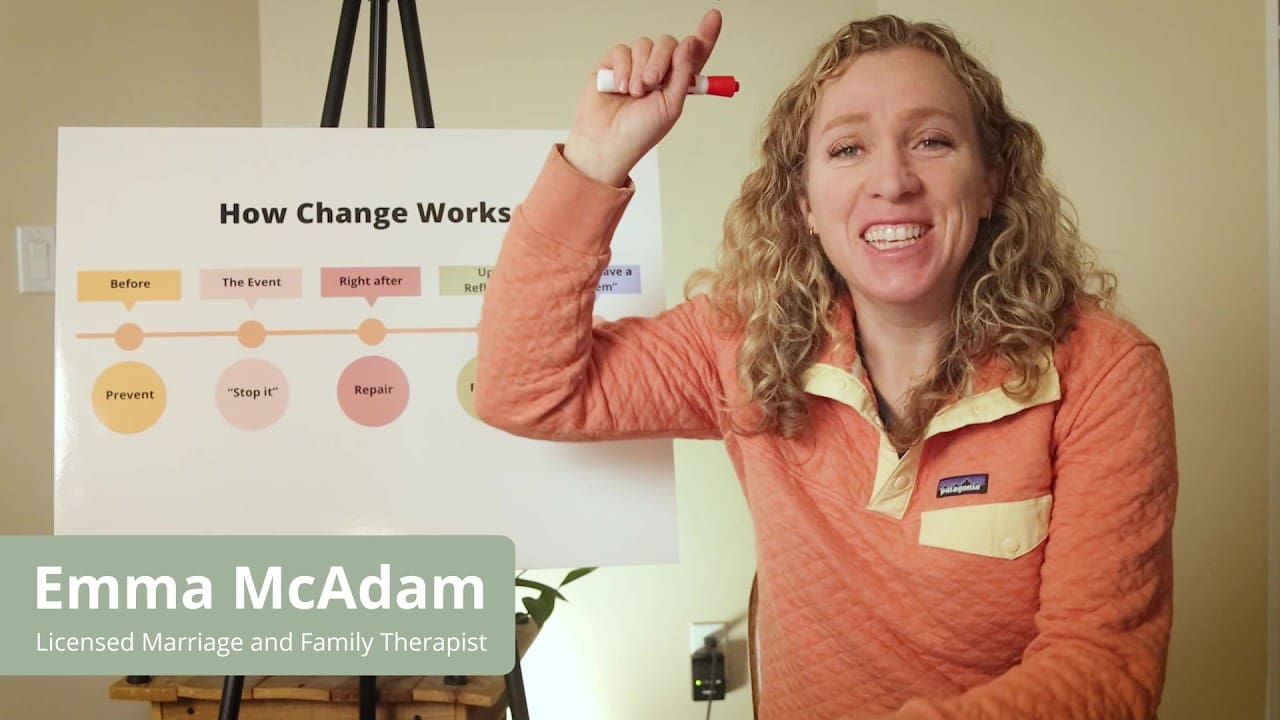
Why ADHD Makes Emotions So Intense — the brain science behind emotional dysregulation, RSD, and 9 practical skills to regulate big feelings with ADHD
If you have ADHD and your emotions feel overwhelming, fast, or hard to control—you’re not broken, lazy, or “too sensitive.” In this episode of Therapy in a Nutshell, I explain the brain science behind ADHD and emotional dysregulation—including delayed prefrontal cortex development, dopamine and norepinephrine differences, rejection sensitive dysphoria (RSD), and why emotions can hit before your “brakes” have time to turn on. Up to 70% of people with ADHD struggle with emotional regulation, and there are real neurological reasons why.
I’ll break down: Why ADHD emotions feel so intense and reactive How executive dysfunction affects impulse control, frustration tolerance, and emotional recovery What rejection sensitive dysphoria (RSD) is and why criticism can feel physically painful Biological triggers that worsen emotional dysregulation (sleep, hunger, sensory overload) ADHD emotional “superpowers” that often get overlooked Most importantly, I’ll share 9 practical, ADHD-friendly skills you can use to regulate emotions—even when your brain is doing ADHD things. These are strategies I use personally and with clients to slow reactions, calm the nervous system, support working memory, and respond instead of react. You don’t need to “try harder.” You need systems that work with your brain. 📌 Topics covered: ADHD emotional dysregulation, emotional impulsivity, executive dysfunction, RSD, ADHD brain science, emotion regulation skills, rejection sensitivity, nervous system regulation.
FREE Mental Health Resources: https://courses.therapyinanutshell.co…
Check out my podcast, Therapy in a Nutshell: https://tinpodcast.podbean.com/
Therapy in a Nutshell and the information provided by Emma McAdam are solely intended for informational and entertainment purposes and are not a substitute for advice, diagnosis, or treatment regarding medical or mental health conditions. Although Emma McAdam is a licensed marriage and family therapist, the views expressed on this site or any related content should not be taken for medical or psychiatric advice. Always consult your physician before making any decisions related to your physical or mental health. In therapy I use a combination of Acceptance and Commitment Therapy, Systems Theory, positive psychology, and a bio-psycho-social approach to treating mental illness and other challenges we all face in life. The ideas from my videos are frequently adapted from multiple sources. Many of them come from Acceptance and Commitment Therapy, especially the work of Steven Hayes, Jason Luoma, and Russ Harris. The sections on stress and the mind-body connection derive from the work of Stephen Porges (the Polyvagal theory), Peter Levine (Somatic Experiencing) Francine Shapiro (EMDR), and Bessel Van Der Kolk. I also rely heavily on the work of the Arbinger institute for my overall understanding of our ability to choose our life’s direction.
And deeper than all of that, the Gospel of Jesus Christ orients my personal worldview and sense of security, peace, hope, and love https://www.churchofjesuschrist.org/c…
Content, illustrations, and third-party video appearing on GEORGIANBAYNEWS.COM may be generated or curated with AI assistance or reproduced pursuant to the fair dealing provisions of the Copyright Act, R.S.C. 1985, c. C-42. Attribution and hyperlinks to original sources are provided in acknowledgment of applicable intellectual property rights. Such referencing is intended to direct traffic to and support the original rights holders’ platforms.