

















The New Senior Wellness Playbook: Why Sleep, Stress, and Loneliness Matter More Than You Think

Last updated: May 27, 2026
Quick Answer
Sleep, stress, and loneliness are not separate problems — they form a reinforcing cycle that quietly erodes health in older adults. The New Senior Wellness Playbook: Why Sleep, Stress, and Loneliness Matter More Than You Think reframes senior wellness by treating these three factors as a connected system, not isolated checkboxes. Managing all three together produces better outcomes for mood, cognition, and long-term resilience than addressing any one in isolation.
Key Takeaways
- 😴 Seniors need 7–9 hours of sleep per night, but poor sleep is often caused by loneliness and chronic stress — not just aging.
- 🧠 Chronic stress in older adults raises cortisol levels, which damages memory, weakens immunity, and increases heart disease risk.
- 🤝 Approximately 19% of Canadian seniors aged 65+ reported experiencing loneliness in 2019–2020, with women more affected than men. [1]
- 🔗 Loneliness directly worsens sleep quality — research links it to insomnia symptoms including difficulty falling asleep and non-restorative sleep. [2]
- ⚠️ Loneliness is associated with increased risks of heart disease, stroke, depression, and cognitive decline. [4]
- ✅ Low-cost strategies — social groups, chair yoga, mindfulness, and structured routines — work for seniors at all mobility levels.
- 📋 This wellness approach differs from traditional advice by treating sleep, stress, and loneliness as a single system to manage together.
- 🎯 Retirement is a high-risk transition period; proactive social planning matters as much as diet or exercise.
What Exactly Is the Senior Wellness Playbook About?
The New Senior Wellness Playbook: Why Sleep, Stress, and Loneliness Matter More Than You Think is a systems-based framework for older adult health that moves beyond the standard advice of “exercise more and eat well.” It centers on three underappreciated drivers of aging: sleep quality, chronic stress, and social disconnection.
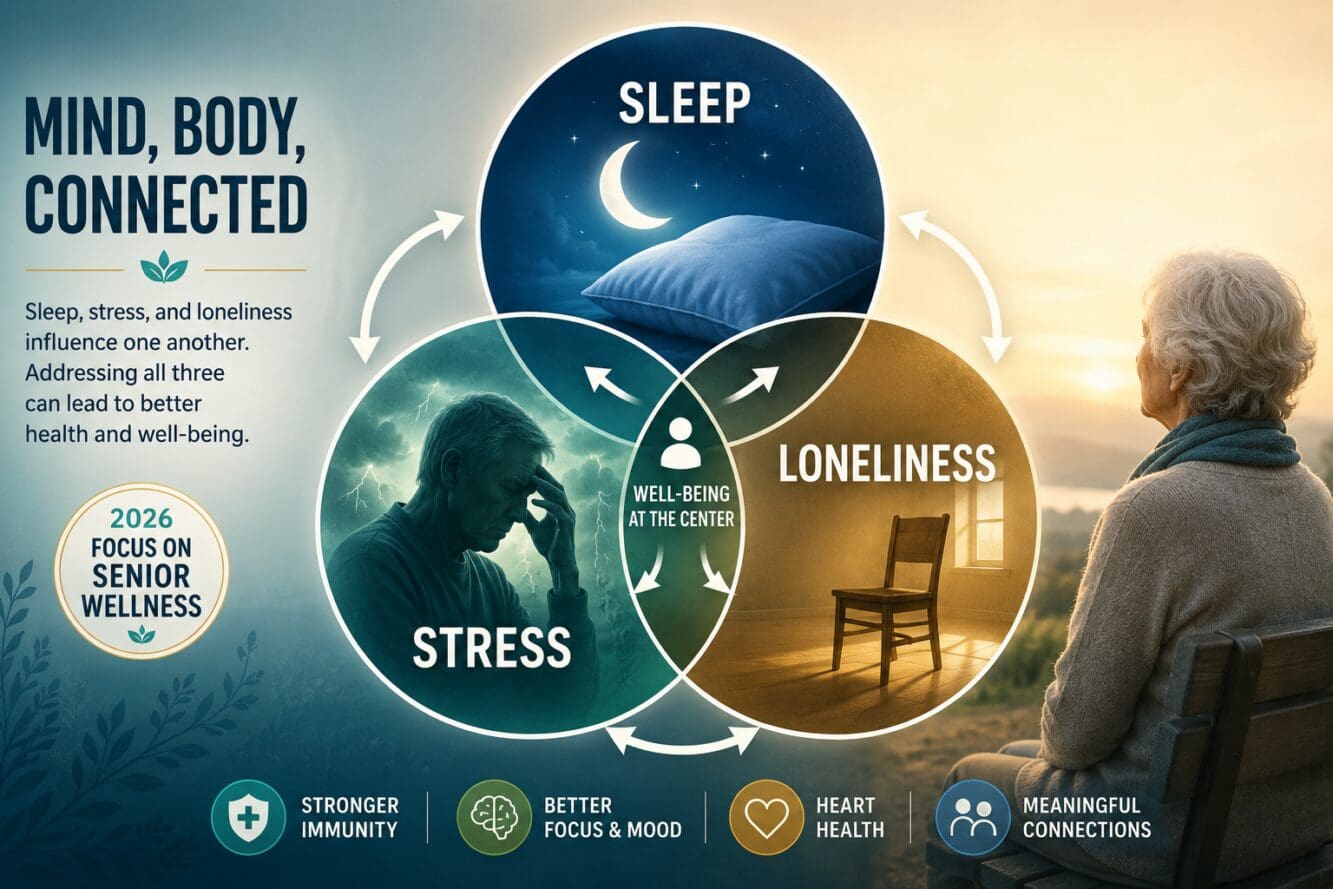
The core argument is that these three factors feed into each other. Poor sleep raises stress hormones. Chronic stress disrupts sleep architecture. Loneliness worsens both. Traditional senior health guidance tends to treat each in a silo — a sleep tip here, a stress management pamphlet there. This playbook treats them as one integrated challenge.
Who it’s for: Adults aged 60 and older, their caregivers, and health professionals working in community or primary care settings.
How Does Sleep Impact Health for Older Adults?
Poor sleep in older adults is not just tiredness — it is a physiological risk factor linked to several serious medical conditions. Research published in Nature confirms that social isolation and loneliness are associated with sleep problems in older community-dwelling adults. [3]
What medical conditions can poor sleep trigger in older adults?
Chronic sleep deprivation in seniors is associated with:
- Cardiovascular disease — fragmented sleep raises blood pressure and inflammatory markers
- Type 2 diabetes — disrupted sleep impairs glucose regulation
- Cognitive decline and dementia — deep sleep is when the brain clears metabolic waste, including amyloid proteins
- Depression and anxiety — sleep loss amplifies emotional reactivity
- Falls and injury — fatigue impairs balance and reaction time
Social connections also play a direct role: maintaining regular social contact helps reinforce consistent sleep-wake patterns, which supports better sleep hygiene overall. [8]
How Much Sleep Do Seniors Actually Need?
Most adults aged 65 and older need 7 to 9 hours of sleep per night, according to the American Academy of Sleep Medicine. Needing less sleep is not a normal part of aging — it is often a sign of a sleep disorder or an underlying health issue.
Common mistake: Many seniors accept fragmented or short sleep as inevitable. It is not. Sleep quality can be improved at any age with consistent routines, reduced screen exposure before bed, and — critically — addressing loneliness and stress, which are among the most overlooked causes of insomnia in this age group. [2]
Why Are Stress and Loneliness Such Big Issues for Seniors?
Stress and loneliness are particularly damaging for older adults because the body’s recovery systems become less efficient with age. Chronic stress keeps cortisol elevated, which suppresses immune function, accelerates memory loss, and raises cardiovascular risk. Loneliness compounds this by removing the social buffering that normally helps regulate the stress response.
Top signs of unhealthy stress in older adults include:
- Persistent fatigue that sleep does not resolve
- Increased irritability or emotional withdrawal
- Frequent headaches or digestive problems
- Difficulty concentrating or making decisions
- Loss of interest in previously enjoyed activities
For more on managing stress as part of daily wellness, local community resources and peer support programs can be a practical starting point.
Pull quote: “Loneliness is not just an emotional experience — it is a physiological stressor that disrupts sleep, elevates cortisol, and accelerates cognitive aging.”
The U.S. Surgeon General has identified social isolation and loneliness as significant public health concerns, linking them directly to increased mortality risk in older adults. [6] Statistics Canada data shows that senior women are disproportionately affected, with 23% reporting loneliness compared to 15% of senior men. [1]
How Is This Wellness Approach Different from Traditional Senior Health Advice?
Traditional senior health advice focuses heavily on physical metrics: blood pressure, cholesterol, BMI, and medication adherence. The New Senior Wellness Playbook: Why Sleep, Stress, and Loneliness Matter More Than You Think shifts attention to behavioral and social determinants that are often ignored in routine checkups.
Traditional ApproachNew Senior Wellness PlaybookTreats symptoms individuallyAddresses root system interactionsFocuses on physical metricsIncludes sleep, mood, and social healthMedication-first for sleep issuesBehavioral and social interventions firstAnnual checkup modelDaily habit-based monitoringGeneric exercise adviceMobility-adapted activity options
The key difference is the systems lens. If a senior is sleeping poorly, the playbook asks: Is loneliness driving nighttime rumination? Is unmanaged stress causing early waking? That diagnostic thinking leads to more targeted — and more effective — interventions.
Can You Reduce Loneliness After Retirement? Is This Approach Good for People in Their 60s or 70s?
Yes — loneliness is not a fixed condition, and it is especially addressable in the years immediately following retirement. Retirement is a high-risk transition because it removes built-in daily social structure. The playbook is most directly useful for adults in their 60s and 70s, when lifestyle habits are still highly modifiable and the consequences of neglect have not yet compounded.
Practical strategies that work at this life stage:
- Structured group activities — volunteer programs, hobby clubs, or somatic chair yoga classes that combine movement with social contact
- Lifelong learning programs — community college courses or library-based learning groups
- Therapy and peer support groups — particularly effective for grief-related isolation after spousal loss [7]
- Mindfulness and relaxation practices — reduce the hypervigilance that loneliness can create
- Digital connection tools — video calls and online communities, especially in rural or low-mobility settings
A longitudinal study found that increases in loneliness were especially linked to worsening sleep quality in women — which means social reconnection is not just emotionally beneficial, it is biologically protective. [5]
Are These Recommendations Good for Seniors with Limited Mobility?
Most strategies in this wellness framework require no physical exertion and are fully accessible to seniors with limited mobility. Social engagement, sleep hygiene practices, mindfulness, and stress reduction techniques are all chair-based or home-based by default.
Choose this approach if:
- Mobility limitations prevent standard exercise programs
- The senior lives alone or in a care facility
- Sleep problems are the primary complaint
- Stress is linked to health anxiety or chronic pain
Activities like somatic chair yoga offer gentle movement combined with breathing and mindfulness — effective for both stress reduction and improved sleep onset. Social programs in community centers also frequently offer accessible formats.
What Are the Biggest Mistakes Seniors Make with Their Health?
The most common and consequential mistake is treating wellness as a physical-only project. Many older adults diligently manage medications and attend medical appointments but ignore the social and psychological factors that determine how well those interventions actually work.
Top mistakes to avoid:
- Accepting poor sleep as normal aging — it is a treatable condition
- Isolating after retirement without building a replacement social structure
- Managing stress with avoidance rather than active coping (exercise, connection, therapy)
- Ignoring early signs of loneliness until they become clinical depression
- Treating sleep, stress, and social health as separate issues rather than a connected system
How Affordable Are the Wellness Strategies in This Playbook?
The majority of strategies are low-cost or free. Sleep hygiene improvements, social engagement through community programs, mindfulness practice, and peer support groups carry no direct financial cost for most participants.
Cost breakdown:
- Sleep hygiene adjustments: Free
- Community social programs: Free to low-cost (many subsidized for seniors)
- Mindfulness apps or classes: $0–$15/month
- Therapy or counseling: Varies; often covered by provincial health plans or Medicare
- Chair yoga or gentle fitness: Free via community centers or YouTube
For seniors in South Georgian Bay and similar communities, local recreation centers and social programs frequently offer subsidized or free wellness programming specifically for older adults.
Conclusion: Actionable Next Steps
The New Senior Wellness Playbook: Why Sleep, Stress, and Loneliness Matter More Than You Think offers a clear, evidence-grounded shift in how older adults and their caregivers should think about health. Sleep, stress, and loneliness are not background noise — they are the operating system that determines how well everything else functions.
Start here this week:
- Audit sleep quality honestly — track wake times, sleep duration, and morning energy for 7 days
- Identify one social habit to add — a weekly class, a regular call, or a volunteer commitment
- Choose one stress reduction practice — even 10 minutes of daily breathing or mindfulness counts
- Talk to a family doctor about sleep concerns; do not accept “that’s just aging” as an answer
- Connect with local community programs — many are free and specifically designed for adults 60+
The research is consistent: addressing these three factors together produces better outcomes than any single intervention alone. The playbook’s value is not in any one tip — it is in the systems thinking that connects them.
FAQ
Q: What age group benefits most from this wellness approach?
Adults aged 60–80 benefit most, particularly those who have recently retired or experienced a major life transition such as spousal loss or relocation.
Q: Can loneliness actually cause physical illness?
Yes. Loneliness is linked to increased risks of heart disease, stroke, depression, and cognitive decline in older adults. [4] It also directly worsens sleep quality. [2]
Q: How quickly can sleep improve with behavioral changes?
Most people see measurable improvement in sleep quality within 2–4 weeks of consistent sleep hygiene practices combined with reduced stress and increased social contact.
Q: Is loneliness more common in older women than men?
Yes. Statistics Canada data shows 23% of senior women reported loneliness compared to 15% of senior men in 2019–2020. [1]
Q: Does social connection actually improve sleep?
Research confirms that maintaining social connections helps reinforce regular sleep-wake patterns, which directly improves sleep quality in older adults. [8]
Q: What is the single most effective first step for a lonely senior?
Joining one structured weekly group activity — whether a hobby club, exercise class, or volunteer program — provides consistent social contact and routine, both of which reduce loneliness and support better sleep.
Q: Are these strategies safe for seniors with dementia or cognitive decline?
Many are, particularly social engagement and gentle movement. Caregivers should consult a physician before introducing new structured programs for seniors with moderate to advanced cognitive decline.
Q: Does stress management really affect sleep that much?
Chronic stress keeps the nervous system in a heightened state that directly delays sleep onset and increases nighttime waking. Addressing stress is one of the most effective ways to improve sleep in older adults.
References
[1] 4881 Look Loneliness Among Seniors – https://www.statcan.gc.ca/o1/en/plus/4881-look-loneliness-among-seniors?utm_source=openai
[2] Loneliness Linked Insomnia Symptoms Middle Aged And Older Adults – https://medschool.duke.edu/news/loneliness-linked-insomnia-symptoms-middle-aged-and-older-adults?utm_source=openai
[3] S41598 021 83778 W – https://www.nature.com/articles/s41598-021-83778-w?utm_source=openai
[4] Hidden Epidemic Loneliness Isolation Among Seniors – https://www.masonicare.org/resources/blog/hidden-epidemic-loneliness-isolation-among-seniors?utm_source=openai
[5] S0167494322001820 – https://www.sciencedirect.com/science/article/abs/pii/S0167494322001820?utm_source=openai
[6] jamanetwork – https://jamanetwork.com/journals/jama/fullarticle/2819153?utm_source=openai
[7] Senior Isolation Tips To Support Mental Health – https://www.mutualofomaha.com/advice/health-and-well-being/mental-health/senior-isolation-tips-to-support-mental-health?utm_source=openai
[8] Pmc5300306 – https://pmc.ncbi.nlm.nih.gov/articles/PMC5300306/?utm_source=openai