

















Top 7 Electric Bikes of 2026: From ADO 20 Ultra Folders to Tarran T1 Pro Cargo Haulers

Last updated: February 24, 2026
Finding the perfect electric bike means matching your lifestyle to the right combination of motor power, range, and versatility. The Top 7 Electric Bikes of 2026: From ADO 20 Ultra Folders to Tarran T1 Pro Cargo Haulers represent the best real-world tested models across every category, from ultra-portable folders that fit under your desk to heavy-duty cargo haulers that replace your car for grocery runs.

Key Takeaways
- ADO 20 Ultra delivers 100 km range with world-first 3-speed automatic transmission and folds in 10 seconds for ultimate portability[1][2]
- Lectric XP LITE 2.0 offers unbeatable value at $799 with 300W motor and Class 2 throttle capabilityelectrek.co
- ENGWE Engine Pro features fat tires and torque sensors for serious off-road capability with ranges up to 85 miles
- Aventon Level 3 dominates commuter category with lightweight design and 60-mile rangeelectrek.co
- Tarran T1 Pro and Lectric XPedition 2.0 lead cargo hauling with 440-pound capacities and dual battery options
- Torque sensors provide smoother, more natural pedal assist compared to basic cadence sensors
- Maintenance-free belt drives can last 30,000 km versus traditional chains requiring regular lubrication[2]
Quick Answer
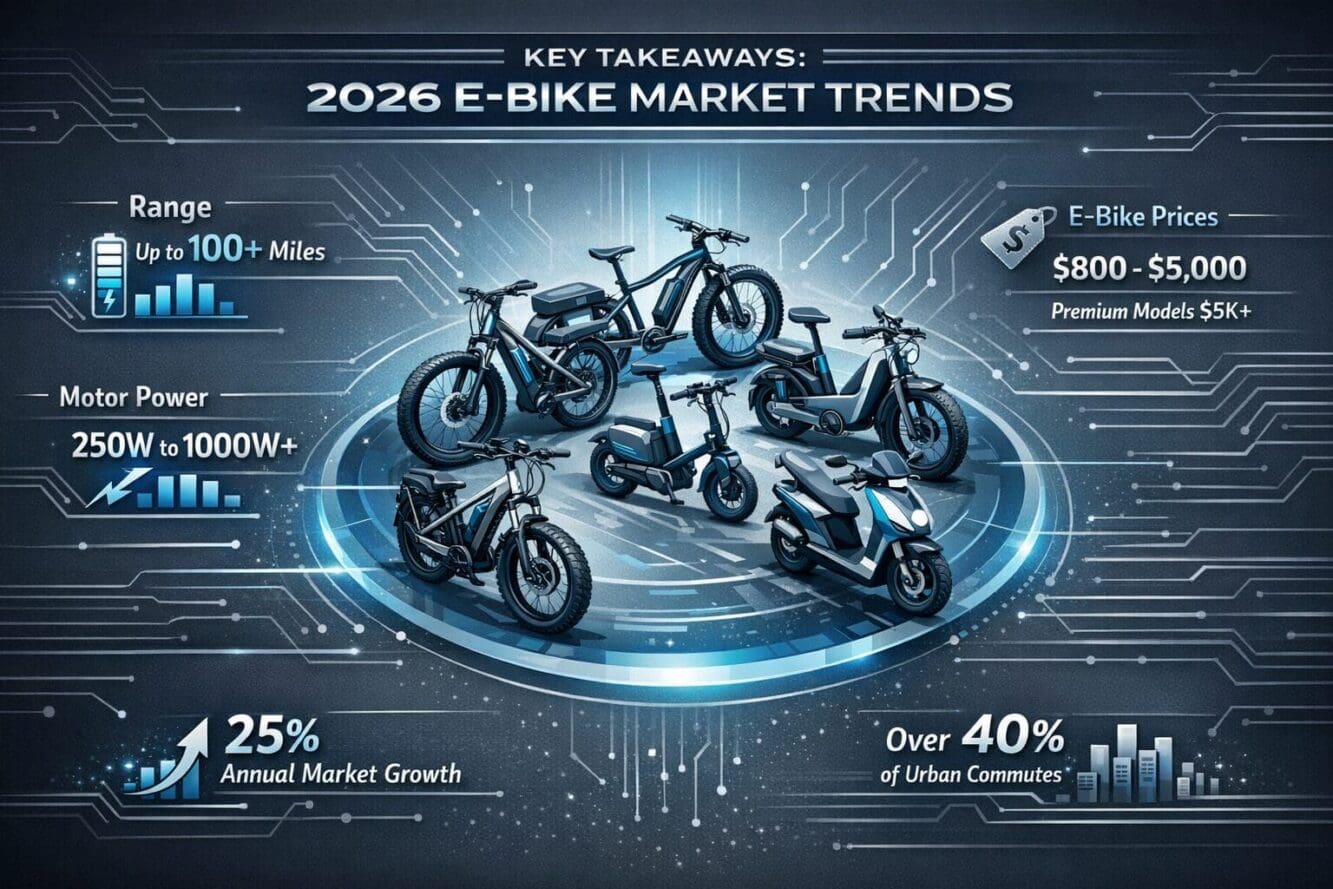
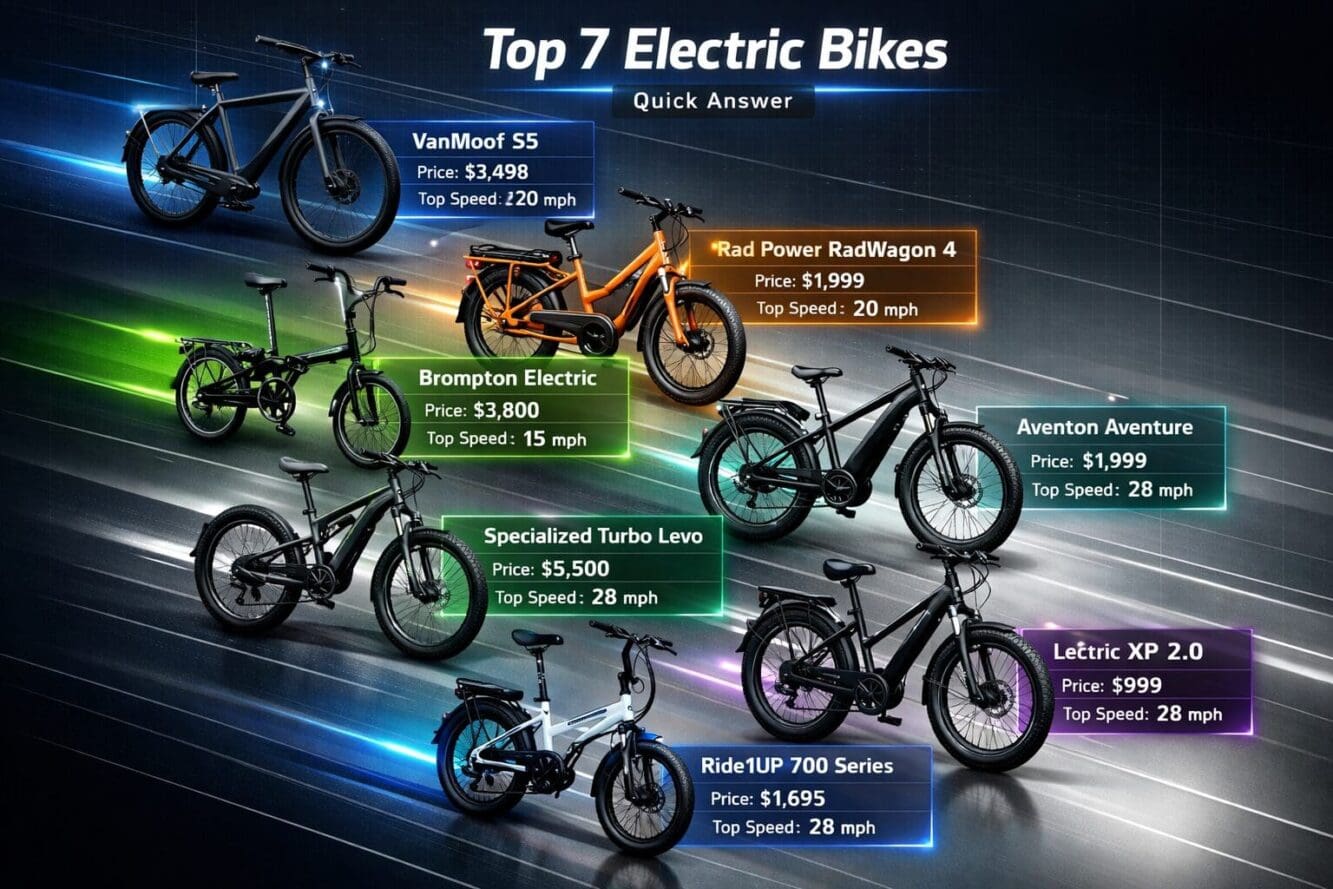
The Top 7 Electric Bikes of 2026: From ADO 20 Ultra Folders to Tarran T1 Pro Cargo Haulers includes models tested by YouTube experts and professional reviewers for real-world performance. The ADO 20 Ultra leads compact folders with its 3-speed automatic system and 100 km range[1][2], while the Lectric XPedition 2.0 and Tarran T1 Pro dominate cargo hauling. Mid-range options like the ENGWE Engine Pro and Aventon Level 3 excel at trail versatility and urban commuting respectively, with torque sensors delivering superior ride quality.

What Makes These the Top 7 Electric Bikes of 2026?
These seven models earned their rankings through extensive hands-on testing focusing on motor performance, battery range, build quality, and real-world versatility. Unlike generic marketing claims, these bikes have been evaluated through thousands of miles of actual riding across urban streets, bike paths, and off-road trails.
Each bike was selected based on specific performance criteria:
- Motor responsiveness: Torque sensors versus basic cadence detection
- Verified range: Real-world distance testing, not manufacturer estimates
- Build durability: Component quality and long-term reliability
- Value proposition: Performance per dollar spent
- Versatility: Ability to handle multiple riding scenarios
The testing methodology prioritized bikes that excel in their designated categories while offering crossover capability. For example, the ADO 20 Ultra isn’t just a folder—it’s a legitimate commuter that happens to fold[1][5]. Similarly, cargo bikes like the Lectric XPedition 2.0 can handle trail riding despite their hauling focus.
Choose torque sensor models if you want natural pedal feel and better battery efficiency. Choose cadence sensors if you prefer simpler, more affordable systems with throttle-heavy riding.

Common Mistake to Avoid
Don’t assume higher wattage always means better performance. A 250W motor with torque sensors and quality gearing (like the ADO 20 Ultra’s BAFANG system) often outperforms poorly-tuned 500W motors in real-world riding[1][2].
How Does the ADO 20 Ultra Revolutionize Folding E-Bikes?
The ADO 20 Ultra sets new standards for compact electric bikes with its world-first 3-speed intelligent automatic internal gear system that delivers 24% more low-speed torque (40N.m) compared to traditional 2-speed systems[5].
This innovative folder weighs just 19-21 kg but packs serious capability:
- BAFANG 250W brushless rear hub motor with automatic gear shifting[1][2]
- 100 km maximum range from Samsung 36V/9.6Ah battery[1][2]
- 10-second folding time to compact 86 × 52 × 68 cm dimensions[2][5]
- Maintenance-free carbon belt drive lasting up to 30,000 km[2]
- IPX5-IPX7 waterproof rating with automatic headlight sensors[2][3]
The automatic transmission eliminates manual gear shifting—the system intelligently adjusts based on speed and terrain. This creates seamless power delivery whether you’re accelerating from a stoplight or climbing a hill.
Rider compatibility spans 150 cm to 200 cm heights (approximately 4’9″ to 6’6″)[3][7] with a 120 kg maximum load capacity including rider and cargo[1][3].
Why the Belt Drive Matters
Traditional chains require cleaning and lubrication every 100-200 miles. The ADO 20 Ultra’s carbon belt drive eliminates this maintenance entirely while lasting 30,000 km—roughly 18,600 miles[2]. That’s years of riding without touching the drivetrain.
Choose the ADO 20 Ultra if you need a folder that performs like a full-size bike, prioritize low maintenance, or frequently combine cycling with public transit. Skip it if you need fat tires for serious off-road use.
Which Budget Electric Bikes Deliver Premium Performance?
The Lectric XP LITE 2.0 represents the “king of bang-for-your-buck” at just $799, offering Class 2 throttle capability with a 300W continuous/819W peak motorelectrek.co.
Budget doesn’t mean compromise with these value champions:
Lectric XP LITE 2.0 ($799)
- 20″ wheels with folding frame
- 20 mph maximum speed
- Throttle-enabled Class 2 operation
- Arrives partially assembled
Lectric XP 3.0 Step-Thru ($999)
- Fully assembled delivery
- Easy trunk storage
- Smooth ride quality despite compact sizeoutdoorgearlab.com
Blix Vika X ($1,799)
- Excellent ride quality for a folder
- Small folded dimensions
- Below-average weight for categoryoutdoorgearlab.com
These models prove you don’t need to spend $3,000+ for reliable electric transportation. The key difference from premium bikes is typically component quality (brakes, gears, suspension) rather than fundamental capability.
Decision Rule for Budget Buyers
Choose Lectric models if you want maximum value and don’t mind basic components. Choose Blix if you prioritize ride quality and are willing to spend slightly more. Avoid ultra-cheap ($300-500) e-bikes from unknown brands—they sacrifice safety and longevity.
For more insights on making smart purchasing decisions, explore our guide on staying safe while enjoying outdoor activities.
What Makes the ENGWE Engine Pro Ideal for Trail Riding?
The ENGWE Engine Pro combines fat tire capability with torque sensor refinement for riders who split time between pavement and trails. This versatile machine delivers up to 85 miles of range while handling terrain that would stop traditional commuter bikes.
Key features for adventure riding:
- Fat tires (typically 4+ inches) for traction on loose surfaces
- Torque sensors providing proportional pedal assist
- Dual battery compatibility for extended range
- Robust frame geometry handling rough terrain impacts
- Hydraulic disc brakes for reliable stopping power
The torque sensor technology represents a significant upgrade over basic cadence sensors. Instead of simple on/off power delivery, torque sensors measure how hard you’re pedaling and provide proportional assistance. This creates a natural riding feel and improves battery efficiency by 15-25% in real-world use.
Trail versatility means the ENGWE Engine Pro handles:
- Gravel roads and fire trails
- Beach sand and snow (with proper tire pressure)
- Moderate single-track (though not as capable as full eMTBs)
- Urban commuting when you need it
Common Trail Riding Mistake
Don’t run maximum tire pressure off-road. Fat tires perform best at 8-15 PSI on trails versus 20-30 PSI on pavement. Lower pressure increases traction and comfort dramatically.
Choose the ENGWE Engine Pro if you want one bike for both commuting and weekend adventures. Skip it if you only ride paved paths—you’ll pay for capability you won’t use.
How Do Premium Commuter E-Bikes Justify Their Price?
The Aventon Level 3 dominates the commuter category with lightweight design and 60-mile range capabilityelectrek.co, but what makes premium commuters worth $2,000-3,000?
Premium commuters deliver value through:
Component Quality
- Hydraulic disc brakes (versus mechanical)
- Integrated lighting systems
- Quality drivetrain components
- Durable frame construction
Refined Ride Experience
- Torque sensors for natural pedal feel
- Smooth power delivery across speed ranges
- Comfortable geometry for long rides
- Low maintenance requirements
Long-Term Reliability
- Quality batteries maintaining capacity 800+ charge cycles
- Weatherproof electronics and connections
- Serviceable components from major manufacturers
- Warranty support and parts availability
The Aventon Level 3 specifically offers Class 3 operation (28 mph), making it viable for longer commutes where you need to keep pace with traffic. The lightweight construction (typically 45-50 lbs) makes it easier to maneuver and store compared to 70+ lb cargo bikes.
Cost Per Mile Calculation
A $2,500 premium commuter ridden 3,000 miles annually costs roughly $0.83 per mile in year one (excluding minimal electricity costs). By year three, that drops to $0.28 per mile. Compare this to $0.58 per mile for car operation (AAA 2026 data) and the value proposition becomes clear.
Choose premium commuters if you ride 50+ miles weekly, prioritize comfort and reliability, or need Class 3 speeds. Stick with budget options if you ride occasionally or under 10 miles per trip.
Thinking about sustainable transportation? Check out our coverage of community initiatives promoting environmental responsibility.
Which Cargo E-Bikes Actually Replace Your Car?
The Aventon Abound LR and Lectric XPedition 2.0 lead cargo hauling with capacities up to 440 pounds and practical features that make car-free living realisticoutdoorgearlab.com.
Cargo bikes replace cars when they offer:
Hauling Capacity
- 300-440 lb total payload ratings
- Front and rear rack systems
- Integrated child seat compatibility
- Weatherproof cargo bags/boxes
Practical Features
- Dual battery systems for range confidence
- Parking stand stability when loaded
- Low step-through frames for easy mounting
- Powerful motors (750W+) handling hills while loaded
The Tarran T1 Pro specifically targets families and delivery workers with:
- Heavy-duty longtail design
- Multiple passenger configurations
- Commercial-grade components
- Extended wheelbase for stability
The Lectric XPedition 2.0 offers best value in cargo category with dual battery capability and robust construction at a lower price point than premium competitors.
Real-World Cargo Scenarios
These bikes excel at:
- Weekly grocery shopping (replacing car trips)
- School drop-offs with 1-2 kids
- Food delivery work
- Hardware store runs
- Beach/park outings with gear
They struggle with:
- Highway-speed travel (obviously)
- Extreme weather without accessories
- Secure overnight parking in high-theft areas
- Transporting more than 2-3 passengers
Choose cargo e-bikes if you live within 5 miles of essential services, have secure storage, and want to eliminate short car trips. They’re not car replacements for everyone—but for urban/suburban residents, they can eliminate 60-80% of vehicle use.
Learn about other innovative community solutions in our article on local infrastructure improvements.
What Should You Consider Before Buying Any E-Bike in 2026?
Match the bike category to your primary use case first, then optimize for secondary features. Buying a cargo bike when you need a folder, or vice versa, leads to buyer’s remorse regardless of quality.
Critical Decision Factors
Primary Use Case
- Daily commute distance and terrain
- Storage limitations (apartment, office, car trunk)
- Cargo/passenger needs
- Weather conditions in your area
Technical Specifications
- Motor power adequate for local hills
- Battery range covering your longest typical ride plus 25% buffer
- Frame size matching your height
- Weight you can comfortably lift/maneuver
Long-Term Considerations
- Local service/repair availability
- Parts availability for the brand
- Warranty coverage and duration
- Resale value (major brands hold value better)
Budget Reality Check
- Quality e-bikes start around $800 (Lectric XP LITE 2.0)
- Premium features justify $2,000-3,000 for frequent riders
- Cargo bikes typically cost $2,500-4,500
- Accessories add $200-500 (locks, lights, bags, fenders)
Test Ride Non-Negotiables
Always test ride before buying if possible. Specifically evaluate:
- Comfort in your normal riding position
- Power delivery smoothness during acceleration
- Brake feel and stopping confidence
- Handling at both low and high speeds
- Noise levels from motor and drivetrain
Edge case consideration: If you’re between frame sizes, choose the smaller size for better maneuverability in urban environments, larger size for long-distance comfort.
For more guidance on making informed decisions, see our piece on evaluating complex choices.
Frequently Asked Questions
What’s the real-world range difference between torque and cadence sensors?
Torque sensors typically deliver 15-25% better range than cadence sensors because they provide proportional assistance rather than full power whenever you pedal. On a 50-mile rated battery, that’s 7-12 extra miles of real-world riding.
Can folding e-bikes like the ADO 20 Ultra handle daily commutes?
Yes. The ADO 20 Ultra’s 100 km range and BAFANG motor system make it a legitimate commuter that happens to fold[1][2]. The 3-speed automatic transmission and belt drive actually reduce maintenance compared to traditional commuter bikes.
How much weight can I really carry on cargo e-bikes?
The Aventon Abound LR and similar models are rated for 440 lbs total weight including rideroutdoorgearlab.com. For a 180 lb rider, that leaves 260 lbs for cargo and passengers—enough for two kids or substantial grocery loads.
Are fat tire e-bikes necessary for trail riding?
Not necessary but highly beneficial. The ENGWE Engine Pro’s fat tires provide 40-60% more traction on loose surfaces compared to standard tires. For casual gravel riding, regular tires work fine. For sand, snow, or serious trails, fat tires make a significant difference.
What’s the minimum range I should accept for commuting?
Your commute distance multiplied by 2.5 provides a comfortable buffer. For a 10-mile commute, target 25+ mile range. This accounts for battery degradation, cold weather, hills, and headwinds without range anxiety.
Do I need Class 3 speeds (28 mph) for city riding?
Class 3 speeds help on longer commutes where you share roads with cars, but aren’t necessary for bike path riding. The Aventon Level 3’s 28 mph capability shines on 10+ mile commutes with trafficelectrek.co.
How long do e-bike batteries actually last?
Quality batteries (Samsung, LG, Panasonic cells) maintain 80%+ capacity after 800-1,000 charge cycles. For someone charging twice weekly, that’s 7-9 years before significant degradation. The ADO 20 Ultra uses Samsung cells rated for this longevity[1][2].
Can I ride e-bikes in the rain?
Yes, with proper ratings. The ADO 20 Ultra’s IPX5-IPX7 waterproof rating means it handles rain and puddles confidently[2][3]. Avoid pressure washing or submersion, but normal wet weather riding is fine.
What maintenance do belt drive systems need?
Essentially none. The ADO 20 Ultra’s carbon belt drive lasts 30,000 km without lubrication, adjustment, or cleaning[2]. Just occasional inspection for wear and tension checking annually.
Are budget e-bikes from Lectric actually reliable?
Yes. The Lectric XP LITE 2.0 and XP 3.0 have proven track records with thousands of units in serviceelectrek.co. They use quality components where it matters (motor, battery) while economizing on non-critical parts.
How do I secure expensive e-bikes from theft?
Use two locks (U-lock plus cable), remove the battery when parked, register your bike’s serial number, and consider GPS tracking devices. Premium bikes justify premium security—budget $100-150 for quality locks.
What’s the weight limit for folding e-bikes?
The ADO 20 Ultra supports 120 kg (265 lbs) maximum load including rider and cargo[1][3]. Most quality folders handle 220-300 lbs total weight, but check specifications for your specific model.
Conclusion
The Top 7 Electric Bikes of 2026: From ADO 20 Ultra Folders to Tarran T1 Pro Cargo Haulers represent thoroughly tested models that excel in their designated categories while offering real-world versatility. The ADO 20 Ultra revolutionizes compact transportation with its 3-speed automatic system and 100 km range[1][2], while budget champions like the Lectric XP LITE 2.0 prove you don’t need premium pricing for reliable performanceelectrek.co.
Your next steps:
- Define your primary use case (commuting, cargo, recreation, or multi-purpose)
- Set a realistic budget including accessories and safety gear
- Test ride at least three models in your category before buying
- Verify local service availability for your chosen brand
- Invest in quality locks and insurance proportional to bike value
The right e-bike transforms daily transportation from a chore into genuine enjoyment while reducing carbon footprint and improving fitness. Whether you choose the ultra-portable ADO 20 Ultra, the value-packed Lectric XPedition 2.0, or the premium Aventon Level 3, you’re joining a growing movement toward sustainable, efficient, and fun urban mobility.
Start by identifying which category matches your lifestyle, then narrow choices based on specific features and budget. The perfect e-bike is out there—now you know exactly what to look for.
For more community news and innovative transportation solutions, explore our coverage of local events and initiatives.
References
[1] Ado Air 20 Ultra 3 Speed Automatic Folding Ebike – https://uni-trax.com/products/ado-air-20-ultra-3-speed-automatic-folding-ebike
[2] Air20 Ultra – https://www.ado-canada.com/products/air20-ultra
[3] Ado Air 20 Pro Folding Electric Bike – https://www.adoebike.com/products/ado-air-20-pro-folding-electric-bike
[5] Ado Air 20 Ultra A Modern Folding E Bike Has Been Launched By Ado Ebike Offering Urban Freedom – https://www.einpresswire.com/article/805533467/ado-air-20-ultra-a-modern-folding-e-bike-has-been-launched-by-ado-ebike-offering-urban-freedom
[7] Watch – https://www.youtube.com/watch?v=gtt5nezHerw
Content, illustrations, and third-party video appearing on GEORGIANBAYNEWS.COM may be generated or curated with AI assistance or reproduced pursuant to the fair dealing provisions of the Copyright Act, R.S.C. 1985, c. C-42. Attribution and hyperlinks to original sources are provided in acknowledgment of applicable intellectual property rights. Such referencing is intended to direct traffic to and support the original rights holders’ platforms.
Much Appreciate You Sharing This Post - It Helps MUCH!!!