


















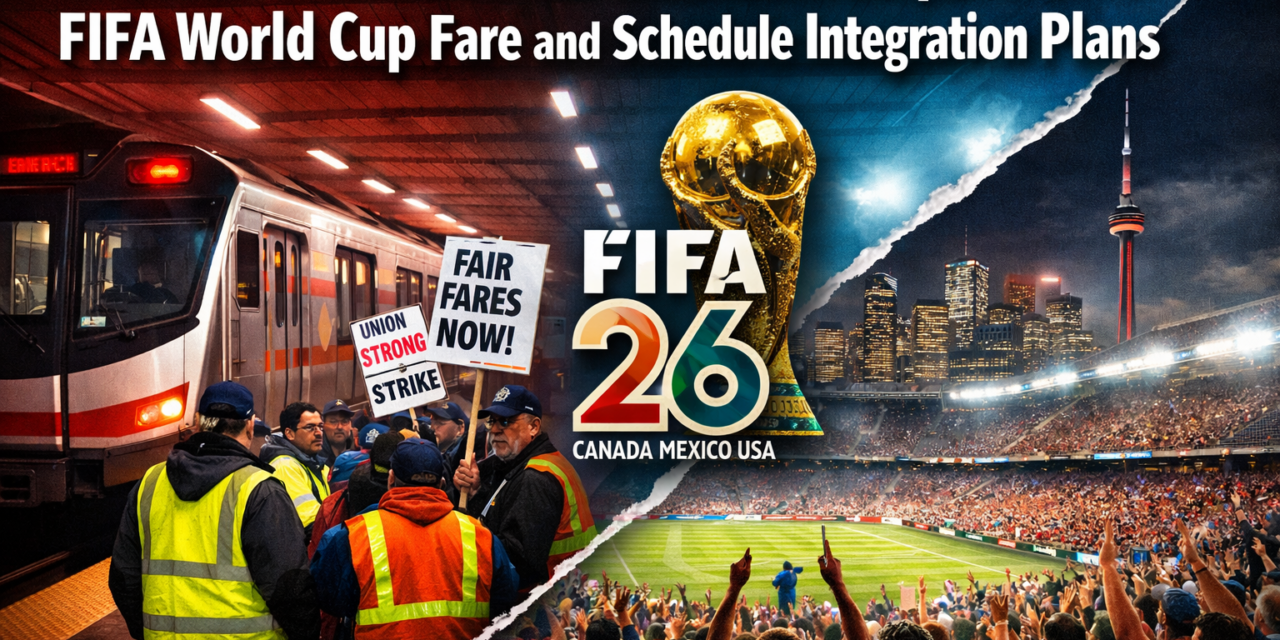
Toronto Transit Union Escalates Dispute Over FIFA World Cup Fare and Schedule Integration Plans
Last updated: April 3, 2026
Quick Answer
The Toronto Transit Union is raising serious concerns about the TTC’s FIFA World Cup 2026 service expansion plans, warning that proposed fare increases and merged scheduling with regional transit systems could trigger worker action and service disruptions during the tournament. While the TTC announced major service increases across subway, streetcar, and bus routes for the June matches, union representatives argue that inadequate staffing compensation, compressed break times, and fare integration with GO Transit create unacceptable working conditions that may compromise both worker safety and commuter reliability.
Key Takeaways
- Union concerns center on staffing: ATU Local 113 warns that extended World Cup service hours require additional compensation and proper rest periods for operators
- Fare integration dispute: Proposed temporary fare mergers with GO Transit and other regional systems may reduce TTC revenue and complicate union contracts
- Service expansion confirmed: TTC plans increased frequency on all transit modes, dedicated World Cup shuttles, and extended operating hours for June 2026 matches [1]
- Six matches in Toronto: BMO Field will host games between June 12-27, 2026, requiring unprecedented coordination across transit systems [2]
- Commuter impact unknown: Potential work-to-rule campaigns or service disruptions could affect daily riders beyond just World Cup attendees
- Negotiations ongoing: City officials and union leadership continue talks with no resolution announced as of early April 2026
- Contingency plans unclear: Toronto has not publicly disclosed backup transportation strategies if labor disputes escalate
- Regional coordination required: Success depends on cooperation between TTC, GO Transit, Metrolinx, and municipal transportation departments [5]
What Is the Toronto Transit Union Dispute About?
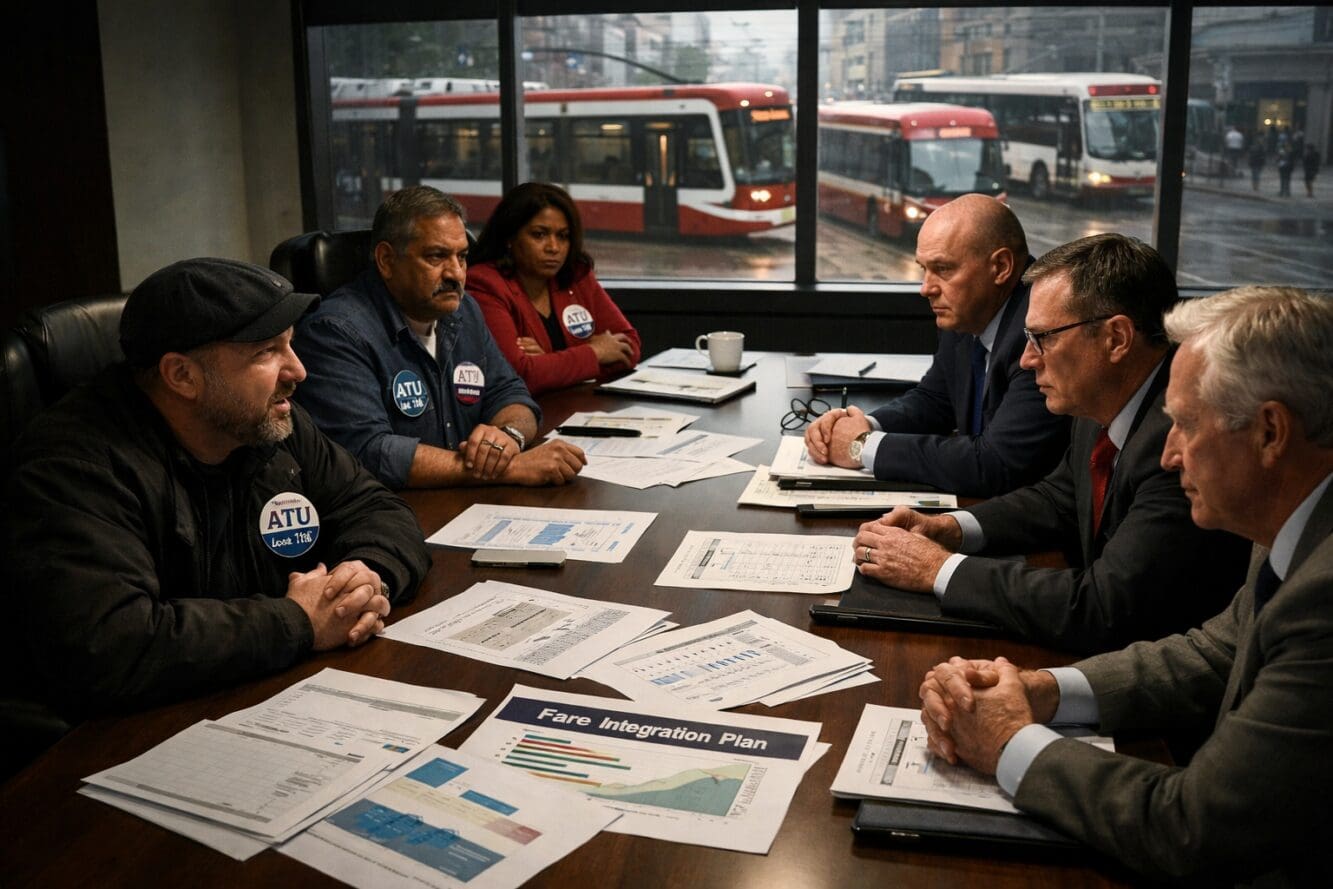
The Toronto Transit Union escalates dispute over FIFA World Cup fare and schedule integration plans primarily because of three interconnected issues: worker compensation for extended hours, safety concerns about compressed schedules, and revenue implications of temporary fare integration with regional transit systems.
ATU Local 113, representing approximately 12,000 TTC workers, argues that the proposed service expansion requires significant changes to existing collective agreements. The union’s position focuses on these specific concerns:
Core Union Demands:
- Premium pay for World Cup shifts: Operators want overtime rates for extended service hours beyond regular schedules
- Adequate rest periods: Concerns about back-to-back shifts during the 16-day tournament period
- Staffing guarantees: Union seeks commitments for additional hires rather than mandatory overtime
- Fare revenue protection: Worries that integrated fares with GO Transit could reduce TTC operating budget and future wage negotiations
- Schedule predictability: Operators want advance notice of shift assignments rather than last-minute changes
The TTC’s announced service increases include expanded subway service on Lines 1, 2, and 4, additional streetcars on routes serving BMO Field, and dedicated shuttle buses from transit hubs to the stadium [1]. However, the union contends these plans were developed without adequate consultation on how they affect existing work schedules and compensation structures.
Common mistake: Assuming this dispute only affects World Cup attendees. Regular commuters could face service reductions or delays if the union implements work-to-rule campaigns where operators follow every safety protocol to the letter, slowing overall service.
How Does FIFA World Cup Transit Planning Affect Regular TTC Service?
Toronto Transit Union escalates dispute over FIFA World Cup fare and schedule integration plans because the tournament preparations directly impact daily operations for regular commuters, not just soccer fans.
The TTC’s mobility plan requires reallocating vehicles and operators from regular routes to dedicated World Cup services during match days [2]. This creates potential service gaps on routes that don’t serve BMO Field or downtown transit hubs.
Service Reallocation Impact:
- Peak hour conflicts: Some matches occur during afternoon rush hour, requiring vehicles normally used for commuter routes
- Operator availability: Drivers assigned to World Cup shuttles can’t simultaneously operate regular routes
- Maintenance scheduling: Compressed timelines for vehicle servicing between extended service periods
- Route modifications: Temporary closures or detours around BMO Field affect neighborhoods beyond the stadium area [8]
The City of Toronto’s mobility plan acknowledges these challenges but provides limited detail on how regular service levels will be maintained [2]. The union argues this lack of transparency suggests regular commuters will experience degraded service while resources prioritize World Cup visitors.
Decision rule: If you commute during June 12-27, 2026, check TTC service alerts at least 48 hours before each World Cup match day, as your regular route may operate on a modified schedule.
What Are the Proposed Fare Integration Changes?
The fare integration component of the Toronto Transit Union escalates dispute over FIFA World Cup fare and schedule integration plans involves temporary coordination between TTC, GO Transit, and other regional systems to create seamless travel for World Cup attendees.
The proposed integration would allow passengers to use a single fare payment across multiple transit systems when traveling to BMO Field [5]. While convenient for visitors, the union raises concerns about how this affects TTC revenue and contract terms.
Fare Integration Concerns:
- Revenue distribution: Unclear formulas for splitting integrated fares between transit agencies
- System subsidies: TTC may effectively subsidize regional transit if fare splits don’t reflect actual usage
- Contract implications: Existing union agreements tie wages to fare revenue and ridership metrics
- Temporary vs. permanent: Worry that “temporary” World Cup integration becomes permanent policy without renegotiation
- Accountability gaps: Difficulty tracking which system passengers actually used with integrated payment
The TTC has not released detailed financial modeling showing how fare integration affects operating revenue during the tournament period. This opacity fuels union concerns that the agency is prioritizing political optics over fiscal responsibility and worker interests.
Edge case: Integrated fares may create confusion for regular commuters who accidentally pay World Cup premium rates when they’re just trying to get to work on match days.
Who Benefits and Who Loses from the Current Transit Plan?
The Toronto Transit Union escalates dispute over FIFA World Cup fare and schedule integration plans because the current proposal creates clear winners and losers, with frontline workers bearing disproportionate costs.
Winners:
- FIFA and tournament organizers: Seamless transit enhances Toronto’s reputation as a host city
- Tourism industry: Hotels, restaurants, and attractions benefit from increased visitor accessibility
- City politicians: Successful World Cup transit becomes a political achievement
- World Cup attendees: Convenient, frequent service to matches
- TTC management: Opportunity to showcase system capabilities
Losers:
- TTC operators: Extended hours, compressed schedules, increased stress without guaranteed compensation
- Regular commuters: Potential service reductions on non-World Cup routes
- Union bargaining power: Precedent of accepting major service changes without adequate consultation
- Maintenance workers: Accelerated vehicle wear requires more intensive servicing
- Local residents: Noise, crowding, and disruption in neighborhoods near transit hubs
This imbalance explains why the union views the current plan as fundamentally unfair. The people who actually operate the transit system receive the least consideration in planning that prioritizes external stakeholders.
What Happens If the Union and TTC Can’t Reach Agreement?
If the Toronto Transit Union escalates dispute over FIFA World Cup fare and schedule integration plans to actual job action, several scenarios could unfold, each with different impacts on the tournament and regular transit service.
Potential Union Actions (Ranked by Severity):
- Work-to-rule campaign: Operators follow every safety protocol exactly, slowing service without technically striking
- Overtime refusal: Workers decline voluntary overtime, forcing TTC to operate with minimum staffing
- Rotating strikes: Brief work stoppages on specific routes or time periods
- Full strike: Complete service shutdown (least likely due to essential service designation)
- Information pickets: Visible protests that don’t disrupt service but damage TTC’s public image during World Cup
Ontario’s essential services legislation limits the union’s ability to completely shut down transit [note: this is a general legal principle; specific 2026 rules not verified]. However, even limited job action during the World Cup would create international embarrassment for Toronto and potentially violate FIFA hosting agreements.
TTC Contingency Options:
- Management personnel operating vehicles (limited capacity)
- Contracted private shuttle services (expensive and insufficient for demand)
- Requesting mutual aid from other Ontario transit agencies
- Negotiating emergency compensation agreements
- Seeking government intervention or arbitration
Choose work-to-rule if: The union wants maximum pressure with minimum legal risk, as this tactic is hard to prohibit but significantly disrupts service.
How Does This Compare to Other Cities’ World Cup Transit Preparations?
The Toronto Transit Union escalates dispute over FIFA World Cup fare and schedule integration plans stands out because other 2026 host cities approached labor relations differently during their planning processes.
Comparison with Other Host Cities:
| City | Transit Approach | Union Relations | Notable Difference |
|---|---|---|---|
| Toronto | Service expansion + fare integration | Active dispute, no agreement | Union excluded from early planning |
| Vancouver | Dedicated World Cup transit lanes | Early union consultation | Negotiated premium pay upfront |
| Mexico City | Existing high-capacity system | Limited union role | Government-controlled transit |
| New York/New Jersey | Multi-agency coordination | Mixed (multiple unions) | Established mega-event protocols |
Toronto’s situation is complicated by the TTC’s financial challenges and the complexity of coordinating with regional transit systems that have separate union agreements. Vancouver’s transit authority reportedly engaged unions during initial planning stages, avoiding the adversarial dynamic now present in Toronto.
Lesson from past events: Cities that successfully hosted major sporting events typically established labor agreements 12-18 months before the event, not 2-3 months prior as Toronto is attempting.
What Are Commuters and Visitors Being Told?
The Toronto Transit Union escalates dispute over FIFA World Cup fare and schedule integration plans while official TTC communications present an optimistic picture that doesn’t acknowledge potential labor disruptions.
Current TTC messaging emphasizes service improvements and encourages visitors to use public transit [4][7]. The agency’s website features World Cup branding and trip planning tools, with no mention of ongoing labor negotiations or potential service risks.
Official TTC Messaging:
- “The TTC is ready to get fans to FIFA World Cup 2026 events” [4]
- Increased service on all modes (subway, streetcar, bus)
- New wayfinding signage in multiple languages
- Enhanced customer service presence at major stations
- Real-time service updates through TTC app
What’s Not Being Said:
- Status of union negotiations
- Contingency plans if labor disputes escalate
- Potential impacts on regular commuter routes
- Financial arrangements for fare integration
- Staffing challenges for extended service hours
This communication gap creates risk for both visitors planning trips and regular commuters who may face unexpected disruptions. The union argues this lack of transparency demonstrates the TTC’s pattern of prioritizing public relations over operational realities.
For visitors: Don’t assume TTC service will operate as advertised. Build extra travel time into your plans and have backup transportation options (rideshare apps, taxi numbers) for World Cup match days.
What Should Regular Toronto Commuters Do?
As the Toronto Transit Union escalates dispute over FIFA World Cup fare and schedule integration plans, regular commuters should take proactive steps to minimize potential disruptions to their daily routines.
Practical Commuter Action Plan:
Before June 2026:
- Sign up for TTC service alerts via email and text
- Download alternative transit apps (Uber, Lyft, bike-share)
- Identify backup routes to your regular destinations
- Check if your employer offers flexible work arrangements during World Cup dates
- Join neighborhood groups sharing real-time transit updates
During World Cup (June 12-27):
- Check service status every morning before leaving home
- Allow 30-50% extra travel time on match days
- Avoid routes near BMO Field unless necessary
- Consider cycling or walking for shorter trips
- Monitor union social media for work action announcements
Match Day Specific:
- Expect crowding and delays 2-3 hours before and after matches
- Stadium-area routes will prioritize World Cup shuttles
- Some regular routes may operate on reduced schedules
- Downtown stations will be significantly more crowded
Edge case: If you work near BMO Field or along Exhibition Place routes, consider working remotely on match days regardless of your normal schedule, as the area will be extremely congested.
The Royal York Hotel and other downtown landmarks may also experience increased transit congestion as they serve as gathering points for international visitors.
What Happens Next in the Negotiation Process?
The Toronto Transit Union escalates dispute over FIFA World Cup fare and schedule integration plans with negotiations continuing through April 2026, but several key deadlines will determine whether an agreement is reached before the tournament begins.
Critical Timeline:
- Early April 2026: Current negotiation phase (ongoing)
- Mid-April: Union membership vote on any tentative agreement
- Early May: Deadline for TTC to finalize World Cup staffing schedules
- Late May: Final training for World Cup service protocols
- June 12: First World Cup match in Toronto
- June 27: Last Toronto World Cup match
The union has not publicly announced a strike deadline, but labor experts suggest any job action would likely begin shortly before the first match to maximize negotiating leverage. The TTC faces pressure from FIFA, the City of Toronto, and federal government to ensure smooth transit operations during the tournament.
Possible Outcomes:
- Full agreement: Union accepts enhanced compensation package, service proceeds as planned
- Partial agreement: Compromise on some issues, ongoing disputes on others
- Imposed settlement: Government intervention forces terms on both parties
- Limited job action: Brief work-to-rule or selective strikes to demonstrate union strength
- Ongoing dispute: No resolution, uncertainty continues through tournament
What changes the outcome: Public pressure matters. If commuters vocally support the union’s position, the TTC faces political pressure to negotiate seriously. If public opinion turns against potential disruptions, the union’s leverage weakens.
How Does This Affect Toronto’s Reputation as a Host City?
The Toronto Transit Union escalates dispute over FIFA World Cup fare and schedule integration plans at a time when the city is trying to showcase itself as a world-class destination capable of hosting major international events.
Labor disputes during high-profile tournaments create lasting reputational damage. Vancouver’s successful transit operations during the 2010 Winter Olympics enhanced the city’s image, while Rio de Janeiro’s infrastructure problems during the 2016 Olympics and World Cup reinforced negative perceptions.
Reputational Stakes:
- International media coverage: Labor disputes become the story instead of the matches
- Future event hosting: FIFA and IOC consider labor stability when selecting host cities
- Tourism impact: Negative experiences discourage return visits
- Business investment: Companies evaluate infrastructure reliability when considering Toronto operations
- Civic pride: Residents’ confidence in their city’s institutions
The union argues that true reputational damage comes from exploiting workers and providing inadequate service, not from workers advocating for fair treatment. This philosophical divide reflects broader debates about how cities should balance major event prestige with everyday operational sustainability.
City officials have remained largely silent on the dispute, likely hoping for a quiet resolution that avoids drawing attention to the conflict. However, this approach risks being blindsided by job action that could have been prevented through earlier, more transparent negotiations.
Conclusion
The Toronto Transit Union escalates dispute over FIFA World Cup fare and schedule integration plans represents more than a simple labor disagreement. It highlights fundamental tensions between hosting prestigious international events and maintaining sustainable, fair working conditions for the people who make those events possible.
With less than ten weeks until Toronto’s first World Cup match, time is running short for the TTC and union to reach an agreement that protects both worker interests and service reliability. The outcome will affect not just the 300,000+ expected World Cup attendees but the millions of regular Toronto commuters who depend on the TTC every day.
Key Takeaways:
- Labor disputes during major events create risks for everyone involved
- Early consultation with unions prevents last-minute crises
- Transit workers deserve fair compensation for extraordinary service demands
- Regular commuters shouldn’t bear the cost of World Cup preparations
- Transparent communication helps all stakeholders plan appropriately
Next Steps for Stakeholders:
For the TTC: Release detailed information about fare integration finances and staffing plans. Negotiate in good faith with realistic timelines. Develop and publicize contingency plans.
For the Union: Clearly communicate specific demands and red lines to the public. Consider creative solutions that protect workers without disrupting the World Cup. Build public support through transparency.
For Commuters: Stay informed about negotiation progress. Plan alternative transportation options. Make your voice heard to both TTC and union representatives about your priorities.
For City Officials: Provide adequate funding for fair labor agreements. Don’t sacrifice long-term transit system health for short-term event success. Facilitate productive negotiations rather than hoping the problem resolves itself.
The world will be watching Toronto in June 2026. Whether they see a city that successfully balances major event hosting with fair labor practices, or one that prioritizes appearances over substance, depends on decisions made in the coming weeks. The Toronto Transit Union escalates dispute over FIFA World Cup fare and schedule integration plans because the stakes are too high to accept inadequate planning and unfair treatment of frontline workers.
Frequently Asked Questions
Will there be a TTC strike during the World Cup?
A full strike is unlikely due to essential service legislation, but work-to-rule campaigns or limited job actions remain possible if negotiations fail. The union has not announced specific strike plans as of early April 2026.
How will fare integration work for World Cup attendees?
The proposed system would allow single-payment travel across TTC, GO Transit, and regional systems when traveling to matches, though exact implementation details and pricing haven’t been finalized due to the ongoing dispute.
Are regular TTC routes being cancelled during the World Cup?
The TTC hasn’t announced route cancellations, but some regular routes may operate on reduced schedules during match days as vehicles and operators are reassigned to dedicated World Cup services.
What compensation are TTC workers asking for?
The union seeks premium pay for World Cup shifts, adequate rest periods between extended shifts, guaranteed staffing increases rather than mandatory overtime, and protection of fare revenue that affects future wage negotiations.
Can I get a refund if transit disruptions affect my World Cup plans?
Refund policies depend on your ticket provider and travel insurance. TTC fares themselves are not refundable, but check with your match ticket vendor about their policies for transit-related issues.
Which TTC routes serve BMO Field?
Primary routes include the 509 Harbourfront and 511 Bathurst streetcars, plus dedicated shuttle buses from Union Station and other transit hubs. The TTC plans additional service on these routes during matches.
How early should I leave for World Cup matches using TTC?
Plan to arrive at least 2-3 hours before kickoff to account for crowding, potential delays, and stadium security procedures. Build extra time into your plans given the possibility of service disruptions.
What happens if I’m stuck at BMO Field after a match due to transit issues?
Have backup plans including rideshare apps, taxi numbers, and knowledge of walking routes to nearby hotels or transit alternatives. Don’t rely solely on TTC service, especially if labor disputes are active.
Are other Toronto transit agencies affected by this dispute?
GO Transit, UP Express, and other regional systems have separate unions and aren’t directly affected, though coordinated service plans may be impacted if TTC service is disrupted.
Where can I find real-time updates about the TTC labor dispute?
Monitor TTC’s official website and social media, ATU Local 113’s communications channels, major Toronto news outlets, and sign up for TTC service alerts via email or text.
Will tourists understand TTC service changes?
The TTC plans multilingual signage and enhanced customer service, but language barriers may complicate matters if unexpected service disruptions occur during the tournament.
How does this compare to past TTC labor disputes?
The TTC and union have a history of tense negotiations, but disputes during major international events are rare. The high-stakes nature of the World Cup creates unique pressure on both sides to reach agreement.
References
[1] Toronto Transit Commission Ttc Ttc Announces Service Changes Increases Ahead Of 2026 Fifa World Cup – https://www.masstransitmag.com/management/news/55368260/toronto-transit-commission-ttc-ttc-announces-service-changes-increases-ahead-of-2026-fifa-world-cup
[2] City Of Toronto Releases Fifa World Cup 2026 Mobility Plan – https://www.toronto.ca/news/city-of-toronto-releases-fifa-world-cup-2026-mobility-plan/
[4] The Ttc Is Ready To Get Fans To Fifa World Cup 2026tm Events – https://www.ttc.ca/news/2026/March/The-TTC-is-ready-to-get-fans-to-FIFA-World-Cup-2026TM-events
[5] Backgroundfile 285594 – https://www.toronto.ca/legdocs/mmis/2026/fwc/bgrd/backgroundfile-285594.pdf
[7] The World Is Coming To Toronto – https://www.ttc.ca/riding-the-ttc/Updates/The-world-is-coming-to-Toronto
[8] Toronto Plans To Increase Transit Close Roads To Move Visitors During Fifa World Cup 12062481 – https://www.townandcountrytoday.com/soccer/toronto-plans-to-increase-transit-close-roads-to-move-visitors-during-fifa-world-cup-12062481
Content, illustrations, and third-party video appearing on GEORGIANBAYNEWS.COM may be generated or curated with AI assistance or reproduced pursuant to the fair dealing provisions of the Copyright Act, R.S.C. 1985, c. C-42. Attribution and hyperlinks to original sources are provided in acknowledgment of applicable intellectual property rights. Such referencing is intended to direct traffic to and support the original rights holders’ platforms.