



















Wellness-Led Vegetable Gardening: Stress-Reducing Routines and Healing Crops for Canadians in 2026
Last updated: March 22, 2026
Quick Answer: Wellness-led vegetable gardening combines intentional planting, mindful outdoor routines, and therapeutic crop selection to reduce stress and support mental health. For Canadians in 2026, it means growing healing plants like lavender, mint, chamomile, and leafy greens while building simple daily garden habits that calm the nervous system and restore focus.
Key Takeaways
- 🌿 Therapeutic crops like lavender, mint, chamomile, and kale offer both sensory and nutritional benefits that support stress relief.
- 🧘 Mindful harvesting — slow, intentional time in the garden — is as important as what you grow.
- 🇨🇦 Canadian climate zones (3 through 8) all support wellness gardening with the right crop choices and timing.
- 📅 Consistent 15-to-20-minute daily garden routines are more effective for stress reduction than occasional long sessions.
- 🌱 Companion planting lavender with mint and chamomile creates a calming sensory zone that doubles as a productive growing space.
- 🥬 Nutrient-dense crops like Swiss chard, spinach, and beets support mood through diet as well as through the act of growing them.
- 🏡 Container and raised-bed gardens make wellness gardening accessible for urban Canadians with limited space.
- Horticultural therapy is a growing field in Canada, with community gardens increasingly integrated into mental health programming [5].
What Is Wellness-Led Vegetable Gardening?
Wellness-led vegetable gardening is the practice of designing a garden around mental and physical health outcomes — not just food production. It draws from horticultural therapy, mindfulness research, and nutritional science to create a growing space that actively supports the gardener’s wellbeing.
Unlike conventional vegetable gardening, the wellness approach prioritizes:
- Sensory engagement (scent, texture, color) over maximum yield
- Routine and ritual over efficiency
- Healing crop selection alongside staple vegetables
- Slow, present-moment practices like mindful weeding or meditative watering
In 2026, this approach is gaining traction across Canada as more gardeners look for practical, low-cost ways to manage stress and anxiety [3].
Why Are Canadians Turning to Therapeutic Gardening in 2026?
Wellness-Led Vegetable Gardening: Stress-Reducing Routines and Healing Crops for Canadians in 2026 is responding directly to a documented rise in stress, climate anxiety, and burnout. Gardening with a purpose can be an effective coping mechanism for those dealing with environmental and personal stress [3].
Several factors are driving the trend in Canada:
- Post-pandemic mental health awareness has normalized seeking everyday wellness tools.
- Rising food costs make home growing both therapeutic and practical.
- Climate anxiety is pushing Canadians toward hands-on environmental action, and gardening offers exactly that [3].
- Horticultural therapy programs are expanding in Canadian hospitals, care homes, and community centres [5].
“Gardening with a purpose can be an excellent coping mechanism for anyone suffering from climate anxiety.” — Garden Culture Magazine [3]
The Collingwood Garden Club plant sale at Trinity Church is one example of how local Canadian communities are making therapeutic plants accessible to everyday gardeners.
Which Crops Have the Strongest Healing Properties?
The most effective healing crops for Canadian wellness gardens combine sensory benefits (scent, texture, color) with nutritional support for mood and energy. Choose plants that work in your climate zone and serve double duty as both food and therapy.
Top Therapeutic Crops for Canadian Gardens in 2026
| Crop | Wellness Benefit | Best Canadian Zones | Notes |
|---|---|---|---|
| Lavender | Reduces anxiety, improves sleep | 5–8 | Needs well-drained soil; overwinter indoors in Zone 5 |
| Mint | Sharpens focus, eases tension headaches | 3–8 | Grow in containers to control spreading |
| Chamomile | Calming, supports digestion | 4–8 | Self-seeds readily; low maintenance |
| Kale | Magnesium and folate for mood support | 3–8 | Frost-tolerant; extends the season |
| Swiss Chard | Iron and B vitamins for energy | 3–8 | Colorful stems add visual calm |
| Beets | Nitrates support brain blood flow | 3–8 | Earthy scent is grounding |
| Lemon Balm | Reduces stress hormones | 4–8 | Companion-plant with mint |
| Spinach | Folate supports serotonin production | 3–8 | Cool-season; plant early spring |
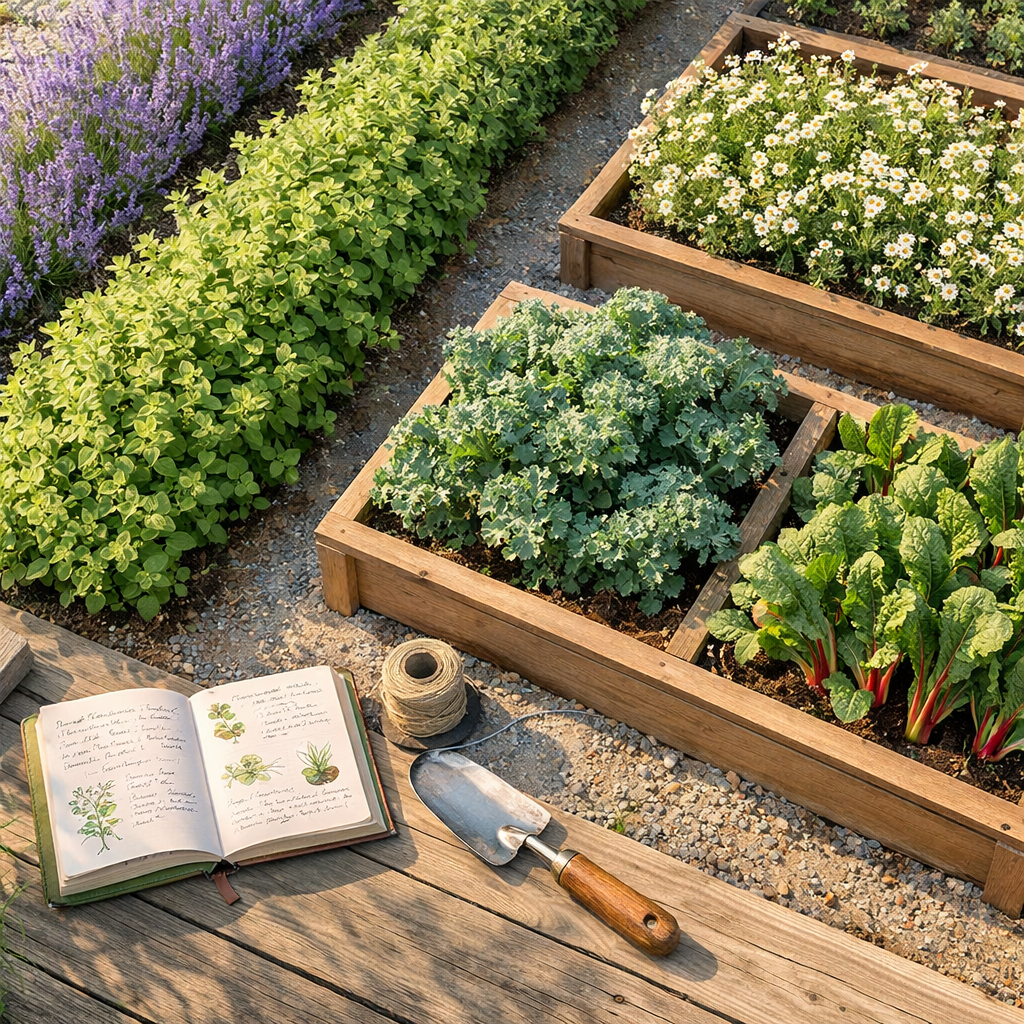
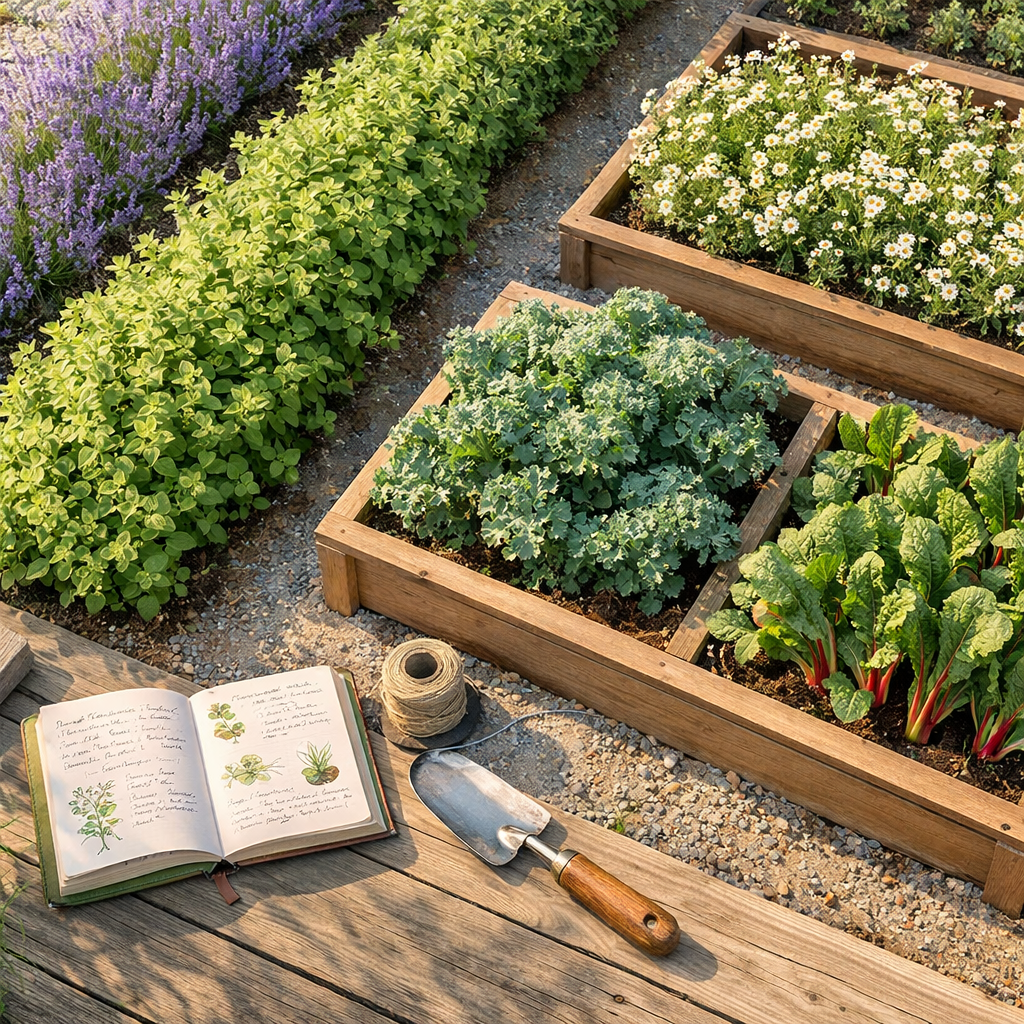
Lavender-mint companion planting is particularly effective. The two plants share similar sun and drainage needs, and together they create a sensory zone that engages smell and touch — both proven pathways to activating the parasympathetic (rest-and-digest) nervous system [6].
Trending 2026 crops like edible flowers, heritage varieties, and functional herbs are also appearing in wellness-focused Canadian gardens [2].
What Daily Routines Reduce Stress Through Gardening?
Consistency matters more than duration. A 15-to-20-minute daily garden routine produces more cumulative stress relief than a single long weekend session, because it builds a reliable sensory anchor into the day.
A simple wellness garden routine for Canadians:
- Morning check-in (5 min): Walk the garden slowly. Touch leaves, smell herbs, observe overnight changes. No tasks — just presence.
- Focused task (10 min): One specific activity: watering, weeding a small section, or harvesting. Single-task focus is the goal.
- Mindful harvest or sensory moment (5 min): Pick a sprig of mint or lavender. Crush a leaf between your fingers. Breathe deliberately.
Avoid turning the garden into another productivity metric. The moment it becomes a to-do list, the stress-relief benefit drops. For more on breathing as a wellness tool, see this guide on finding peace through breathing.
How Should Canadians Design a Wellness Vegetable Garden?
Wellness-Led Vegetable Gardening: Stress-Reducing Routines and Healing Crops for Canadians in 2026 works best when the garden layout itself supports calm. A cluttered, hard-to-reach space creates frustration, not peace.
Design principles for a healing garden:
- Keep beds narrow (no wider than 60–90 cm) so everything is reachable without stepping in.
- Add a seating element — even a simple stool — to encourage sitting and observing.
- Group sensory plants near entry points so the calming scent of lavender or mint greets you immediately.
- Use raised beds for accessibility and to reduce the physical strain that can undermine the wellness experience.
- Limit the palette to 4–6 crops at first. Overwhelm is the enemy of mindful gardening.
Urban Canadians with balconies or small yards can achieve the same effect with containers. A single pot of mint beside a chamomile planter on a Toronto balcony delivers genuine therapeutic value [6].
The Singhampton Sculpture Forest near Collingwood is a useful local example of how intentional natural design creates joy and calm — principles that translate directly to home garden planning.
What Are the Most Common Mistakes in Therapeutic Gardening?
The biggest mistake is treating wellness gardening like conventional gardening — optimizing for yield, speed, and perfection. That mindset cancels out the mental health benefit.
Common mistakes and how to fix them:
- ❌ Overplanting → Start with 4–6 crops maximum. Add more only after the first season.
- ❌ Ignoring sensory plants → At least 25% of the garden should be herbs or edible flowers with strong scent or texture.
- ❌ Skipping rest time → Build in sitting-and-observing time. It’s not wasted time; it’s the point.
- ❌ Choosing only practical crops → Beets and kale are great, but a row of chamomile or a lavender border transforms the emotional experience.
- ❌ Gardening only on weekends → Daily micro-sessions outperform occasional long ones for stress relief.
Conclusion: Start Small, Garden Mindfully, and Let the Harvest Heal
Wellness-Led Vegetable Gardening: Stress-Reducing Routines and Healing Crops for Canadians in 2026 is not a complicated system. It’s a deliberate shift in why and how Canadians grow food — prioritizing mental health alongside nutrition, and sensory experience alongside harvest weight.
Actionable next steps:
- Choose 2–3 healing crops from the table above that suit your climate zone.
- Add a lavender-mint companion pair to your existing garden or a container.
- Commit to a 15-minute daily garden routine for 30 days and notice the effect on your stress levels.
- Design for access and calm — narrow beds, a seat, sensory plants at the entrance.
- Connect with local gardening communities like the Collingwood Garden Club for plant swaps, advice, and shared growing spaces.
The garden doesn’t need to be large or perfect. It needs to be consistent, intentional, and planted with your wellbeing in mind.
FAQ
Q: Do I need a large yard to practice wellness vegetable gardening?
No. A single raised bed or a cluster of containers on a balcony is enough. The therapeutic benefit comes from the routine and the plants, not the square footage.
Q: What is the easiest healing crop to start with in Canada?
Mint is the easiest starting point. It grows in zones 3–8, thrives in containers, and delivers immediate sensory benefit through scent and touch.
Q: How long before gardening reduces stress noticeably?
Most people report a calmer mood after 2–3 weeks of consistent daily garden time, even in short sessions. The effect builds with regularity.
Q: Is wellness gardening the same as horticultural therapy?
They overlap but aren’t identical. Horticultural therapy is a clinical practice led by trained therapists. Wellness gardening is a self-directed practice that borrows its principles for everyday use [5].
Q: Can lavender survive Canadian winters?
In zones 5–8, lavender can overwinter outdoors with good drainage and mulching. In zones 3–4, grow it in containers and bring it indoors before the first hard frost.
Q: What if I find gardening stressful rather than calming?
Start smaller. Reduce the number of crops, lower expectations for yield, and focus only on one task per session. Stress in the garden usually comes from overcommitment, not from gardening itself.
Q: Are there community wellness gardens in Canada I can join?
Yes. Many Canadian municipalities have community garden programs, and horticultural therapy groups are growing in number [5]. Check with your local recreation centre or health authority.
Q: What companion plants work best with lavender for stress relief?
Mint, chamomile, and lemon balm all pair well with lavender. They share similar light needs and together create a multi-scent sensory zone that is particularly effective for anxiety relief.
References
[1] 2026 Sustainable Garden Trends – https://www.gardenalchemist.ca/post/2026-sustainable-garden-trends
[2] What Gardeners Are Growing Next 2026 Trends To Know – https://seedsnsuch.com/blogs/gardeners-greenroom/what-gardeners-are-growing-next-2026-trends-to-know
[3] 2026 Garden Trends – https://gardenculturemagazine.com/2026-garden-trends/
[5] 2026 Garden Trends Report Marks 25 Years Of Forecasting Change For Green Industry – https://www.greenhousecanada.com/2026-garden-trends-report-marks-25-years-of-forecasting-change-for-green-industry/
[6] Top Gardening Trends For 2026 What To Expect – https://www.vegogarden.com/en-au/blogs/academy/top-gardening-trends-for-2026-what-to-expect
Content, illustrations, and third-party video appearing on GEORGIANBAYNEWS.COM may be generated or curated with AI assistance or reproduced pursuant to the fair dealing provisions of the Copyright Act, R.S.C. 1985, c. C-42. Attribution and hyperlinks to original sources are provided in acknowledgment of applicable intellectual property rights. Such referencing is intended to direct traffic to and support the original rights holders’ platforms.