

















💻 What’s New in AI in Everyday Life: The 2026 Update Everyone Should Read
Last updated: April 24, 2026
Quick Answer: AI in everyday life has expanded well beyond voice assistants and spam filters. AI tools are actively helping people manage health, finances, creative work, home routines, and communication — often without requiring any technical knowledge to use them.
Key Takeaways
- AI assistants are now embedded in smartphones, appliances, cars, and workplace tools used by billions of people daily.
- Personalized health monitoring powered by AI can flag potential issues before symptoms appear.
- AI writing and image tools have become standard in education, small business, and creative work.
- Real-time AI translation is breaking down language barriers in travel, business, and healthcare.
- AI-powered financial tools help everyday users budget, invest, and detect fraud automatically.
- Concerns about privacy, job displacement, and misinformation remain real and worth understanding.
- Most new AI features in 2026 are designed to be used without any coding or technical background.
How Has AI in Everyday Life Changed Since 2024?
Two years ago, most people interacted with AI mainly through chatbots and recommendation algorithms. By 2026, that has shifted considerably. AI is now woven into the tools people already use — email apps, health wearables, banking platforms, and even grocery delivery services.
The shift isn’t just about more AI. It’s about AI that requires less effort to use. Features that once needed a prompt or a search now run in the background, learning from habits and preferences over time.
What Are the Biggest New AI Features in Health and Wellness?
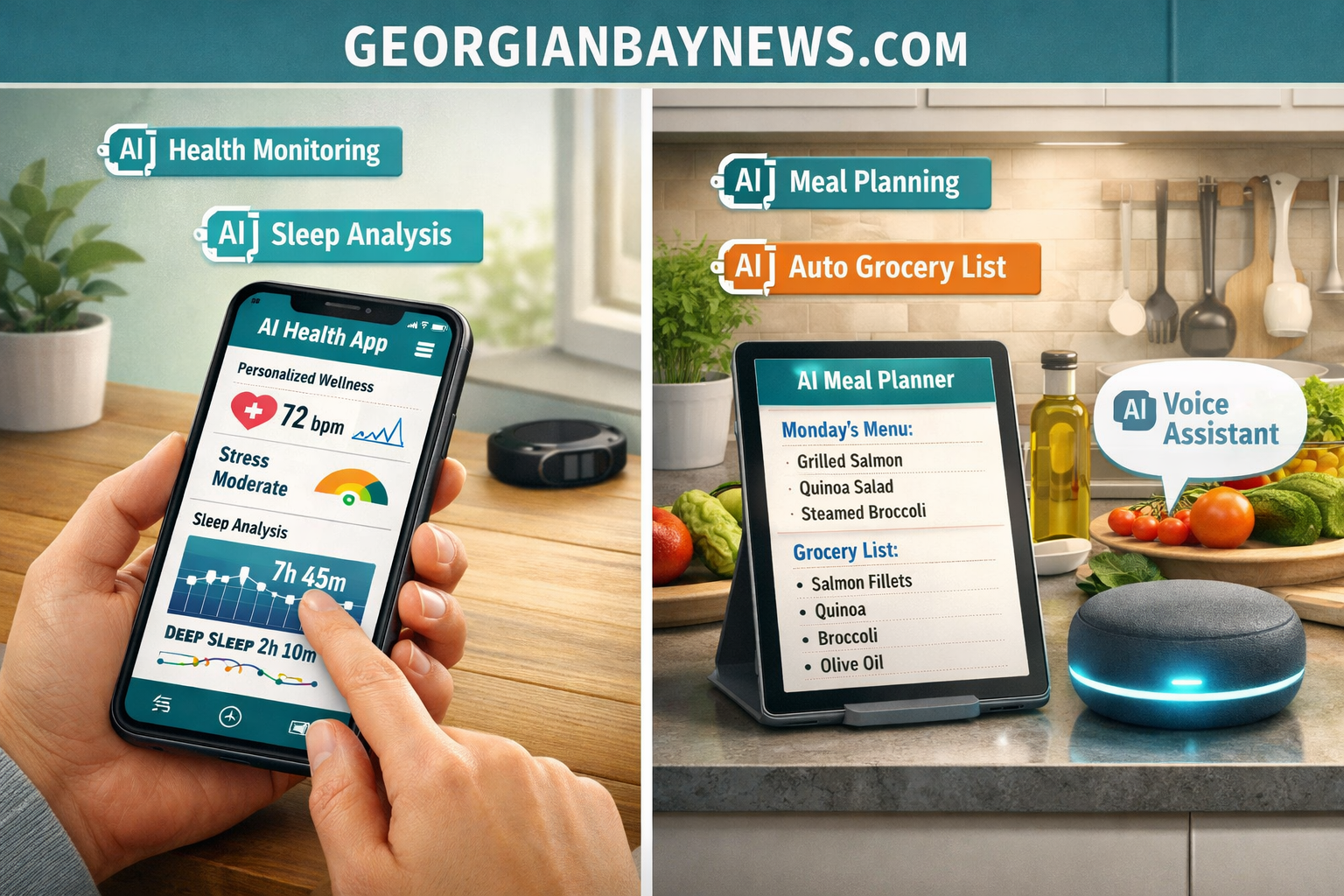
AI in everyday health monitoring has moved from step-counting to genuine early-warning capability. Wearable devices from major manufacturers now use AI models to detect irregular heart rhythms, track sleep quality with clinical-grade accuracy, and flag changes in blood oxygen levels that may warrant a doctor’s visit.
Key health AI developments in 2026:
- Continuous glucose monitoring paired with AI coaching apps that suggest meal and activity adjustments in real time.
- Mental health check-ins built into popular wellness apps, using voice tone and response patterns to suggest when professional support might help.
- AI-assisted diagnostics in telehealth platforms that help triage symptoms before a patient speaks to a physician.
For a deeper look at how technology intersects with personal wellbeing, see this piece on what the fasting and nutrition science community is saying about health tools.
Choose AI health tools if: you want passive monitoring that alerts you to trends over time. They are not a replacement for medical diagnosis, but they can make you a more informed patient.
How Is AI Changing Communication and Language?
Real-time AI translation has become genuinely reliable for everyday use. Apps on standard smartphones can now translate spoken conversations with low latency across dozens of languages, making travel, international business calls, and multilingual healthcare visits far more accessible.
AI writing assistants are also standard in most email clients and word processors. These tools do more than fix grammar — they suggest tone adjustments, flag unclear sentences, and can draft replies based on context.
Common mistake: Treating AI-generated text as final. AI writing tools still make factual errors and can miss cultural nuance. Always review before sending anything important.
What’s New in AI for Home and Smart Devices?
Smart home AI has become more contextually aware. Rather than responding only to direct commands, newer systems learn household routines and make adjustments automatically — dimming lights before a regular bedtime, pre-heating the oven when a recipe app is opened, or alerting homeowners to unusual energy use patterns.
Examples of 2026 smart home AI features:
| Feature | What It Does |
|---|---|
| Predictive climate control | Adjusts heating/cooling based on your schedule and weather forecasts |
| AI security cameras | Distinguish between a delivery person and an intruder using behavior analysis |
| Smart appliance diagnostics | Alert you before a washer or fridge breaks down |
| Voice-controlled meal planning | Suggest recipes based on what’s in the fridge and dietary preferences |
How Is AI Affecting Work and Small Business?
AI tools have become practical for small business owners and freelancers who don’t have large teams or IT budgets. Scheduling, invoicing, customer service responses, social media drafts, and basic bookkeeping can all be handled or assisted by AI tools available at low or no cost.
For context on how industries that ignored technological shifts paid a heavy price, the story of what went wrong at Kodak is a useful reminder of why adapting to new tools matters.
Practical AI tools for small business in 2026:
- AI chatbots that handle customer FAQs 24/7
- Automated invoice generation and payment reminders
- AI-assisted ad copy and social media scheduling
- Meeting transcription and summary tools
What Are the Real Risks of AI in Everyday Life?
AI in everyday life brings genuine benefits, but the risks are real and worth understanding clearly.
The main concerns:
- Privacy: Many AI tools learn from your data. Reading privacy policies and choosing tools from reputable providers matters.
- Misinformation: AI-generated content can be convincing and wrong. Verifying important information from primary sources remains essential.
- Over-reliance: Using AI for decisions that require human judgment — medical, legal, financial — without professional oversight carries risk.
- Job displacement: Some roles in data entry, customer service, and content production are being reduced. Workers in these areas benefit from building skills that complement AI rather than compete with it.
For a candid look at where AI development may be heading, this account from a former OpenAI employee raises questions worth considering. The Microsoft AI CEO’s discussion of AI’s future offers a contrasting industry perspective.
How Can Anyone Start Using AI Tools Today?
No technical background is needed to start. Most AI tools in 2026 are built into apps people already use.
Simple starting points:
- Enable AI features in your email app (most major providers have them built in).
- Try a free AI assistant for scheduling or note-taking.
- Use an AI writing tool to draft one email or document this week.
- If you wear a fitness tracker, explore its AI health insights section.
- Ask your bank whether it offers AI-powered fraud alerts or budgeting tools.
For those interested in how simplicity and intentional living intersect with technology adoption, this piece on embracing simplicity in daily life offers a grounding perspective.
FAQ: AI in Everyday Life
Q: Do I need to pay for AI tools?
Many useful AI features are free, built into existing apps like Gmail, Microsoft 365, and most smartphones. Paid tiers offer more advanced capabilities but aren’t required for everyday use.
Q: Is my data safe when I use AI apps?
It depends on the provider. Reputable platforms publish privacy policies explaining how data is used. Avoid sharing sensitive personal or financial information with unknown AI tools.
Q: Can AI replace a doctor or financial advisor?
No. AI tools can support and inform, but they cannot replace licensed professionals for diagnosis, treatment, or regulated financial advice.
Q: How accurate is AI translation in 2026?
For common language pairs (English, Spanish, French, Mandarin, etc.), accuracy is high enough for everyday conversation. For legal or medical translation, human review is still recommended.
Q: Will AI take my job?
AI is changing many roles rather than eliminating them outright. Jobs that involve judgment, creativity, and human connection are less at risk. Building familiarity with AI tools is one of the best ways to stay relevant in most fields.
Q: What is the easiest AI tool for a beginner?
Voice assistants on smartphones (built into iOS and Android) are the lowest barrier entry point. From there, AI writing suggestions in email apps are a natural next step.
Q: How does AI learn my preferences?
Most AI tools use your past behavior — what you click, type, skip, or search — to build a model of your preferences. This happens automatically in the background.
Q: Is there AI that helps with sleep?
Yes. Several wearables and apps now use AI to analyze sleep stages, identify disruptions, and suggest behavioral changes. For more on sleep science, see this discussion with sleep researcher Dr. Cheri Mah.
Conclusion: What to Do Next
AI in everyday life is no longer a future concept — it’s the current default for millions of people in 2026. The tools are more accessible, more accurate, and more integrated than ever before.
Actionable next steps:
- Audit the apps you already use and turn on any AI features you haven’t explored yet.
- Pick one area — health, writing, home, or finance — and try one AI tool for 30 days.
- Stay informed about privacy settings and review what data your AI tools collect.
- Keep human judgment in the loop for any decision that carries real consequences.
The people who benefit most from AI aren’t necessarily the most tech-savvy. They’re the ones who stay curious, start small, and build from there.
References
- Stanford University Human-Centered AI Institute. AI Index Report 2024. https://aiindex.stanford.edu (2024)
- World Health Organization. Digital Health and AI in Primary Care. https://www.who.int/health-topics/digital-health (2023)
- McKinsey Global Institute. The State of AI in 2024. https://www.mckinsey.com/capabilities/quantumblack/our-insights/the-state-of-ai (2024)
Content, illustrations, and third-party video appearing on GEORGIANBAYNEWS.COM may be generated or curated with AI assistance or reproduced pursuant to the fair dealing provisions of the Copyright Act, R.S.C. 1985, c. C-42. Attribution and hyperlinks to original sources are provided in acknowledgment of applicable intellectual property rights. Such referencing is intended to direct traffic to and support the original rights holders’ platforms.