























Last updated: March 24, 2026
Quick Answer
What’s new in AI in 2026 is simple: AI models are getting better at reasoning, handling longer inputs, working across text, images, and software tools, and running more tasks on phones and laptops. The biggest recent changes include new OpenAI releases, DeepSeek V4, faster AI hardware, and wider rollout of on-device AI in consumer devices [1][2][3].

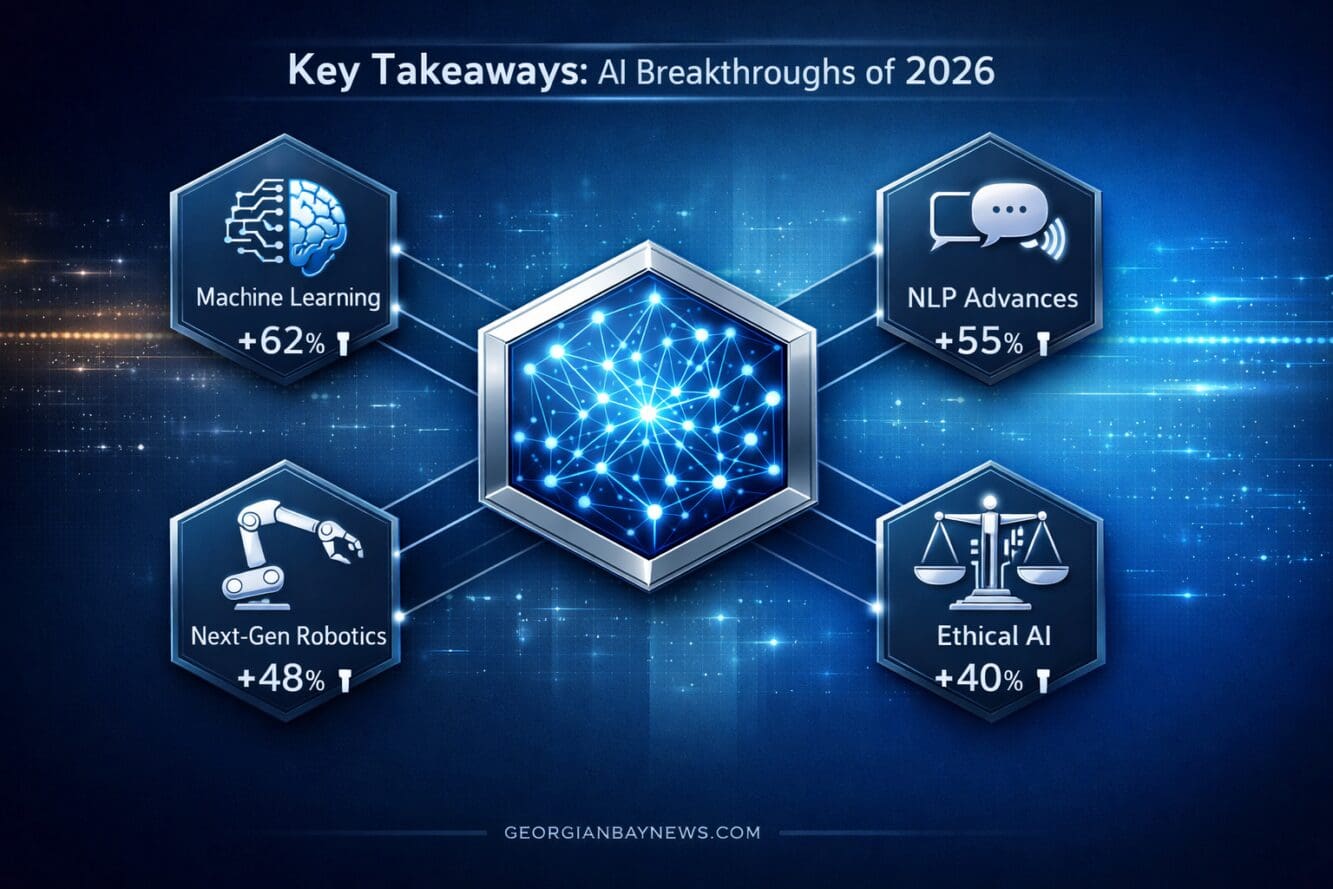
The biggest AI news in March 2026 is a fast wave of model releases and hardware upgrades. AI tools are becoming more useful because they can reason through harder tasks, remember more context, and act inside software with less hand-holding [1][2].

A simple way to think about it:
“The real story in 2026 is not one shiny chatbot. The real story is AI becoming more useful in many places at once.”
For readers who want examples of practical AI tasks, this roundup of use cases for the new GPT-4o helps connect model updates to real work.
People are talking about these releases because they point to where AI is heading: better answers, stronger reasoning, and more agent-like behavior. For everyday users, that means less back-and-forth and better help with complex tasks [2].
According to reporting from early March 2026:
A small business owner once spent half a day matching invoice notes, emails, and spreadsheet rows. A modern reasoning model can now review a much larger pile of documents in one session, suggest matches, and flag unclear items for a human to check.
Choose GPT-style reasoning tools if: the work involves long documents, coding, research synthesis, or multistep planning.
Common mistake: using a fast chat model for a complex task that really needs a reasoning model.
OpenAI is not the whole story. DeepSeek, Google, Anthropic, and others are all part of the current AI race, and model releases are arriving quickly [1].
One of the biggest launches is DeepSeek V4, reported in early March 2026:
Analysts also expect frequent releases through early 2026 from Google, Anthropic, Alibaba, ByteDance, and Moonshot [1].
For readers tracking broader tech and platform shifts, this piece on social media trends and the virtual shift gives useful context on how AI features spread into consumer platforms.
AI is no longer only about cloud chatbots. The hardware story matters because better chips make AI faster, cheaper, and more private on personal devices [1][3].
Recent changes include:
That last point matters to regular people. AI features are moving from premium gadgets into more mainstream phones.
A parent using a mid-range phone may soon get live translation, better voice search, and faster note summaries without paying for a top-end device. That is a bigger daily-life change than many headline-grabbing demos.
Related local tech coverage like the smart door access system study at Collingwood Town Hall and Library also shows how AI-linked systems are expanding beyond chat.
AI in 2026 is becoming more normal, not just more powerful. The biggest daily changes are happening in search, writing, school support, customer service, smartphones, and accessibility tools.
Common examples:
Apple also reportedly confirmed a reworked Siri powered by Google’s Gemini model through Private Cloud Compute, with privacy positioned as a key part of the design [1].
For people curious about what these tools can do in practice, articles such as GPT-5 making GPT-4o look outdated and the appeal to major tech giants on AI can help frame both the excitement and the concerns.
The main benefits are speed, access, and better support for hard tasks. The main risks are errors, privacy leaks, overtrust, and unclear rules.
| Area | Benefits | Risks |
|---|---|---|
| Work | Faster drafting, coding, research | Wrong answers, lazy review |
| School | Better tutoring, clearer explanations | Cheating, shallow learning |
| Health info | Easier plain-language summaries | Unsafe advice without experts |
| Devices | Private on-device features | Confusing permissions |
| Business | Lower support costs | Bad automation harming users |
If a topic affects safety, money, law, or health, human oversight is still the smart choice.
Start small, set clear rules, and always review outputs. AI works best when the task is narrow and the human goal is obvious.
Choose AI first for drafting, organizing, and brainstorming.
Choose human-first work for emotional issues, high-stakes decisions, and original expert judgment.
For a beginner-friendly mindset, the practical tone in guides like 7 beginner mistakes to avoid applies surprisingly well to AI too: start simple, watch for errors, and learn by doing.
It means recent changes in AI models, devices, hardware, and laws that affect how useful AI is for real people.
Yes. Many current systems are better at reasoning, handling long context, and working across text, images, and tools [1][2].
GPT-5.4 Thinking is an OpenAI model released on March 5, 2026, focused on stronger reasoning, coding, and large context handling [2].
DeepSeek V4 is a newly launched model with multimodal support and a very large context window, aimed at high-end AI tasks [1].
AI will change many jobs, but most near-term effects look more like task changes than full job replacement.
On-device AI can improve privacy for some tasks because less data needs to leave the device, but safety still depends on app design and permissions.
Students can use AI for tutoring and draft help, but they still need to verify facts and do their own thinking.
Businesses should test one low-risk workflow, measure the results, and keep a human reviewer in the loop.
Whats new in AI in 2026 is not just “smarter chat.” The real shift is broader: better reasoning models, bigger context windows, faster infrastructure, and AI features showing up in the devices people already use every day.
The best next steps are practical:
AI is moving fast, but regular users do not need to learn everything at once. Start with one task, one tool, and one clear goal. That is still the safest way to benefit from the newest AI changes.
[1] New Ai Model Releases News March 2026 – https://blog.mean.ceo/new-ai-model-releases-news-march-2026/
[2] Ai By Ai Weekly Top 5 March 2 8 2026 – https://champaignmagazine.com/2026/03/08/ai-by-ai-weekly-top-5-march-2-8-2026/
[3] Ai News Briefs Bulletin Board For March 2026 – https://radicaldatascience.wordpress.com/2026/03/17/ai-news-briefs-bulletin-board-for-march-2026/
Content, illustrations, and third-party video appearing on GEORGIANBAYNEWS.COM may be generated or curated with AI assistance or reproduced pursuant to the fair dealing provisions of the Copyright Act, R.S.C. 1985, c. C-42. Attribution and hyperlinks to original sources are provided in acknowledgment of applicable intellectual property rights. Such referencing is intended to direct traffic to and support the original rights holders’ platforms.