




















When Is It Time to Germinate Vegetable Seeds in Canada for Your Own Garden?
Last updated: March 2, 2026
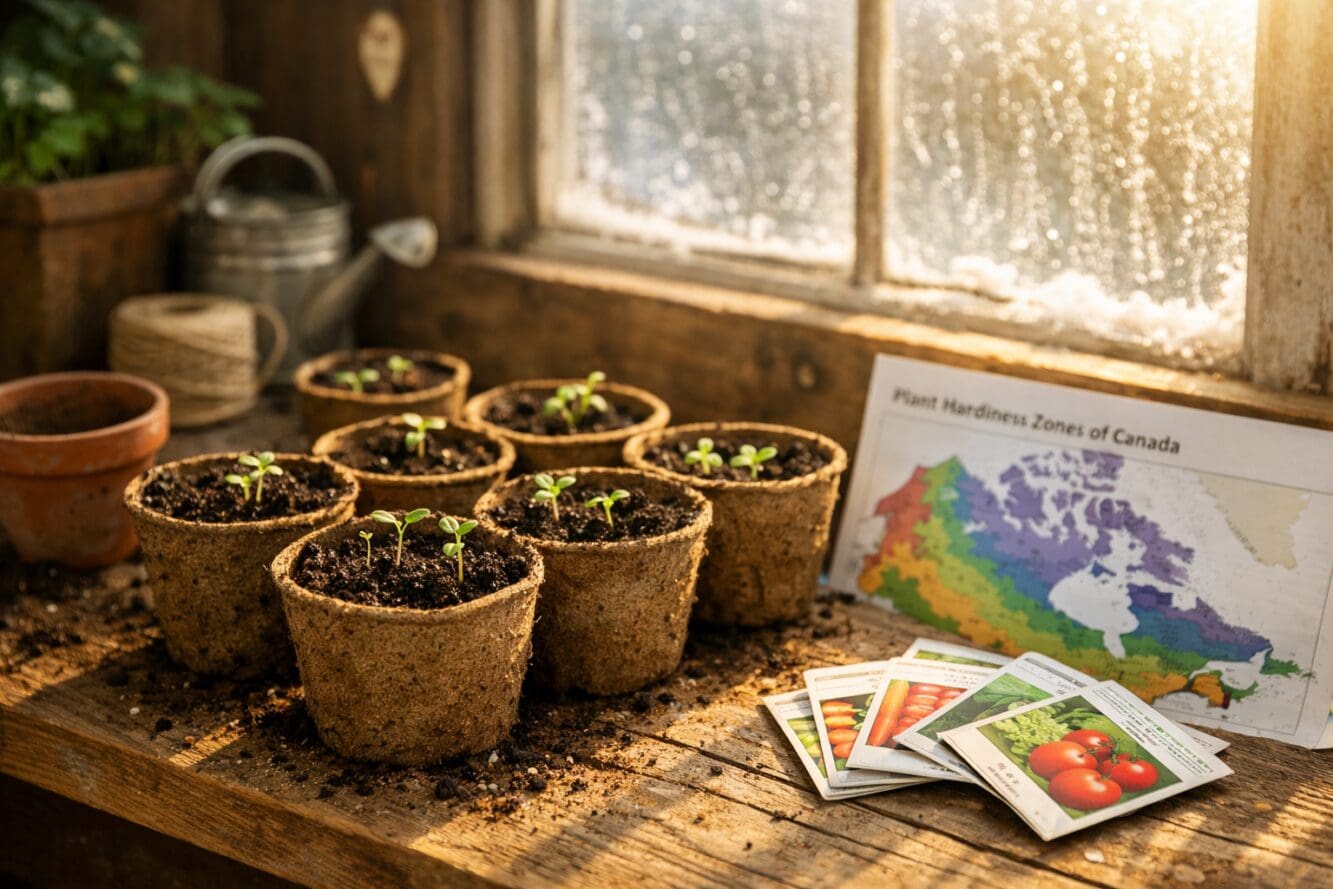
Imagine pulling your first homegrown tomato off the vine in August — deep red, still warm from the sun. That moment starts not in summer, but on a cold February or March morning when you press a tiny seed into damp soil indoors. Knowing when is it time to germinate vegetable seeds in Canada for your own garden is the single most important decision a first-time gardener will make, and getting the timing right separates a thriving harvest from a season of frustration.
Key Takeaways 🌱
- Your last frost date is your anchor point. Count backward from it using your seed packet’s recommended weeks.
- Tomatoes start indoors around early March (roughly 8 weeks before last frost) [4].
- Peppers need mid-to-late March starts, transplanting outdoors in early June [1].
- Onions and leeks are Canada’s earliest indoor seeds — start them mid-February [4].
- Carrots, beets, and parsnips should never be started indoors; direct-sow them once the soil thaws in mid-May [2].
- Cool-season crops like kale and lettuce can be started 2–4 weeks before last frost [2].
- Beans need warm soil (15°C or higher) — don’t rush them outdoors [2].
- Celery is the slowest grower; start it 10–12 weeks before last frost [2].
- Stagger lettuce, spinach, and radish seedings every 2–3 weeks for continuous harvests [1].
- Canada’s growing zones vary widely — always verify your local last frost date before planning.
Quick Answer
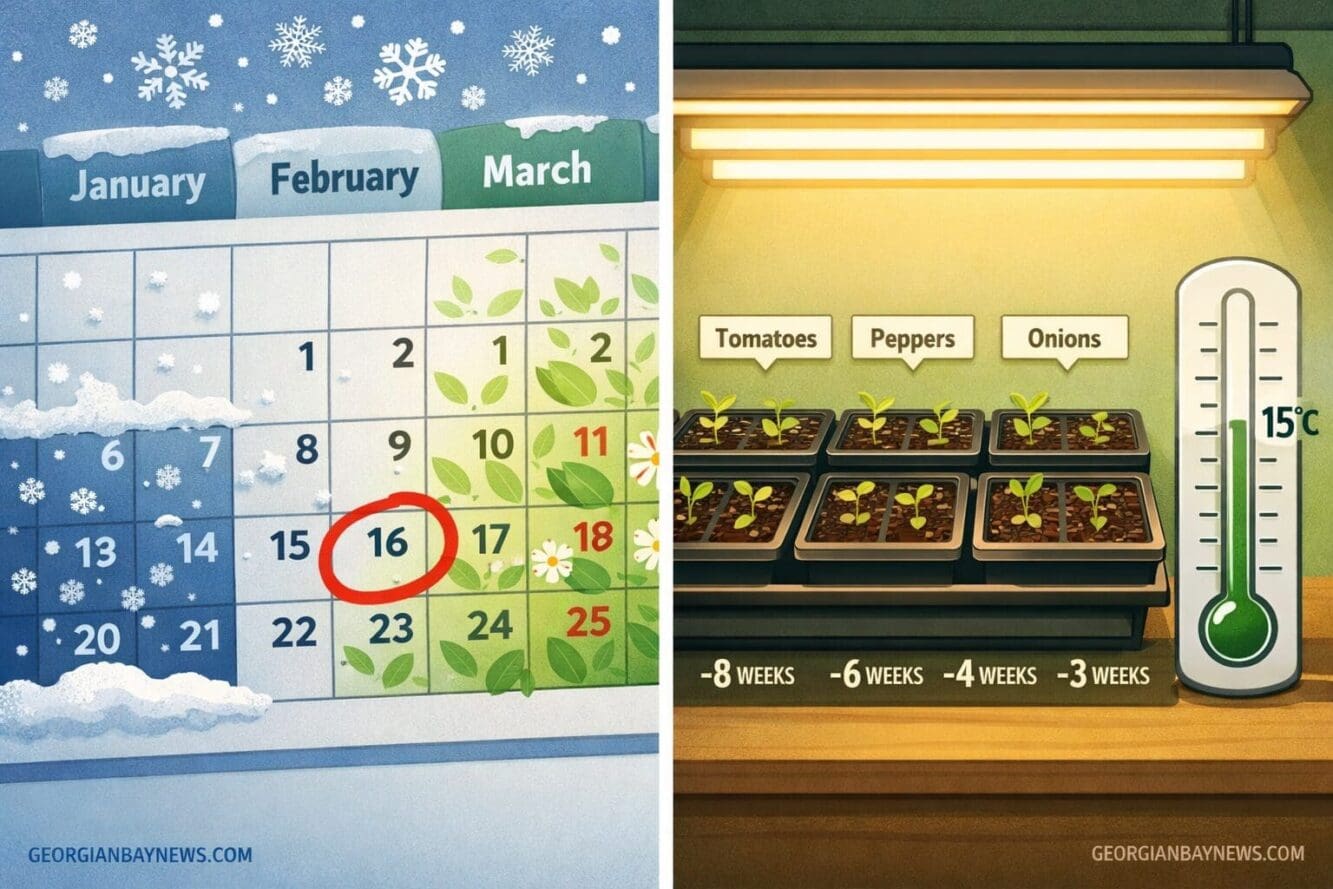
The right time to germinate vegetable seeds in Canada depends on your region’s last frost date and the specific vegetable. Most indoor seed starting happens between mid-February and early April, with direct outdoor sowing beginning in mid-May for most of the country. Always count backward from your last frost date using the weeks listed on your seed packet [2][3].
Why Last Frost Date Is Everything for Canadian Gardeners
Your last frost date is the foundation of every planting decision. In Canada, this date varies dramatically — from late April in parts of southern Ontario and British Columbia, to late May or even early June in the Prairies and northern regions [6].
How to find your last frost date:
- Check Environment Canada’s climate data for your city.
- Use the Garden.org planting calendar and enter your location [6].
- Ask at a local garden centre — staff know regional conditions well.
Once you have that date, every seed packet becomes a countdown timer. A packet that says “start 8 weeks before last frost” tells you exactly when to act.
Decision rule: If your last frost is May 15, count back 8 weeks — that’s March 20. That’s your start date for tomatoes.
When Is It Time to Germinate Vegetable Seeds in Canada: A Crop-by-Crop Breakdown
Different vegetables have very different needs. Here’s a practical guide organized by timing:
🗓️ Mid-February Starts (Earliest)
| Vegetable | Weeks Before Last Frost | Notes |
|---|---|---|
| Onions | 10–12 weeks | Allow 3 weeks for germination at ~15°C [4] |
| Leeks | 10–12 weeks | Slow growers; start early [4] |
| Celery | 10–12 weeks | Slowest of all; needs consistent warmth [2] |
🗓️ Early-to-Mid March Starts
| Vegetable | Weeks Before Last Frost | Notes |
|---|---|---|
| Tomatoes | ~8 weeks | Starting too early causes leggy, pale seedlings [4] |
| Peppers | 8–12 weeks | Transplant outdoors in early June [1] |
| Eggplant | 8–10 weeks | Needs warmth similar to peppers |
🗓️ Early April Starts (Montreal/Southern Ontario Example)
Broccoli, Brussels sprouts, and cabbage begin indoors in early April in the Montreal area, with outdoor transplanting by mid-May [1]. In Ontario, onions and peas go in around March 24, with tomatoes started indoors around March 14 for a May 3 transplant date [6].
🗓️ Direct-Sow Outdoors (Mid-May Onward)
- Carrots, beets, parsnips: Sow directly once soil has thawed. These root vegetables do not tolerate transplanting [2].
- Beans (bush and pole): Wait until soil reaches 15°C. Cold soil causes poor germination and rot [2].
- Peas: Sow 6–8 weeks before last frost — they actually prefer cool soil [2].
What Vegetables Should Never Be Started Indoors?
Root vegetables belong in the ground, not in a tray. Carrots, beets, and parsnips develop long taproots that are easily damaged during transplanting, which stunts growth or kills the plant entirely [2].
Direct-sow these outdoors only:
- Carrots
- Beets
- Parsnips
- Radishes
- Turnips
Common mistake: First-time gardeners often start carrots indoors to “get ahead.” The result is forked, stunted roots. Save the tray space for tomatoes and peppers.
How to Set Up a Simple Indoor Seed-Starting Station
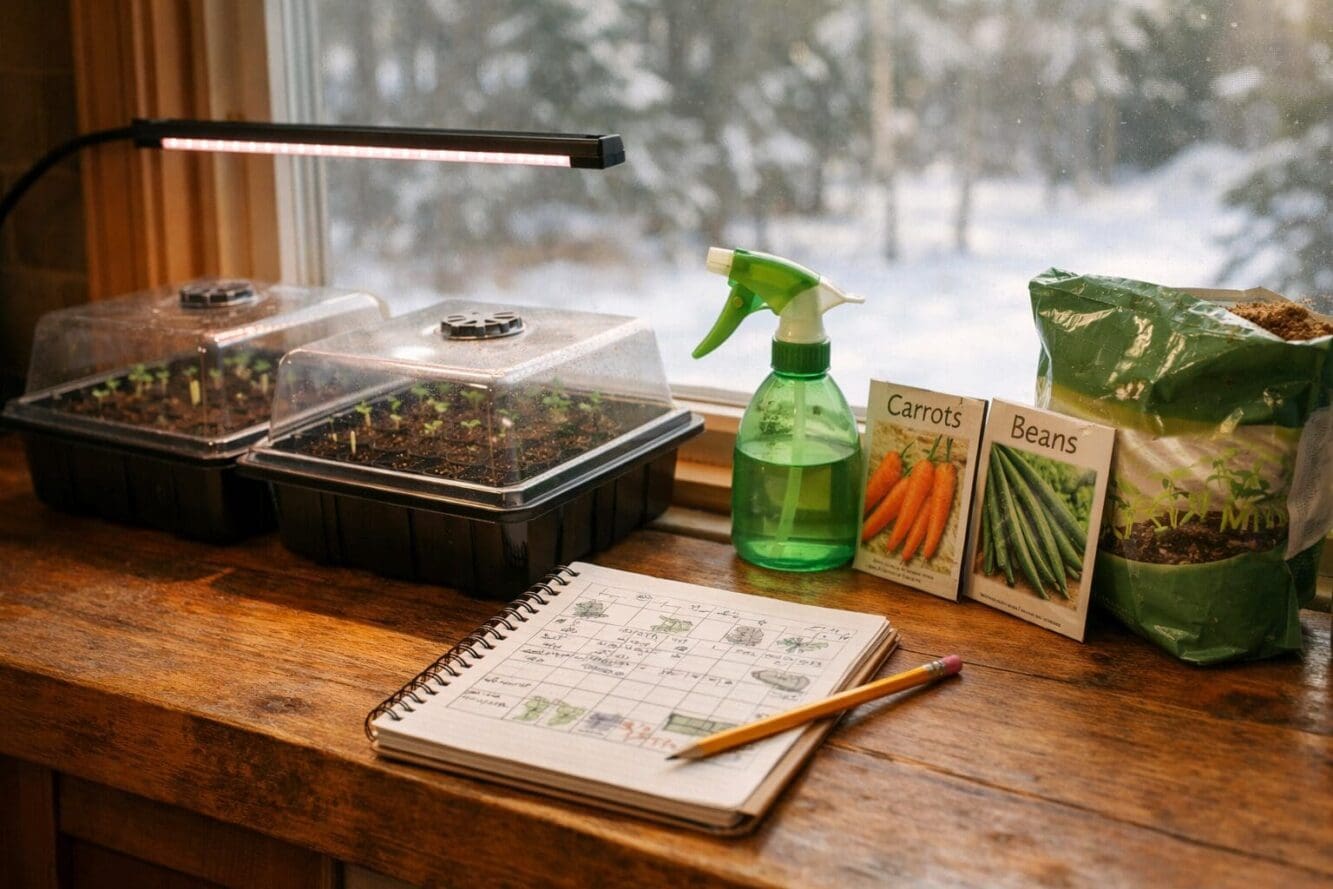
Starting seeds indoors doesn’t require expensive equipment. A sunny south-facing window or a basic LED grow light, seed-starting mix (not regular potting soil), and small trays with drainage holes are enough to begin.
Basic steps:
- Fill trays with moist seed-starting mix.
- Plant seeds at the depth shown on the packet (usually 2–3 times the seed’s diameter).
- Cover with a clear plastic dome to retain humidity.
- Keep soil temperature between 18–24°C for most vegetables.
- Once seedlings emerge, remove the dome and ensure 14–16 hours of light daily.
- Water from the bottom to prevent damping off (a fungal issue that kills seedlings).
For gardeners interested in reducing their environmental footprint, ditching traditional lawn space in favour of a productive vegetable garden is a great companion step to starting from seed.
Successive Planting: The Secret to Harvests All Season Long
One planting of lettuce gives you one harvest. Three plantings give you salads from June through September.
Vegetables like lettuce, mesclun, spinach, and radishes should be re-seeded every 2–3 weeks through spring and summer [1]. This is called succession planting, and it’s one of the most effective strategies a beginner can adopt.
Crops that benefit most from succession planting:
- Lettuce and mesclun
- Spinach
- Radishes
- Cilantro
- Bush beans
If you’re in the Collingwood or Georgian Bay area, the Collingwood Garden Club Plant Sale is also a great place to pick up starter plants alongside your own seedlings.
Common Seed-Starting Mistakes (and How to Avoid Them)
Starting too early is the most frequent error. Seedlings that outgrow their trays before outdoor conditions are safe become root-bound and stressed [4].
Other mistakes to watch for:
- Overwatering: Soggy soil causes root rot. Let the top of the soil dry slightly between waterings.
- Too little light: Windowsill light in February is often insufficient. Leggy, pale seedlings are a sign of light deprivation.
- Skipping hardening off: Before transplanting, gradually expose seedlings to outdoor conditions over 7–10 days. Moving them directly outside causes transplant shock.
- Wrong soil: Seed-starting mix is finer and lighter than potting mix. Regular garden soil compacts and suffocates seedlings.
Community gardens and pop-up gardening events, like those featured in pop-up events for community gardens, are also excellent places to learn hands-on from experienced growers.
FAQ: When Is It Time to Germinate Vegetable Seeds in Canada for Your Own Garden?
Q: When should I start tomato seeds indoors in Canada?
Start tomato seeds indoors approximately 8 weeks before your last frost date — typically early March for most of southern Canada [4].
Q: Can I start seeds too early?
Yes. Starting more than 10–12 weeks before transplant time produces leggy, weak seedlings that struggle outdoors [4].
Q: Do I need a grow light?
A south-facing window works in March and April, but a basic LED grow light significantly improves seedling quality, especially in February.
Q: When can I transplant seedlings outdoors in Ontario?
Most vegetables transplant safely after the last frost — around mid-May in southern Ontario, and late May to early June further north [6].
Q: What’s the easiest vegetable to start from seed for a beginner?
Zucchini, beans, and peas are forgiving and fast-germinating. Tomatoes are also beginner-friendly with a little attention to timing.
Q: Should I fertilize seedlings?
Not immediately. Seed-starting mix contains minimal nutrients, but once seedlings develop their second set of leaves, a diluted liquid fertilizer every two weeks helps.
Q: What soil temperature do beans need?
Bush and pole beans need soil at 15°C or warmer before direct sowing outdoors [2].
Q: How do I know my hardiness zone in Canada?
Agriculture Canada’s Plant Hardiness Zone map is the standard reference. Your local garden centre can also confirm your zone.
Conclusion: Start Small, Start on Time
The most important step is simply beginning — with one tray, a few seed packets, and a calendar marked with your last frost date. Knowing when is it time to germinate vegetable seeds in Canada for your own garden removes the guesswork and gives every seed the best possible start.
Actionable next steps for 2026:
- Look up your city’s average last frost date today.
- Choose 3–5 vegetables you actually want to eat.
- Read each seed packet and mark your start dates on a calendar.
- Set up a simple tray-and-dome station near your brightest window.
- Start with onions or leeks in mid-February, then tomatoes and peppers in March.
A garden grown from seed is deeply satisfying — and it all begins with the right timing. 🌿
References
[1] Seeding And Planting Calendar Vegetables – https://m.espacepourlavie.ca/en/seeding-and-planting-calendar-vegetables
[2] Vegetable Seeds Canada When To Start Your Seeds – https://www.circlefarms.ca/blogs/news/vegetable-seeds-canada-when-to-start-your-seeds
[3] Watch – https://www.youtube.com/watch?v=wMzMrDMWICU
[4] Seeding Calendar – https://salisburygreenhouse.com/seeding-calendar/
[5] When To Start Your Seedlings A Garden Planting Guide For Canada 2026 – https://seasonal-overstock.com/pages/when-to-start-your-seedlings-a-garden-planting-guide-for-canada-2026
[6] Calendar – https://garden.org/apps/calendar/?q=Ontario
Content, illustrations, and third-party video appearing on GEORGIANBAYNEWS.COM may be generated or curated with AI assistance or reproduced pursuant to the fair dealing provisions of the Copyright Act, R.S.C. 1985, c. C-42. Attribution and hyperlinks to original sources are provided in acknowledgment of applicable intellectual property rights. Such referencing is intended to direct traffic to and support the original rights holders’ platforms.