





















Why Jung Believed Jesus Was the First Man to Complete Individuation
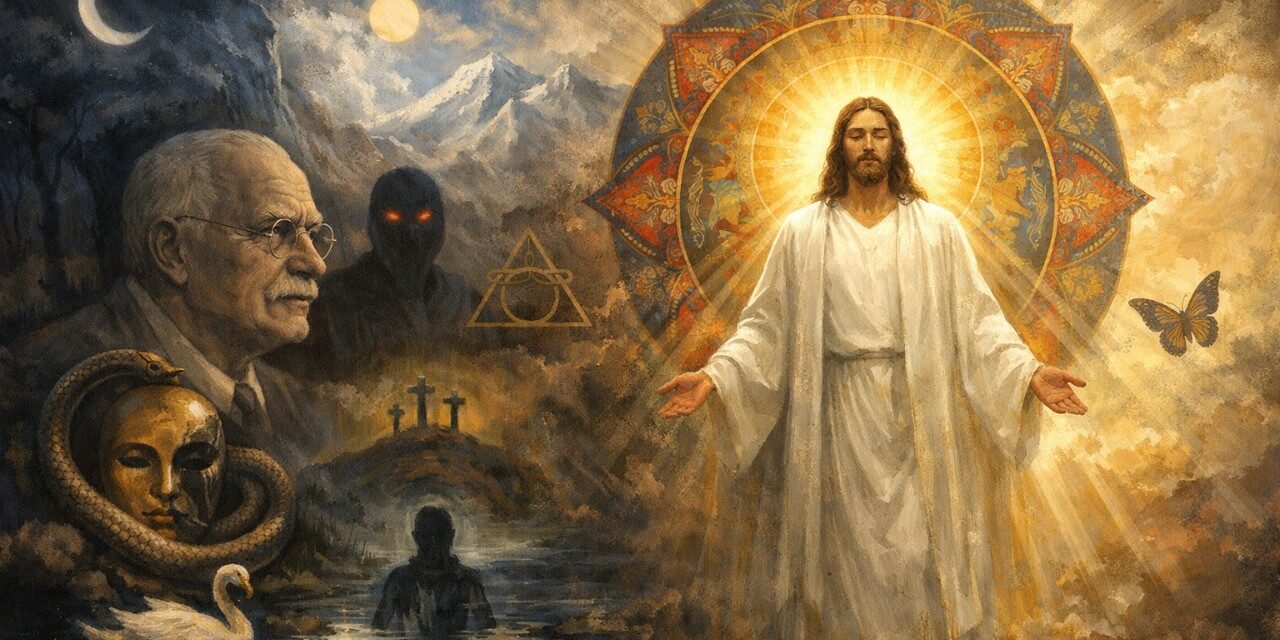
Carl Jung believed the story of Jesus may represent the ultimate psychological transformation, what he called individuation, the process of becoming a complete human being.
In this video, we explore Jung’s controversial idea that the life of Jesus symbolically maps the journey of confronting the Shadow, surrendering the ego, and emerging as the integrated Self. From the wilderness temptation to the crucifixion and resurrection, Jung saw these events not only as religious narratives, but as a profound blueprint for inner transformation. PsycheCodex and Primeval Mythology
Carl Jung’s concept of individuation describes the lifelong psychological journey toward becoming a fully integrated, whole person — what he called the Self. At its core, individuation is the process by which an individual differentiates themselves from the collective psyche, moving beyond the roles, masks, and expectations imposed by family, culture, and society. Rather than conforming to an external ideal, the individuating person gradually comes to embody their own unique psychological truth.
The journey begins with a confrontation with the persona — the social mask we wear to meet the world’s expectations — and the recognition that we are more than this curated surface. From there, the process demands an encounter with the shadow, the unconscious repository of everything we have denied, suppressed, or failed to acknowledge in ourselves. Jung saw integrating the shadow not as eliminating darkness, but as honestly owning it, because what we refuse to see in ourselves tends to be projected outward onto others, causing conflict and distortion in our relationships.
Deeper still, individuation involves a reckoning with the anima (in men) or animus (in women) — the inner contrasexual figure representing unconscious qualities of the opposite psychological type. These figures often appear in dreams and projections, and integrating them brings a richer emotional life and a more complete sense of self. Beyond these lie the archetypal figures of the collective unconscious — the Wise Old Man, the Great Mother, and others — which the psyche encounters as it reaches toward the deeper layers of human experience shared across cultures and history.
Ultimately, individuation is not about perfection or achieving some final, static state. Jung conceived of it as a spiral process, endlessly returning to the same fundamental conflicts at deeper levels of understanding. The goal is wholeness rather than goodness — an honest relationship with all of one’s inner life, light and dark alike. It is, in Jung’s view, the central task of the second half of life, when the questions of meaning, depth, and authentic selfhood begin to press most urgently against the structures we built in our youth.