






















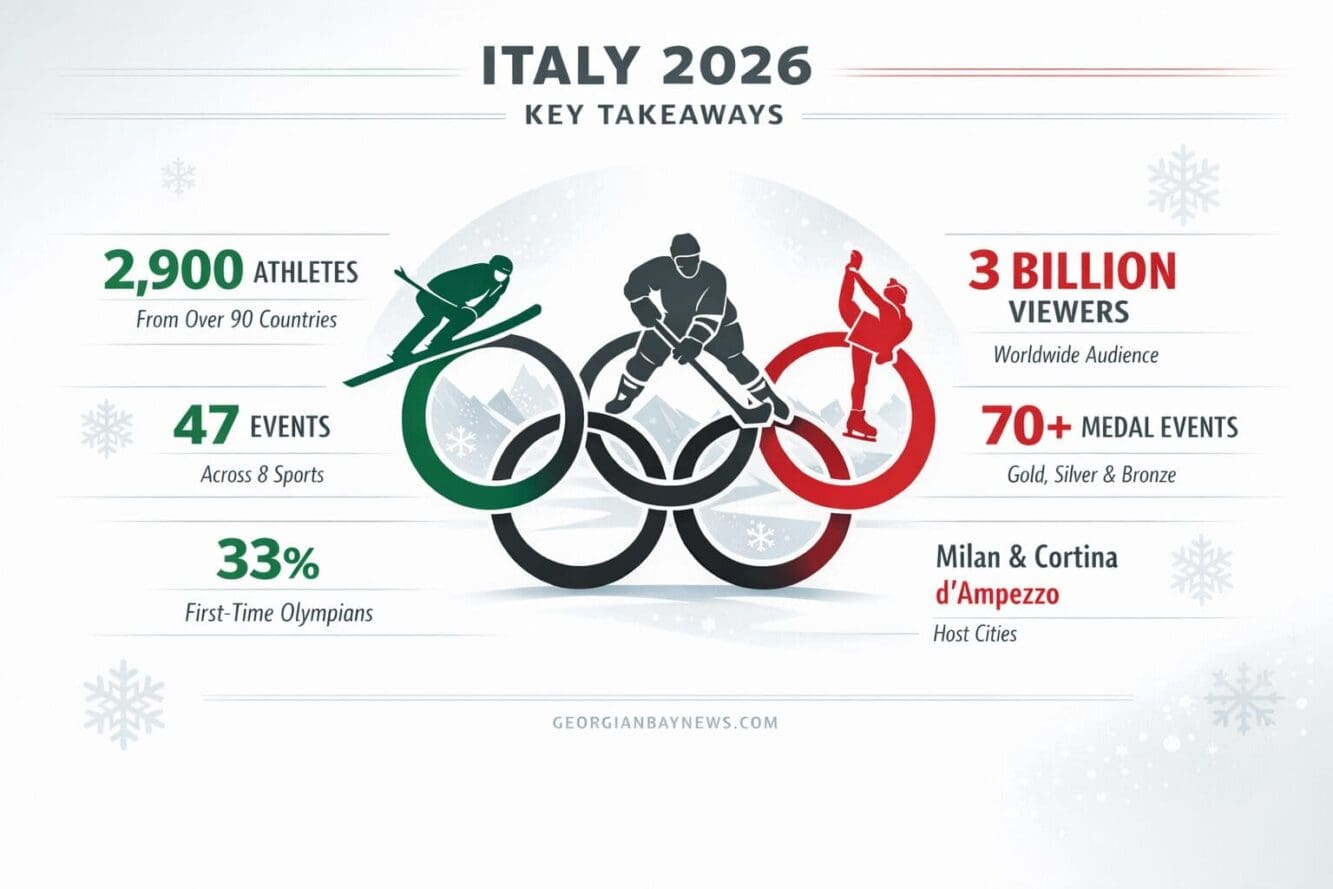
The countdown is on. In just days, the world’s elite winter athletes will descend upon the snow-capped peaks of northern Italy for what promises to be one of the most anticipated Winter Olympic Games in recent history. The Olympics Italy is hosting—officially known as Milano Cortina 2026—represents not just a sporting spectacle, but a moment of global unity as nations gather for the first Winter Games in Europe in two decades.
With construction crews racing against time to complete venues, NHL superstars lacing up their skates for the first time in over a decade, and new sports making their Olympic debut, the Olympics Italy brings to the world stage carries unprecedented excitement and some unexpected challenges.

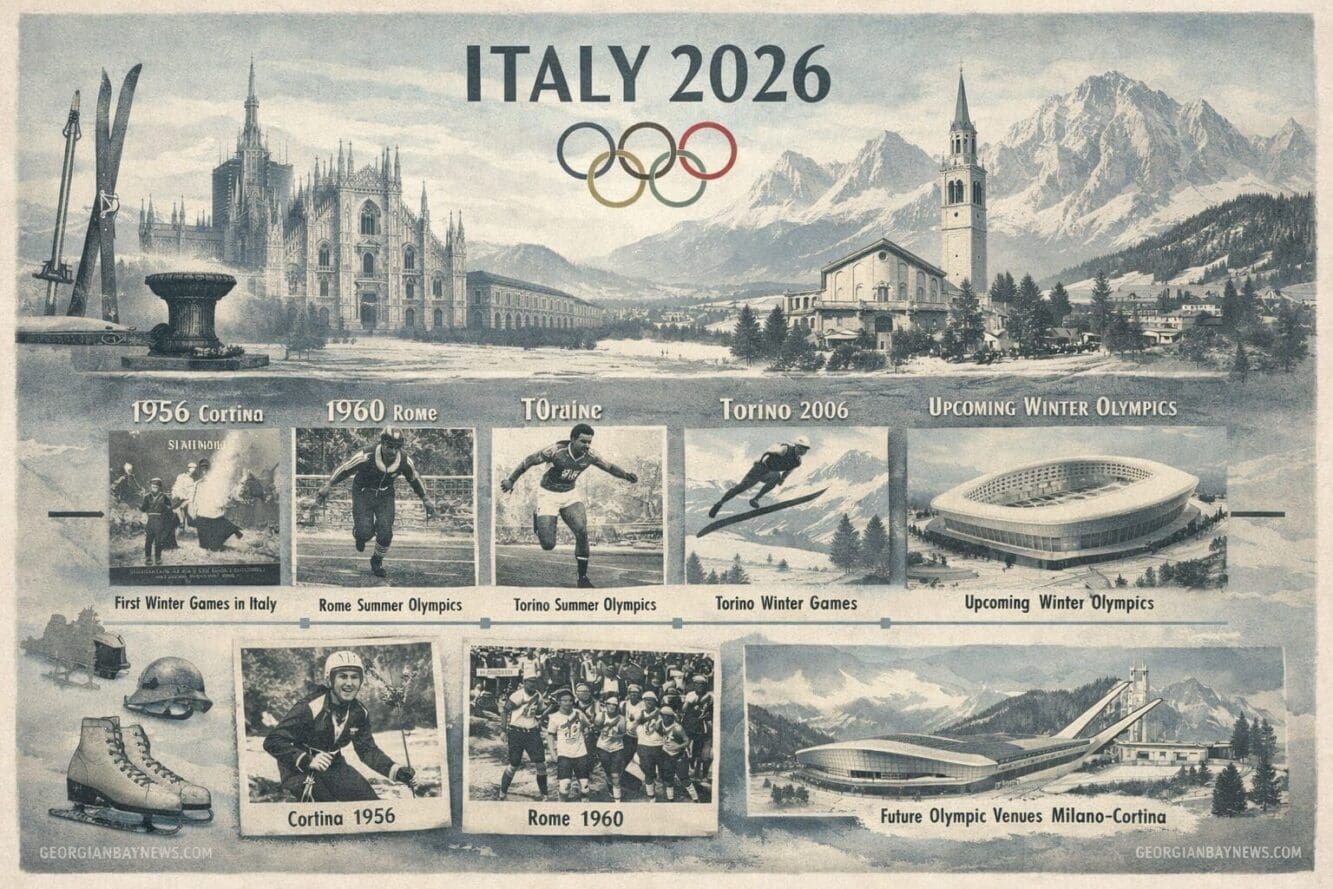
Italy’s relationship with the Winter Olympics runs deep through the snow-covered valleys of its northern regions. This marks the nation’s third time hosting the Winter Games, following memorable events in Cortina d’Ampezzo (1956) and Turin (2006). The decision to award the Olympics Italy to the Milano Cortina bid represents the International Olympic Committee’s confidence in the country’s winter sports infrastructure and cultural heritage.

The 2026 Games hold additional historical significance as the first Winter Olympics under IOC President Kirsty Coventry, who assumed leadership of the Olympic movement in a new era. Her inaugural Winter Games as president comes at a pivotal time for international sports, with geopolitical tensions and evolving athlete participation policies reshaping Olympic competition.[1]
For those interested in exploring Italy’s stunning landscapes, the Olympic host regions showcase some of the country’s most breathtaking alpine scenery.
Unlike traditional single-city Winter Olympics, Milano Cortina 2026 splits hosting duties between two distinct Italian regions. Milan, the fashion and financial capital, brings urban sophistication and modern infrastructure, while Cortina d’Ampezzo offers authentic alpine charm and decades of winter sports expertise. This partnership model aims to maximize existing facilities while minimizing environmental impact—a growing priority for Olympic host cities.
Perhaps no story better illustrates the pressure facing Olympic organizers than the ongoing construction drama surrounding Cortina’s hockey arena. With the opening ceremony just days away, construction crews continue working around the clock to complete the venue that will host one of the Games’ marquee events.
The arena project has faced multiple setbacks:
Local residents have expressed concern about the rushed timeline. Maria Benedetti, a Cortina shopkeeper whose family has lived in the town for generations, shared her perspective: “We’ve been preparing for this moment for years, but watching them work day and night on that arena makes everyone nervous. We want it done right, not just done fast.”
Olympic officials have assured the public that backup plans exist should the arena not reach completion. Alternative venues in nearby regions could accommodate hockey matches, though such a move would disappoint fans and athletes expecting to compete in the historic Cortina setting. The situation remains fluid as construction continues.[1]

After a 12-year absence, the world’s best professional hockey players are returning to Olympic competition. The Olympics Italy will showcase NHL talent for the first time since the 2014 Sochi Games, when the league and players’ association agreed to pause Olympic participation due to scheduling conflicts and insurance concerns.[1]
This policy reversal represents a major victory for hockey fans worldwide and significantly elevates the competition level. Stars like Connor McDavid, Auston Matthews, and Nathan MacKinnon will don their national colors, transforming Olympic hockey from a showcase of amateur and European league talent into a true world championship.
The return of NHL players dramatically reshapes medal predictions:
| Country | Previous Advantage | 2026 Outlook |
|---|---|---|
| 🇨🇦 Canada | Strong amateur program | Heavy favorite with NHL stars |
| 🇺🇸 United States | Competitive college system | Major contender with deep NHL roster |
| 🇷🇺 Russia (Neutral) | KHL professionals | Weakened by travel restrictions |
| 🇸🇪 Sweden | Elite development system | Strengthened significantly |
| 🇫🇮 Finland | Consistent performer | Enhanced medal prospects |
Innovation meets tradition at Milano Cortina 2026, with ski mountaineering making its Olympic debut among the 16 sports featured. This addition reflects the IOC’s effort to include disciplines that resonate with younger audiences while honoring alpine heritage.[1]
Ski mountaineering combines endurance racing with technical climbing skills. Athletes ascend mountains using specialized climbing skins on their skis, then descend at high speed. The sport demands exceptional cardiovascular fitness, technical skiing ability, and mountain navigation skills—making it one of the most physically demanding Olympic events.
The sport’s inclusion brings total medal events to 116 across all disciplines, offering athletes from diverse backgrounds new opportunities for Olympic glory.
The Milano Cortina program includes:
The first medals of Milano Cortina 2026 will be awarded on February 7 across five different sports, creating an action-packed opening weekend for fans.[1] This early medal distribution ensures multiple nations celebrate podium success during the Games’ crucial first days.
For Canadians following the Games, these early events offer prime viewing opportunities. Those interested in community recreation and sports can draw inspiration from Olympic athletes’ dedication.
The Olympics Italy welcomes the most geographically diverse Winter Games field in history, with three nations competing in Winter Olympics for the first time: Benin, Guinea-Bissau, and the United Arab Emirates.[1] These debuts demonstrate the IOC’s success in expanding winter sports beyond traditional cold-weather nations.
Continuing a policy established after Russia’s invasion of Ukraine, Russian and Belarusian athletes compete as Individual Neutral Athletes without national flags, anthems, or official team designations.[1] This compromise allows individual athletes to compete while maintaining political pressure on their governments.
The decision remains controversial, with some advocating for complete bans while others argue athletes shouldn’t face punishment for government actions beyond their control.
In an unprecedented move, U.S. Immigration and Customs Enforcement (ICE) agents are joining the American delegation to provide security for high-ranking officials including Vice President JD Vance and Secretary of State Marco Rubio. According to official statements, these agents will “vet and mitigate risks from transnational criminal organizations” but will not conduct enforcement operations on Italian soil.[2]
This security enhancement reflects heightened concerns about international events in an increasingly complex geopolitical landscape.
Historical performance suggests Norway and Germany will lead the medal count, as both nations have dominated recent Winter Olympics.[1] Norway’s exceptional cross-country skiing program and Germany’s strength in sliding sports (bobsled, luge, skeleton) provide consistent medal opportunities across multiple events.
The United States finished third in total medals at the 2022 Beijing Games, tied for third in gold medals with China, demonstrating relatively weaker positioning in winter sports compared to Summer Olympics dominance.[1] The return of NHL players could significantly improve American medal prospects, particularly in hockey.
The Milano Cortina Games showcase cutting-edge sports technology, from aerodynamic ski suits designed using computational fluid dynamics to AI-powered training systems that analyze athlete biomechanics. Emerging technologies continue transforming athletic performance.
Canadian athletes enter these Games with strong medal prospects across multiple sports. The hockey tournament, with NHL stars representing Canada, could deliver the nation’s most anticipated Olympic moment. Morning and afternoon events align well with North American viewing times.
Olympic broadcasts offer multiple viewing options, including streaming services with customizable features like closed captioning and audio descriptions. The Games provide inspiration for staying active through winter months, regardless of age.
U.S. viewers can expect extensive NBC coverage across multiple platforms. With strong American teams in snowboarding, skiing, and figure skating, plus the return of NHL stars to hockey, the Games offer compelling storylines throughout the competition.
The Olympics provide diplomatic opportunities for international dialogue. The gathering of global leaders in Italy creates informal channels for discussion on pressing international issues, continuing the Olympic tradition of sport as a bridge between nations.
Beyond athletic competition, the Olympics Italy offers visitors an immersive cultural experience. The host regions blend world-class winter sports facilities with Italian culinary excellence, architectural heritage, and warm hospitality.
Visitors exploring the Olympic regions can discover hidden gems throughout Italian landscapes, from alpine villages to lakeside communities. The Games provide economic benefits extending far beyond the competition period, with tourism infrastructure improvements serving communities for decades.
Olympic organizers project the Games will generate:
Milano Cortina 2026 emphasizes environmental responsibility, with organizers committing to carbon-neutral Games through renewable energy, public transportation, and offset programs. The decision to use existing facilities wherever possible reduces construction impact.
Key sustainability initiatives include:
The official Olympics website and mobile app provide real-time results, athlete profiles, and streaming options for viewers worldwide. Social media channels offer highlights, behind-the-scenes content, and athlete interactions.
Italian venues operate on Central European Time (CET), which translates to:
Morning events in Italy provide prime-time viewing for North American audiences, while evening ceremonies occur during afternoon hours in the Americas.
As construction crews put finishing touches on venues and athletes complete final training sessions, the Olympics Italy stands poised to deliver an unforgettable celebration of winter sports excellence. From the dramatic return of NHL players to the debut of ski mountaineering, from historic national debuts to the ongoing drama of unfinished venues, Milano Cortina 2026 offers compelling storylines that transcend sport.
The Games represent more than athletic competition—they embody international cooperation, cultural exchange, and the pursuit of excellence that defines the Olympic spirit. Despite challenges including construction delays and geopolitical tensions, the fundamental Olympic values of respect, friendship, and excellence remain at the heart of this global gathering.
Whether you’re a dedicated winter sports enthusiast, a casual viewer drawn to Olympic drama, or someone seeking inspiration from world-class athletes, Milano Cortina 2026 offers something remarkable. As the Olympic flame ignites in the Italian Alps, the world watches, united in appreciation for human achievement at its finest.
The unfinished hockey arena serves as a metaphor for the Olympics themselves—ambitious, challenging, and ultimately rewarding when completed through determination and collective effort. Just as construction crews race to finish their work, athletes have trained for years to reach this moment. Both groups share a common goal: delivering excellence on the world’s biggest stage.
As we prepare to witness history in the making, the Olympics Italy reminds us that sport possesses unique power to inspire, unite, and elevate the human spirit beyond everyday concerns. Let the Games begin.
[1] 2026 Milan Cortina Olympics Everything Know About Years Winter Games – https://www.foxnews.com/sports/2026-milan-cortina-olympics-everything-know-about-years-winter-games
[2] Watch – https://www.youtube.com/watch?v=w3pT6OyOngQ
GEORGIANBAYNEWS.COM shares video content from YouTube creators under fair use principles. We respect creators’ intellectual property and include direct links to their original videos, channels, and social media platforms whenever we feature their content. This practice supports creators by driving traffic to their platforms.
Some content and illustrations on GEORGIANBAYNEWS.COM are created with the assistance of AI tools.