




















Youth Phenom Tama Shimabukuro’s 2026 Breakout: Draft Hype, Cape Coral Results, and MLP Trajectory
Last updated: February 28, 2026
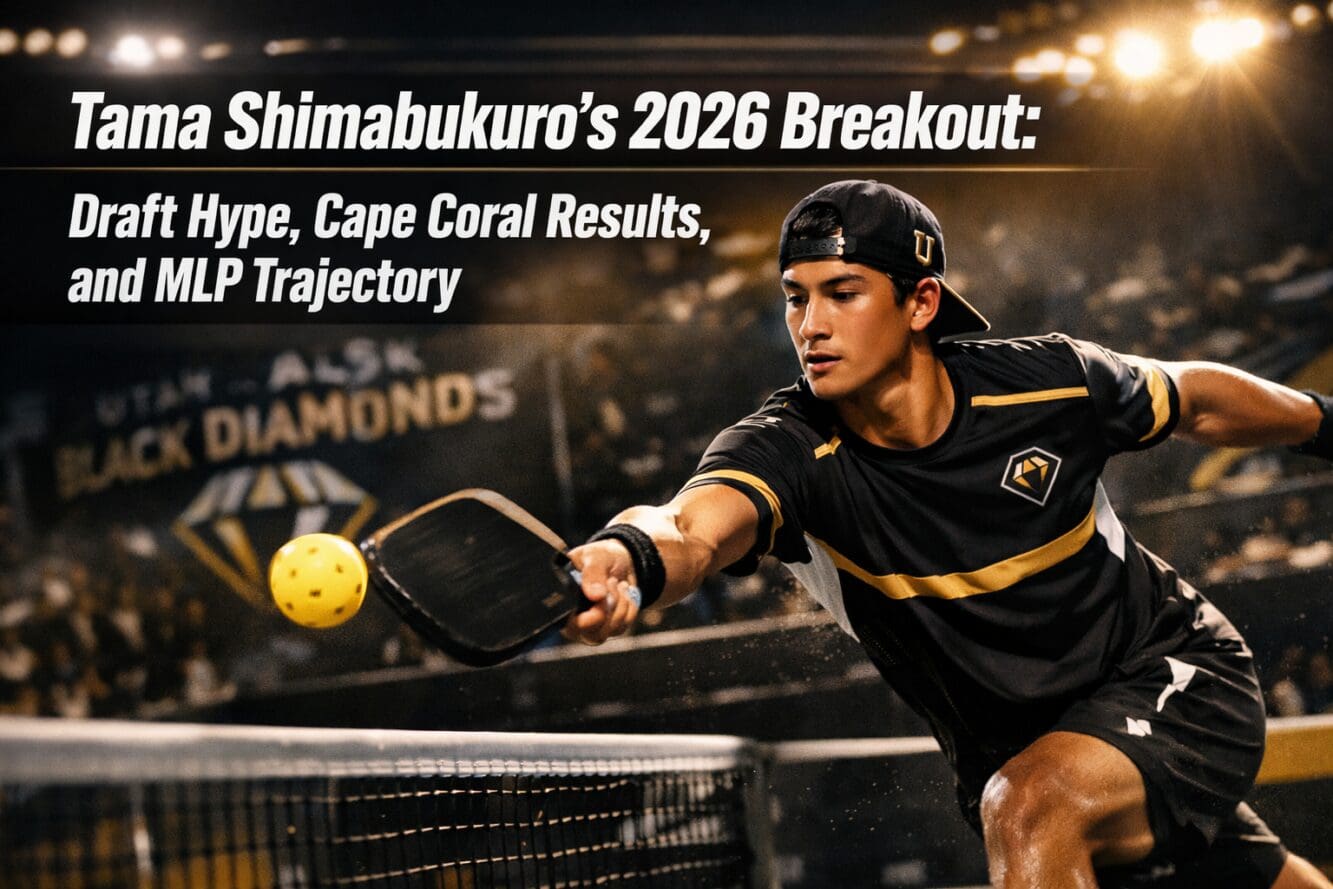
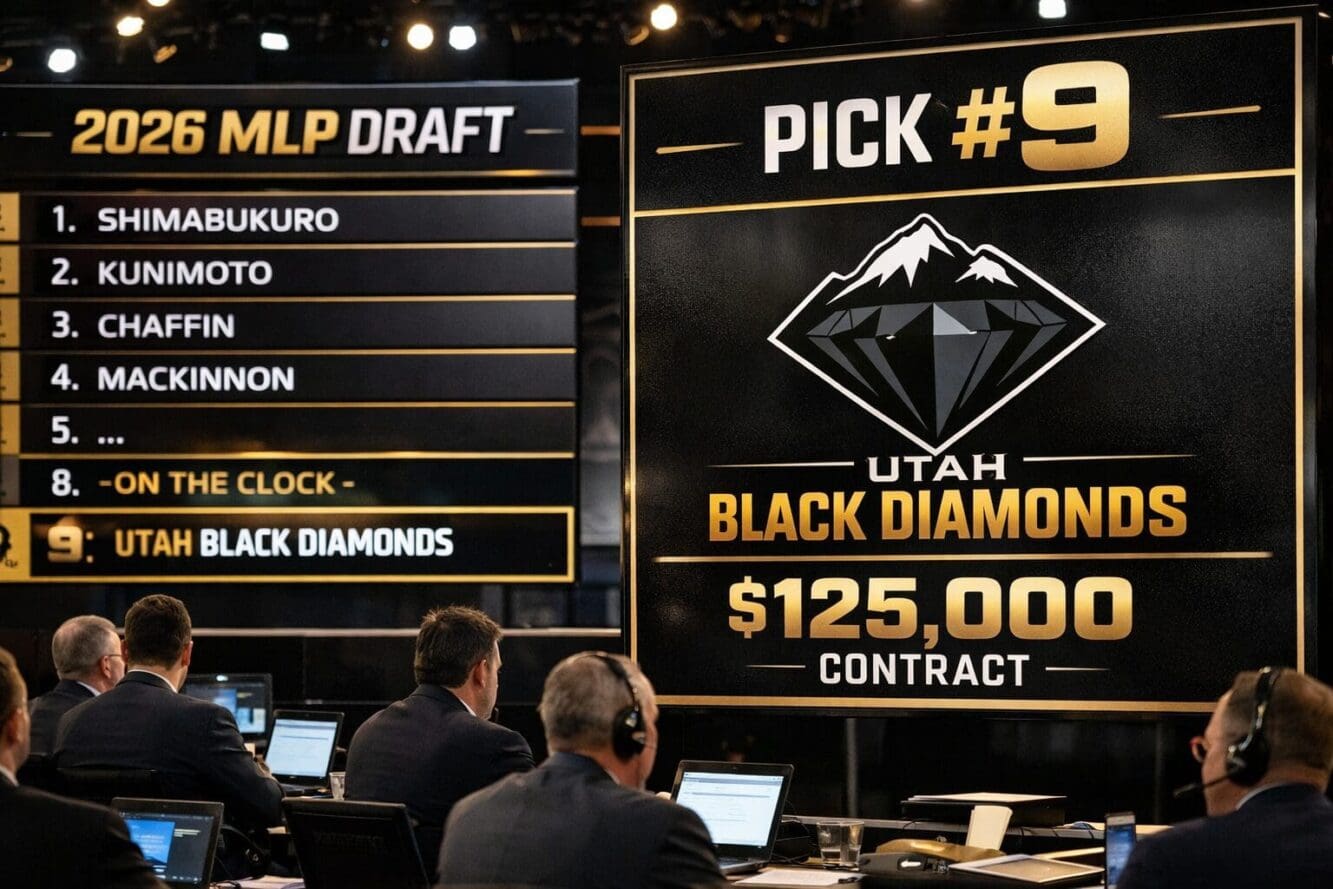
At just 15 years old, Tama Shimabukuro became one of the highest-drafted teenagers in Major League Pickleball history when the Utah Black Diamonds selected him 9th overall for $125,000 in February 2026. Youth Phenom Tama Shimabukuro’s 2026 Breakout: Draft Hype, Cape Coral Results, and MLP Trajectory represents a seismic shift in professional pickleball, where teenage talent now commands Premier Level contracts and elite roster spots. His quarterfinal run at Cape Coral—including upset victories over established pros—proved that youth isn’t just the future of pickleball; it’s the present.
Key Takeaways
- Tama Shimabukuro was drafted 9th overall by Utah Black Diamonds for $125,000 in the 2026 MLP Auction Draft[2][3][4]
- He was the highest-drafted teenager in the 2026 class, ahead of other youth prospects like Kiora Kunimoto (#15) and Cam Chaffin (#16)[2]
- Cape Coral quarterfinal run featured upset wins over professional players, validating his draft position
- League expansion created opportunity: 20 Premier Level teams (up from previous structure) increased roster demand for young talent[1]
- Four teenagers drafted in top 20, signaling a major youth investment trend across MLP[2]
- Pre-draft predictions were accurate: Shimabukuro was identified as likely to be “drafted high” among teenage prospects[1]
- Contract value reflects confidence: His $125,000 deal ranks among the top rookie contracts in 2026
Quick Answer
Tama Shimabukuro’s 2026 breakout combines exceptional tournament results with historic draft positioning. The 15-year-old secured the 9th overall pick and a $125,000 contract with Utah Black Diamonds after proving himself against professional competition at Cape Coral. His quarterfinal performance—featuring wins over established pros—validated pre-draft hype and positioned him as a Premier Level disruptor ready to challenge veteran players throughout the 2026 season.
Who Is Tama Shimabukuro and Why Does His 2026 Draft Matter?
Tama Shimabukuro is a 15-year-old pickleball prodigy who became the highest-drafted teenager in the 2026 MLP Auction Draft, selected 9th overall by the Utah Black Diamonds for $125,000[2][3][4]. His selection marks a turning point in professional pickleball’s approach to youth talent.
The draft matters because it signals a fundamental shift in team strategy. Pre-draft analysis warned team owners that they would need to “pick them sooner and for more money than you thought” when targeting young prospects[1]. Shimabukuro’s top-10 selection proved that prediction correct.
Key factors driving his draft stock:
- Proven tournament results against professional-level competition
- League expansion to 20 Premier Level teams created more roster spots[1]
- Youth movement momentum with four teenagers selected in the top 20 picks[2]
- Team willingness to invest six-figure contracts in unproven but high-ceiling talent
Choose Shimabukuro as a case study if you’re analyzing how professional sports leagues integrate teenage talent or how draft strategies evolve with league expansion.
What Happened at Cape Coral That Elevated Shimabukuro’s Draft Stock?
Shimabukuro’s quarterfinal run at Cape Coral featured multiple upset victories over established professional players, including notable wins against seasoned competitors. These results demonstrated that his skills translate against elite competition, not just age-group peers.
The Cape Coral performance validated what scouts already suspected: Shimabukuro possesses Premier Level skills despite his age. His ability to compete deep into professional brackets removed the biggest risk factor teams face when drafting teenagers—the uncertainty of whether junior success translates to pro performance.
What made the Cape Coral run significant:
- Quarterfinal finish in a field of professional players
- Strategic shot selection that exploited veteran opponents’ weaknesses
- Mental composure under pressure against more experienced players
- Physical stamina to maintain performance through multiple matches
Common mistake: Assuming one tournament run guarantees future success. While Cape Coral proved Shimabukuro’s current capabilities, sustained Premier Level performance requires consistency across an entire season.
How Did the 2026 MLP Draft Unfold for Youth Prospects?
The 2026 MLP Auction Draft concluded on February 26 with four teenagers selected in the top 20 picks, led by Shimabukuro at #9[2]. This represented the strongest youth class in league history.
Complete teenage draft results:
| Player | Pick # | Team | Contract Value |
|---|---|---|---|
| Tama Shimabukuro | 9 | Utah Black Diamonds | $125,000 |
| Kiora Kunimoto | 15 | TBD | $45,000 |
| Cam Chaffin | 16 | TBD | $35,000 |
| Will MacKinnon | 17 | TBD | $40,000 |
Shimabukuro and Kunimoto were specifically identified as the teenagers “most likely to headline the youth trend” before the draft[1]. The actual results confirmed this prediction, with both players selected in the top half of the first round.
Draft dynamics that favored youth:
- 20-team Premier Level structure increased total roster spots[1]
- Competitive bidding drove prices higher than expected
- Risk tolerance among GMs willing to invest in potential over proven production
- Salary cap strategy where younger players offer cost-controlled upside
Edge case: Teams drafting in the back half of the first round faced a dilemma—pay premium prices for remaining youth prospects or pivot to veteran stability.
What Does Shimabukuro’s $125,000 Contract Tell Us About MLP’s Youth Valuation?
The $125,000 contract represents a massive financial commitment to an unproven 15-year-old, signaling that MLP teams now value high-ceiling youth prospects at near-veteran levels. This contract was nearly three times larger than the next teenager drafted (Kunimoto at $45,000)[2].
This valuation gap reveals two things: Utah Black Diamonds had exceptional conviction in Shimabukuro’s abilities, and other teams may have undervalued youth talent by comparison. The contract also creates performance pressure—Shimabukuro must justify the investment with immediate results.
Contract context and implications:
- Top-10 pick premium: Early selections command higher guaranteed money
- Market-setting precedent: Future teenage prospects will reference this deal
- Roster flexibility: Youth contracts typically include team-friendly options
- Performance benchmarks: Likely includes incentives tied to wins and statistics
Choose a high-value youth contract if you’re building for 3-5 years; choose veteran stability if you need immediate championship contention.
How Does Utah Black Diamonds Plan to Use Shimabukuro in 2026?
Utah Black Diamonds likely plans to integrate Shimabukuro gradually while leveraging his aggressive playing style to disrupt opponent game plans. Premier Level teams rarely draft teenagers 9th overall to keep them on the bench.
The team’s strategy probably includes:
Immediate integration tactics:
- Mixed doubles pairing with veteran partner to provide stability
- Strategic match deployment in favorable matchups early in season
- Practice squad development with intensive coaching between events
- Pressure-free expectations publicly while demanding excellence privately
Development timeline:
- Months 1-2: Limited minutes, learning team systems
- Months 3-4: Increased playing time as comfort grows
- Months 5-6: Regular rotation player if performance warrants
Common mistake: Expecting immediate superstar production. Even elite teenagers need adjustment time to Premier Level speed and strategy.
What Challenges Will Shimabukuro Face as a 15-Year-Old in Premier Level Competition?
Shimabukuro faces physical, mental, and logistical challenges that veteran players don’t encounter. The physical demands of Premier Level play—longer matches, compressed schedules, elite athleticism—test even experienced professionals.
Primary obstacles ahead:
- Physical development: Still growing, strength and endurance lag behind adults
- Mental pressure: Six-figure contract creates performance expectations
- Educational balance: Managing school requirements with professional travel
- Veteran targeting: Opponents will test the teenager early and often
- Consistency demands: Weekend tournament success must become weekly reality
Competitive disadvantages vs. veterans:
- Less experience reading opponent tendencies
- Smaller margin for error due to developing power game
- Fewer years of high-pressure match experience
- Potential stamina issues in best-of-five formats
Edge case: If Shimabukuro struggles early, Utah must decide whether to reduce playing time (risking confidence damage) or maintain minutes (risking team performance).
How Does Shimabukuro’s Trajectory Compare to Other Youth Phenoms in Racquet Sports?
Shimabukuro’s path mirrors successful youth integration in tennis and table tennis, where teenage prodigies occasionally break through to elite professional levels. However, pickleball’s shorter professional history means fewer precedents exist.
Successful youth integration patterns:
- Gradual exposure: Top organizations limit early minutes to prevent burnout
- Veteran mentorship: Pairing with experienced players accelerates development
- Protected expectations: Public patience while demanding private excellence
- Skill specialization: Focusing on 2-3 elite skills rather than complete games
Tennis provides the clearest comparison—players like Carlos Alcaraz and Coco Gauff showed similar early professional success by combining physical talent with exceptional mental maturity. Shimabukuro’s Cape Coral composure suggests similar psychological readiness.
Choose the gradual integration model if prioritizing long-term career sustainability; choose aggressive deployment if the championship window is narrow.
What Does Youth Phenom Tama Shimabukuro’s 2026 Breakout Mean for Future MLP Drafts?
Shimabukuro’s success will likely accelerate the youth movement in future MLP drafts, with teams targeting teenagers earlier and paying premium prices for elite prospects. The 2026 draft proved that teenage talent can command top-10 selections and six-figure contracts[2][3][4].
Expected future draft trends:
- Earlier teenage selections: Teams won’t wait until mid-first round
- Higher contract values: $125,000 becomes the floor, not ceiling
- Expanded scouting: Teams invest more resources in youth evaluation
- Development infrastructure: Organizations build academy-style training programs
Pre-draft analysis correctly predicted that teams would need to draft youth “sooner and for more money than you thought”[1]. The 2027 draft will likely see this trend intensify, with potentially 6-8 teenagers selected in the first round.
Risk factors that could slow the trend:
- If Shimabukuro or other 2026 teenagers struggle significantly
- If veteran free agents prove more cost-effective
- If league contracts or adds Challenger Level, creating development pathway
FAQ
How old is Tama Shimabukuro?
Tama Shimabukuro is 15 years old, making him one of the youngest players ever drafted into Major League Pickleball’s Premier Level.
What pick was Tama Shimabukuro in the 2026 MLP Draft?
Shimabukuro was selected 9th overall by the Utah Black Diamonds in the 2026 MLP Auction Draft[2][3][4].
How much is Tama Shimabukuro’s MLP contract worth?
His contract with Utah Black Diamonds is valued at $125,000, the highest among all teenage draftees in 2026[2][3][4].
What team drafted Tama Shimabukuro?
The Utah Black Diamonds selected Shimabukuro with the 9th overall pick in February 2026[2][3][4].
What were Shimabukuro’s best results before the MLP draft?
His quarterfinal run at Cape Coral, including upset victories over professional players, was his signature pre-draft performance that validated his top-10 selection.
How many teenagers were drafted in the 2026 MLP first round?
Four teenagers were selected in the top 20 picks: Tama Shimabukuro (#9), Kiora Kunimoto (#15), Cam Chaffin (#16), and Will MacKinnon (#17)[2].
Why did Utah draft a 15-year-old so high?
Utah’s selection reflected Shimabukuro’s proven ability to compete against professionals at Cape Coral, combined with his high ceiling and the league’s expansion creating more roster opportunities[1].
When does Tama Shimabukuro’s MLP season start?
The 2026 MLP season schedule follows the league’s standard calendar, with Premier Level events beginning in spring 2026.
Can Shimabukuro balance school and professional pickleball?
Like other teenage professional athletes, Shimabukuro will need to coordinate educational requirements with travel and competition schedules, though specific arrangements haven’t been publicly disclosed.
What playing style does Tama Shimabukuro use?
Based on his Cape Coral performance, Shimabukuro employs an aggressive baseline style with strategic shot placement that exploits opponent positioning.
Who were the other top picks in the 2026 MLP Draft?
While Shimabukuro went 9th, the complete draft order included multiple established professionals selected ahead of him, with four teenagers total in the top 20[2].
How does the MLP draft work?
The MLP Auction Draft allows teams to bid on players, with contract values determined by competitive bidding among the 20 Premier Level teams[1].
Conclusion
Youth Phenom Tama Shimabukuro’s 2026 Breakout: Draft Hype, Cape Coral Results, and MLP Trajectory represents more than one teenager’s success story—it signals a fundamental transformation in how professional pickleball values and integrates young talent. His 9th overall selection and $125,000 contract prove that elite teenagers can command veteran-level investment when backed by proven performance against professional competition.
The Cape Coral quarterfinal run removed the primary risk factor teams face with youth prospects: uncertainty about translating junior success to professional results. Shimabukuro’s composure and strategic execution against established pros demonstrated Premier Level readiness at just 15 years old.
Next steps for following Shimabukuro’s 2026 season:
- Track Utah Black Diamonds’ lineup decisions to see how they deploy their investment
- Monitor early-season performance metrics against veteran competition
- Watch for adjustment patterns as opponents develop scouting reports
- Compare results to other 2026 teenage draftees to gauge relative development
- Follow contract extension discussions if performance exceeds expectations
The 2026 MLP season will answer whether Shimabukuro’s breakout was a preview of sustained excellence or a developmental stepping stone. Either way, his draft position and Cape Coral results have already reshaped how teams evaluate and value teenage talent in professional pickleball.
References
[1] Five Things To Expect From The 2026 Mlp Auction Draft – https://pickleball.com/news/five-things-to-expect-from-the-2026-mlp-auction-draft
[2] Pros React To The Major League Pickleball 2026 Draft Results – https://www.thedinkpickleball.com/pros-react-to-the-major-league-pickleball-2026-draft-results/
[3] 2026 Major League Pickleball Draft Live Updates – https://thekitchenpickle.com/blogs/news/2026-major-league-pickleball-draft-live-updates
[4] 2026 Mlp Draft Presented By Skechers Coverage Live Results – https://majorleaguepickleball.co/news/2026-mlp-draft-presented-by-skechers-coverage-live-results/
Content, illustrations, and third-party video appearing on GEORGIANBAYNEWS.COM may be generated or curated with AI assistance or reproduced pursuant to the fair dealing provisions of the Copyright Act, R.S.C. 1985, c. C-42. Attribution and hyperlinks to original sources are provided in acknowledgment of applicable intellectual property rights. Such referencing is intended to direct traffic to and support the original rights holders’ platforms.