

















🎯 There is a RESTLESSNESS that arrives when the life you were living loses its shape | Russell Taylor
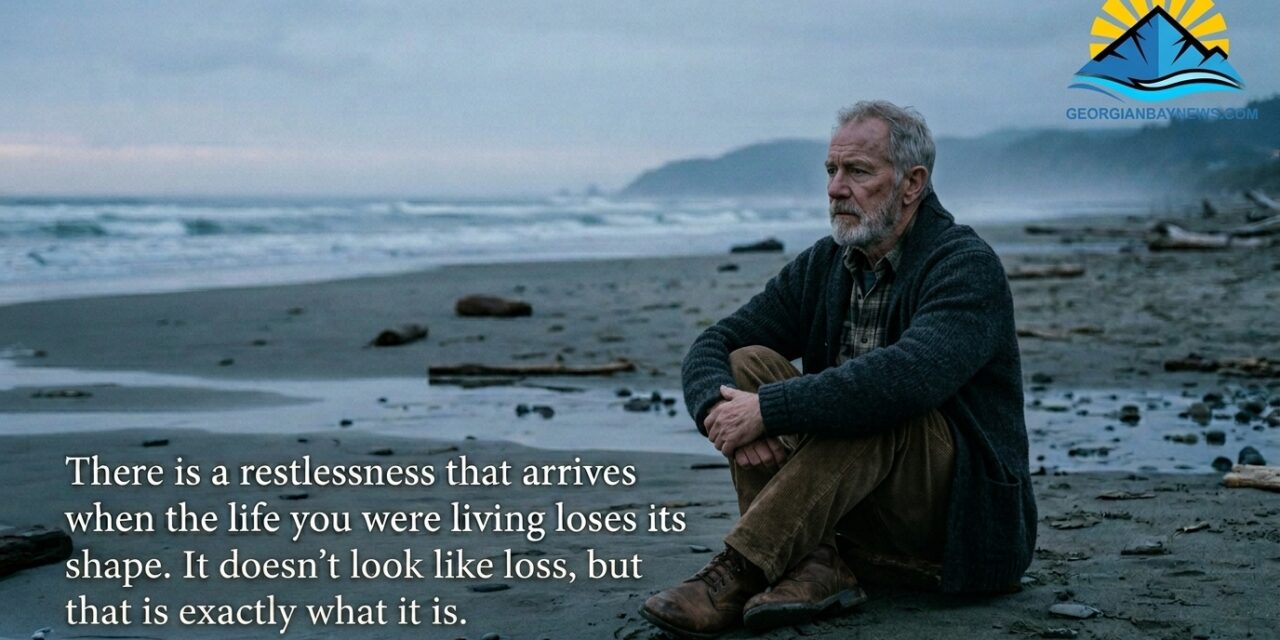
There is a restlessness that arrives when the life you were living loses its shape. It doesn’t look like loss, but that is exactly what it is…
You aren’t bored, you aren’t ungrateful, and you aren’t struggling in any way that has a simple explanation. But there is something underneath that just won’t quite settle.
Your sleep is different and the mornings feel longer than they used to. You pick things up and put them down, you sit and then you move, and then you sit again. And none of it quite lands the way it used to.
Most people start to believe that something is just not working the way they want, that they should be further along. And that everyone else managed this part much better than you are.
Here’s what I know. They haven’t gone wrong, and neither have you.
What has happened is this. The life you were living, the working week, the role, the relationship, the busy house, whatever shape it took for you, was doing something the body depended on, quietly and invisibly, for years.
It wasn’t just giving you somewhere to be. It was providing a rhythm. And rhythm, as it turns out, is not a luxury. It is infrastructure.
Think about what that rhythm was actually providing underneath the obvious things.
People who knew your name and expected you to show up, that sense of belonging and being missed when you weren’t there. Work that felt worthy of your time, that gave the day a reason beyond getting through it.
The energy that came from being needed, from movement and contact and contribution. A shape to the week the body could anticipate, Monday feeling genuinely different from Friday, the weekend earned rather than just arrived at.
The quiet trust of familiar faces and a familiar version of yourself that knew how to operate in that world.
When the rhythm goes, all of those things go with it. Not one loss, all of them, at once. And the body, which had been quietly relying on every single one, registers their absence as something significant. Not grief exactly, and not illness. Something more like the nervous system searching for a signal it can no longer find.
What makes this harder is that belief goes with it too. The sense that what you were doing was genuinely worthy of your time and energy. That it mattered, that the years spent in it meant something. When the role ends, that belief has nowhere to land. And without it, even the days that go well can feel strangely hollow.
The research on how the body processes major life change is unambiguous, and it matters that you hear this.
The physical adjustment, the restlessness, the disrupted sleep, the tiredness that won’t lift, runs far longer than anyone tells you. Months, not weeks, often well into a second year, and for some, much longer still.
The research says suggests that only 11% of people approaching significant life transitions are emotionally prepared for what follows. The rest of us are navigating something real, without a map, while quietly concluding that everyone else is managing better. They aren’t. The body sets its own timeline for this work, and it’s almost always right.
I have known this from the inside. When I left the Royal Navy, an institution that had structured every hour of my adult life, I didn’t just lose a job. I lost the rhythm that had been holding everything together. I remember the specific strangeness and disorientation of days that had no shape, no signal, and no one expecting me anywhere.
The body kept preparing for something that was no longer coming. And I discovered only after it was gone, how completely it had been relying on all of it to function.
What I’ve learned, through that experience and through years of working with people navigating similar territory, is that the first work, the unglamorous, patient, genuinely useful work, is to rebuild a rhythm. A gentler one, a slower one. One that belongs to you, rather than to a role or a structure that could remove it without asking.
What that looks like in practice is simpler than most people expect.
It starts with one regular point of human connection each week that the body can anticipate. Not a full diary, one person, one conversation, at roughly the same time, because the nervous system is social. It settles in the company of other nervous systems, and isolation during transition takes away one of the most important things available to help.
This also includes something small each day that matters to someone other than yourself. A phone call made, a meal shared, a message sent to someone who needed to hear from you.
The sense that what you do has meaning for another person is one of the things the rhythm was providing. It can be rebuilt in very small ways, and the body responds to even the smallest version of it.
And it needs a gentle shape to the week. Not a schedule, more of a cadence. The same small things at roughly the same times. A Tuesday walk, a Friday phone call, a Sunday morning that has a particular quality. The body doesn’t need a full diary. It needs enough predictability to stop searching for a signal that isn’t there.
When someone begins to find their rhythm again, even a small, imperfect, self-chosen version of it, the people around them feel it too. The energy shifts and that ripple outwards is real and it’s felt.
In the work I do with people navigating this, the first conversation is always about their journey, understanding what they have been carrying, where the patterns began, and what has kept them in place. From there, an element of rhythm tends to be at the heart of what we work on together.
Not because it solves everything. Because it gives the body something to hold onto while the deeper questions find their answers, and discoveries emerge.
The rhythm you lost doesn’t have to be the rhythm you rebuild. It gets to be yours now, gentler, slower, chosen rather than inherited.
The body needs it. And beginning to build it, even one small thing at a time, is some of the most important work a person in transition can do.
Be gentle with yourself. The restlessness is real, and so is the way through it.