




















🇨🇦 Canadian Athletes’ Greatest Comeback Stories: From Career-Ending Injury Scares to National Team Glory


Last updated: June 8, 2026
Quick Answer: Canadian Athletes’ Greatest Comeback Stories: From Career-Ending Injury Scares to National Team Glory span decades and sports, from Silken Laumann winning Olympic bronze just 10 weeks after a catastrophic leg injury to Mark Ideson competing in his fourth Paralympics after quadriplegia. These stories share a common thread: structured rehabilitation, strong mental resilience, and national team support systems that give athletes a realistic path back to competition.
Key Takeaways
- Silken Laumann underwent five surgeries in 10 weeks and still won Olympic bronze at the 1992 Barcelona Games, one of the most celebrated comebacks in Canadian sports history.
- Mark Ideson became quadriplegic after a 2007 helicopter crash and went on to represent Canada in wheelchair curling at four Paralympic Games, earning bronze medals in 2018 and 2022.
- Moïse Bombito fractured his tibia in October 2025 and targeted a return to Canada’s national soccer team by March 2026, with the FIFA World Cup as the long-term goal.
- Sidney Crosby’s injury during the 2026 Winter Olympics galvanized Team Canada, with teammates vowing the setback would not end his Olympic story.
- Recovery timelines vary widely: ACL tears typically require 9 to 12 months, while fractures and soft-tissue injuries can range from 4 to 18 months depending on severity and sport.
- Mental resilience strategies, including visualization, goal-setting, and psychological counselling, are now standard parts of elite Canadian sports rehabilitation programs.
- Canadian national sport organizations and provincial sport medicine clinics provide structured injury support, though costs for private rehab can reach tens of thousands of dollars annually.
- Research suggests roughly 65 to 82 percent of athletes return to sport after major injuries, but return-to-elite-competition rates are lower and depend heavily on sport type and injury severity.

What Are the Most Famous Canadian Athlete Comeback Stories
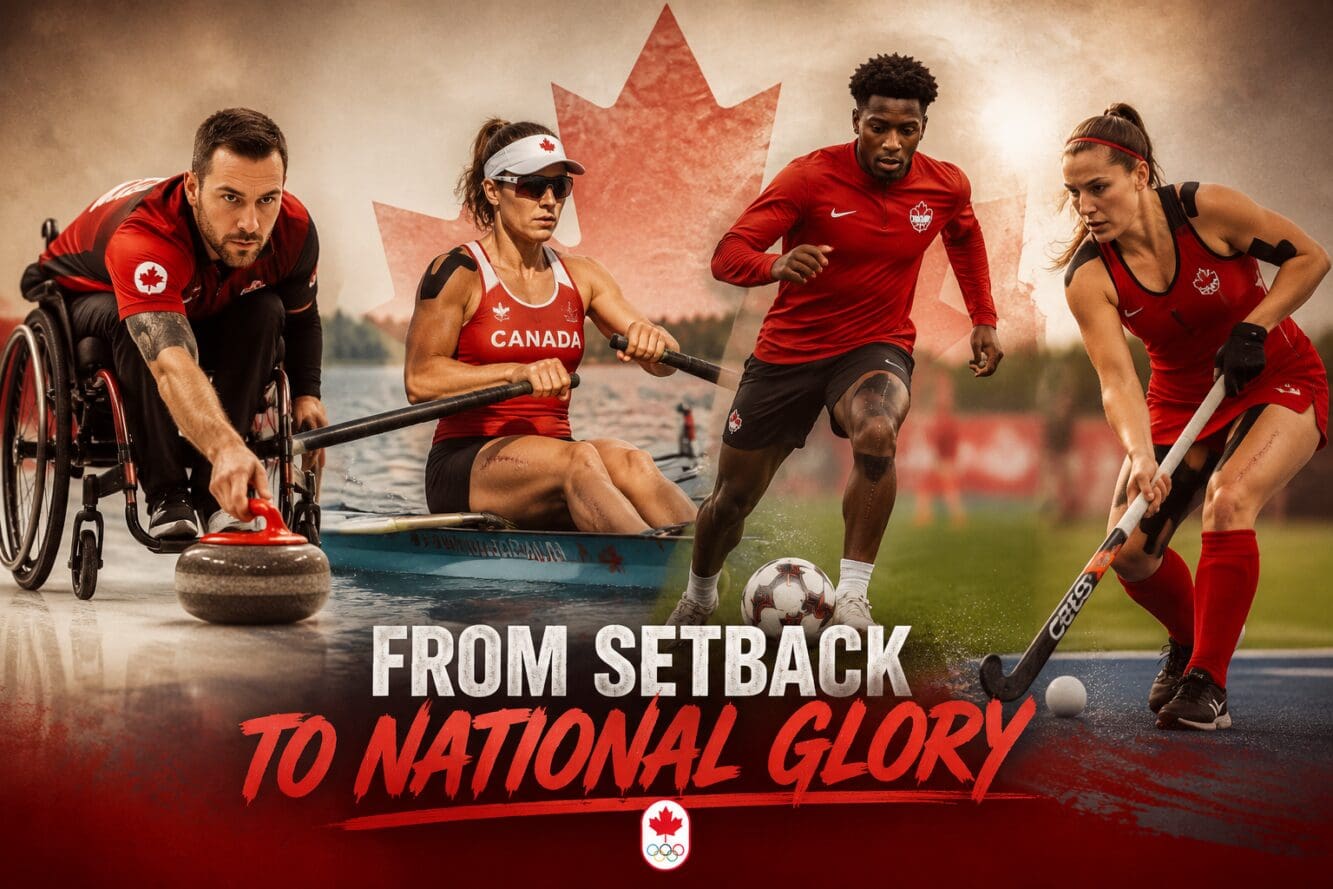
The most famous Canadian athlete comeback stories involve overcoming injuries that doctors initially considered career-ending, then returning to compete at the highest level. Silken Laumann, Mark Ideson, Penny Cooper, and Sidney Crosby each represent a different era and sport, but all faced the same question: could they come back?
Silken Laumann (rowing): In May 1992, a collision with a German coxless pair boat shattered Laumann’s right leg. She underwent five surgeries. Ten weeks later, she won bronze at the Barcelona Olympics in single sculls, competing with her leg still visibly damaged [5]. Sports historians widely consider it one of the greatest athletic recoveries ever recorded.
Mark Ideson (wheelchair curling): A helicopter crash in 2007 left Ideson with quadriplegia. After rehabilitation at Parkwood Institute’s Spinal Cord Injury Clinic in London, Ontario, he discovered wheelchair curling in 2010. By 2018, he was Canada’s skip, earning Paralympic bronze in 2018 and again in 2022. In March 2026, he competed in his fourth Paralympics in Italy [1]. His story is covered in detail through Georgian Bay News sports coverage.
Penny Cooper (field hockey): Cooper overcame a significant ligament injury to compete at the 1988 Seoul Olympics, where Canada finished sixth. Her determination earned her the Harry Jerome Comeback Award that same year [6].
Sidney Crosby (hockey): At the 2026 Winter Olympics, Crosby suffered an injury during a match against Czechia. His teammates rallied around the belief that “this will not be Sid’s last game at the Olympics,” turning his setback into collective motivation [3].
Which Canadian Athletes Have Overcome the Worst Career-Threatening Injuries
The most severe career-threatening injuries in Canadian sports history include spinal cord injuries, compound fractures, and multiple ligament tears. Mark Ideson’s quadriplegia following a 2007 helicopter crash stands as arguably the most extreme example, given that most spinal cord injuries at that level permanently end athletic careers [1].
Moïse Bombito’s fractured tibia in October 2025 threatened his participation in the 2026 FIFA World Cup cycle. Canadian national team head coach Jesse Marsch projected a four-month recovery window, targeting March 2026 for Bombito’s return to international play [2]. Staying on track with that timeline was critical for Canada’s World Cup preparations.
How Do Athletes Recover From Serious Sports Injuries
Recovery from serious sports injuries follows a structured, phased approach: initial stabilization and surgery if needed, followed by controlled rehabilitation, sport-specific conditioning, and finally return-to-competition protocols. No two recoveries are identical, but the framework is consistent across elite Canadian programs.
Key phases typically include:
- Acute phase (weeks 1 to 6): Pain management, swelling reduction, and protecting the injury site.
- Rehabilitation phase (weeks 6 to 24+): Physiotherapy, strength rebuilding, and range-of-motion work.
- Sport-specific phase: Reintroducing sport movements under clinical supervision.
- Return-to-competition phase: Graduated exposure to full training loads and competition scenarios.
Silken Laumann’s five-surgery, 10-week recovery compressed all of these phases dramatically, which is why sports medicine professionals still study her case [5].
How Long Does It Typically Take to Return to Pro Sports After a Major Injury
Return timelines depend on injury type, the athlete’s age, sport demands, and access to quality rehabilitation. General benchmarks used by Canadian sports medicine practitioners include:
Injury TypeTypical Return TimelineACL tear (surgical repair)9 to 12 monthsTibial fracture4 to 6 monthsRotator cuff surgery6 to 12 monthsSpinal cord injuryHighly variable; often permanentSoft tissue (grade 2 ligament)6 to 12 weeks
Bombito’s four-month target for a tibial fracture aligns with the lower end of that range, reflecting both the nature of his injury and the urgency of the World Cup timeline [2].
What Medical Treatments Help Athletes Make Successful Comebacks
Modern sports medicine combines surgical advances, physiotherapy, and emerging treatments to improve comeback success rates. Facilities like Parkwood Institute’s Spinal Cord Injury Clinic, which supported Mark Ideson’s recovery, represent the standard of specialized Canadian rehabilitation care [1].
Common treatments include:
- Surgical reconstruction for torn ligaments, fractures, and joint damage.
- Physiotherapy and strength conditioning to rebuild muscle and movement patterns.
- Hydrotherapy and aquatic rehabilitation to reduce load while maintaining fitness.
- Platelet-rich plasma (PRP) injections for soft-tissue injuries (evidence is mixed but widely used).
- Psychological counselling integrated into the physical recovery plan.
Readers interested in health and recovery resources in the Georgian Bay region can explore staying safe and healthy locally.
What Percentage of Athletes Successfully Return After a Serious Injury
Roughly 65 to 82 percent of athletes return to sport after a major injury, according to sports medicine literature, but return-to-elite-level competition rates are considerably lower. A torn ACL, for example, sees high return-to-sport rates in recreational athletes but lower rates at pre-injury performance levels for professional players.
Factors that improve return rates include early surgical intervention, access to dedicated rehabilitation programs, strong psychological support, and a clear return-to-play protocol set by a sports medicine team.
What Mental Strategies Do Athletes Use to Overcome Career-Ending Injury Fears
Mental resilience is as critical as physical rehabilitation. Elite Canadian athletes and their support teams use several proven strategies:
- Visualization: Mentally rehearsing competition performance during physical recovery keeps neural pathways active.
- Goal-setting: Breaking recovery into small, measurable milestones reduces the psychological weight of a long timeline.
- Identity separation: Coaches and psychologists help athletes see themselves as more than their sport, reducing fear of permanent loss.
- Team connection: Staying engaged with teammates and national programs, as Ideson did through the curling community, maintains purpose and motivation [1].
The mental health dimension of athletic recovery connects to broader community conversations. Georgian Bay News covers mental health challenges that affect Canadians across all walks of life, including athletes.
How Do Canadian National Teams Support Injured Athletes During Recovery
Canadian national sport organizations, including Own the Podium and individual national sport federations, provide injured athletes with access to sport medicine physicians, physiotherapists, and sport psychologists as part of their high-performance programs. Athletes on national team rosters typically retain access to these services throughout their recovery.
For Paralympic athletes like Mark Ideson, organizations such as the Canadian Paralympic Committee coordinate with provincial rehabilitation centres to ensure continuity of care from acute injury through to competitive return [1].
How Expensive Are Sports Injury Rehabilitation Programs in Canada
Private sports rehabilitation in Canada can cost between $100 and $300 per physiotherapy session, with comprehensive programs running $10,000 to $40,000 or more annually for elite-level care. Athletes on national team programs typically have these costs covered through their sport federation or federal funding.
For non-elite athletes, provincial health insurance covers some physiotherapy, but limits vary by province. Many athletes rely on private insurance or out-of-pocket spending for the volume of sessions required after major surgery. Those exploring community health resources in the Georgian Bay area can check local community services.
Are Some Sports Easier to Recover From Injuries Than Others
Yes. Sports with lower impact demands and more position flexibility tend to allow faster returns. Wheelchair curling, for example, allowed Mark Ideson to compete at an elite level despite quadriplegia because the sport’s physical demands could be adapted to his abilities [1].
Contact sports like hockey and soccer carry higher re-injury risk on return, partly because the same physical scenarios that caused the original injury recur regularly. Swimming and rowing allow cardiovascular conditioning to continue even when lower-body injuries limit land training.
How Do Sports Insurance and Medical Coverage Work for Pro Athletes in Canada
Professional athletes in Canadian leagues typically carry private insurance policies that cover career-ending injuries, often negotiated through player associations. National team athletes are covered under federal high-performance sport programs for injuries sustained during sanctioned competition and training.
Amateur and developing athletes face more gaps. Provincial health plans cover emergency care and some specialist visits, but the rehabilitation volume required for a serious comeback often exceeds public coverage. Many athletes and families fund the gap privately or through fundraising, which is why community support for injured athletes matters beyond the professional level. Readers can follow local community initiatives at Georgian Bay News.
FAQ
Who is considered Canada’s greatest sports comeback athlete?
Silken Laumann is widely cited as Canada’s greatest comeback athlete after winning Olympic bronze just 10 weeks after a severe leg injury that required five surgeries in 1992 [5].
Did Mark Ideson compete at the 2026 Paralympics?
Yes. Mark Ideson competed in his fourth Paralympics in Milan-Cortina, Italy in March 2026, continuing a career that began after quadriplegia from a 2007 helicopter crash [1].
Can you fully recover from a torn ACL?
Most athletes return to sport after ACL surgery, typically within 9 to 12 months. However, returning to pre-injury performance levels is not guaranteed and depends on rehabilitation quality and sport demands.
How did Sidney Crosby’s injury affect Team Canada at the 2026 Olympics?
Crosby was injured during a game against Czechia at the 2026 Winter Olympics. His teammates rallied around him, expressing confidence that the setback would not end his Olympic career [3].
What is the Harry Jerome Comeback Award?
The Harry Jerome Comeback Award recognizes Canadian athletes who return to high-level competition after a serious injury or setback. Penny Cooper won it in 1988 after recovering from a ligament injury to compete at the Seoul Olympics [6].
What was Moïse Bombito’s injury in 2025?
Bombito fractured his tibia in October 2025 while playing for French club Nice. Coach Jesse Marsch projected a four-month recovery, targeting March 2026 for his return to the Canadian national soccer team [2].
What role does psychology play in sports comebacks?
Psychology is now considered a core component of elite sports rehabilitation. Visualization, goal-setting, and counselling help athletes manage fear of re-injury and maintain competitive identity during long recoveries.
How does Canada’s Paralympic program support injured athletes?
The Canadian Paralympic Committee coordinates with provincial rehabilitation centres and national sport federations to provide continuity of care, sport-specific coaching, and competition pathways for athletes with acquired disabilities.
Conclusion
Canadian Athletes’ Greatest Comeback Stories: From Career-Ending Injury Scares to National Team Glory are not just inspiring headlines. They are practical proof that structured rehabilitation, strong mental frameworks, and community support can turn devastating setbacks into defining achievements.
For readers facing their own recovery challenges, the takeaways are actionable: work with qualified sports medicine professionals, set phased goals, stay connected to your sport community, and treat mental health as seriously as physical healing. For fans and community members, supporting injured athletes through their recovery, whether at the Olympic level or in local Georgian Bay leagues, makes a measurable difference.
Follow Georgian Bay News for ongoing coverage of Canadian sports stories, community health resources, and the athletes who represent this region and country on national and international stages.
References
[1] More Medal Mark Idesons Journey To His Fourth Paralympics – https://www.sjhc.london.on.ca/news-and-media/our-stories/more-medal-mark-idesons-journey-to-his-fourth-paralympics?utm_source=openai
[2] Moise Bombito Jesse Marsch Canmnt Fifa World Cup – https://canadiansoccerdaily.com/2025/10/08/moise-bombito-jesse-marsch-canmnt-fifa-world-cup/?utm_source=openai
[3] How Sidney Crosby Injury Canada Comeback Czechia Olympics – https://www.sportingnews.com/us/nhl/pittsburgh-penguins/news/how-sidney-crosby-injury-canada-comeback-czechia-olympics/4e96c9a6985af65e96fe2ab2?utm_source=openai
[4] Olympics Brody Malones Remarkable Comeback To Second Olympic Berth – https://www.ncaa.org/news/2024/7/17/olympics-brody-malones-remarkable-comeback-to-second-olympic-berth?utm_source=openai
[5] Olympics Silken Laumanns Inspiring Comeback 1992 Barcelona – https://ca.sports.yahoo.com/sports/news/olympics–olympics-silken-laumanns-inspiring-comeback-1992-barcelona.html?utm_source=openai
[6] Penny Cooper – https://en.wikipedia.org/wiki/Penny_Cooper?utm_source=openai
Much Appreciate You Sharing This Post - It Helps MUCH!!!