




















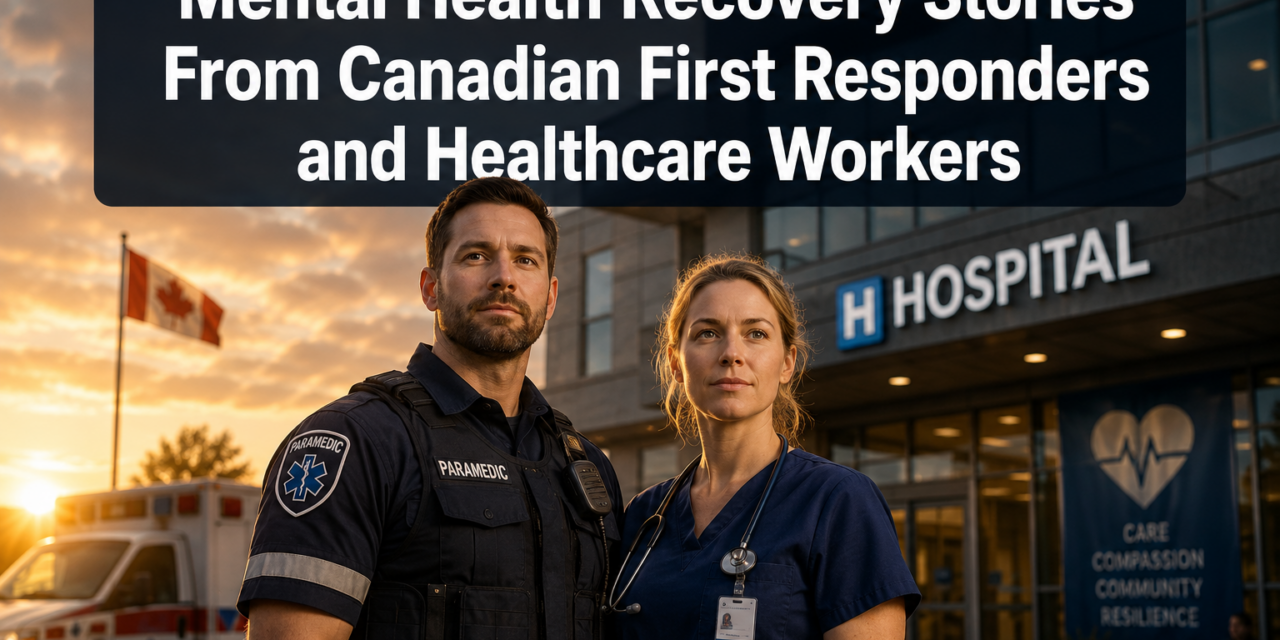
🇨🇦 Mental Health Recovery Stories From Canadian First Responders and Healthcare Workers
Last updated: June 15, 2026
Quick Answer: Mental health recovery stories from Canadian first responders and healthcare workers reveal a growing movement toward openness, peer support, and structured treatment. Across Canada, paramedics, nurses, police officers, and firefighters are accessing specialized programs, breaking the silence around PTSD and burnout, and returning to meaningful careers and lives. Recovery is possible, and in 2026, more resources than ever exist to support that path.
Key Takeaways
- First responders and healthcare workers in Canada face elevated rates of PTSD, burnout, depression, and anxiety due to repeated exposure to trauma.
- Stigma remains one of the biggest barriers to seeking help, but peer support programs are changing that culture from within.
- In April 2026, the federal government committed $15 million to establish Ontario’s first Post-Traumatic Stress Injury (PTSI) Centre of Excellence at Runnymede Healthcare Centre. [1]
- Free, confidential services like PSPNET offer internet-delivered cognitive behavioural therapy (ICBT) tailored specifically for public safety personnel. [4]
- Programs such as Wounded Warriors Canada’s First Responder Assist and the Before Operational Stress (BOS) initiative offer both prevention and crisis support. [6][3]
- Recovery timelines vary widely, but many workers see meaningful improvement within six to twelve months of consistent treatment.
- Warning signs of crisis are often dismissed as “part of the job,” which delays treatment and worsens outcomes.
- Peer support networks and warm lines staffed by fellow first responders are among the most trusted entry points into care.
What Mental Health Challenges Do First Responders Face in Canada
Canadian first responders face a disproportionate burden of occupational mental health conditions. Repeated exposure to death, injury, violence, and human suffering creates cumulative psychological strain that differs from typical workplace stress.
The most common conditions include:
- Post-Traumatic Stress Injury (PTSI) and PTSD — triggered by critical incidents or accumulated exposure over time
- Burnout — emotional exhaustion from sustained high-demand work with limited recovery time
- Depression and anxiety — often co-occurring with PTSD
- Substance use disorders — sometimes used as coping mechanisms
- Moral injury — the distress of being unable to prevent harm despite best efforts
Healthcare workers, particularly nurses and emergency physicians, faced compounding trauma during and after the COVID-19 pandemic, with many still processing grief and exhaustion in 2026. These conditions are not signs of weakness. They are predictable responses to extraordinary circumstances.
How Do Healthcare Workers Deal With Burnout and PTSD
Most healthcare workers who recover from burnout and PTSD do so through a combination of professional therapy, peer connection, and structured workplace support. No single approach works for everyone, but evidence consistently supports early intervention.
Effective strategies include:
- Cognitive behavioural therapy (CBT) — the most well-researched treatment for PTSD and anxiety
- EMDR (Eye Movement Desensitization and Reprocessing) — widely used for trauma processing
- Ketamine-assisted therapy — an emerging option; a March 2026 study published on PubMed examined outcomes for first responders with complex, co-occurring diagnoses [8]
- Peer support conversations — often the first step before formal treatment
- Scheduled recovery time — structured rest and reduced exposure during acute phases
CBI Health’s dedicated first responder program addresses PTSD, acute stress disorder, depression, and anxiety with a focus on helping clients return to functional, meaningful lives. [5]
Success Stories of First Responders Recovering From Workplace Trauma
Mental health recovery stories from Canadian first responders and healthcare workers share common threads: a breaking point, a trusted connection, and a gradual return to stability. While individual stories vary, patterns of recovery are consistent and instructive.

A paramedic in Ontario who had responded to hundreds of overdose calls described reaching out through a peer support line after a particularly difficult shift. Within weeks, he was connected to a therapist through PSPNET who specialized in public safety trauma. After eight months of ICBT, he returned to active duty and now volunteers as a peer supporter himself.
A hospital nurse in Alberta, struggling with panic attacks after three years of ICU work, found her way to Responders First, which connected her with a counselor who had previously worked in emergency services. The shared context made a significant difference in how quickly she felt understood. [9]
These stories are not outliers. They reflect what happens when stigma is reduced and access to care is made easier.
Warning Signs That a First Responder Needs Professional Mental Health Help
The warning signs are often subtle at first and easy to rationalize as normal stress. First responders and their colleagues should watch for:
- Persistent sleep problems, nightmares, or hypervigilance
- Emotional numbness or detachment from family and colleagues
- Increased alcohol or substance use
- Irritability, anger outbursts, or withdrawal from social contact
- Difficulty concentrating or making decisions at work
- Intrusive memories or flashbacks related to specific incidents
- A sense that nothing matters or that the future is empty
The mental health crisis coverage at Georgian Bay News reflects how these issues affect communities across the region, including among local emergency services personnel.
Choose professional help if: symptoms persist for more than two weeks, interfere with work or relationships, or involve thoughts of self-harm. Do not wait for a “rock bottom” moment.
Who Offers Counseling Specifically for First Responders in Canada
Several organizations offer counseling designed specifically for the culture and trauma patterns of first responders, not generic therapy adapted from other settings.
OrganizationServices OfferedCoverage AreaPSPNETFree ICBT, therapist-guided and self-guidedNational [4]Responders FirstIndividual counseling, peer groups, crisis supportAlberta [9]Wounded Warriors CanadaPrevention, crisis, individual treatmentOntario and beyond [6]CBI HealthPTSD, anxiety, depression programsNational [5]Onward WellnessEvidence-based psychological supportCanada-wide [10]The Mental Health Commission of CanadaThe Working Mind First Responders trainingNational [7]
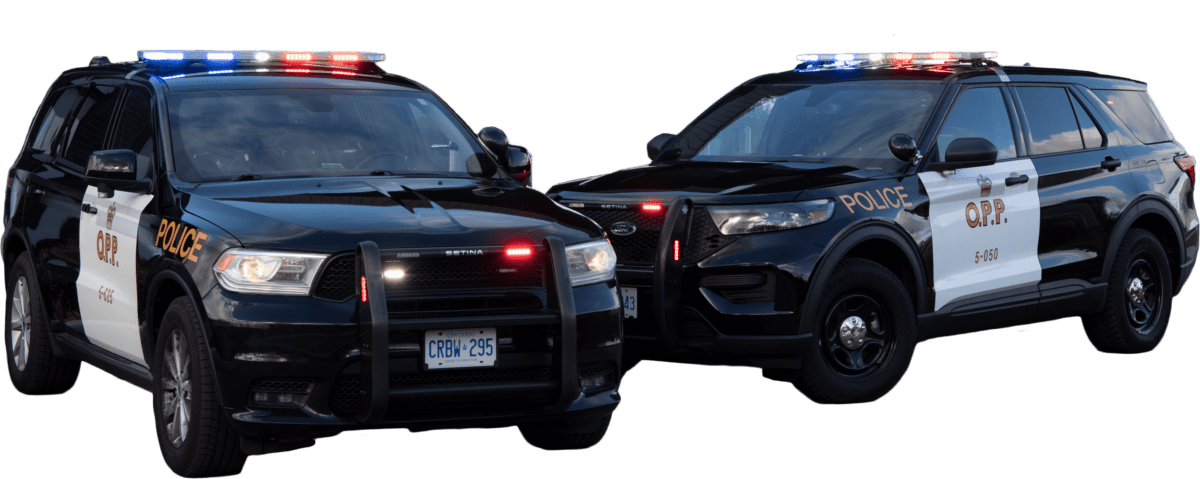
The South Georgian Bay OPP community and similar regional services often have access to provincial programs that connect officers with these specialized providers.
Resources for Canadian Emergency Workers Struggling With Mental Health
Canada’s resource landscape for first responder mental health has expanded significantly in 2026. The most accessible entry points include:
- PSPNET — free, confidential internet-delivered therapy for public safety personnel [4]
- First Responders Warm Line (Newfoundland and Labrador) — staffed by peer supporters with firsthand emergency services experience, available noon to midnight daily [2]
- Before Operational Stress (BOS) Program — proactive mental health training developed by clinical experts to build skills before stress becomes injury [3]
- Wounded Warriors Canada First Responder Assist — prevention, crisis support, and clinical training in Ontario [6]
- Runnymede PTSI Centre of Excellence — Ontario’s first specialized centre for frontline worker mental health, funded with $15 million in federal support [1]
The Springwater paramedic post and similar regional stations in Georgian Bay are connected to provincial networks that can direct workers to these resources.
Common Mistakes First Responders Make When Seeking Mental Health Support
The most common mistake is waiting too long. Many first responders delay seeking help for months or years, assuming symptoms will resolve on their own or fearing career consequences.
Other frequent mistakes include:
- Seeing a general therapist with no first responder experience — cultural mismatch slows trust and progress
- Stopping treatment too early — improvement after a few sessions does not mean recovery is complete
- Relying solely on alcohol or physical activity — these can mask symptoms without addressing root causes
- Not telling a supervisor or trusted colleague — isolation increases risk
- Assuming insurance won’t cover it — most provincial health plans and many employer benefit packages include mental health coverage; check before assuming it’s out of pocket
What Insurance Covers Mental Health Treatment for Canadian Healthcare Workers
Most Canadian healthcare workers and first responders have access to mental health coverage through a combination of sources. Provincial health plans cover psychiatrist visits when referred by a physician. Employer group benefits typically cover registered psychologists and social workers, often between $500 and $2,000 per year depending on the plan.
Some programs, including PSPNET, are entirely free and do not require insurance. [4] The new PTSI Centre of Excellence in Ontario is publicly funded, meaning eligible frontline workers can access services without direct cost. [1]
If cost is a barrier: start with PSPNET or the BOS program, both of which are free. Many provincial workers’ compensation boards also cover PTSD treatment when it is linked to occupational exposure.
Are There Peer Support Networks for Healthcare Workers With Mental Health Issues
Peer support is one of the most effective entry points into mental health care for first responders, precisely because it bypasses the stigma associated with formal treatment. Hearing from someone who has been through similar experiences carries weight that a clinical brochure cannot.
Active peer support networks in Canada include:
- The First Responders Warm Line in Newfoundland and Labrador, staffed by trained peer supporters from emergency services [2]
- Responders First peer support groups in Alberta [9]
- Wounded Warriors Canada’s peer-informed model within the First Responder Assist program [6]
- The Working Mind First Responders training from the Mental Health Commission of Canada, which builds peer awareness and reduces stigma within organizations [7]
The Southern Georgian Bay communities have seen growing interest in peer-led mental health initiatives among local emergency services, reflecting a national trend.
Difference Between Military and Civilian First Responder Mental Health Programs
Military and civilian first responder programs share overlapping goals but differ in structure, eligibility, and cultural context. Military programs, such as those through Veterans Affairs Canada, are designed for Canadian Armed Forces members and veterans, with access to a broader network of federally funded services.
Civilian first responder programs serve police, paramedics, firefighters, and healthcare workers. They are typically funded through provincial governments, employer benefits, or non-profits. Programs like Wounded Warriors Canada bridge both worlds, serving veterans and civilian first responders under one umbrella. [6]
Key differences:
- Military programs may offer longer-term residential treatment options
- Civilian programs tend to be outpatient and community-based
- Eligibility rules differ; some military programs require a service connection
- Cultural competency varies; the best civilian programs employ therapists with direct emergency services backgrounds
How Long Does Mental Health Recovery Typically Take for Emergency Workers
Recovery timelines are not fixed, but most first responders who engage consistently with treatment see meaningful improvement within six to twelve months. Complex PTSD or long-delayed treatment can extend that timeline.
Factors that affect recovery duration:
- How long symptoms went untreated before seeking help
- Presence of co-occurring conditions such as substance use or depression
- Quality of the therapeutic relationship and cultural fit with the provider
- Ongoing workplace stress during treatment
- Strength of personal and peer support networks
Recovery is rarely linear. Setbacks are common and do not indicate failure. The goal is not to erase difficult memories but to reduce their grip on daily functioning and restore a sense of agency.
Conclusion
Mental health recovery stories from Canadian first responders and healthcare workers are not rare exceptions. They are increasingly common, and they are becoming easier to share as stigma slowly erodes and resources expand. The federal investment in Ontario’s PTSI Centre of Excellence, the growth of free programs like PSPNET and BOS, and the rise of peer support networks all point in the same direction: Canada is taking the mental health of its frontline workers more seriously than ever before.
Actionable next steps for first responders and healthcare workers:
- Identify one trusted colleague, supervisor, or peer supporter to talk to this week.
- Visit PSPNET.ca to access free, confidential therapy without a referral.
- Ask your HR department what your benefit plan covers for registered psychologists.
- If you are in crisis, contact the First Responders Warm Line or the Crisis Services Canada line at 1-833-456-4566.
- If you are a manager or team leader, complete The Working Mind First Responders training to recognize warning signs in your team.
The path back to stability is real. The people who have walked it are proof.
FAQ
Q: Can a first responder lose their job for seeking mental health treatment?
A: In most cases, no. Canadian human rights legislation protects workers from discrimination based on mental health conditions. Seeking treatment is generally viewed positively by employers and does not automatically trigger fitness-for-duty reviews.
Q: Is PTSD in first responders covered under workers’ compensation in Canada?
A: Yes, in most provinces. Several provinces have amended their workers’ compensation legislation to create a presumptive clause for PTSD in first responders, meaning the condition is assumed to be work-related unless proven otherwise.
Q: What is the difference between PTSD and PTSI?
A: PTSI (Post-Traumatic Stress Injury) is a term increasingly preferred by first responder communities because it frames the condition as an injury caused by the job, not a disorder inherent to the person. Clinically, the two terms often refer to the same diagnostic criteria.
Q: How do I find a therapist who understands first responder culture?
A: Start with PSPNET, Responders First, or Onward Wellness. These organizations specifically match clients with therapists who have experience working with public safety personnel.
Q: Are online therapy options effective for first responders?
A: Yes. PSPNET’s internet-delivered cognitive behavioural therapy has strong evidence behind it and is designed specifically for public safety personnel who may have shift work schedules or live in rural areas.
Q: What should I do if a colleague seems to be struggling but won’t ask for help?
A: Express concern directly and without judgment. Share information about peer support lines like the First Responders Warm Line. Avoid ultimatums. Sometimes a single conversation from a trusted colleague is the turning point.
Q: Is ketamine-assisted therapy available for first responders in Canada?
A: It is available in some clinical settings. A 2026 study examined outcomes for first responders with co-occurring diagnoses, showing promising results. [8] Speak with a psychiatrist to determine if it is appropriate for your situation.
Q: How do I access the new PTSI Centre of Excellence in Ontario?
A: The Runnymede Healthcare Centre in Toronto is the anchor site. Contact your primary care provider or employer’s employee assistance program (EAP) for a referral pathway.
References
[1] Expanding Mental Health And Substance Use Support For Frontline Workers In Ontario – https://www.canada.ca/en/health-canada/news/2026/04/expanding-mental-health-and-substance-use-support-for-frontline-workers-in-ontario.html
[2] Mental Health Resources – https://panl.ca/resources/mental-health-resources/
[3] Before Operational Stress – https://www.beforeoperationalstress.ca/
[4] PSPNET – https://www.pspnet.ca/
[5] First Responders – https://www.cbihealth.ca/services/first-responders
[6] First Responder Assist – https://woundedwarriors.ca/our-programs/first-responder-assist/
[7] The Working Mind First Responders – https://mentalhealthcommission.ca/?page_id=7369
[8] Ketamine-Assisted Therapy Outcomes Study – https://pubmed.ncbi.nlm.nih.gov/41105111/
[9] Responders First – https://respondersfirst.ca/
[10] First Responder Therapy Frontline Mental Health – https://onwardwellness.ca/services/first_responder_therapy_frontline_mental_health/