



















💦 Senior Hydration and Electrolytes: How Much Water Older Adults Really Need Each Day


Last updated: June 10, 2026
Quick Answer: Most older adults need between 1.6 and 2.0 litres of fluid per day from drinks alone, not the generic “8 glasses” rule that ignores age-related changes [4]. The bigger challenge is that seniors often don’t feel thirsty even when their bodies are already short on water, making deliberate hydration habits essential. Plain water works for most situations, but certain health conditions and medications mean electrolytes matter just as much as fluid volume.
Key Takeaways
- Thirst sensation weakens significantly with age, so seniors cannot rely on feeling thirsty as a reliable hydration signal.
- Current geriatric guidelines recommend 1.6–2.0 litres of fluid per day from drinks for most older adults [4][8].
- Dehydration in seniors can mimic dementia, cause falls, and trigger urinary tract infections.
- Electrolyte imbalances, especially low sodium (hyponatremia), are a genuine risk for older adults who drink too much plain water.
- Common medications including diuretics, laxatives, and certain blood pressure drugs increase fluid and electrolyte losses.
- Signs of dehydration in elderly people are often subtle: confusion, dark urine, dry mouth, and fatigue rather than obvious thirst.
- Food contributes roughly 20–30% of daily fluid intake, so water-rich foods count toward the daily target [8].
- Practical strategies such as scheduled drinking, flavoured water, and soups can help seniors who struggle to drink enough.
Why Seniors Need More Attention to Hydration Than Younger People
Older adults are not simply older versions of younger adults when it comes to fluid balance. The body’s ability to conserve water and signal thirst declines measurably with age. Research published in peer-reviewed geriatric literature confirms that kidney function decreases with age, reducing the body’s capacity to concentrate urine and retain water [3]. At the same time, total body water decreases as muscle mass is replaced by fat tissue, which holds far less water.
The result is a narrower margin for error. A younger person can tolerate mild fluid deficits without much consequence. For a 75-year-old, the same deficit can trigger confusion, a dangerous drop in blood pressure, or a fall.
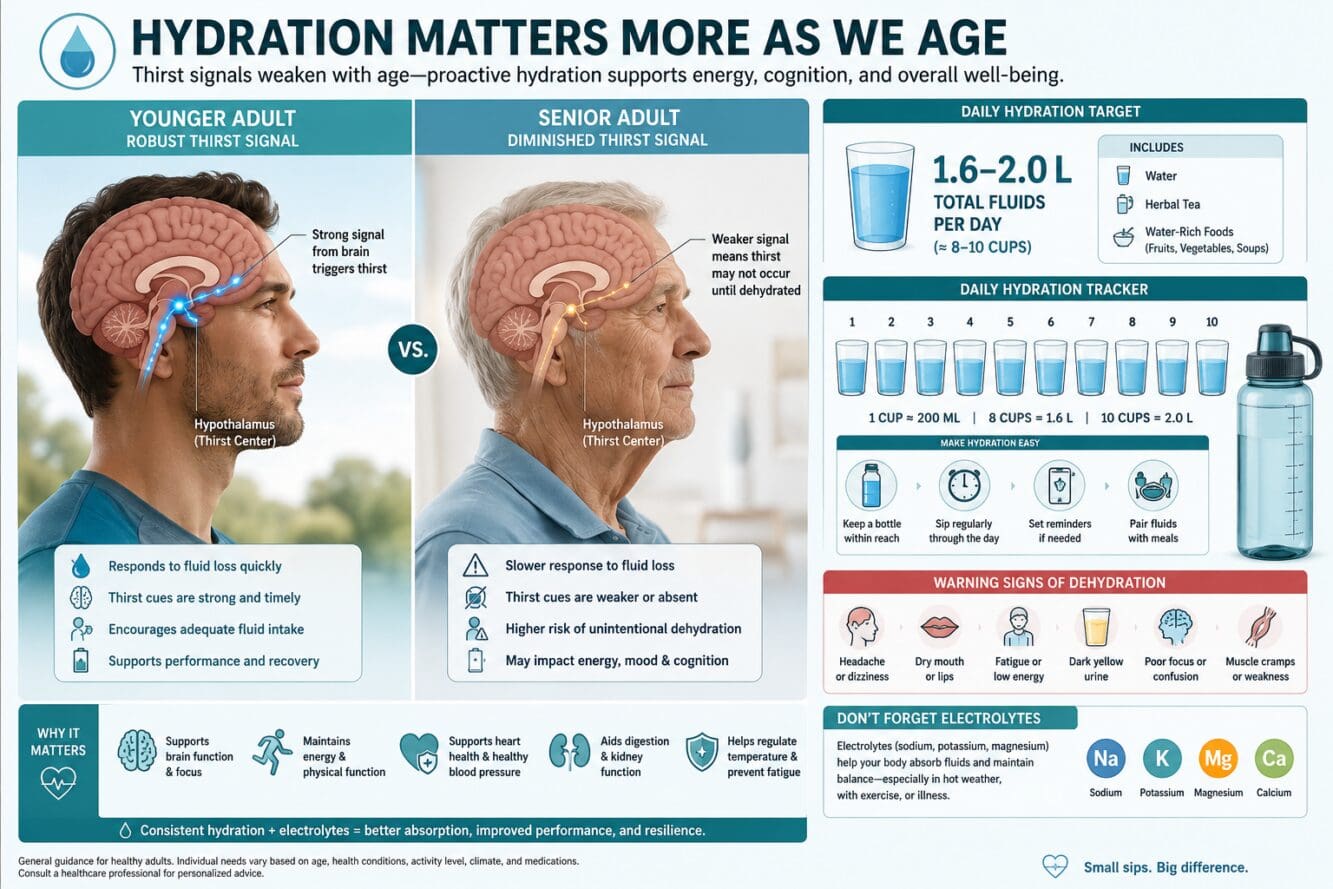
The thirst mechanism itself becomes less sensitive. Studies show that older adults experience reduced thirst even when plasma osmolality rises to levels that would cause significant discomfort in younger people [9]. This means the standard advice to “drink when you’re thirsty” is genuinely unreliable for seniors.

How Much Water Should a 70-Year-Old Drink Daily
For most adults aged 65 and over, the evidence-based target is 1.6 to 2.0 litres of fluid from drinks per day, with total water intake (including food sources) closer to 2.0–2.5 litres [4][8]. This is more specific and more useful than the commonly repeated “eight glasses” guideline.
Key factors that adjust this range:
- Body weight: Larger individuals generally need more fluid.
- Climate and activity: Hot weather or light exercise increases losses through sweat.
- Health conditions: Kidney disease, heart failure, or certain medications may require a lower or higher target (see sections below).
- Diet: A diet rich in fruits, vegetables, and soups contributes meaningful fluid, reducing the amount needed from drinks alone [8].
The NHS notes that drinks of all kinds, including tea, coffee, milk, and juice, count toward daily fluid intake, not just plain water [1]. This is reassuring for older adults who find plain water unappealing.
“For older adults, the goal is consistent, scheduled fluid intake throughout the day, not waiting until thirst strikes.”
Signs of Dehydration in Elderly People That Are Easy to Miss
Dehydration in seniors often presents differently than in younger adults, and the early signs are frequently overlooked or attributed to other causes. Recognising these signals early can prevent serious complications.
Common signs to watch for:
- Urine that is dark yellow or amber (pale straw colour is the goal)
- Dry mouth or cracked lips
- Fatigue or low energy without an obvious cause
- Headache
- Dizziness or lightheadedness, especially when standing
- Confusion or sudden changes in mental clarity
- Reduced urine output or skipping bathroom visits for many hours
- Constipation
Less obvious signs:
- Increased falls or unsteadiness
- Worsening of existing conditions such as kidney stones or urinary tract infections
- Skin that tents (stays pinched) when lightly pulled on the back of the hand
A sudden change in cognitive function in an older adult should prompt a check for dehydration before assuming a neurological cause [2].
What Happens If Seniors Don’t Drink Enough Water
Chronic mild dehydration in older adults carries real medical consequences. Inadequate fluid intake raises the concentration of waste products in the blood, stresses the kidneys, and impairs nearly every organ system.
Short-term consequences:
- Urinary tract infections (concentrated urine creates a better environment for bacteria)
- Constipation and bowel impaction
- Kidney stones
- Confusion and delirium, sometimes misdiagnosed as dementia
- Falls due to low blood pressure and dizziness
Longer-term consequences:
- Accelerated kidney function decline [3]
- Increased hospitalisation risk
- Poorer recovery from illness or surgery
Dehydration is one of the most common reasons older adults are admitted to hospital, and it is largely preventable [10].
Symptoms of Electrolyte Imbalance in Elderly Adults
Electrolytes, including sodium, potassium, magnesium, and chloride, regulate nerve and muscle function. Seniors are at higher risk of imbalances because of reduced kidney efficiency, medication use, and dietary changes.
Low sodium (hyponatremia): The most common electrolyte disorder in older adults. Symptoms include nausea, headache, confusion, seizures, and in severe cases, coma [5]. Paradoxically, this can result from drinking too much plain water, especially in people on certain medications.
Low potassium (hypokalemia): Causes muscle weakness, cramps, irregular heartbeat, and fatigue. Common in those taking diuretics.
Low magnesium: Often overlooked, it presents as muscle twitching, poor sleep, and heart rhythm irregularities.
If an older adult develops sudden confusion, muscle weakness, or an irregular heartbeat, electrolyte imbalance should be considered alongside dehydration [5][6].
Best Electrolyte Drinks for Seniors
Most healthy seniors who eat a balanced diet and drink adequate fluids do not need commercial electrolyte supplements. However, those who sweat heavily, have diarrhea or vomiting, take diuretics, or have been advised by a doctor may benefit from electrolyte-containing drinks.
Good options:
- Oral rehydration solutions (ORS): Formulated to the WHO standard, these are the most effective for replacing both fluid and electrolytes. Available at pharmacies without a prescription.
- Low-sugar sports drinks: Useful after significant exertion or illness, but check sodium content.
- Coconut water: A natural source of potassium and some sodium, lower in sugar than many sports drinks.
- Milk: Contains sodium, potassium, and calcium, making it a practical everyday electrolyte source [1].
- Broth or soup: Provides sodium and fluid together, and is often more appealing to seniors than plain water.
Choose electrolyte drinks if: a senior has been ill with vomiting or diarrhea, is on diuretics, or a doctor has flagged low potassium or sodium levels.
Avoid if: the senior has kidney disease or heart failure without first checking with a physician, as excess potassium or sodium can be dangerous.
Cheap Electrolyte Supplements for Seniors on Fixed Income
Cost is a real barrier for many older adults managing on a fixed income. Effective electrolyte support does not require expensive branded products.
Budget-friendly options:
- Generic oral rehydration salts: Available at most pharmacies for a fraction of the cost of branded sports drinks.
- Homemade electrolyte drink: Mix 1 litre of water with a pinch of salt, a squeeze of lemon, and a small amount of honey or sugar. This approximates a basic ORS at minimal cost.
- Bananas and potatoes: Among the cheapest and most potent food sources of potassium.
- Table salt in cooking: Adequate dietary sodium is achievable through normal food without supplements for most seniors.
For seniors managing social programs or community support services, a dietitian referral through a public health program can provide personalised guidance at no cost.
Medications That Cause Dehydration in Seniors
Several commonly prescribed medications increase fluid and electrolyte losses, making hydration management more complex for older adults.
Medication TypeEffect on HydrationDiuretics (e.g., furosemide, hydrochlorothiazide)Increase urine output, deplete sodium and potassiumLaxatives (stimulant or osmotic types)Cause fluid loss through the bowelACE inhibitors / ARBsCan affect kidney fluid regulationAntidepressants (SSRIs)Associated with hyponatremia riskAntipsychoticsCan impair thirst sensation furtherMetformin (diabetes medication)Risk of dehydration during illness
Seniors taking any of these medications should discuss specific fluid targets with their pharmacist or physician [7]. The interaction between diuretics and fluid intake is particularly important: too little fluid worsens dehydration, but too much plain water without electrolytes can dangerously dilute sodium levels.
Medical Conditions That Affect Senior Hydration Needs
Certain chronic conditions common in older adults directly change how much fluid is needed and what kind.
- Heart failure: Fluid restriction is often required. These individuals should not increase water intake without medical guidance.
- Chronic kidney disease: Both fluid overload and dehydration are harmful. A nephrologist or dietitian should set individual targets.
- Diabetes: High blood sugar increases urinary fluid losses, raising hydration needs.
- Dementia: Cognitive impairment reduces the ability to recognise or respond to thirst, and swallowing difficulties may make drinking harder [2].
- Parkinson’s disease: Swallowing problems and reduced mobility complicate adequate intake.
For seniors managing complex conditions, practical solutions from a healthcare team, including speech-language pathology for swallowing issues, are worth pursuing.
Can Drinking Too Much Water Be Dangerous for Older Adults
Yes, overhydration is a real risk for older adults, particularly those on certain medications or with kidney or heart conditions. Drinking excessive amounts of plain water can dilute blood sodium to dangerously low levels, a condition called hyponatremia [5].
Symptoms of overhydration include nausea, headache, bloating, confusion, and in severe cases, seizures. This risk is highest in seniors who:
- Take SSRIs or certain diuretics
- Have reduced kidney function
- Drink large amounts of plain water rapidly after exercise or illness
The practical guideline: aim for 1.6–2.0 litres of fluid per day from drinks, spread across the day, rather than drinking large amounts at once [4]. Urine colour remains the simplest self-check: pale straw is ideal; colourless may indicate overhydration.
How to Help Elderly Parents Stay Hydrated
For family members and caregivers, encouraging adequate fluid intake in an older adult who doesn’t feel thirsty requires practical, consistent strategies. Addressing social isolation is also relevant, as isolated seniors often have fewer prompts to eat or drink regularly.
Practical strategies:
- Set a schedule: offer a drink at every meal and at fixed times between meals (e.g., mid-morning, mid-afternoon).
- Keep a water bottle or glass visible and within easy reach at all times.
- Offer variety: herbal teas, diluted juice, flavoured water, and broth count alongside plain water.
- Make it social: sharing a cup of tea or friendly visits naturally prompt drinking.
- Use water-rich foods: watermelon, cucumber, oranges, yogurt, and soups all contribute to daily fluid intake.
- Track intake with a simple chart or marked water bottle if memory is a concern.
- For those with swallowing difficulties, thickened fluids or fluid-rich foods may be necessary.
Natural Ways to Increase Water Intake for Older Adults
Plain water is not the only path to adequate hydration. Many seniors find it easier to meet their fluid targets through food and flavoured drinks rather than glasses of water alone.
Food-based hydration:
- Soups and broths (also provide electrolytes)
- Fresh fruit: watermelon, strawberries, oranges, grapes
- Vegetables: cucumber, celery, lettuce, tomatoes
- Yogurt and milk-based foods
Drink alternatives:
- Herbal teas (caffeine-free options are hydrating)
- Warm water with lemon and honey
- Diluted fruit juice (watch sugar content)
- Milk (contributes fluid plus calcium and potassium)
Seniors interested in staying safe and healthy at home will find that building hydration into meal routines, rather than treating it as a separate task, is the most sustainable approach. Similarly, light physical activity such as somatic chair yoga can support circulation and overall wellness alongside good hydration habits.
FAQ
Q: Does coffee count toward daily fluid intake for seniors?
Yes. Despite mild diuretic properties, research confirms that moderate coffee consumption contributes positively to daily fluid intake for habitual drinkers [1]. Two to three cups per day is generally fine for most older adults.
Q: How can a senior tell if they are dehydrated without a blood test?
Urine colour is the most accessible indicator. Dark yellow or amber urine suggests dehydration; pale straw colour indicates adequate hydration. Colourless urine may indicate overhydration.
Q: Are electrolyte tablets safe for seniors?
Most are safe for healthy older adults, but those with kidney disease, heart failure, or who take diuretics or ACE inhibitors should check with a doctor first, as excess potassium or sodium can cause serious complications.
Q: Should seniors drink more water in summer?
Yes. Heat and humidity increase fluid losses through sweat, even without vigorous activity. Seniors should increase fluid intake by at least 500ml on hot days and avoid prolonged outdoor exposure during peak heat.
Q: Is it normal for older adults to urinate less frequently?
Reduced urine output can be a sign of dehydration, not a normal part of aging. Adults should urinate at least four to six times per day. Fewer visits, or very dark urine, warrants increased fluid intake and possibly a medical check.
Q: Can dehydration cause confusion in elderly people?
Yes. Dehydration is one of the most common reversible causes of acute confusion (delirium) in older adults. If an older person becomes suddenly confused, checking hydration status is an important first step [2].
Q: What is the best time of day for seniors to drink water?
Spreading fluid intake evenly across the day is better than drinking large amounts at once. A glass of water or other drink with each meal and between meals is a practical framework. Drinking a small amount before bed is fine for most seniors, though those with nocturia may prefer to reduce intake in the two hours before sleep.
Q: Do seniors need special electrolyte drinks, or is food enough?
For most healthy seniors eating a varied diet, food provides sufficient electrolytes. Special drinks are most useful during illness, after significant sweating, or when a doctor has identified a specific deficiency.
Conclusion
Senior hydration and electrolytes: how much water older adults really need each day is not a simple question with a single answer, but the core principles are clear. Most adults over 65 need 1.6 to 2.0 litres of fluid from drinks per day, should not rely on thirst as a guide, and need to be aware that plain water alone may not address electrolyte needs in certain circumstances.
Actionable next steps:
- Set a daily fluid schedule rather than waiting for thirst. Offer or take a drink at every meal and at two fixed times between meals.
- Check urine colour daily. Pale straw is the target; dark yellow signals a need for more fluid.
- Review medications with a pharmacist to identify any that increase fluid or electrolyte losses.
- Add water-rich foods such as soups, fruit, and yogurt to meals to supplement drink intake.
- For anyone with heart failure, kidney disease, or dementia, get a personalised fluid target from a physician or dietitian rather than following general guidelines.
- If confusion, weakness, or dizziness appears suddenly, consider dehydration or electrolyte imbalance as a possible cause and seek medical advice promptly.
Consistent, proactive hydration habits are one of the most accessible and cost-effective steps older adults and their caregivers can take to support long-term health.
References
[1] Water Drinks Nutrition – https://www.nhs.uk/live-well/eat-well/food-guidelines-and-food-labels/water-drinks-nutrition/
[2] Pmc12300510 – https://pmc.ncbi.nlm.nih.gov/articles/PMC12300510/
[3] Pmc10255140 – https://pmc.ncbi.nlm.nih.gov/articles/PMC10255140/
[4] ESPEN Practical Guideline Clinical Nutrition And Hydration In Geriatrics – https://www.espen.org/files/ESPEN-Guidelines/ESPEN_practical_guideline_Clinical_nutrition_and_hydration_in_geriatrics.pdf
[5] Pmc7694182 – https://pmc.ncbi.nlm.nih.gov/articles/PMC7694182/
[6] PubMed 35306388 – https://pubmed.ncbi.nlm.nih.gov/35306388/
[7] S3 Klinische Ernaehrung Hydrierung Im Alter 2025 – https://register.awmf.org/assets/guidelines/073-019l_S3_Klinische-Ernaehrung-Hydrierung-im-Alter_2025-09.pdf
[8] Hydration In Older Adults – https://www.bda.uk.com/resource/hydration-in-older-adults.html
[9] Accepted Manuscript (UEA) – https://ueaeprints.uea.ac.uk/id/eprint/67392/1/Accepted_manuscript.pdf
[10] How To Stay Hydrated For Better Health – https://www.ncoa.org/article/how-to-stay-hydrated-for-better-health/
Content, illustrations, and third-party video appearing on GEORGIANBAYNEWS.COM may be generated or curated with AI assistance or reproduced pursuant to the fair dealing provisions of the Copyright Act, R.S.C. 1985, c. C-42. Attribution and hyperlinks to original sources are provided in acknowledgment of applicable intellectual property rights. Such referencing is intended to direct traffic to and support the original rights holders’ platforms.
Much Appreciate You Sharing This Post - It Helps MUCH!!!