




















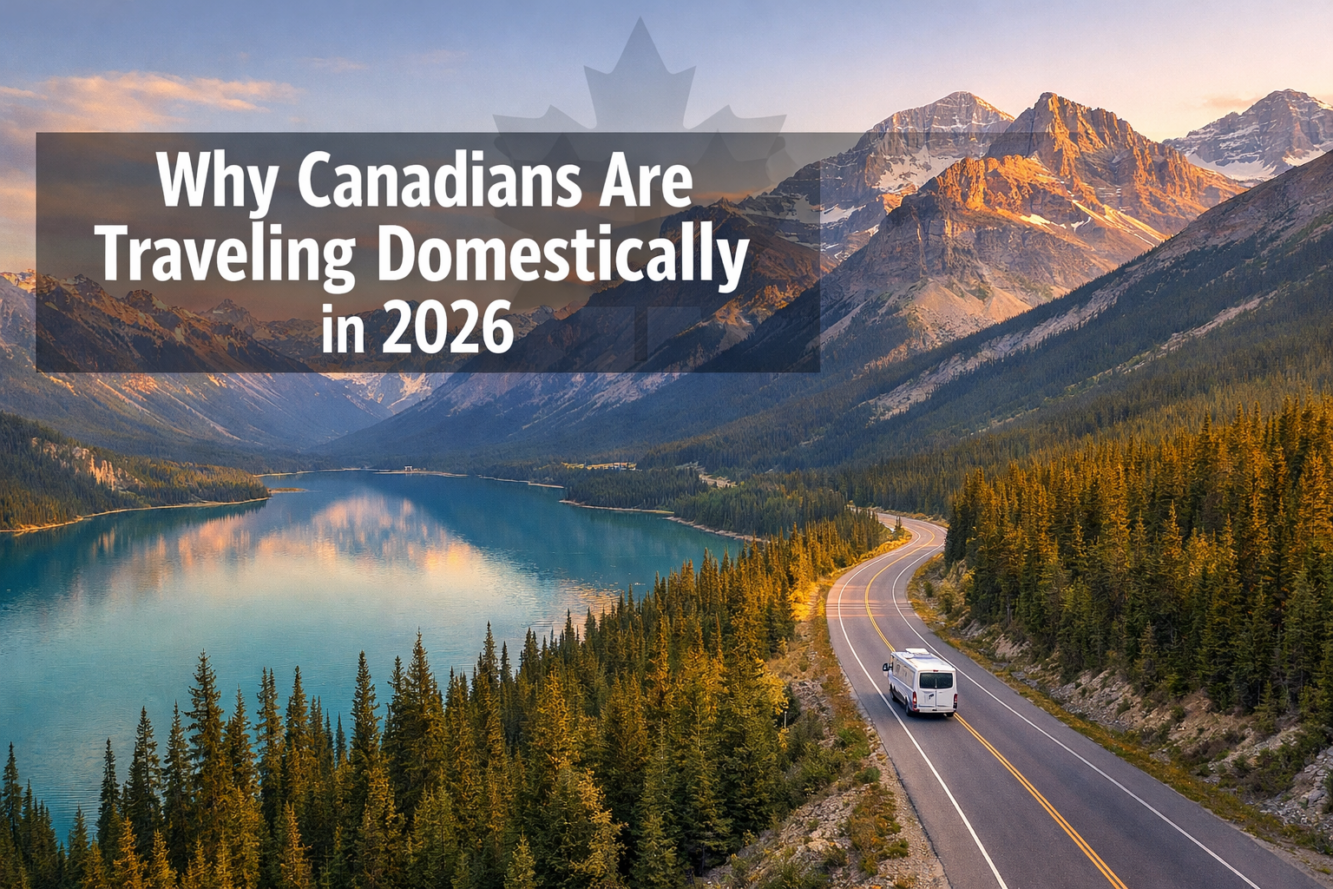
Why Canadians Are Traveling Domestically in 2026: Trends, Economic Shifts, and the Best Regional Escapes to Explore
Last updated: March 18, 2026
Canadian travelers are staying home in record numbers in 2026, and the reasons go far beyond patriotism. A weak dollar, political friction with the United States, and rising international costs have pushed domestic travel to the top of Canadian wishlists. Total vacation spending is projected to hit $47.6 billion this year, a 22% jump from 2025, and 37% of Canadian travelers now rank Canada as their number-one destination [1][2]. This guide breaks down why Canadians are traveling domestically in 2026: trends, economic shifts, and the best regional escapes to explore.
Key Takeaways
- Record spending ahead: Canadian vacation spending is projected at $47.6 billion in 2026, up 22% from 2025 [1].
- Canada tops the wishlist: 37% of travelers put Canada first, ahead of Europe (25%), Mexico (9%), and Asia (9%) [2].
- U.S. avoidance is real: 62% of Canadians say they’re less likely to visit the U.S. this year compared to last year [2].
- The dollar matters: 48% of those planning to travel will adjust plans because of the weak Canadian dollar [1].
- Cost drives decisions: 58% of travelers say cost is the single biggest factor in choosing a destination [2].
- Budget per household: The average Canadian household vacation budget for 2026 sits at $4,169 [1].
- Values-driven spending: 20% of Canadians will pay a premium to travel domestically and support local jobs [2].
- 81% feel desperate for a vacation after a soft travel year in 2025 [1].
- 31% can’t confidently travel at all, mostly due to financial barriers [1].
What’s Driving Record Domestic Travel Spending in 2026?
Three forces are converging: pent-up demand from a disappointing 2025, economic pressure that makes staying in Canada cheaper, and a deliberate cultural shift away from U.S. travel.
After a soft 2025, Canadians are hungry to get moving again. An Ipsos survey conducted in October 2025 found that 81% of intended travelers feel a desperate need for a vacation [1]. That emotional pressure, combined with household budgets that have gradually climbed to an average of $4,169 per trip, is fueling a projected $47.6 billion in total vacation spending for 2026 [1].
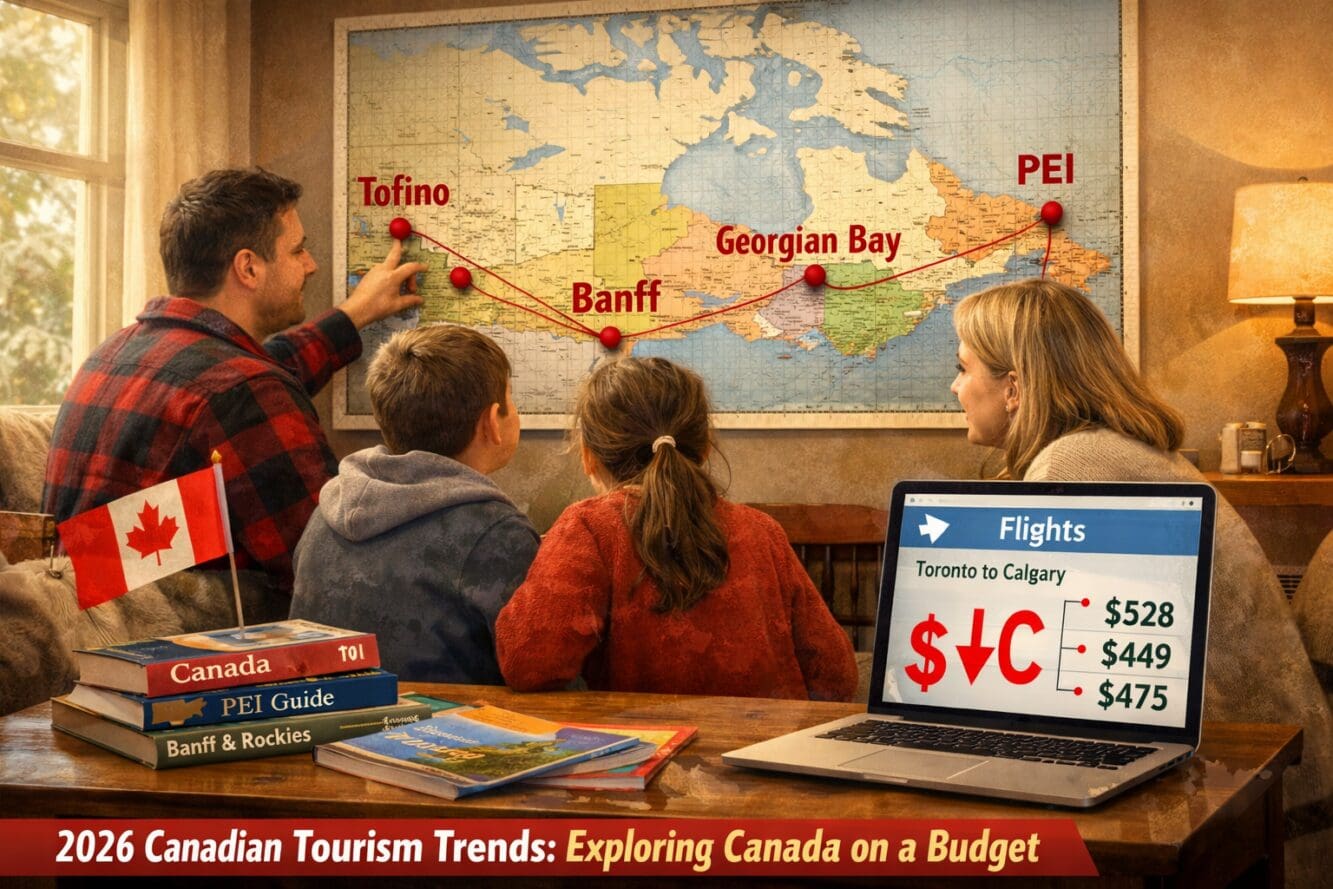
But desire alone doesn’t explain the domestic tilt. The Canadian dollar’s weakness means international trips cost significantly more. Travelers heading to Europe or distant destinations are budgeting an average of $6,354 per trip, more than $2,000 above the domestic average [1]. For families watching every dollar, that gap makes a road trip to the Rockies or the Maritimes a much easier sell.
Common mistake: Assuming domestic travel is “settling.” Many Canadian regions offer experiences that rival international destinations at a fraction of the cost, from world-class wine country in the Okanagan to the dramatic coastlines of Newfoundland.
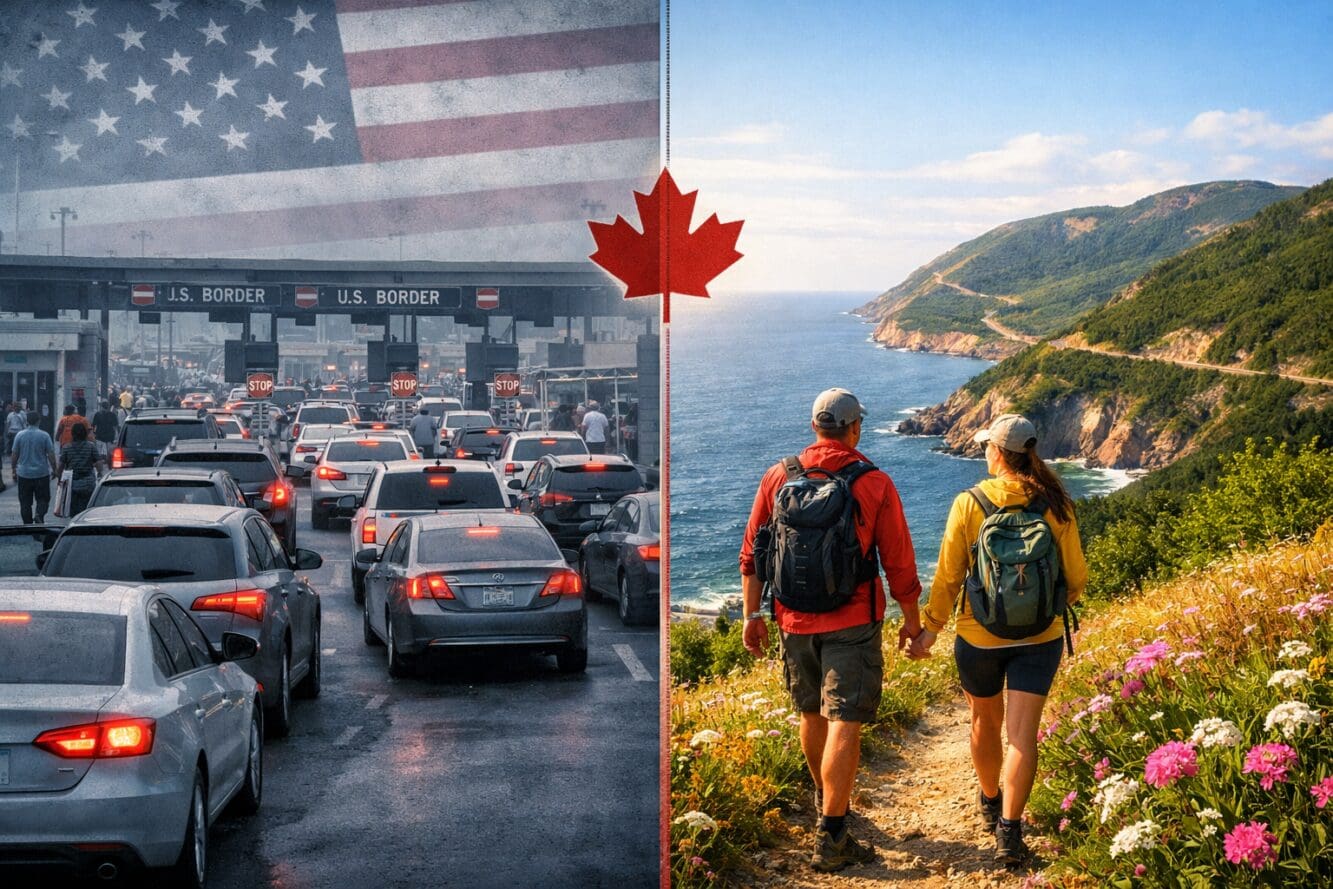
Why Are 62% of Canadians Avoiding the United States?
Political and cultural tensions are the primary reason, followed closely by border hassles and safety concerns.
A February 2026 YouGov survey found that 62% of Canadians are less likely to visit the U.S. this year, while only 8% are more likely [2]. This builds on a 28% decline in U.S. travel that already occurred in 2025 [2].
The top deterrents, ranked by percentage of respondents:
| Factor | % of Canadians Citing It |
|---|---|
| Political/cultural climate | 57% |
| Border hassles and travel restrictions | 53% |
| Safety/security concerns | 46% |
| Cost and exchange rate | 44% |
This isn’t a minor blip. When nearly six in ten travelers cite the political climate as a reason to stay away, it signals a structural shift in Canadian travel behavior. And the numbers show where that spending is going instead: 68% of those avoiding the U.S. plan to explore Canada as their alternative [6].
For context on how shifting political dynamics affect Canadian sentiment, this look at the importance of keeping Canada strong offers useful background.
How Is the Weak Canadian Dollar Reshaping Travel Plans?
Nearly half of all Canadian travelers are changing where or how they vacation because of the exchange rate.
48% of Canadians determined to travel in 2026 say they’ll adjust their plans due to the weakening dollar [1]. Another 31% are planning fewer trips altogether, citing the combined pressure of inflation, interest rates, and geopolitical uncertainty [1].
Here’s how travelers are adapting:
- Choosing domestic over international: The math is simple. A week in Banff costs significantly less in real dollars than a week in Europe or the Caribbean when the exchange rate is factored in.
- Shortening trip lengths: Some travelers are keeping international plans but cutting days to stay within budget.
- Switching from flights to road trips: Driving to destinations within a day’s range saves on airfare and lets families control food and accommodation costs.
- Booking shoulder season: Traveling in May or October instead of July cuts accommodation costs by 20-40% in most Canadian resort areas.
Decision rule: Choose domestic travel if your household budget is under $4,500 and you want to avoid exchange-rate risk entirely. Consider Europe only if you can comfortably budget $6,000+ and are flexible on dates.
Who Can’t Travel at All, and What Are Their Barriers?
About one-third of Canadians aren’t confident they can afford any vacation in 2026, and financial stress is the overwhelming reason.
31% of Canadians say they are not confident they will travel this year [1]. Among that group:
- 63% cite financial barriers as the primary obstacle [1]
- 36% specifically point to economic uncertainty as their concern [1]
This means roughly one in five Canadian adults is being held back from travel by money alone. The rising cost of living, including housing, groceries, and debt servicing, leaves less room for discretionary spending. For these Canadians, even a modest domestic trip feels out of reach.
Edge case worth noting: Some budget-conscious Canadians are finding creative workarounds, including house-swapping, camping instead of hotels, and taking advantage of municipal and provincial park passes that cost under $100 for a full season. Organizations like the YMCA also run community programs that support access to recreation. Learn more about YMCA community initiatives here.
What Are the Best Regional Escapes Canadians Are Exploring?
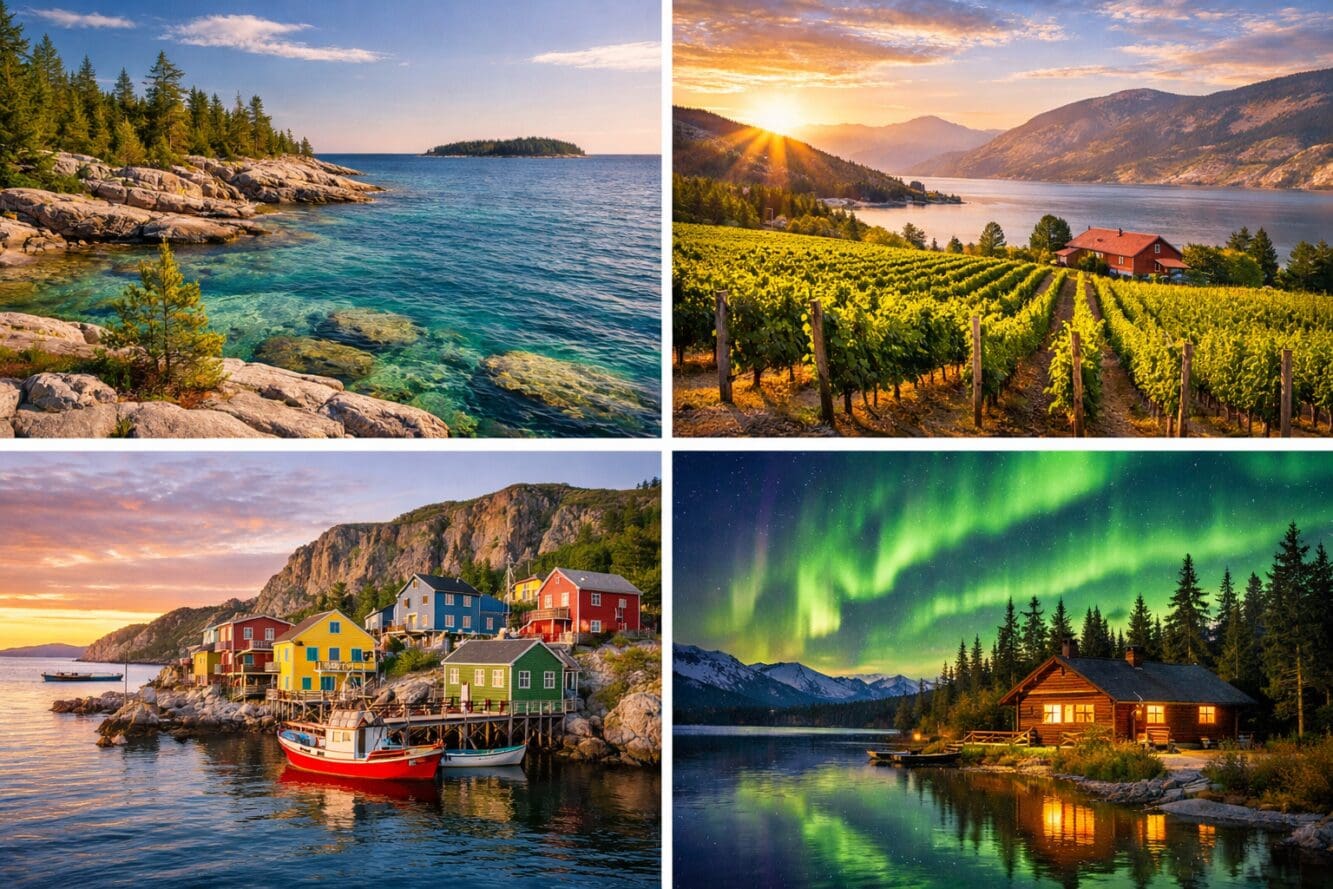
The Rockies, Maritimes, British Columbia’s coast, Ontario’s Georgian Bay region, and Quebec’s cultural corridors are seeing the biggest surge in domestic interest.
Here’s a breakdown of the top regional escapes drawing Canadian travelers in 2026:
The Canadian Rockies (Alberta/British Columbia)
Banff, Jasper, and the Kootenays remain perennial favorites. The combination of mountain scenery, hiking, and hot springs appeals to both adventure seekers and families. Post-wildfire rebuilding in Jasper has also generated a wave of solidarity tourism, with Canadians wanting to support affected communities.
The Maritimes (Nova Scotia, New Brunswick, PEI)
The Cabot Trail, Fundy Coast, and PEI’s red sand beaches offer a slower pace and incredible seafood. Flight prices from central Canada to Halifax have become more competitive as airlines add capacity to meet demand.
Georgian Bay and Ontario’s Near North
For Ontarians, Georgian Bay offers a quick escape without a long drive. The turquoise waters, rocky shoreline, and vibrant local culture make it a standout. Communities like Collingwood, Meaford, and Wasaga Beach host festivals, live music, and outdoor adventures throughout the summer. The Meaford Summerfest is a perfect example of the region’s vibrant seasonal events, and Collingwood’s Sidelaunch Days celebrate the area’s rich waterfront heritage.
British Columbia’s Pacific Coast
Tofino, the Gulf Islands, and the Sunshine Coast draw surfers, kayakers, and anyone looking for rainforest hikes and fresh seafood. The region also appeals to wellness travelers seeking retreats and digital-detox experiences.
Quebec’s Cultural Corridor
Montreal to Quebec City remains one of Canada’s most rewarding road trips. The food scene, historic architecture, and arts festivals provide a European-feeling experience without leaving the country, and without the exchange-rate hit.
Are Canadians Making Values-Based Travel Choices?
Yes. One in five Canadians say they’ll pay more to travel domestically and support Canadian jobs and businesses.
20% of travelers are willing to pay premium prices specifically to keep their vacation dollars in Canada [2]. This values-driven approach goes beyond saving money. It reflects a broader cultural moment where Canadians are actively choosing to invest in their own communities.
This trend is especially visible in smaller towns and rural areas. When travelers book a cabin in Muskoka, eat at a family-run restaurant in Lunenburg, or attend a local music festival in the Georgian Bay area, that spending circulates directly through the local economy. Events like live jazz and blues performances at the Station and the Singhampton Sculpture Forest show how cultural tourism supports small communities.
Choose values-based domestic travel if: you want your vacation spending to have a direct local impact, you care about reducing your carbon footprint from flights, or you want to discover parts of Canada you haven’t seen before.
How Does 2026 Compare to Previous Years for Canadian Travel?
2026 marks a sharp rebound from a soft 2025, with domestic travel gaining share at the expense of U.S. trips.
| Metric | 2025 | 2026 (Projected) | Change |
|---|---|---|---|
| Total vacation spending | ~$39 billion | $47.6 billion | +22% [1] |
| Average household budget | ~$3,700 (est.) | $4,169 | ~+13% [1] |
| U.S. travel likelihood | Declining (28% drop) | 62% less likely [2] | Accelerating decline |
| Canada as top destination | Growing | 37% rank it #1 [2] | Strong domestic preference |
The 2025 travel year was disappointing for many Canadians. Economic uncertainty, lingering inflation, and early signs of U.S.-Canada political friction kept wallets closed. The 2026 rebound reflects both pent-up demand and a deliberate redirection of travel dollars toward domestic and European destinations.
What About Canadians Who Still Want to Travel Internationally?
Europe has emerged as the clear alternative to the U.S., with 25% of travelers ranking it as their top destination.
For Canadians who want an international experience, the destination preference breakdown looks like this [2]:
- Canada: 37%
- Europe: 25%
- Mexico: 9%
- Asia: 9%
- Other: 20%
Europe’s appeal makes sense: it offers cultural richness, historical depth, and a welcoming atmosphere for Canadian travelers. The exchange rate against the euro is less favorable than staying domestic, but for those budgeting $6,354+ per trip, it’s a viable option [1].
Quick tip: Canadians traveling to Europe in 2026 should book flights early, as transatlantic capacity from Canadian airports hasn’t fully kept pace with the surge in demand away from U.S. routes.
Practical Checklist: Planning a Domestic Trip in 2026
For Canadians ready to explore their own country, here’s a step-by-step approach:
- Set a realistic budget. The national average is $4,169 per household. Adjust based on family size and destination.
- Pick your region based on interests. Mountains and adventure? The Rockies. Culture and food? Quebec. Beaches and relaxation? The Maritimes or Georgian Bay.
- Book shoulder season if possible. May, early June, September, and October offer lower prices and fewer crowds.
- Consider driving. Road trips eliminate airfare costs and let you stop at smaller towns along the way.
- Look for provincial park passes. Many provinces offer annual passes under $100 that cover camping and day-use fees.
- Support local businesses. Choose locally owned accommodations, restaurants, and tour operators.
- Check for festivals and events. Summer and fall are packed with music festivals, food events, and cultural celebrations across the country. Wasaga Beach’s summer events are a great example.
FAQ
Q: Why are so many Canadians traveling domestically in 2026?
A: The weak Canadian dollar, a 62% decline in U.S. travel interest, and rising international costs are pushing travelers toward domestic destinations. Canada ranks as the #1 destination for 37% of travelers [2].
Q: How much is the average Canadian household spending on vacation in 2026?
A: The average household vacation budget is $4,169 for 2026, according to Ipsos [1].
Q: What percentage of Canadians are avoiding the U.S. in 2026?
A: 62% of Canadians say they are less likely to visit the U.S. compared to the previous year [2].
Q: What’s the top reason Canadians are avoiding U.S. travel?
A: The political and cultural climate, cited by 57% of respondents, is the leading deterrent [2].
Q: Is domestic travel actually cheaper than going abroad?
A: Yes, in most cases. The average domestic trip budget is about $4,169, while international trips (especially to Europe) average $6,354 [1]. The exchange rate amplifies the gap.
Q: What are the most popular domestic destinations in 2026?
A: The Canadian Rockies, the Maritimes, Georgian Bay, BC’s Pacific Coast, and Quebec’s Montreal-to-Quebec City corridor are all seeing strong demand [6].
Q: Can low-income Canadians still travel domestically?
A: Budget options exist, including camping, house-swapping, and provincial park passes. However, 31% of Canadians say they can’t confidently afford travel in 2026, with 63% citing financial barriers [1].
Q: Are Canadians willing to pay more to support local tourism?
A: Yes. 20% of travelers say they’ll pay premium prices to keep their spending in Canada and support local jobs [2].
Q: What percentage of Canadians say cost is the deciding factor?
A: 58% say cost will ultimately determine where they travel in 2026 [2].
Q: Is Europe a popular alternative to the U.S.?
A: Yes. 25% of Canadian travelers rank Europe as their top destination, making it the second most popular choice after Canada itself [2].
Conclusion
The story of why Canadians are traveling domestically in 2026 comes down to three things: economics, politics, and a genuine rediscovery of what Canada has to offer. The weak dollar makes staying home the smart financial move. The political climate with the U.S. has turned a practical choice into an emotional one. And the sheer variety of Canadian landscapes, from Rocky Mountain peaks to Maritime coastlines to the turquoise waters of Georgian Bay, means travelers aren’t sacrificing quality.
Here’s what to do next:
- Start planning now. Shoulder-season bookings fill up fast in popular regions.
- Set a budget using the $4,169 national average as a benchmark.
- Pick one new region you haven’t visited before. Canada is enormous, and most Canadians have only seen a fraction of it.
- Support local. Choose independent accommodations, eat at local restaurants, and attend community events. Your dollars go further in small-town Canada.
This is the year to explore your own backyard. The numbers say Canadians are already doing it. The question is: where will you go?
References
[1] Canadian Travel Spending Set Soar 2026 Travel Intentions Rebound Soft 2025 – https://www.ipsos.com/en-ca/canadian-travel-spending-set-soar-2026-travel-intentions-rebound-soft-2025
[2] Canadians Continue To Shift Travel Priorities In 2026 – https://www.travelpress.com/canadians-continue-to-shift-travel-priorities-in-2026/
[6] 2026 Travel Trends How Canadians Are Travelling Smarter Not Less – https://travelguardian.ca/en/2026-travel-trends-how-canadians-are-travelling-smarter-not-less/
Content, illustrations, and third-party video appearing on GEORGIANBAYNEWS.COM may be generated or curated with AI assistance or reproduced pursuant to the fair dealing provisions of the Copyright Act, R.S.C. 1985, c. C-42. Attribution and hyperlinks to original sources are provided in acknowledgment of applicable intellectual property rights. Such referencing is intended to direct traffic to and support the original rights holders’ platforms.