



















Aging in Place: Home Modifications That Make a Real Difference
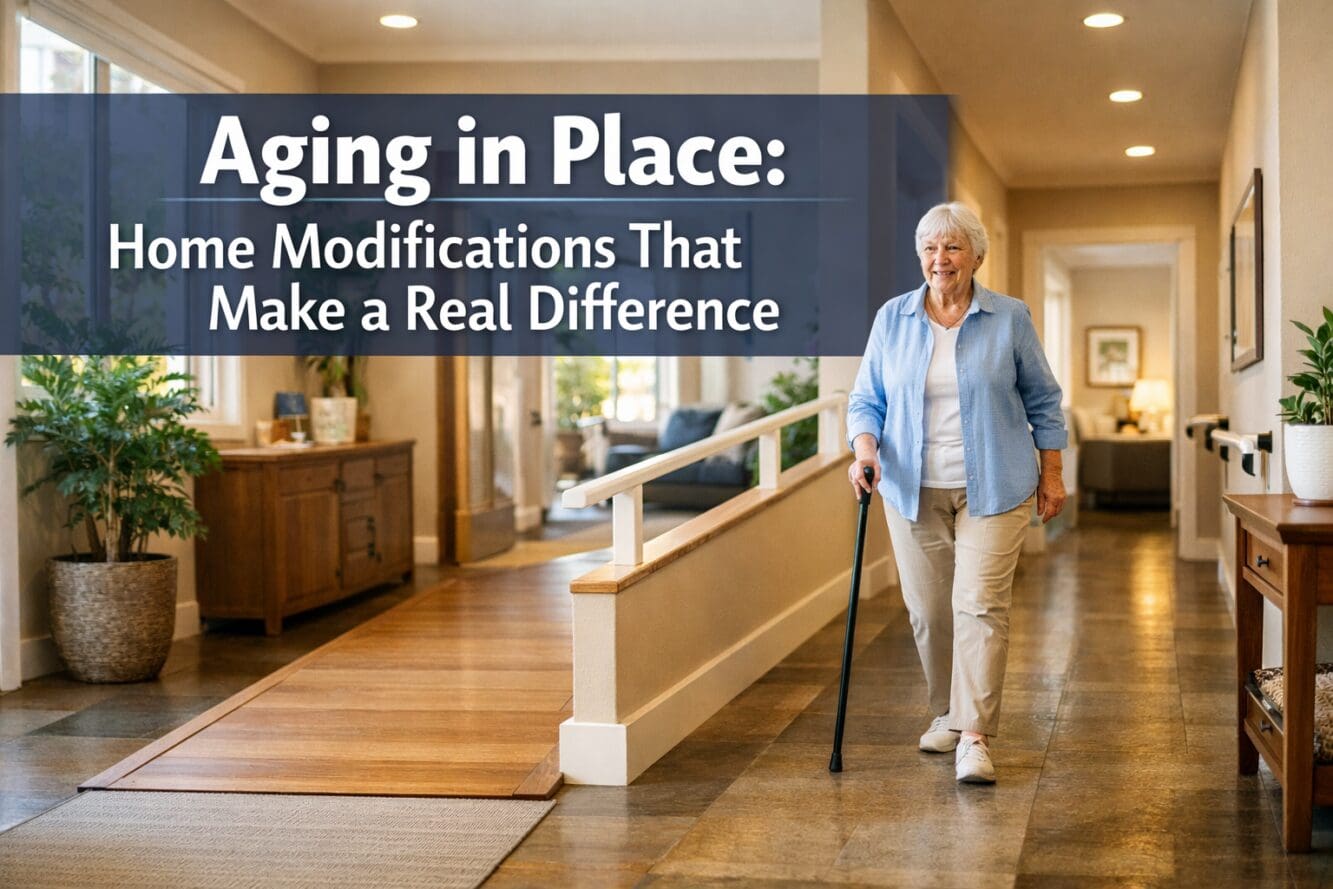
When Wendy turned 79, she made a decision that surprised her adult children: she wasn’t moving to a retirement community. “This is my home,” she told them firmly, standing in the kitchen where she’d raised her family for four decades. But Wendy was smart enough to know that aging in place successfully would require some changes. Within six months, her home had been transformed with thoughtful modifications that allowed her to maintain her independence safely and comfortably—a story that’s becoming increasingly common across North America.
As our population ages, more seniors are choosing to remain in their own homes rather than relocate to assisted living facilities. This trend toward aging in place represents not just a preference, but a fundamental shift in how we approach senior living. The right home modifications can mean the difference between struggling daily and thriving independently well into your golden years.
Key Takeaways
• Strategic home modifications can prevent falls and injuries, which are the leading cause of hospitalization for seniors over 65
• Bathroom and kitchen updates deliver the highest return on investment for aging in place, combining safety with maintained home value
• Professional assessments from occupational therapists identify hidden hazards and prioritize modifications based on individual needs
• Financial assistance programs exist at federal, provincial, and state levels to help offset modification costs
• Early planning allows for gradual, budget-friendly improvements rather than emergency renovations after an incident
Understanding the Importance of Aging in Place
The concept of aging in place goes far beyond simple stubbornness or nostalgia. Research consistently shows that seniors who remain in familiar environments experience better mental health outcomes, maintain stronger social connections, and often enjoy improved physical health compared to those who relocate [1].
Why seniors prefer staying home:
- 🏡 Emotional attachment to memories and community
- 💰 Cost savings compared to assisted living ($4,000-$8,000 monthly)
- 🤝 Proximity to established support networks
- 🧠 Cognitive benefits of familiar surroundings
- 🔑 Maintained sense of independence and control
The financial argument alone is compelling. The average cost of assisted living in Canada ranges from $3,500 to $6,000 per month, while in the United States, it can exceed $4,500 monthly [2]. Even with significant home modifications, most families find that aging in place remains substantially more affordable over time.
However, the standard home wasn’t designed with aging bodies in mind. What worked perfectly at 45 becomes increasingly challenging at 75. The good news? Most homes can be adapted effectively with the right modifications, allowing seniors to maintain their quality of life while prioritizing their health and wellness.
Critical Safety Modifications: Where to Start
When Robert, a retired contractor, began helping his mother prepare her home for aging in place, he was surprised to discover that the most dangerous areas weren’t where he expected. “I thought stairs would be the biggest issue,” he recalls, “but it was actually the bathroom and inadequate lighting that posed the greatest risks.”
The Bathroom: Priority Number One
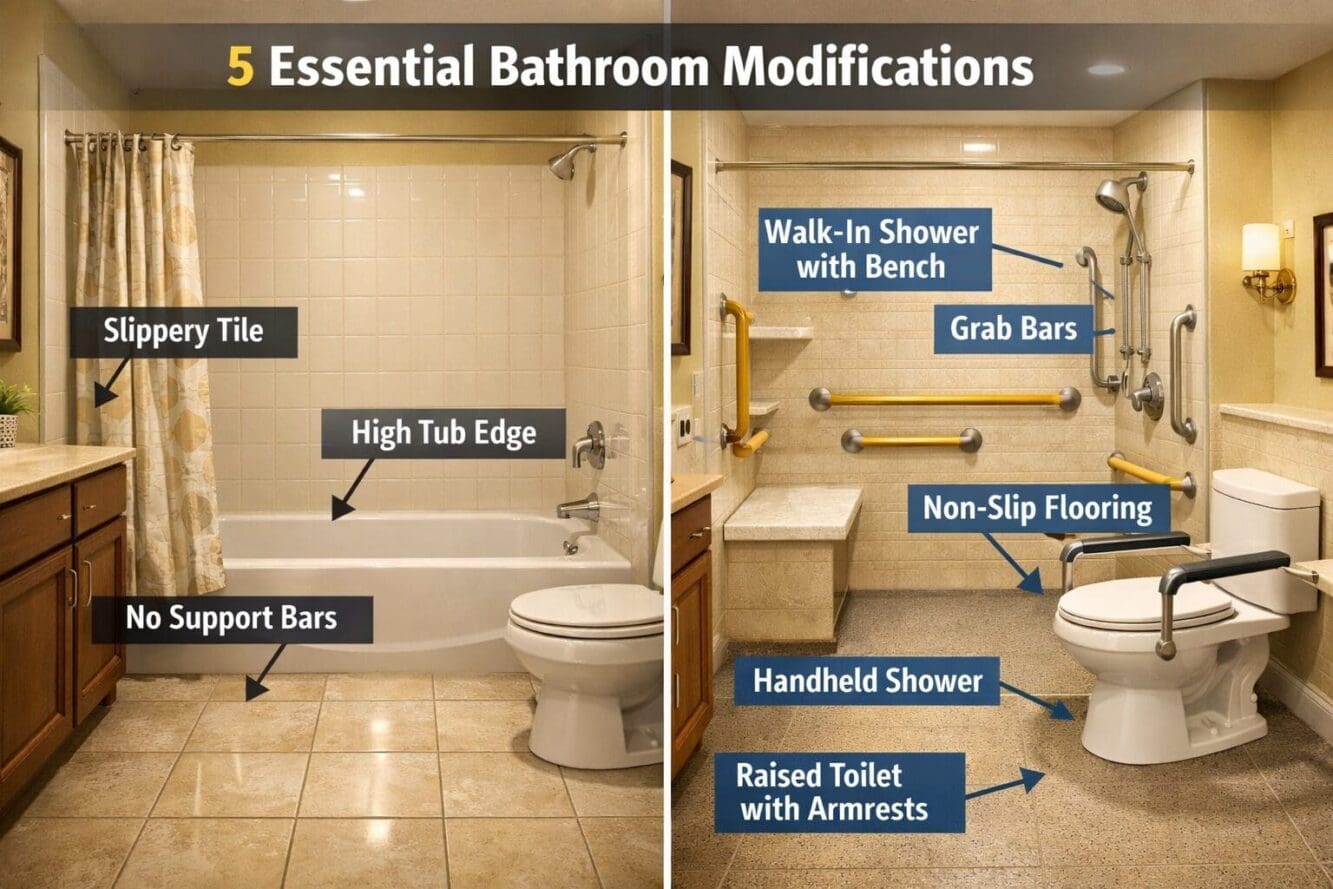
Falls in bathrooms account for nearly 80% of home accidents among seniors [3]. This single room requires the most immediate attention when planning aging in place modifications.
Essential bathroom modifications:
| Modification | Purpose | Approximate Cost |
|---|---|---|
| Grab bars | Prevent falls, assist with balance | $100-$300 per bar installed |
| Walk-in shower or tub | Eliminate dangerous step-over | $3,000-$10,000 |
| Shower bench/seat | Reduce fall risk while bathing | $50-$500 |
| Non-slip flooring | Improve traction when wet | $800-$3,000 |
| Raised toilet | Easier sitting and standing | $200-$800 |
| Handheld showerhead | Maintain control while seated | $50-$200 |
“The $200 I spent on grab bars and a shower seat literally saved my life. I slipped getting out of the tub, but the grab bar was right there. Without it, I would have fallen hard.” — Dorothy, 82, Toronto
Don’t underestimate the importance of proper installation. Grab bars must be anchored into wall studs or blocking, not just drywall. Many seniors have been injured when improperly installed safety features failed when needed most.
Lighting: The Overlooked Safety Feature
Adequate lighting becomes increasingly critical as vision naturally declines with age. Yet it’s one of the most neglected aspects of home safety.
Lighting improvements that matter:
- 💡 Motion-sensor lights in hallways and bathrooms (no fumbling for switches)
- 💡 Under-cabinet lighting in kitchens for task visibility
- 💡 Increased wattage throughout the home (seniors need 2-3x more light)
- 💡 Night lights along pathways to bathrooms
- 💡 Elimination of glare and shadows that obscure hazards
- 💡 Rocker-style light switches (easier to operate than toggles)
Installing motion-activated lighting in key areas provides safety without requiring seniors to remember to turn lights on and off—a simple modification that prevents countless nighttime falls. For those interested in maintaining overall wellness while aging, stress-relieving practices can complement physical home modifications.
Flooring and Pathways
Tripping hazards lurk throughout most homes, often invisible to younger family members but dangerous obstacles for aging bodies.
Flooring modifications include:
- Removing or securing throw rugs and runners
- Installing non-slip flooring materials
- Ensuring smooth transitions between different flooring types
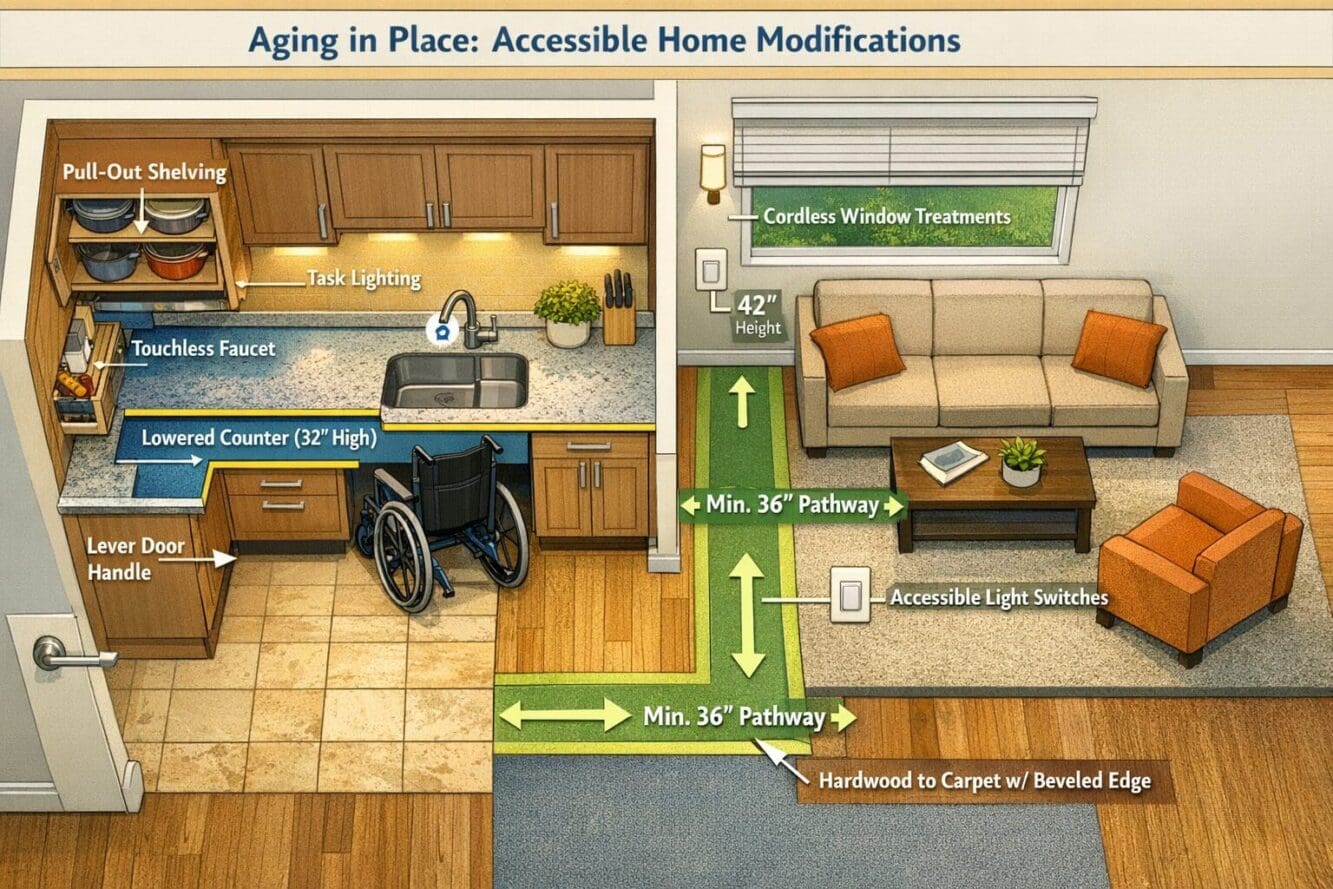
- Widening doorways to 36 inches minimum (wheelchair accessible)
- Creating clear pathways with furniture arrangement
- Removing clutter and unnecessary furniture
- Installing beveled or ramped transitions instead of thresholds
Carpet can actually be beneficial for seniors—it provides cushioning if falls occur and offers better traction than hardwood. However, it must be low-pile, tightly woven, and completely secured to prevent tripping.
Kitchen Modifications for Independence
The kitchen represents independence and the ability to care for oneself. Thoughtful modifications allow seniors to continue cooking safely, which contributes significantly to nutrition and quality of life.
Smart kitchen updates:
🔧 Lower countertop sections for seated food preparation
🔧 Pull-out shelving instead of deep cabinets requiring reaching
🔧 Lever-style faucets easier to operate than knobs
🔧 Front-control ranges eliminate reaching over hot burners
🔧 Contrasting edge strips on counters for visibility
🔧 Lazy Susans in corner cabinets for easier access
🔧 Touchless or motion-sensor faucets for convenience
🔧 Anti-scald devices on faucets to prevent burns
🔧 Side-by-side refrigerators instead of top-freezer models
Many of these modifications also increase home value, making them wise investments even beyond their safety benefits. Similar to how maintaining healthy eating habits supports overall wellness, an accessible kitchen enables continued healthy food preparation.
Bedroom and Living Space Adaptations
While bathrooms and kitchens get most of the attention, bedroom and living area modifications significantly impact daily comfort and safety for aging in place.
Bedroom Essentials
The bedroom should be a sanctuary of safety:
- Adjustable-height beds for easier entry and exit
- Bedside lighting with easy-reach switches
- Clear pathways on both sides of the bed
- Nightstands within arm’s reach
- Telephone and emergency call button nearby
- Firm mattress that supports movement
- Bed rails if balance is compromised
Consider relocating the primary bedroom to the main floor if stairs become challenging. This single change can dramatically improve safety and reduce daily strain, even if it means converting a former dining room or office.
Living Areas
Living spaces should promote both safety and social engagement:
- Furniture at appropriate heights (seats 18-20 inches high)
- Firm cushions that assist with standing
- Clear traffic patterns throughout
- Cordless window treatments (eliminate tripping hazards)
- Remote-controlled ceiling fans and lights
- Accessible storage for frequently used items
- Removal of low coffee tables and ottomans
Creating spaces that support physical activity within the home helps seniors maintain mobility and strength, which are crucial for successful aging in place.
Stairways and Entrances: Maintaining Access
For homes with multiple levels, stairways present significant challenges but can be made safer with proper modifications.
Stairway Safety Measures
Critical stair modifications:
| Feature | Benefit | Consideration |
|---|---|---|
| Handrails on both sides | Provides support regardless of direction | Must extend beyond top and bottom steps |
| Contrasting stair edges | Improves depth perception | High-contrast tape or paint |
| Adequate lighting | Prevents missteps | Install at top and bottom |
| Non-slip treads | Prevents slipping | Replace worn carpet or add treads |
| Stairlifts | Eliminates climbing | $3,000-$5,000 installed |
Stairlifts have become increasingly affordable and reliable, offering a practical solution when relocating bedrooms isn’t feasible. Modern models are sleek, quiet, and can be installed without major renovations.
Entrance Accessibility
Making entrances safe and accessible:
- Installing ramps with proper slope (1:12 ratio)
- Adding railings to existing steps
- Improving lighting at all entrances
- Creating covered entryways for weather protection
- Installing lever-style door handles
- Adding keyless entry systems
- Ensuring doorbells and intercoms are accessible
- Widening doorways for walker or wheelchair access
A well-designed entrance ramp not only improves safety but maintains curb appeal when professionally installed. Many communities offer grants and assistance programs to help fund these modifications.
Technology and Smart Home Features
Modern technology offers remarkable solutions for aging in place, from emergency response systems to automated home controls.
Essential Technology for Seniors
Smart home features that support independence:
📱 Medical alert systems (wearable emergency buttons)
📱 Smart doorbells with video (see visitors without answering)
📱 Voice-activated assistants (control lights, temperature, calls)
📱 Automated medication dispensers (reminders and tracking)
📱 Motion sensors (alert family to unusual inactivity)
📱 Smart thermostats (maintain comfortable temperatures)
📱 Video monitoring (family can check in remotely)
📱 Fall detection devices (automatic emergency calls)
These technologies provide peace of mind for both seniors and their families. Many adult children report sleeping better knowing their parents have emergency response systems and monitoring in place.
“My mom was resistant to the medical alert button at first. Then she fell in the garden and couldn’t get up. She pressed the button, help arrived within minutes, and now she wears it religiously. It’s given her confidence to maintain her independence.” — James, 54, Vancouver
Financial Assistance and Planning
The cost of home modifications can seem daunting, but numerous programs exist to help offset expenses.
Available Financial Resources
Funding sources for aging in place modifications:
🏦 Canada:
- Home Accessibility Tax Credit (up to $10,000 in eligible expenses)
- Provincial programs (vary by province)
- Veterans Affairs Canada (for eligible veterans)
- CMHC grants for accessibility improvements
🏦 United States:
- Medicaid Home and Community-Based Services waivers
- Veterans Affairs Specially Adapted Housing grants
- State-specific programs (check local Area Agency on Aging)
- Medicare (limited coverage for specific medical equipment)
- Property tax exemptions for accessibility improvements
🏦 Other Resources:
- Reverse mortgages (for homeowners 62+)
- Home equity lines of credit
- Non-profit organizations (Rebuilding Together, Habitat for Humanity)
- Community development block grants
Prioritizing Modifications on a Budget
Not every modification needs to happen simultaneously. Smart prioritization allows for gradual improvements aligned with budget constraints.
Priority levels for modifications:
Immediate (Safety-Critical):
- Bathroom grab bars and non-slip surfaces
- Adequate lighting throughout
- Removal of tripping hazards
- Handrails on stairs
Short-term (Within 6-12 months):
- Kitchen accessibility updates
- Entrance ramps or railings
- Bedroom relocation if needed
- Emergency response system
Long-term (As budget allows):
- Major bathroom renovation (walk-in shower)
- Stairlift installation
- Smart home technology
- Widening doorways
Starting with low-cost, high-impact modifications builds momentum and demonstrates value, making it easier to justify larger investments later. Just as managing household expenses wisely helps seniors maintain financial independence, strategic planning for home modifications ensures resources are used effectively.
Working with Professionals: When to Call in Experts
While some modifications are DIY-friendly, others absolutely require professional expertise—both for safety and to ensure compliance with building codes.
The Value of Professional Assessments
Occupational therapists (OTs) specialize in home safety assessments for aging in place. A comprehensive OT evaluation typically costs $200-$500 but can save thousands by:
- Identifying hazards you might overlook
- Prioritizing modifications based on individual needs
- Recommending specific products and solutions
- Providing documentation for insurance or assistance programs
- Ensuring modifications match physical capabilities
Choosing the Right Contractors
When hiring contractors for modifications, seek those with experience in accessibility and aging in place projects.
Questions to ask potential contractors:
✓ Do you have experience with aging in place modifications?
✓ Can you provide references from similar projects?
✓ Are you licensed, bonded, and insured?
✓ Do you understand local building codes for accessibility?
✓ Can you work with occupational therapist recommendations?
✓ What warranties do you provide on work?
✓ Can you provide detailed written estimates?
Certified Aging-in-Place Specialists (CAPS) have specific training in home modifications for seniors. The National Association of Home Builders maintains a directory of CAPS professionals.
Real Stories: Successful Aging in Place
Thomas and Helen’s Story:
After Helen suffered a minor stroke at 76, the couple faced a decision: move to assisted living or modify their home of 40 years. They chose to stay. With help from their daughter and a CAPS contractor, they invested $18,000 in modifications including a walk-in shower, kitchen updates, and a stairlift. “Best money we ever spent,” Thomas says. “Helen regained her confidence, and we’re still in the home we love. We’ve been here five more years now, and we’re not going anywhere.”
Patricia’s Proactive Approach:
At 68, Patricia wasn’t experiencing mobility issues yet, but she’d watched her mother struggle after waiting too long to modify her home. Patricia took a different approach, making gradual improvements over several years: grab bars at 68, better lighting at 70, kitchen modifications at 72, and a walk-in shower at 74. “I didn’t wait for a crisis,” she explains. “Each modification was planned, budgeted, and done right. Now at 76, my home is ready for whatever comes next.”
These stories illustrate an important principle: proactive modifications are easier, less expensive, and less stressful than reactive emergency changes after an injury or health crisis.
Common Mistakes to Avoid
Even with the best intentions, families often make costly mistakes when planning aging in place modifications.
Pitfalls to Avoid
❌ Waiting for an emergency before making changes
❌ Focusing solely on current needs without planning ahead
❌ Choosing aesthetics over functionality
❌ DIY installation of critical safety features like grab bars
❌ Ignoring professional assessments to save money
❌ Making modifications without senior input (reduces buy-in)
❌ Overlooking lighting in favor of more obvious modifications
❌ Assuming Medicare/insurance covers modifications (most don’t)
❌ Neglecting maintenance of installed safety features
❌ Forgetting about outdoor spaces (walkways, gardens, entries)
The most successful aging in place plans involve the senior in all decisions, balance immediate safety with long-term needs, and prioritize function while maintaining dignity and aesthetics.
Creating Your Aging in Place Action Plan
Ready to begin? A systematic approach ensures nothing critical is overlooked.
Step-by-Step Planning Process
1. Conduct a Home Safety Assessment
- Walk through every room identifying potential hazards
- Consider current and future mobility needs
- Use a professional OT assessment if possible
- Document findings with photos and notes
2. Prioritize Modifications
- List critical safety issues first
- Consider frequency of use for each space
- Balance urgency with available budget
- Create timeline for implementation
3. Research Costs and Funding
- Get multiple quotes for major work
- Investigate available grants and programs
- Explore financing options if needed
- Build in 15-20% contingency for unexpected costs
4. Assemble Your Team
- Occupational therapist for assessment
- CAPS-certified contractor for major work
- Handyman for minor modifications
- Family members for support and oversight
5. Implement in Phases
- Start with quick wins (lighting, grab bars)
- Move to medium-complexity projects (flooring, kitchen)
- Complete major renovations last (bathroom, stairlift)
- Test and adjust as needed
6. Maintain and Update
- Regularly inspect safety features
- Update plan as needs change
- Stay current with new technologies
- Reassess annually
Similar to how maintaining physical fitness requires ongoing commitment, successful aging in place demands continuous attention to home safety and functionality.
Conclusion: Investing in Independence
Aging in place isn’t just about staying in a familiar house—it’s about maintaining independence, dignity, and quality of life throughout the senior years. The home modifications discussed in this article represent investments in safety, comfort, and continued autonomy.
Margaret, whose story opened this article, recently celebrated her 85th birthday in the home she refused to leave seven years ago. The modifications she made—grab bars, improved lighting, a walk-in shower, and kitchen updates—have allowed her to maintain the independence she values so deeply. “I’m still here,” she says with pride, “and I’m still thriving.”
The statistics support her experience: seniors who successfully age in place with appropriate modifications report higher life satisfaction, better health outcomes, and stronger community connections than those who relocate [4]. The key is planning ahead, making strategic modifications, and creating a home environment that adapts to changing needs.
Your Next Steps
Don’t wait for a crisis to begin planning. Take action today:
- Schedule a home safety assessment this month—professional or self-guided
- Research available funding programs in your area
- Make one immediate improvement (install grab bars, improve lighting, remove tripping hazards)
- Have the conversation with aging parents or for yourself about long-term plans
- Create a modification budget and timeline for the next 1-3 years
- Connect with professionals (OT, CAPS contractor) to understand options
The home you love can remain the home you thrive in throughout your senior years. With thoughtful planning and strategic modifications, aging in place becomes not just possible, but comfortable, safe, and deeply rewarding.
Remember: the best time to make aging in place modifications was five years ago. The second-best time is today.
For more information on maintaining health and wellness as you age, explore resources on staying active and building resilience in your daily life.
References
[1] Wiles, J. L., et al. (2012). “The Meaning of ‘Aging in Place’ to Older People.” The Gerontologist, 52(3), 357-366.
[2] Genworth Cost of Care Survey (2024). “Cost of Long-Term Care Across North America.”
[3] Centers for Disease Control and Prevention (2025). “Important Facts about Falls.” National Center for Injury Prevention and Control.
[4] National Institute on Aging (2025). “Aging in Place: Growing Older at Home.” U.S. Department of Health and Human Services.
Some content and illustrations on GEORGIANBAYNEWS.COM are created with the assistance of AI tools.