




















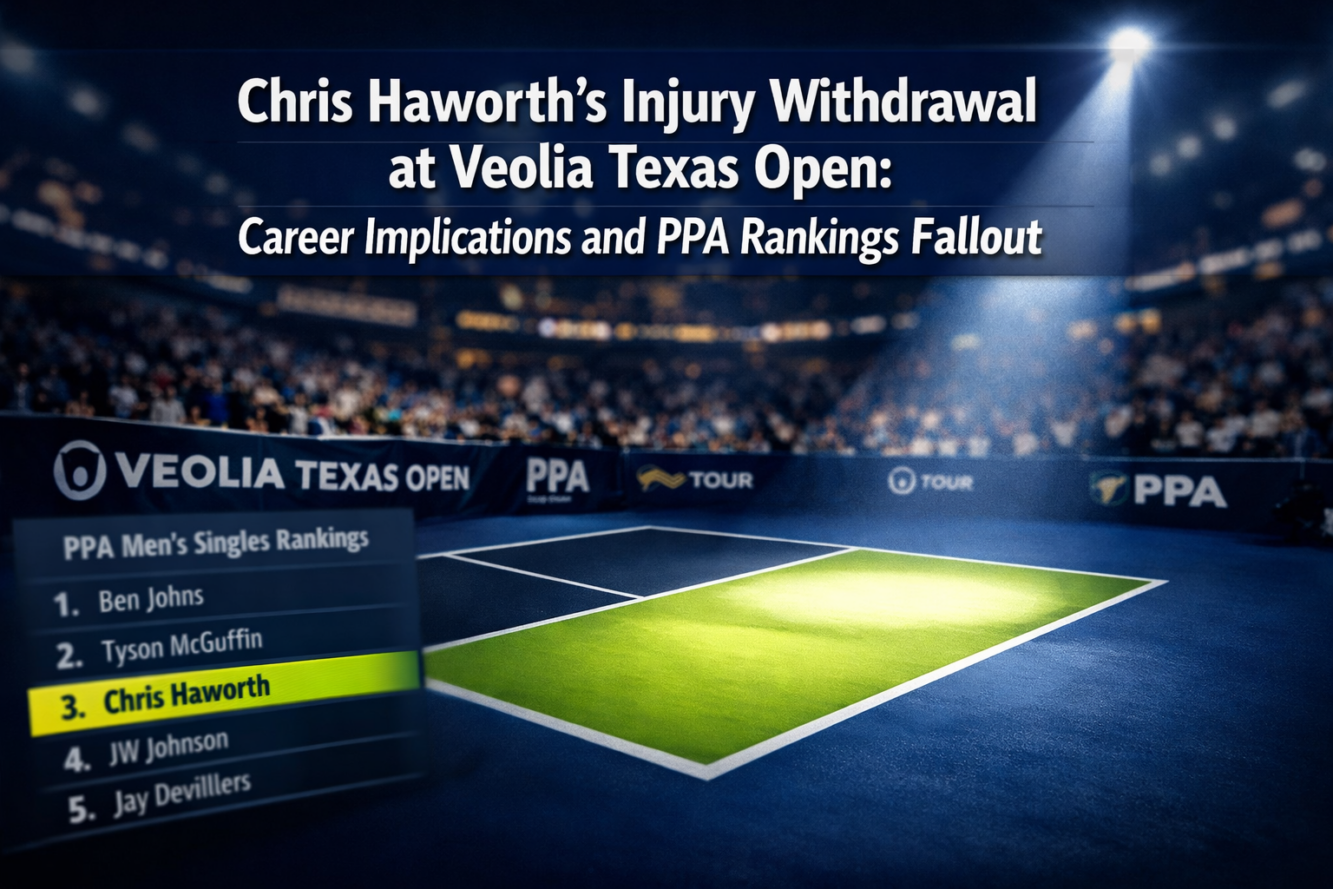
Chris Haworth’s Injury Withdrawal at Veolia Texas Open: Career Implications and PPA Rankings Fallout

Sharing is SO MUCH APPRECIATED!


Last updated: March 14, 2026
Quick Answer
Chris Haworth withdrew from men’s singles competition at the Veolia Texas Open (March 9-15, 2026) due to illness, halting his momentum after back-to-back titles at the Daytona Beach Open and PPA Masters. The withdrawal threatens his newly achieved world #3 ranking and opens opportunities for Hunter Johnson and Federico Staksrud to solidify their positions at the top of the PPA men’s singles standings.

Key Takeaways
- Chris Haworth withdrew from men’s singles at the 2026 Veolia Texas Open despite entering as the #2 seed
- The withdrawal follows an earlier illness-related exit from the Zimmer Biomet Cape Coral Open in February 2026
- Haworth recently climbed to world #3 after winning consecutive titles at Daytona Beach and the PPA Masters in January
- Hunter Johnson and Federico Staksrud are now positioned to extend their lead in the race for the #1 ranking
- The absence creates bracket opportunities for Jack Sock, Dylan Frazier, and other contenders at the Texas event
- Haworth’s doubles competitions remain active, suggesting the withdrawal is singles-specific
- Recovery timeline and return date remain uncertain, with implications for upcoming PPA Tour stops
What Happened with Chris Haworth’s Injury Withdrawal at Veolia Texas Open?
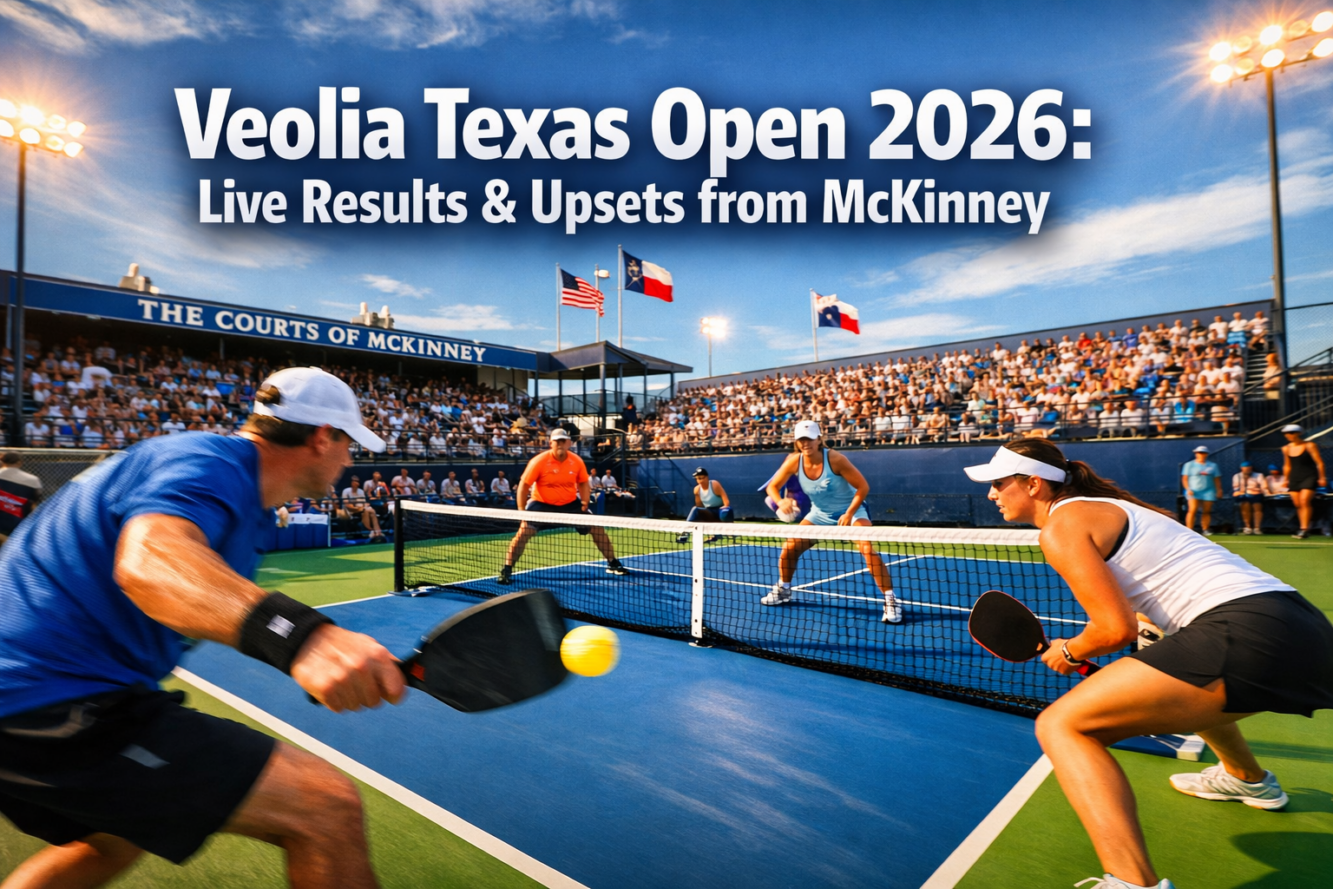
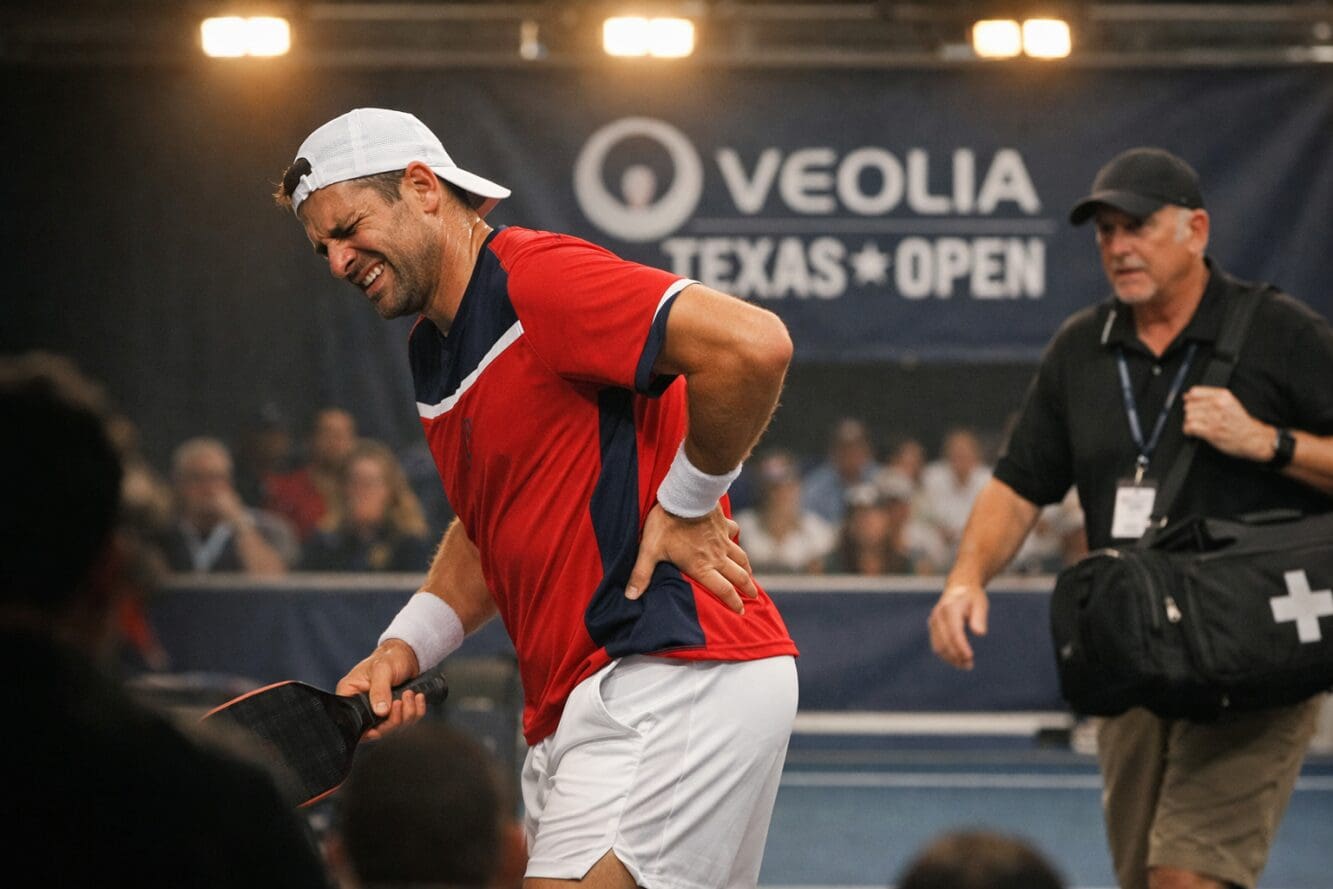
Chris Haworth pulled out of the men’s singles draw at the Veolia Texas Open during the March 9-15, 2026 tournament window. Despite being seeded #2 in the event, Haworth could not continue competing in singles matches due to illness-related complications.
This marks the second consecutive PPA Tour event where health issues have forced Haworth to withdraw. In February 2026, he exited the Zimmer Biomet Cape Coral Open due to illness, missing men’s singles, mixed doubles, and men’s doubles competitions in Florida.
The timing is particularly significant because Haworth entered the Texas Open riding exceptional momentum. He captured back-to-back men’s singles championships at the Daytona Beach Open in late December 2025 and the PPA Masters in January 2026, where he defeated Jack Sock 11-8, 11-8 in the final.
Key difference: Unlike the Cape Coral withdrawal where all events were affected, Haworth appears to be continuing in doubles competitions at the Texas Open, suggesting the withdrawal is specifically related to the physical demands of singles play.

How Does Chris Haworth’s Injury Withdrawal at Veolia Texas Open Impact PPA Rankings?
Haworth’s absence from singles competition directly threatens his world #3 ranking and creates a wider points gap between him and the top two players. When a seeded player withdraws, they forfeit potential ranking points while competitors who advance collect points that widen the standings separation.
Immediate ranking consequences include:
- Lost point opportunities: As the #2 seed, Haworth was positioned for a deep tournament run that could have challenged the top two rankings
- Competitor advancement: Hunter Johnson and Federico Staksrud can now extend their lead without facing one of their strongest challengers
- Bracket reshuffling: Lower-seeded players receive easier paths to advancement, potentially earning career-best results
- Momentum disruption: Consecutive withdrawals interrupt the ranking algorithm’s recency weighting that favored Haworth’s recent wins
The PPA Tour uses a rolling points system where recent tournament performance carries significant weight. Missing multiple events in a two-month span means Haworth collects zero points while his competitors accumulate results, creating mathematical disadvantages that compound over time.
Choose singles-focused recovery if: Your goal is protecting long-term ranking position and championship viability rather than maintaining short-term tournament appearance streaks.

What Were the Career Implications Before Chris Haworth’s Injury Withdrawal at Veolia Texas Open?
Before the Texas Open withdrawal, Haworth was experiencing the strongest stretch of his professional pickleball career. His consecutive championship victories positioned him as a legitimate contender for the #1 ranking and established him as a must-watch player for 2026.
Pre-withdrawal career trajectory:
- Ranking ascent: Climbed to world #3, his highest career position
- Title streak: Two consecutive PPA Tour singles championships
- Head-to-head dominance: Defeated top-10 players including Jack Sock in finals competition
- Tournament seeding: Earned #2 seed at Texas Open, reflecting his elevated status
- Sponsorship momentum: Recent success typically correlates with increased endorsement opportunities
The PPA Masters victory over Sock was particularly significant because it demonstrated Haworth could defeat established tennis professionals who transitioned to pickleball with built-in name recognition and athletic pedigrees. That 11-8, 11-8 straight-game victory suggested Haworth had reached a new competitive level.
Common mistake: Assuming consecutive titles guarantee sustained ranking position. The PPA system requires consistent tournament participation because points decay and competitors continuously earn new results.
Who Benefits Most from Chris Haworth’s Injury Withdrawal at Veolia Texas Open?
Hunter Johnson and Federico Staksrud, currently battling for the #1 ranking, gain the most significant advantages from Haworth’s absence. With their closest pursuer sidelined, both players can focus on their head-to-head competition without worrying about a surging third contender.
Primary beneficiaries:
- Hunter Johnson (#1): Can extend his points lead and solidify top ranking with deep Texas Open run
- Federico Staksrud (#2): Opportunity to close gap with Johnson or potentially claim #1 without facing Haworth
- Jack Sock (#4): Moves up in effective seeding and gains easier bracket path
- Dylan Frazier (#5): Increased probability of career-best result and ranking advancement
- Unseeded players: Bracket opens for breakthrough performances that can launch careers
For those interested in professional pickleball tournament dynamics, understanding how player matchups affect tournament outcomes provides valuable context for analyzing these competitive situations.
Decision rule: If you’re ranked #4-#10, a top-three withdrawal represents your best opportunity for a career-defining tournament result that can change sponsorship and seeding trajectories.
What Happens Next in the PPA Rankings Race After Chris Haworth’s Injury Withdrawal?
The immediate future centers on whether Haworth can return to full health before the next major PPA Tour event. Each missed tournament compounds the ranking disadvantage and allows Johnson and Staksrud to establish more comfortable leads.
Near-term scenarios:
- Quick recovery (2-3 weeks): Haworth returns for the next PPA stop, minimizes ranking damage, and resumes pursuit of top-two positions
- Extended absence (4-6 weeks): Rankings gap widens significantly, requiring multiple championship performances to recover position
- Recurring issues: Pattern of withdrawals damages ranking beyond single-season recovery, potentially dropping outside top 5
The PPA Tour schedule operates on a condensed timeline with events occurring every 2-3 weeks during peak season. Missing even one additional tournament means Haworth would have participated in only one of four consecutive major events, creating substantial mathematical disadvantages in the rankings algorithm.
Edge case consideration: If Haworth continues competing in doubles while withdrawing from singles, he maintains tour presence and sponsorship visibility but sacrifices singles ranking position. This strategy might preserve long-term career health while accepting short-term ranking consequences.
How Common Are Injury Withdrawals in Professional Pickleball?
Professional pickleball’s explosive growth has brought increased attention to player health and injury management. The sport’s rapid side-to-side movements, explosive starts and stops, and tournament formats requiring multiple matches per day create significant physical demands.
Common injury patterns in professional pickleball:
- Lower body issues: Ankle sprains, knee problems, and Achilles tendon stress from court movement
- Shoulder injuries: Repetitive overhead motions in serves and slams
- Back strain: Twisting movements and bent-over ready positions
- Illness-related withdrawals: Travel schedules and indoor tournament environments increase illness exposure
- Overuse injuries: Compressed tournament schedules with limited recovery time between events
Haworth’s illness-related withdrawals differ from acute injuries but reflect the broader challenge of maintaining peak performance across a demanding tour schedule. The PPA Tour’s growth means more tournaments, more travel, and less recovery time between competitive weekends.
For aspiring professionals: Build training programs that emphasize injury prevention, mobility work, and recovery protocols rather than only focusing on skill development. The ability to stay healthy across a full season often determines ranking success more than peak performance ability.
What Should Fans Watch for in Chris Haworth’s Recovery and Return?
Monitoring Haworth’s return involves tracking both his tournament participation announcements and his performance level when he resumes competition. A rushed return often leads to diminished results or re-injury, while excessive caution can result in lost ranking ground that takes months to recover.
Key indicators to monitor:
- Official return announcement: PPA Tour entry lists typically post 7-10 days before events
- Event selection: Whether he enters singles only, doubles only, or full schedule
- Seeding position: Changes reflect ranking movement during his absence
- First-match performance: Rust and conditioning levels become apparent in opening rounds
- Tournament stamina: Ability to maintain performance level across multiple matches per day
The pattern of withdrawing from singles while potentially continuing doubles suggests Haworth and his team are making strategic decisions about physical load management. This approach prioritizes long-term career health over short-term ranking protection.
Common mistake fans make: Criticizing players for “not being tough enough” when they withdraw. Professional athletes face career-threatening consequences from competing while injured, and strategic withdrawals often represent the smarter long-term decision.
For those following professional pickleball storylines, similar competitive dynamics play out across the tour, as seen in other major tournament matchups.
FAQ
Is Chris Haworth injured or ill at the Veolia Texas Open?
Haworth withdrew due to illness, not acute injury. This follows a similar illness-related withdrawal at the Cape Coral Open in February 2026.
Will Chris Haworth lose his #3 world ranking?
His ranking is at risk. Missing tournaments means zero points earned while competitors accumulate results, potentially dropping him in standings depending on others’ performances.
When will Chris Haworth return to competition?
No official return date has been announced. His next tournament appearance will depend on recovery timeline and medical clearance.
Did Chris Haworth withdraw from doubles at Texas Open too?
Reports suggest he may be continuing in doubles competitions, indicating the withdrawal is specific to the physical demands of singles play.
Who replaces Chris Haworth in the Texas Open bracket?
The next eligible player in the entry list receives his bracket position, and all subsequent seeds adjust upward by one position.
How many tournaments has Chris Haworth missed in 2026?
He has withdrawn from at least two PPA Tour events: the Cape Coral Open (February) and Veolia Texas Open men’s singles (March).
Can Chris Haworth still win the 2026 PPA Tour championship?
Yes, but each missed tournament makes it mathematically harder. He would need multiple championship performances and favorable results from current leaders.
What caused Chris Haworth’s illness?
Specific medical details have not been publicly disclosed. Professional athletes typically maintain privacy regarding health information.
Is this Chris Haworth’s first major withdrawal?
The Cape Coral and Texas Open withdrawals represent his first consecutive missed events during his rise to top-three ranking status.
How does PPA Tour handle withdrawal prize money?
Players who withdraw typically forfeit prize money for that event. Specific PPA policies govern whether entry fees are refunded based on withdrawal timing and circumstances.
Will sponsors drop Chris Haworth after these withdrawals?
Unlikely in the short term. His recent championship performances and #3 ranking provide substantial value. Extended absences could affect future sponsorship negotiations.
What’s the difference between injury and illness withdrawal?
Injury withdrawals involve physical damage to muscles, joints, or bones. Illness withdrawals involve systemic health issues like infections, viruses, or other medical conditions affecting overall performance capacity.
Conclusion
Chris Haworth’s withdrawal from men’s singles at the Veolia Texas Open represents a critical inflection point in his breakout 2026 season. After climbing to world #3 with consecutive championship victories, the illness-forced exit threatens to derail his momentum and widen the gap between him and the top-two ranked players, Hunter Johnson and Federico Staksrud.
The career implications extend beyond immediate ranking consequences. Professional pickleball’s compressed tournament schedule means missing multiple events creates compounding disadvantages that require months of championship-level performance to overcome. Haworth’s team now faces strategic decisions about balancing short-term ranking protection against long-term career health.
For fans and followers of professional pickleball:
- Monitor official PPA Tour entry lists for Haworth’s return announcement
- Track ranking movements to understand how the top-five positions shift during his absence
- Watch for performance indicators when he returns, particularly stamina across multi-match days
- Follow the Johnson-Staksrud battle for #1, which now unfolds without their closest pursuer
The next 4-6 weeks will determine whether Haworth’s rise to elite status represents a sustained breakthrough or a brief peak interrupted by health challenges. His ability to return at full strength and resume winning will define his 2026 season and establish whether he can legitimately challenge for the year-end #1 ranking.
Professional sports demand both exceptional performance and durable health. Haworth’s situation reminds us that in pickleball’s explosive growth era, managing the physical demands of an expanding tour schedule has become as important as mastering the sport’s technical and tactical elements.
Content, illustrations, and third-party video appearing on GEORGIANBAYNEWS.COM may be generated or curated with AI assistance or reproduced pursuant to the fair dealing provisions of the Copyright Act, R.S.C. 1985, c. C-42. Attribution and hyperlinks to original sources are provided in acknowledgment of applicable intellectual property rights. Such referencing is intended to direct traffic to and support the original rights holders’ platforms.
Sharing is SO MUCH APPRECIATED!