






















Climate-Resilient Perennials for Canada’s 2026 Extremes: Fast-Multiplying Varieties That Bounce Back

Last updated: March 3, 2026
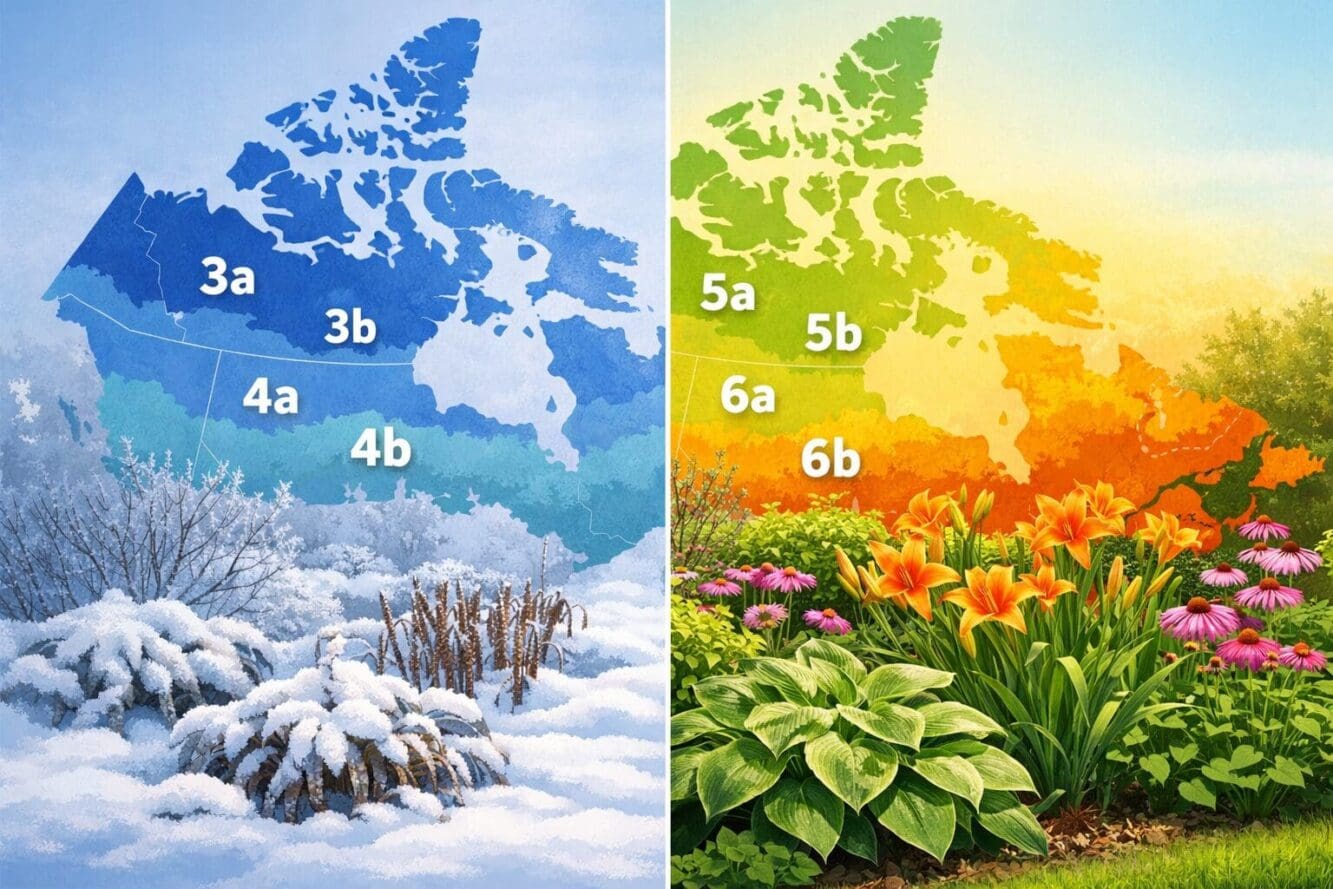
Canada’s growing conditions have shifted measurably. Natural Resources Canada’s updated Plant Hardiness Zones map confirms that roughly 80% of Canadian land has warmed by half to a full zone since the last update in 2014 [1]. That warming brings longer summers but also sharper swings: late frosts, flash droughts, and intense rainfall events that flatten unprepared gardens. Climate-resilient perennials for Canada’s 2026 extremes: fast-multiplying varieties that bounce back are the practical answer for gardeners who want reliable colour and ground cover without replanting every spring.

This guide covers specific varieties tested across Canadian regions, planting schedules from the Maritimes to the Rockies, companion pairings that boost survival, and the soil practices that help these plants multiply quickly and recover from weather damage.
Key Takeaways
- Canada’s hardiness zones have shifted: approximately 80% of land is now half to a full zone warmer, expanding the range of perennials that can survive winter [1].
- Perennials capture carbon and protect soil better than annual crops and flowers, making them a climate-positive garden choice [2].
- Fast-multiplying perennials like daylilies, Echinacea, Siberian iris, and native grasses can double their clump size in one to two seasons under good conditions.
- Companion planting with deep-rooted and shallow-rooted species together improves drought tolerance and flood resilience.
- No-till and mulch practices are critical for perennial survival through extreme weather [5].
- Container gardening is a growing trend across Canada for 2026, offering flexibility when ground conditions are unpredictable [6].
- Genetic research on hybrid trees in Canada is revealing how genome matching improves plant performance in warming climates [3].
- Regional planting windows differ significantly: Maritimes gardeners plant two to three weeks later in spring than Southern Ontario gardeners.
Quick Answer
The best climate-resilient perennials for Canadian gardens in 2026 are varieties that tolerate both heat spikes and cold snaps, spread quickly through division or rhizomes, and require minimal chemical inputs. Top performers include Echinacea purpurea, Hemerocallis (daylilies), Rudbeckia, Monarda, Siberian iris, and native switchgrass. Plant them in spring (after last frost) or early fall (six weeks before first frost), use organic mulch, avoid tilling, and divide clumps every two to three years to accelerate coverage.
Why Are Canada’s Shifting Hardiness Zones Changing What Perennials Survive?
The short answer: warmer winters let more species survive, but wilder weather swings kill plants that aren’t genuinely tough.
Natural Resources Canada’s updated hardiness zone map shows a clear warming trend across the country [1]. A garden in the Georgian Bay region that was solidly Zone 5a a decade ago may now sit at Zone 5b or even Zone 6a. That sounds like good news, and it does mean gardeners can try species that previously wouldn’t overwinter. But the real challenge isn’t average temperature; it’s the extremes.
A January thaw followed by a sudden -30°C snap. A June heat dome pushing 38°C for a week. A 100mm rainfall event in August. These are the conditions that separate truly resilient perennials from ones that merely survive mild years.
What makes a perennial “climate-resilient” in practice:
- Deep or extensive root systems that access moisture during drought and anchor the plant during floods
- Crown hardiness that tolerates freeze-thaw cycles without rotting
- Fast vegetative reproduction through rhizomes, stolons, or easy division, so damaged clumps recover quickly
- Tolerance for variable soil moisture, from saturated spring conditions to dry summer stretches
Research in British Columbia is studying exactly this: how perennial-based farming systems perform under climate stress over multiple years [2]. The early findings confirm that perennial systems provide more stable outcomes than annuals because their established root networks buffer against weather variability.
For those interested in the broader push for environmental action in Canada, many Canadians are calling for stronger climate policy alongside personal gardening choices.
Which Fast-Multiplying Perennials Perform Best Across Canadian Regions?
The varieties below have proven track records in Canadian gardens and multiply quickly enough to fill beds within two to three seasons. Each tolerates the kind of weather extremes 2026 is delivering.
| Perennial | Hardiness Zone | Multiplication Method | Drought Tolerance | Flood Tolerance | Best Region |
|---|---|---|---|---|---|
| Echinacea purpurea (Purple Coneflower) | 3–8 | Self-seeding + division | High | Moderate | All regions |
| Hemerocallis (Daylily) | 3–9 | Division (doubles in 1–2 years) | High | Moderate | All regions |
| Rudbeckia fulgida (Black-eyed Susan) | 3–9 | Self-seeding + rhizomes | High | Moderate | All regions |
| Monarda (Bee Balm) | 3–9 | Rhizome spreading | Moderate | Moderate | Ontario, Maritimes |
| Iris sibirica (Siberian Iris) | 3–8 | Rhizome division | Moderate | High | Prairies, Ontario |
| Panicum virgatum (Switchgrass) | 4–9 | Clump expansion + seed | Very high | Very high | Prairies, Ontario |
| Sedum (Stonecrop) | 3–9 | Stem cuttings + division | Very high | Low | Rockies, Prairies |
| Nepeta (Catmint) | 3–8 | Division + layering | High | Low | All regions |
Choose daylilies or Echinacea if the goal is fast, reliable coverage with minimal effort. Choose switchgrass if the site is prone to both drought and flooding. Choose sedum for rocky, well-drained slopes where water runs off quickly.
“Perennial crops show promise for climate resilience because they capture carbon and protect farms against loss of soil quality, drought, and other impacts of climate variability.” — Organic BC [2]
This principle applies equally to ornamental gardens. Every perennial bed that replaces annual plantings reduces the need for yearly soil disturbance and chemical inputs.
What Planting Schedules Work for Each Region in 2026?
Timing varies by region, and the shifted hardiness zones mean some traditional dates need adjusting. Below are updated planting windows based on current conditions.
Maritimes (New Brunswick, Nova Scotia, PEI, Newfoundland)
- Spring planting: Mid-May to early June (soil temperature consistently above 10°C)
- Fall planting: Late August to mid-September
- Key risk: Late spring frost into early June; heavy fall rain saturating clay soils
- Best approach: Raised beds or mounded planting for drainage; mulch heavily before winter
Ontario and Quebec
- Spring planting: Late April to mid-May (Southern Ontario); mid-May to early June (Northern Ontario)
- Fall planting: September to early October
- Key risk: Summer heat domes, ice storms, and freeze-thaw cycles in shoulder seasons
- Best approach: Deep mulch (10–15 cm) for winter insulation; companion planting for shade during heat events
Gardeners in the Georgian Bay area can find community events and local connections through celebrations and festivals that often include garden tours and plant swaps.
Prairies (Manitoba, Saskatchewan, Alberta)
- Spring planting: Mid-May to early June
- Fall planting: Late August to mid-September (earlier than other regions due to early frost)
- Key risk: Extreme cold snaps (-40°C possible), summer drought, hail
- Best approach: Choose Zone 3 varieties minimum; use snow fencing to trap insulating snow cover over beds
British Columbia and the Rockies
- Spring planting: March to April (coastal BC); May to June (interior and mountain regions)
- Fall planting: September to October (coastal); August to September (interior)
- Key risk: Atmospheric rivers causing flooding (coastal), wildfire smoke reducing photosynthesis, drought (interior)
- Best approach: Flood-tolerant species near waterways; drought-tolerant species on slopes
BC is also home to a multi-year research project on perennial farming for climate resilience that is generating data gardeners can use [2].
How Do Companion Pairings Improve Perennial Survival?
Pairing perennials with complementary root depths, bloom times, and moisture needs creates a community of plants that supports each other through extreme conditions.
Three proven companion groupings for Canadian gardens:
The Drought-Proof Trio: Switchgrass (deep roots, tall) + Echinacea (medium height, taproot) + Sedum (ground cover, shallow roots). This combination covers three soil layers, shades the ground to reduce moisture loss, and attracts pollinators throughout summer.
The Flood-Tolerant Border: Siberian iris (tolerates wet feet) + Monarda (moderate moisture) + Nepeta (drier edges). Plant the iris at the lowest point, Monarda in the middle, and catmint at the highest. Water naturally drains through the grouping.
The Four-Season Screen: Switchgrass or Karl Foerster grass (winter structure) + Daylilies (summer bloom) + Rudbeckia (late summer to fall) + Crocus or Galanthus bulbs (early spring). This grouping provides visual interest year-round and ensures roots are active in the soil across all seasons.
Including native plants in these groupings is especially important. As the Indigenous Climate Hub notes, gardens that incorporate native species and avoid chemical pesticides are more resilient to climate disruption [5]. Native pollinators also prefer native plant species, creating a feedback loop that strengthens the garden ecosystem. Understanding the difference between wild native bees and managed honeybees can help gardeners design pollinator-friendly plantings.
What Soil Practices Help Climate-Resilient Perennials Multiply Faster?
Healthy soil is the single biggest factor in how quickly perennials establish and spread. The practices below are backed by research and field experience.
Step-by-step soil preparation for new perennial beds:
- Skip the rototiller. Minimizing tillage preserves soil structure, mycorrhizal networks, and earthworm populations. Cut existing vegetation low, cover with cardboard, and top with 15 cm of compost [5].
- Test soil pH and drainage. Most perennials on the list above prefer slightly acidic to neutral soil (pH 6.0–7.0). If drainage is poor, build up rather than dig down.
- Apply organic mulch 8–10 cm deep around new plantings. Use shredded leaves, wood chips, or straw. Avoid dyed mulch or rubber mulch.
- Skip synthetic fertilizers. Perennials fed with slow-release organic matter (compost, aged manure) develop stronger root systems than those pushed with synthetic nitrogen [5].
- Inoculate with mycorrhizal fungi at planting time. These beneficial fungi extend root reach by up to 100 times, dramatically improving drought tolerance.
Common mistake: Over-watering new perennials. Most climate-resilient varieties develop deeper roots when they experience mild drought stress after establishment. Water deeply once a week rather than lightly every day.
Research from Canadian institutions is also uncovering how plants signal between leaves and roots to optimize growth with fewer inputs [4]. Within the next decade, these discoveries may produce cultivars that establish even faster.
Can Container Gardening Work for Climate-Resilient Perennials?
Yes, and it’s becoming increasingly popular across Canada in 2026 [6]. Containers offer a practical solution when ground conditions are unpredictable, whether due to flooding, contaminated soil, or rental situations.
Best perennials for Canadian containers:
- Compact Echinacea varieties (e.g., ‘PowWow Wild Berry’): Zone 3 hardy, blooms first year
- Dwarf daylilies (e.g., ‘Stella de Oro’): Continuous bloom, easy division
- Sedum (e.g., ‘Autumn Joy’): Nearly indestructible in pots
- Ornamental grasses (e.g., ‘Little Bluestem’): Native, drought-tolerant, provides winter interest
Key container tips for overwintering:
- Use pots at least 45 cm (18 inches) in diameter to insulate roots
- Group pots together against a south-facing wall for winter
- Wrap pots in burlap or bubble wrap in Zones 3–4
- Choose varieties rated two zones hardier than the local zone (container roots get colder than in-ground roots)
The container gardening trend in Canada for 2026 also includes pairing perennials with annuals like Supertunia petunias for immediate colour while the perennials establish [6].
What Does Genetic Research Mean for Future Climate-Resilient Plants?
Cutting-edge plant genetics is already influencing which varieties perform best, and the pipeline of improved cultivars is growing.
Penn State researchers studying 574 hybrid trees across the Pacific Northwest (from Alaska to Montana) found that trees whose chloroplast and nuclear genomes matched showed significantly better photosynthetic efficiency [3]. When these genomes were mismatched, the trees converted sunlight to energy less effectively, and the problem worsened in warmer environments [3].
This matters for perennial gardeners because the same principle applies to ornamental and food plants. Breeding programs that account for genome matching can produce varieties that:
- Photosynthesize more efficiently during heat stress
- Recover faster after cold damage
- Grow more vigorously with less fertilizer
Canadian researchers are also working on crops that perform better with fewer inputs by decoding the signals plants send from leaves to roots [4]. While the focus is on agricultural crops like wheat and barley, the underlying science applies to ornamental perennials too.
For gardeners today, the practical takeaway is: choose locally bred or locally adapted cultivars whenever possible. Plants sourced from Canadian nurseries that grow their own stock are more likely to have the right genetic combinations for Canadian conditions than imports from warmer climates.
Those interested in how Canada is investing in large-scale infrastructure for climate adaptation can see similar forward-thinking applied at the national level.
How Does Voting and Policy Affect the Future of Resilient Gardening?
Individual garden choices matter, but so does the policy environment. Municipal bylaws on pesticide use, provincial support for native plant nurseries, and federal climate adaptation funding all shape what’s available and affordable for gardeners. Canadians who care about resilient landscapes can make their voices heard at the ballot box and through community advocacy for green infrastructure.
FAQ
Q: What is the hardiest fast-multiplying perennial for Zone 3?
A: Hemerocallis (daylily) is rated to Zone 3 and can double its clump size in one to two growing seasons through division. Echinacea purpurea is equally hardy and self-seeds readily.
Q: How often should climate-resilient perennials be divided?
A: Every two to three years for most fast-multiplying varieties. Division keeps plants vigorous, prevents centre die-out, and provides free plants for expanding the garden.
Q: Can perennials survive a flash flood?
A: Siberian iris and switchgrass tolerate temporary flooding well. Most other perennials survive brief flooding (24–48 hours) if soil drainage is adequate afterward. Prolonged waterlogging kills most perennials through root rot.
Q: Do climate-resilient perennials need fertilizer?
A: Generally no, if the soil is amended with compost annually. Synthetic fertilizers can actually reduce root depth and make plants more vulnerable to drought [5].
Q: Is it too late to plant perennials in fall?
A: Plant at least six weeks before the first hard frost so roots can establish. In most of Canada, this means planting by mid-September at the latest (earlier on the Prairies).
Q: How do perennials help fight climate change?
A: Perennial root systems capture and store carbon in the soil, reduce erosion, and eliminate the need for annual tilling, which releases stored carbon [2].
Q: Are native perennials better than cultivated varieties?
A: Native species generally support local ecosystems better (pollinators, birds, soil microbes) and are adapted to regional conditions. Cultivated varieties of native species offer the best of both worlds: local adaptation with improved garden performance.
Q: Can I grow climate-resilient perennials in containers through a Canadian winter?
A: Yes, but choose varieties rated two zones hardier than the local zone, use large pots (45 cm minimum), and insulate pots with burlap or group them against a sheltered wall.
Q: What’s the biggest mistake gardeners make with perennials?
A: Overwatering and over-fertilizing. Both produce weak, shallow root systems that fail during the first serious drought or cold snap.
Q: How do I know if my hardiness zone has changed?
A: Check Natural Resources Canada’s updated Plant Hardiness Zones map, last revised to reflect warming trends through 2026 [1].
Conclusion
Climate-resilient perennials for Canada’s 2026 extremes: fast-multiplying varieties that bounce back are not a luxury. They’re a practical response to a measurable shift in growing conditions across the country. The hardiness zones have moved, the weather has become less predictable, and gardens built on annuals or tender perennials are increasingly unreliable.
Actionable next steps:
- Check the updated hardiness zone for your specific location using Natural Resources Canada’s current map.
- Pick three to five varieties from the table above that match your zone, soil type, and site conditions.
- Prepare soil without tilling: cardboard, compost, and organic mulch.
- Plant in companion groupings rather than monoculture rows for better resilience.
- Divide and share every two to three years to expand coverage and strengthen plants.
- Avoid synthetic fertilizers and pesticides to build deep root systems and healthy soil biology.
The perennials that thrive in 2026 won’t just survive the next heat dome or ice storm. They’ll spread, fill in, and come back stronger, which is exactly what a Canadian garden needs right now.
References
[1] Shifting Seasons Climate Change Affecting Plants – https://www.oursafetynet.org/2026/02/26/shifting-seasons-climate-change-affecting-plants/
[2] Project Overview: Agroecological Transitions for Climate Resilience in BC – https://organicbc.org/project-overview-agroecological-transitions-for-climate-resilience-in-bc/
[3] Genetic Teamwork: Secret to Climate-Resilient Trees – https://phys.org/news/2025-12-genetic-teamwork-secret-climate-resilient.html
[4] Climate-Resilient Crops Can Do More with Less – https://www.innovation.ca/projects-results/research-stories/climate-resilient-crops-can-do-more-less
[5] Gardens and Climate Change: How Growing a Resilient Garden Helps Fight Global Warming – https://indigenousclimatehub.ca/2020/07/gardens-and-climate-change-how-growing-a-resilient-garden-helps-fight-global-warming/
[6] 6 Inspiring Trends Shaping Canadian Gardening 2026 – https://www.provenwinners.com/learn/finding-right-plant/6-inspiring-trends-shaping-canadian-gardening-2026
Content, illustrations, and third-party video appearing on GEORGIANBAYNEWS.COM may be generated or curated with AI assistance or reproduced pursuant to the fair dealing provisions of the Copyright Act, R.S.C. 1985, c. C-42. Attribution and hyperlinks to original sources are provided in acknowledgment of applicable intellectual property rights. Such referencing is intended to direct traffic to and support the original rights holders’ platforms.
Much Appreciate You Sharing This Post - It Helps MUCH!!!