



















When The Forest Breathes by Suzanne Simard: Mycorrhizal Networks and Ecological Wisdom in Bestselling Author’s Fiction Debut

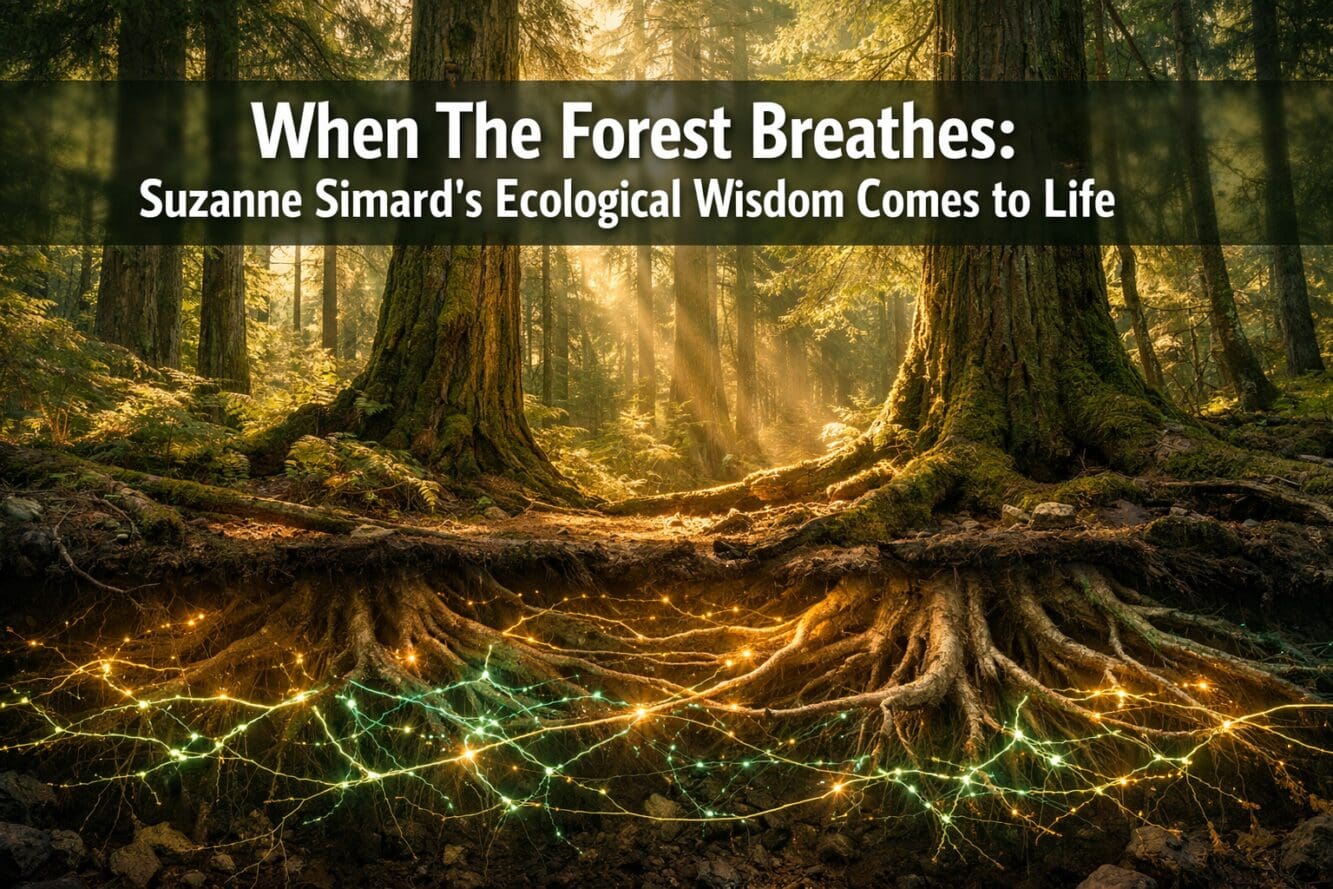
Last updated: March 3, 2026
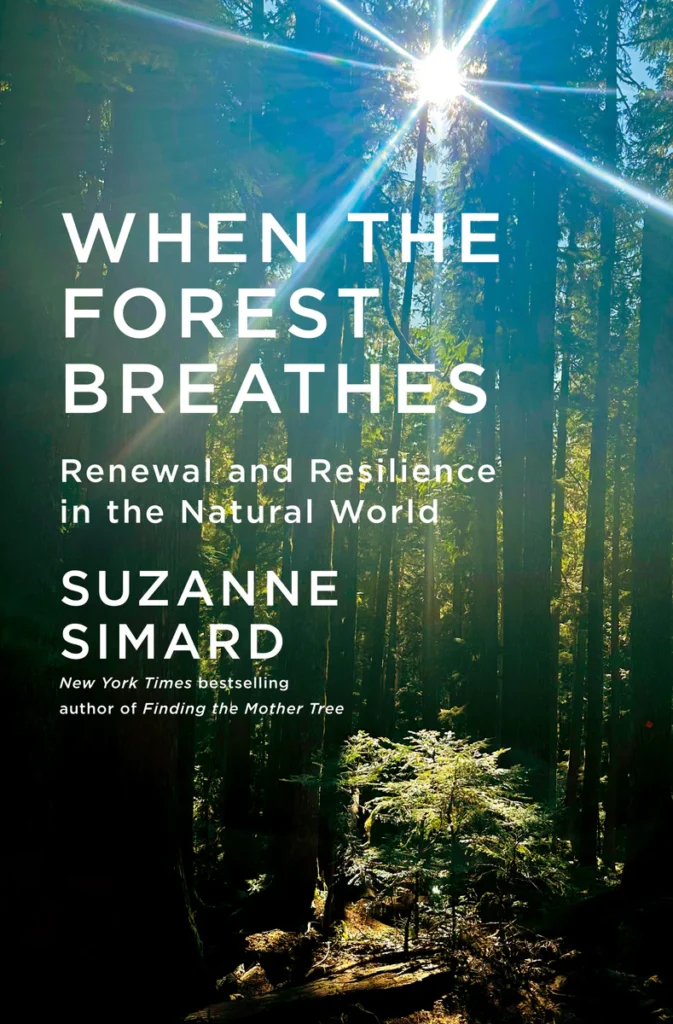
Suzanne Simard’s new book When The Forest Breathes arrives on March 31, 2026, and it represents a significant expansion of the ideas that made her a household name in ecological science. While the title “When The Forest Breathes by Suzanne Simard: Mycorrhizal Networks and Ecological Wisdom in Bestselling Author’s Fiction Debut” captures the excitement around this release, a clarification is warranted: the book is classified as non-fiction, exploring forest renewal and resilience through the lens of Simard’s decades of research [1][2]. But the narrative approach she takes — weaving personal story, Indigenous wisdom, and scientific discovery into a cohesive arc about loss and regeneration — reads with the immersive quality of literary fiction. For readers who loved Finding the Mother Tree, this is the next chapter.
Key Takeaways
- When The Forest Breathes releases March 31, 2026, in hardcover (336 pages, $39.00), large print, e-book, and audio formats [1][4]
- The book builds on Simard’s pioneering research into mycorrhizal networks and the Mother Tree Project [2]
- Literary Hub named it one of the most anticipated books of 2026 [2]
- Simard integrates Indigenous stewardship practices with Western ecological science throughout the book [2]
- The book addresses how protecting mother trees can reduce wildfire risk and support long-term forest health [2]
- Simard’s previous book Finding the Mother Tree was a New York Times bestseller translated into 21 languages [2]
- Her TED talks have reached over 10 million viewers worldwide [3]
- The book is described as combining “reverence for the natural world” with “wisdom and warmth” [1]
Quick Answer
When The Forest Breathes is Suzanne Simard’s second book, following her bestselling memoir Finding the Mother Tree. It focuses on forest renewal, ecological resilience, and the underground fungal networks that connect trees — themes drawn from her career as a Professor of Forest Ecology at the University of British Columbia [3]. The book blends rigorous science with narrative storytelling, making complex ecological concepts accessible to general readers while offering practical wisdom about forest stewardship in an era of climate change and industrial logging [1][2].
What Is When The Forest Breathes About?
The book examines how forests recover from damage — whether from wildfire, logging, or climate stress — and what humans can learn from that process. At its core, it’s about regeneration, both ecological and personal [1].
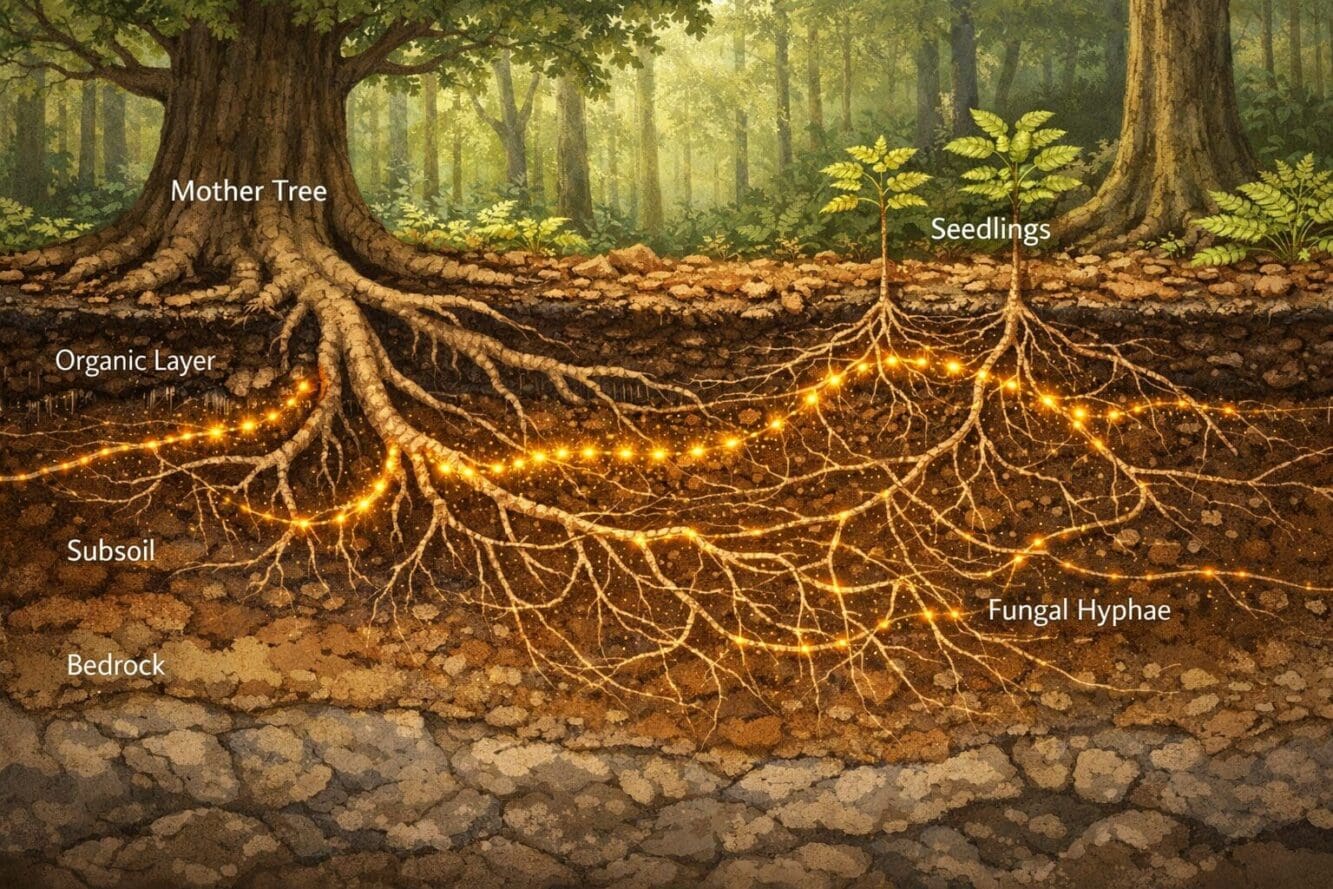
Simard draws on her field research in British Columbia’s forests to explain how trees share resources through underground fungal networks. These mycorrhizal connections allow older “mother trees” to nurture seedlings, distribute nutrients to struggling neighbors, and maintain the health of entire forest ecosystems [2].

To purchase the book, CLICK HERE
Key themes include:
- Forest connectivity: How trees communicate and cooperate through root-fungal partnerships
- Wildfire resilience: Why protecting mother trees can reduce fire risk across landscapes [2]
- Loss and renewal: Parallels between ecological regeneration and human resilience [1]
- Indigenous knowledge: How traditional stewardship practices align with and sometimes predate Western scientific findings [2]
The book is not a dry academic text. Simard writes with emotional depth about the forests she has studied for decades, and the result is something that reads closer to narrative non-fiction than a typical science book. For anyone who finds rest and restoration through spending time in nature, this book provides the scientific foundation for why forests feel restorative.
How Do Mycorrhizal Networks Work in Simard’s Research?
Mycorrhizal networks are underground systems of fungal threads (called hyphae) that connect the roots of different trees and plants. Through these networks, trees exchange carbon, water, nutrients, and even chemical warning signals about pests.
Simard’s research, which began in the 1990s, was among the first to demonstrate that these networks are not random — they’re structured around hub trees, which she calls mother trees. These large, old trees serve as central nodes in the network, supporting dozens or even hundreds of younger trees around them [2][3].
Here’s a simplified breakdown of how the system works:
| Component | Function | Why It Matters |
|---|---|---|
| Fungal hyphae | Thin threads that extend tree root systems by hundreds of times | Allow trees to access nutrients far beyond their own root reach |
| Mother trees | Large, established trees that act as network hubs | Distribute resources to seedlings and stressed neighbors |
| Carbon transfer | Sugars move from trees with excess to those in need | Keeps weaker trees alive during drought or shade stress |
| Chemical signals | Warning compounds travel through the network | Allow neighboring trees to mount defenses before pests arrive |
| Nutrient sharing | Nitrogen and phosphorus move between species | Supports biodiversity by helping different species coexist |
This is the science that underpins When The Forest Breathes. Simard uses it to argue that forests are not collections of competing individuals but cooperative communities — and that understanding this cooperation is essential for effective forest management [2].
The concept echoes broader conversations about how ecosystems sustain themselves. Similar themes about biodiversity and ecological stewardship appear in discussions about community gardens and their role in local ecosystems.
Why Is This Book Considered a Narrative Expansion for Finding the Mother Tree Fans?
Finding the Mother Tree (2021) told Simard’s personal story alongside her scientific discoveries. It was part memoir, part science writing, and it resonated with millions of readers worldwide — becoming a New York Times bestseller translated into 21 languages [2].
When The Forest Breathes goes further. Rather than retelling her origin story, it focuses on what comes next: the practical and philosophical implications of her research for how we manage forests, respond to climate change, and think about resilience in our own lives [1].
The book is described as combining “reverence for the natural world” with “wisdom and warmth,” addressing themes of loss, regeneration, and resilience in both natural systems and human life [1].
Choose this book if:
- You read Finding the Mother Tree and want deeper exploration of the science
- You’re interested in how Indigenous ecological knowledge intersects with Western research
- You want to understand forest management through a lens of cooperation rather than extraction
- You’re looking for a science book that reads like a story
This may not be the right fit if:
- You want a pure field guide or technical manual on mycology
- You’re looking for fiction (despite the narrative quality, this is non-fiction)
The narrative approach Simard takes makes complex ecology accessible — similar to how David Suzuki has communicated environmental science to broad audiences for decades.
What Role Does Indigenous Knowledge Play in the Book?

A significant one. Simard has collaborated extensively with Indigenous knowledge holders in British Columbia, and When The Forest Breathes integrates their perspectives on forest stewardship alongside her scientific findings [2].
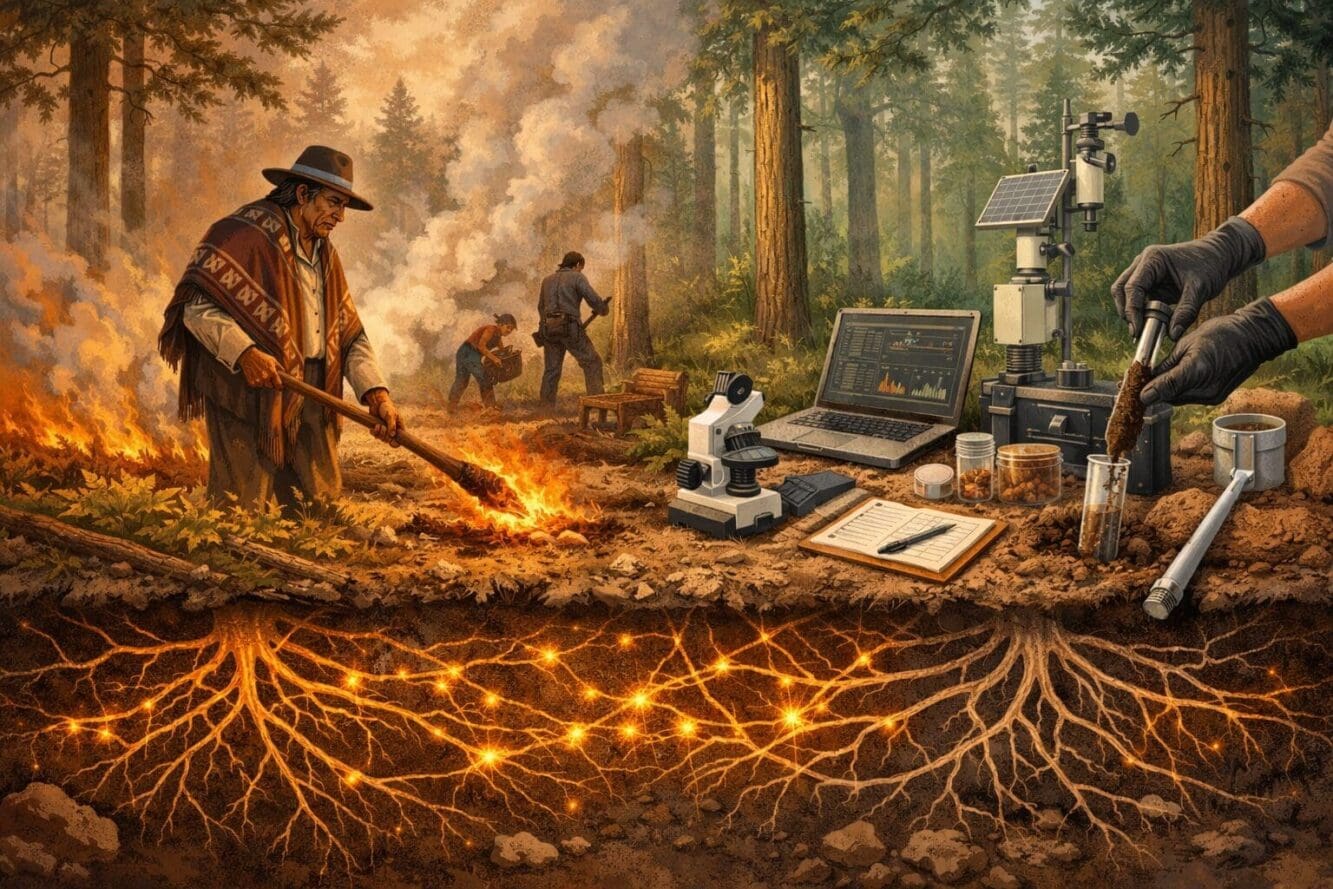
This isn’t a token inclusion. Many Indigenous communities have practiced forest management techniques — including selective harvesting, controlled burns, and protection of old-growth trees — for thousands of years. Simard’s research has, in many cases, provided Western scientific evidence for practices that Indigenous peoples already understood [2].
The book explores several areas where these knowledge systems converge:
- Fire management: Indigenous controlled burning practices that reduce catastrophic wildfire risk
- Old-growth protection: Traditional practices of leaving large trees standing, which aligns with Simard’s mother tree research
- Relational ecology: Indigenous worldviews that treat forests as communities of beings rather than resources to extract
- Intergenerational stewardship: Managing forests for future generations rather than short-term profit
This integration of knowledge systems is one of the features that earned the book its spot on Literary Hub’s most anticipated list for 2026 [2]. It also reflects a growing trend in environmental writing: recognizing that scientific discovery and traditional knowledge are complementary, not competing.
For readers interested in how local communities engage with environmental stewardship, initiatives like LawnShare that create biodiverse habitats demonstrate similar principles at a neighborhood scale.
How Does the Book Address Climate Change and Wildfire?
Directly and practically. One of the book’s central arguments is that protecting mother trees can reduce wildfire risk and support long-term ecosystem health [2].
Here’s the logic: when old-growth forests are clear-cut, the mycorrhizal networks that sustain them are destroyed. The young trees planted afterward lack the underground support system that helps forests regulate moisture, share nutrients, and maintain structural diversity. These simplified, even-aged plantations are more vulnerable to drought, pest outbreaks, and catastrophic fire [2].
Simard’s research suggests a different approach:
- Retain mother trees during harvesting operations to preserve network connectivity
- Maintain species diversity rather than planting monocultures
- Protect old-growth stands as biological anchors for surrounding forests
- Allow natural regeneration where possible, supported by existing mycorrhizal networks
- Integrate Indigenous fire management practices to reduce fuel loads safely
These aren’t abstract proposals. They come from decades of field studies and the ongoing Mother Tree Project, which tests these strategies in real forest conditions across British Columbia [2].
The connection between environmental degradation and industrial practices is a theme that resonates across many sectors. Coverage of how industries have historically denied environmental impacts provides important context for understanding why Simard’s work has faced resistance from the logging industry.
What Are the Publication Details and How to Pre-Order?
| Detail | Information |
|---|---|
| Title | When The Forest Breathes |
| Author | Suzanne Simard |
| Release Date | March 31, 2026 [1] |
| Pages | 336 [4] |
| Format | Hardcover, large print, e-book, audio [1] |
| Hardcover Price | $39.00 [4][5] |
| Publisher | Available through major retailers |
Pre-orders are currently available across all formats [1][3]. The audiobook format may be particularly appealing given Simard’s background as a compelling speaker — her TED talks have been viewed by over 10 million people [3].
For readers who prefer to support independent bookstores, the book is listed at retailers like Rizzoli Bookstore [4] and Coho Books [5].
How Does When The Forest Breathes Fit Into Broader Ecological Literature?
Simard’s work sits at the intersection of several trends in 2026 environmental writing:
- Narrative science writing: Books that make complex research accessible through storytelling (in the tradition of Robin Wall Kimmerer’s Braiding Sweetgrass)
- Two-eyed seeing: Works that hold Indigenous and Western scientific knowledge as equally valid ways of understanding the natural world
- Climate solutions literature: Books that move beyond documenting problems to proposing actionable responses
- Relational ecology: A growing body of work that emphasizes cooperation and interconnection in natural systems
What sets Simard apart is that she’s both the researcher and the storyteller. She’s not interpreting someone else’s science — she’s explaining her own discoveries, grounded in decades of fieldwork, and connecting them to larger questions about how humans relate to the natural world [2][3].
The book also arrives at a moment when public interest in forest ecology is high. Concerns about wildfire, deforestation, and carbon sequestration have made forest science relevant to policy discussions in ways it wasn’t a decade ago. For those interested in how environmental awareness connects to community action, beginner gardening guides offer a practical entry point into understanding soil health and plant interconnection at a personal scale.
Common Mistakes When Approaching This Book
- Expecting a novel: Despite the narrative quality, this is non-fiction rooted in scientific research [1][2]
- Assuming it repeats Finding the Mother Tree: The new book focuses on renewal and resilience rather than Simard’s personal origin story
- Overlooking the Indigenous knowledge component: This is central to the book’s argument, not supplementary [2]
- Reading it as anti-logging: Simard’s proposals are about better forest management, not eliminating timber harvesting
- Skipping the science: The mycorrhizal network explanations are accessible and essential to understanding the book’s larger points
Conclusion
When The Forest Breathes represents the maturation of Suzanne Simard’s public-facing work. Where Finding the Mother Tree introduced millions of readers to the idea that forests are interconnected communities, this new book pushes those ideas toward practical application — how protecting mother trees reduces wildfire risk, how Indigenous stewardship practices align with cutting-edge ecology, and how understanding forest regeneration can inform human resilience [1][2].
Actionable next steps for interested readers:
- Pre-order the book in your preferred format before the March 31, 2026 release [1]
- Read or revisit Finding the Mother Tree for essential background on Simard’s research journey
- Watch Simard’s TED talks (available free online) for a visual introduction to mycorrhizal networks [3]
- Follow the Mother Tree Project for ongoing research updates from Simard’s team [2]
- Explore local forests with fresh eyes — look for old-growth trees and consider the underground networks that connect them
Whether you’re a longtime follower of Simard’s research or discovering her work for the first time, this book offers both the science and the story needed to understand why forests matter — and what we stand to lose if we don’t change how we manage them.
FAQ
When does When The Forest Breathes come out?
The book releases on March 31, 2026, with pre-orders available now in hardcover, large print, e-book, and audio formats [1][3].
How much does the hardcover cost?
The hardcover retails for $39.00 [4][5]. To purchase the book, CLICK HERE
Is this a fiction or non-fiction book?
It is non-fiction, exploring forest ecology, renewal, and resilience through narrative science writing [1][2].
Do I need to read Finding the Mother Tree first?
No, but it provides helpful context. Finding the Mother Tree covers Simard’s personal journey and early discoveries, while When The Forest Breathes focuses on renewal, resilience, and practical applications of her research.
What are mycorrhizal networks?
Underground systems of fungal threads that connect tree roots, allowing trees to share nutrients, water, and chemical signals. Simard’s research showed these networks are structured around hub “mother trees” [2][3].
Who is this book best suited for?
Readers interested in ecology, climate solutions, Indigenous knowledge, or narrative science writing. It’s accessible to general audiences — no science background required.
How long is the book?
336 pages in hardcover [4].
What is the Mother Tree Project?
An ongoing research initiative led by Simard that studies how protecting old-growth mother trees affects forest health, resilience, and regeneration in British Columbia [2].
Has the book received any early recognition?
Literary Hub named it one of the most anticipated books of 2026 [2].
Is there an audiobook version?
Yes, an audio edition will be available at release [1].
How does this book relate to climate change?
It argues that protecting mother trees and mycorrhizal networks can reduce wildfire risk, improve carbon sequestration, and build forest resilience against climate stress [2].
References
[1] When The Forest Breathes – https://suzannesimard.com/when-the-forest-breathes/
[2] Looking Ahead Dr Suzanne Simard’s When The Forest Breathes Coming March 31 2026 – https://mothertreeproject.org/2026/01/21/looking-ahead-dr-suzanne-simards-when-the-forest-breathes-coming-march-31-2026/
[3] Suzanne Simard – https://suzannesimard.com
[4] When Forest Breathes Renewal And Resilience Natural World – https://www.rizzolibookstore.com/product/when-forest-breathes-renewal-and-resilience-natural-world
[5] Coho Books listing – https://cohobooks.com/item/rC8Hn_GwKfQmiedAf2f8lA/lists/N2Ac0NFbZ3c/
Content, illustrations, and third-party video appearing on GEORGIANBAYNEWS.COM may be generated or curated with AI assistance or reproduced pursuant to the fair dealing provisions of the Copyright Act, R.S.C. 1985, c. C-42. Attribution and hyperlinks to original sources are provided in acknowledgment of applicable intellectual property rights. Such referencing is intended to direct traffic to and support the original rights holders’ platforms.
Much Appreciate You Sharing This Post - It Helps MUCH!!!