
















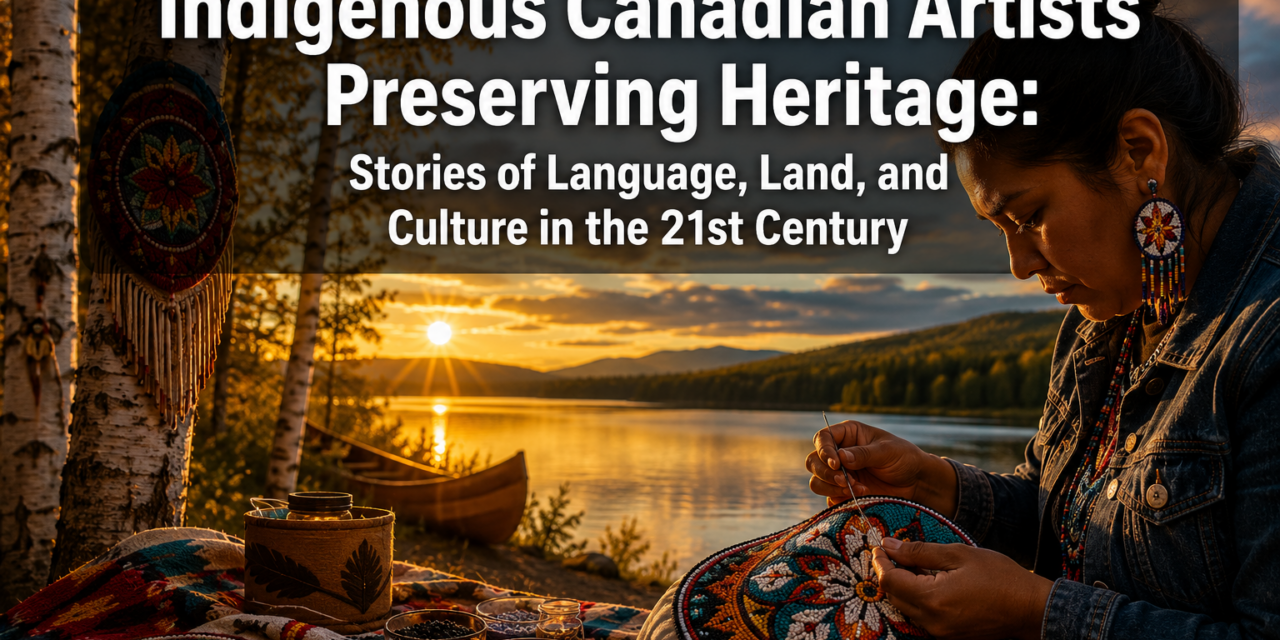
Indigenous Canadian Artists Preserving Heritage: Stories of Language, Land, and Culture in the 21st Century

Last updated: June 9, 2026
Quick Answer: Indigenous Canadian artists preserving heritage through stories of language, land, and culture in the 21st century are doing far more than making art — they are actively protecting endangered languages, transmitting land-based knowledge, and asserting cultural sovereignty through painting, beadwork, film, and digital media. Their work is recognized by scholars, national institutions, and communities as a frontline response to generations of cultural disruption. This is year-round, person-centered work, not a history-month footnote.
Key Takeaways
- Indigenous Canadian artists treat their creative practice as an act of cultural sovereignty, embedding language, land relations, and community knowledge directly into their work [2]
- Several leading artists explicitly name language and intergenerational knowledge as core motivations for their practice [10]
- Contemporary Indigenous art spans painting, beadwork, sculpture, film, and digital media, with each medium serving specific preservation goals
- The Canadian federal government funds Indigenous arts and language programs that link artistic practice to cultural survival [4]
- Younger Indigenous artists are combining traditional knowledge with pop culture and modern technology to keep heritage relevant for new generations [9]
- Common mistakes by non-Indigenous audiences include treating Indigenous art as purely decorative or as a static historical artifact
- Grants from federal, provincial, and Indigenous-led organizations support heritage-focused artistic work
- Digital platforms including social media and YouTube are now primary tools for sharing cultural stories beyond geographic boundaries
- Regional diversity is significant: Indigenous art practices differ substantially across First Nations, Metis, and Inuit communities from coast to coast
- Artist-run collectives and community organizations are positioning art as a vehicle for preserving matriarchal knowledge systems [8]

Who Are the Most Influential Indigenous Canadian Artists Today
Several Indigenous Canadian artists are nationally and internationally recognized for centering language, land, and cultural continuity in their work. The Art Canada Institute’s 2025 “Indigenous Artists to Know” list highlights figures whose practices directly address heritage preservation, not just aesthetic innovation.
Key names active in 2026 include:
- Kent Monkman (Cree) — large-scale paintings that reframe Canadian colonial history from an Indigenous perspective
- Christi Belcourt (Metis) — beadwork-inspired paintings and the Walking With Our Sisters commemorative art installation
- Rebecca Belmore (Anishinaabe) — performance and installation art addressing land, body, and political memory
- Nadia Myre (Anishinaabe) — conceptual work exploring language loss and the politics of Indigenous identity
- Tanya Tagaq (Inuit) — throat singing and multimedia performance connecting Inuit cultural knowledge to contemporary audiences [10]
These artists are not simply representing culture — they are actively transmitting it. Many name specific languages or land territories as the foundation of their creative process [2].
How Do Indigenous Artists Use Art to Protect Traditional Languages
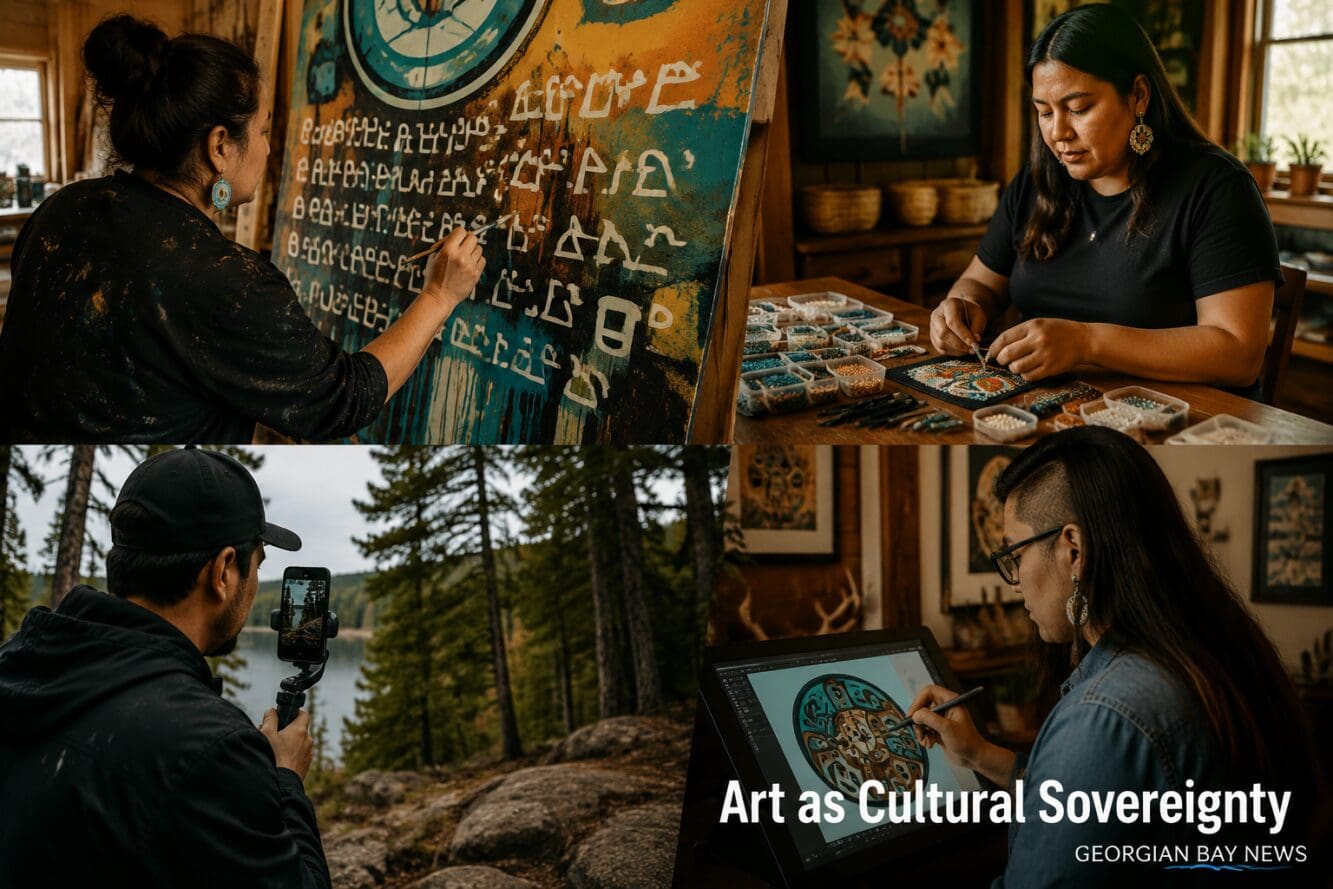
Art is one of the most effective tools for language preservation when formal transmission has been disrupted. Indigenous Canadian artists embed syllabics, pictographs, oral story structures, and place names directly into visual and performance works, making language visible and emotionally resonant for audiences who may never enter a classroom setting [6].
Examples of language-centered artistic practice:
- Painting Cree or Ojibwe syllabics into large-scale canvases so the written form reaches gallery audiences
- Incorporating oral storytelling rhythms into film and video art
- Using beadwork patterns that encode specific territorial and clan knowledge
- Producing bilingual artist statements and exhibition materials in Indigenous languages alongside English or French
Artist-run organizations are also positioning art as a primary vehicle for preserving Indigenous language and supporting matriarchal knowledge systems [8]. For readers interested in how stories from communities shape cultural identity, the connection between lived experience and artistic language work is direct and personal.
What Techniques Are Contemporary Indigenous Artists Using to Document Cultural Stories
Contemporary Indigenous artists use a wide range of techniques to document and transmit cultural stories, combining traditional craft with modern production methods [5].
Common documentation techniques include:
TechniqueCultural PurposeBeadwork and quillworkEncodes clan, territorial, and ceremonial knowledgeLand-based paintingRecords relationships between people and specific landscapesFilm and videoCaptures elder knowledge and oral histories in accessible formatsDigital illustrationAdapts traditional design systems for new audiencesPerformance and ceremony-based artTransmits embodied knowledge that cannot be writtenCollaborative muralsCreates community ownership of shared stories
Artists are also blending traditional forms with modern science and pop culture imagery as a way to communicate cultural teachings in contexts that reach younger audiences [9]. This is not dilution — it is strategic reach.
How Much Do Indigenous Canadian Art Pieces Typically Cost
Prices for Indigenous Canadian art vary widely depending on the artist’s profile, medium, and scale of the work. Emerging artists may price smaller works (prints, small beadwork) between $50 and $500. Mid-career artists working in painting or mixed media typically price original works between $1,000 and $15,000. Works by nationally recognized artists such as Kent Monkman or Rebecca Belmore can exceed $100,000 at auction.
Key pricing factors:
- Artist’s exhibition history and institutional recognition
- Medium and production time (beadwork is extremely labour-intensive)
- Size and edition status (original vs. limited print)
- Whether the work is sold through a gallery (which adds commission) or directly
Buyers should purchase from reputable Indigenous-owned galleries or artist-run collectives to ensure artists receive fair compensation and that works are authentic [8]. The Indigenous Arts Collective of Canada provides guidance on ethical purchasing practices.
What Challenges Do Indigenous Artists Face in Preserving Heritage
Indigenous Canadian artists preserving heritage face structural, economic, and social barriers that go well beyond the creative process itself [3].
Major challenges include:
- Language loss: Many artists are working to preserve languages with only a small number of fluent speakers remaining, meaning the knowledge base itself is shrinking
- Geographic isolation: Artists from remote communities face limited access to markets, galleries, and funding networks
- Cultural appropriation: Non-Indigenous artists and manufacturers reproduce Indigenous designs without permission or compensation, undermining both economic sustainability and cultural integrity
- Underfunding: Heritage-focused art projects often fall outside standard arts funding criteria, which tend to favour individual artistic merit over community cultural function
- Institutional gatekeeping: Major galleries and museums have historically controlled how Indigenous art is displayed and interpreted, often without Indigenous curatorial input
Galleries and cultural institutions now increasingly acknowledge that preserving Indigenous art is inseparable from protecting the communities and lands that produce it [7]. For broader context on conservation and community resilience in the Georgian Bay region, the links between land stewardship and cultural survival are clear.
Which Indigenous Canadian Art Mediums Are Most Effective for Cultural Preservation
No single medium is universally most effective — the right medium depends on what knowledge is being preserved and who the intended audience is. That said, certain forms carry particular preservation value [3].
- Beadwork and textile arts: Encode highly specific territorial, clan, and ceremonial information in a durable, portable format
- Film and video: Capture elder voices, oral histories, and land-based practices in ways that can be archived and shared widely
- Painting: Reaches broad gallery and institutional audiences, making cultural narratives visible in mainstream spaces
- Digital media and social platforms: Allow artists to bypass traditional gatekeepers and reach global Indigenous and non-Indigenous audiences directly
- Performance: Transmits embodied, ceremonial knowledge that resists being fully captured in static form
The most effective preservation strategies tend to combine multiple mediums, using digital tools to document and distribute what traditional craft produces [5].
Are There Grants or Funding for Indigenous Artists Working on Heritage Projects
Yes, multiple funding streams exist specifically for Indigenous Canadian artists working on language, land, and heritage projects [4].
Key funding sources in 2026:
- Canada Council for the Arts — dedicated Indigenous arts funding streams including the Sector Support for Indigenous Arts Organizations program
- Department of Canadian Heritage / RCAANC — programs linking arts funding to Indigenous language and cultural revitalization [4]
- Provincial arts councils — Ontario, British Columbia, Manitoba, and Quebec all have Indigenous-specific grant categories
- Indigenous-led foundations — organizations such as the First Peoples Cultural Council (British Columbia) fund language and heritage arts projects
- Artist-run collectives — some collectives pool resources and provide peer support, micro-grants, and residency opportunities [8]
Artists should apply to multiple streams simultaneously, as heritage projects often qualify under both arts and language revitalization categories. Deadlines and eligibility criteria change annually, so checking directly with each funder is essential.
What Are Common Mistakes Non-Indigenous People Make When Engaging With Indigenous Art
The most common mistake is treating Indigenous art as decorative or as a static cultural artifact rather than as living, community-rooted expression with specific protocols attached to it [2].
Other frequent errors:
- Buying mass-produced “Indigenous-style” items from non-Indigenous manufacturers (cultural appropriation with economic harm)
- Assuming all Indigenous art looks the same, ignoring the significant regional and nation-specific differences
- Interpreting sacred or ceremonial imagery as purely aesthetic without understanding its cultural weight
- Asking artists to explain or justify their cultural knowledge as though it requires external validation
- Photographing or sharing ceremonial art without permission
The respectful approach: buy from verified Indigenous artists or collectives, ask about the cultural context of a work before purchasing, and follow the artist’s lead on what can and cannot be shared publicly [8]. Readers following stories about community and connection will recognize that respect for context is foundational to any genuine relationship.
How Do Younger Generations of Indigenous Canadians Connect With Traditional Art Forms
Younger Indigenous Canadians are described in national media as “regenerating their roots,” combining traditional knowledge with contemporary culture to keep heritage relevant for new generations [9].
Pathways younger artists are using:
- Learning beadwork, drumming, and visual art through community workshops led by elders and mid-career artists
- Participating in land-based programs that connect art-making to specific territories and seasonal practices
- Using social media (Instagram, TikTok, YouTube) to share their learning process and finished work with peers
- Collaborating with non-Indigenous artists on projects that centre Indigenous knowledge and protocols
- Attending Indigenous arts residencies and summer programs that blend traditional and contemporary practice
The key insight from national coverage is that younger artists are not choosing between tradition and modernity — they are using both as tools [9]. This mirrors broader patterns of soul expression that resonate across communities navigating identity and belonging.
Which Indigenous Canadian Artists Are Teaching Cultural Preservation Through Their Work
Several artists are explicitly structured as teachers and knowledge carriers, not just creators [10].
- Christi Belcourt uses her Walking With Our Sisters installation to teach communities about missing and murdered Indigenous women while transmitting beadwork knowledge
- Leanne Betasamosake Simpson (Michi Saagiig Nishnaabeg) combines writing, music, and visual art to teach land-based resurgence philosophy
- Nadia Myre runs workshops and academic programs exploring language and identity alongside her studio practice
- Various elder-artist collaborations documented by the CBC show how established artists mentor youth in specific cultural art forms [10]
Artist-run organizations also structure mentorship into their programming, ensuring that the act of making art is simultaneously an act of teaching [8].
What Digital Platforms Are Indigenous Artists Using to Share Their Heritage Stories
Digital platforms have become primary tools for Indigenous Canadian artists preserving heritage, allowing them to reach audiences far beyond their home territories [9].
Most-used platforms in 2026:
- Instagram — visual storytelling, process documentation, and direct sales
- YouTube — long-form teaching videos, documentary-style cultural content, and artist interviews [1]
- TikTok — short-form cultural education reaching younger audiences
- Substack and independent newsletters — in-depth writing on Indigenous art theory and cultural context [2]
- Artist-run websites and online stores — direct-to-buyer sales that bypass gallery commissions
Digital reach is particularly important for artists from remote communities who are physically distant from major urban art markets. Media coverage confirms that creative practice maintains connection to cultural roots even when artists are geographically separated from home territories [9].
How Does Indigenous Art Differ Across Different Canadian Regions and Nations
Indigenous art in Canada is not a single tradition — it reflects the distinct languages, territories, ceremonies, and histories of hundreds of First Nations, Metis, and Inuit communities [6].
Regional distinctions include:
- Pacific Northwest Coast (Haida, Tlingit, Tsimshian): formline design, totem carving, button blankets with highly codified visual grammar
- Plains (Blackfoot, Cree, Sioux): ledger art, hide painting, beadwork with geometric patterning tied to specific clan identities
- Eastern Woodlands (Anishinaabe, Haudenosaunee): floral beadwork, wampum belts, birchbark art with distinct regional styles
- Inuit (Arctic): soapstone carving, printmaking (particularly Dorset and Cape Dorset/Kinngait studios), and throat singing as performance art
- Metis: distinctive floral beadwork traditions sometimes called the “Metis flower” style, blending European and Indigenous influences
Treating any of these as interchangeable is both inaccurate and disrespectful. Regional specificity is a core feature of Indigenous cultural preservation work [6].
What Resources Exist for Aspiring Indigenous Canadian Artists
Aspiring Indigenous Canadian artists have access to a growing network of community, institutional, and digital resources [7].
Key resources:
- Banff Centre for Arts and Creativity — Indigenous arts residencies and professional development programs
- First Peoples Cultural Council (BC) — language and arts grants, mentorship, and resource guides
- Indigenous Arts Collective of Canada — marketplace, advocacy, and community support [8]
- Canada Council for the Arts — dedicated Indigenous arts funding and professional development grants
- University and college Indigenous arts programs — OCAD University, Emily Carr University, and others offer Indigenous-focused studio and curatorial training
- CBC Arts — ongoing coverage of Indigenous artists provides visibility and networking opportunities [10]
- Local friendship centres and cultural organizations — community-level workshops, elder connections, and land-based learning opportunities
For those in the Georgian Bay region, local stories from the community and connections through southern Georgian Bay networks can also open doors to Indigenous cultural programming and arts events.
FAQ
What does “cultural sovereignty” mean in the context of Indigenous art?
Cultural sovereignty refers to Indigenous communities’ right to control, define, and transmit their own cultural knowledge, languages, and practices. In art, it means Indigenous artists — not outside institutions — determine how their culture is represented and shared [2].
Is it appropriate for non-Indigenous people to buy Indigenous art?
Yes, purchasing directly from Indigenous artists or verified Indigenous-owned galleries is encouraged and economically beneficial to artists. Avoid mass-produced imitations from non-Indigenous manufacturers [8].
How can I tell if an Indigenous artwork is authentic?
Buy from the artist directly, from a reputable Indigenous-owned gallery, or from the Indigenous Arts Collective of Canada. Ask for provenance information and the artist’s nation affiliation [8].
Are there Indigenous art events in the Georgian Bay region?
Yes, the Georgian Bay and southern Ontario region hosts Indigenous cultural events, art markets, and gallery exhibitions throughout the year. Check local community boards and Indigenous friendship centres for current listings.
What is the Walking With Our Sisters installation?
Walking With Our Sisters is a commemorative art installation created by Christi Belcourt to honour missing and murdered Indigenous women and girls. It consists of thousands of beaded moccasin vamps contributed by community members and has traveled to dozens of venues across Canada [10].
Can non-Indigenous artists collaborate with Indigenous artists?
Collaboration is possible and can be meaningful when it is built on genuine relationship, clear protocols, and Indigenous leadership. Non-Indigenous artists should follow the lead of their Indigenous collaborators on what is appropriate to share publicly.
How does land-based art differ from studio-based art?
Land-based art is created in direct relationship with specific territories, often incorporating materials, seasonal cycles, and knowledge systems tied to that land. Studio-based art may reference land themes but is produced in a more controlled environment. Both are valid; land-based practice carries particular weight in cultural transmission [5].
What is the Kinngait Studios?
Kinngait Studios (formerly Cape Dorset Studios) in Nunavut is one of Canada’s most celebrated Indigenous art collectives, known internationally for Inuit printmaking and drawing. It has been central to Inuit cultural expression since the late 1950s.
How long does traditional beadwork take to produce?
A single pair of fully beaded moccasins can take 40 to 100 hours of work depending on the complexity of the design. Large-scale beadwork installations may represent thousands of collective hours, which is why pricing reflects significant labour value.
Are Indigenous languages actually being saved through art?
Art alone cannot reverse language loss, but it is a documented and effective complement to formal language programs. Embedding language in visual and performance art creates emotional connection and public visibility that classroom instruction alone cannot achieve [3].
Conclusion
Indigenous Canadian artists preserving heritage through stories of language, land, and culture in the 21st century are doing work that is urgent, specific, and irreplaceable. Their practices — spanning beadwork, painting, film, performance, and digital media — are not nostalgic gestures. They are active, strategic responses to the ongoing challenge of cultural survival.
Actionable next steps for readers:
- Purchase art directly from Indigenous artists or verified Indigenous-owned galleries and collectives
- Follow Indigenous artists on social media platforms to support their reach and learn from their cultural teaching
- Attend Indigenous arts events in your region year-round, not only during National Indigenous Peoples Month
- If you are an aspiring Indigenous artist, apply to Canada Council for the Arts Indigenous funding streams and connect with the Indigenous Arts Collective of Canada
- If you work in education, media, or cultural institutions, advocate for Indigenous curatorial leadership and fair compensation for cultural knowledge-sharing
The connection between art, land, and language is not metaphorical for these artists — it is the foundation of everything they make. Supporting that work is one of the most direct ways any community can contribute to cultural survival.
References
[1] Watch – https://www.youtube.com/watch?v=s3YFsSNqunE
[2] Why Indigenous Art In Canada Is More – https://canadianartdaily.substack.com/p/why-indigenous-art-in-canada-is-more
[3] The Art Of Preserving Native Culture – https://www.firstnations.org/stories/the-art-of-preserving-native-culture/
[4] rcaanc-cirnac.gc.ca – https://www.rcaanc-cirnac.gc.ca/eng/1100100012788/1534858910282
[5] Reclaiming Cultural Heritage An Art Based Exploration Of Indigenous Artifacts And Their Meanings – https://informationmatters.org/2024/10/reclaiming-cultural-heritage-an-art-based-exploration-of-indigenous-artifacts-and-their-meanings/
[6] Indigenous – https://guides.library.queensu.ca/art-history/indigenous
[7] Canada Helps Preserve Indigenous Art – https://rehs.com/eng/2023/07/canada-helps-preserve-indigenous-art/
[8] indigenousartscollective – https://indigenousartscollective.org
[9] Meet The Indigenous Artists Blending Traditional Art Forms With Pop Culture Modern Medical Images 1 – https://www.cbc.ca/radio/unreserved/meet-the-indigenous-artists-blending-traditional-art-forms-with-pop-culture-modern-medical-images-1.6347144
[10] 5 Indigenous Artists Keeping Cultural Traditions Alive With Their Work 1 – https://www.cbc.ca/arts/5-indigenous-artists-keeping-cultural-traditions-alive-with-their-work-1.4170311
Much Appreciate You Sharing This Post - It Helps MUCH!!!