




















Last updated: June 1, 2026
Quick Answer: Canadian veterans who became community leaders after service have used military discipline, crisis management, and team leadership to drive real change in cities and towns across the country. From founding national nonprofits to running for local office, former Canadian Armed Forces (CAF) members consistently translate their service skills into civilian impact. Programs like VETS Canada, the ALLIES Leadership Lab, and federal housing initiatives are actively supporting this transition in 2026.
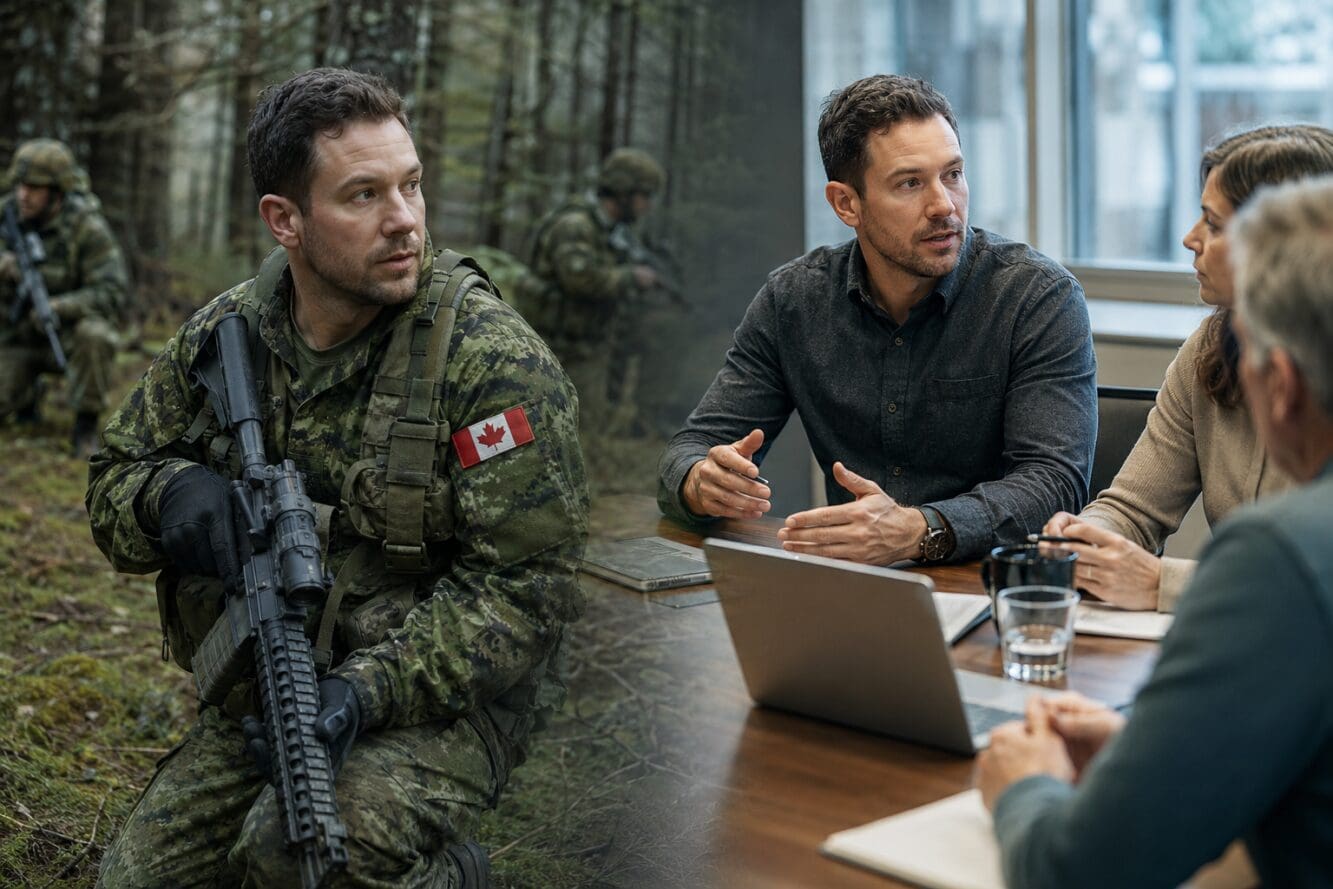
Military training produces skills that map almost directly onto community leadership. Veterans are trained to assess situations quickly, coordinate teams under pressure, and execute plans with limited resources — all qualities that community organizers rely on daily.
Key transferable skills include:
Where veterans sometimes need adjustment is in the shift from command-and-control structures to consensus-based environments. Civilian community work often requires more negotiation and patience with slower decision cycles. Veterans who recognize this difference early tend to adapt faster and lead more effectively.
Some of the clearest examples of Canadian veterans who became community leaders after service come from the nonprofit sector. Debbie Lowther, a Royal Canadian Navy veteran, co-founded VETS Canada with her husband Jim, a former infantryman, after the couple began helping homeless veterans in Halifax around 2010. What started as personal outreach grew into a national, volunteer-driven organization that provides emergency support, housing referrals, and advocacy for veterans in crisis across the country. [10]
VETS Canada now operates as a formal service provider in partnership with Veterans Affairs Canada (VAC), giving veterans direct influence over how community outreach and crisis interventions are delivered. [10] This is a strong example of lived experience becoming institutional leadership.
Veterans’ House Canada (VHC) in Ottawa takes a similar approach, running supportive housing projects built around the principle of “veterans helping veterans.” In early 2026, VHC highlighted collaborative work with local community partners, with veterans who had personally experienced homelessness and trauma serving as peer leaders within their housing communities. [8] For more on social inclusion initiatives in communities like Georgian Bay, local coverage offers useful context.
Several programs are specifically designed to support veterans entering community and civic leadership. The most active in 2026 include:
ProgramFocusStatusVETS CanadaEmergency support, peer advocacyNational, ongoing [10]ALLIES Leadership LabDefence and civic leadership pipelineActive since 2024-2025 [4]Veterans’ House CanadaPeer-led supportive housing leadershipOngoing [8]Reaching Home (federal)Veteran homelessness prevention with peer leadershipFunded Dec 2025 [9]
The ALLIES Leadership Lab, launched by ADGA Group, is particularly focused on building a formal pathway for veterans to move into leadership roles within Canada’s defence and broader civic ecosystem. [4] [5] It targets veterans with leadership potential and connects them with mentorship, training, and professional networks.
Veterans Affairs Canada’s own outreach, including its Salute publication, regularly profiles veterans in community roles, reinforcing that this transition is both common and valued. [7]
Transitioning from military to community leadership is not automatic. Veterans often face a set of predictable obstacles.
Common challenges:
The Office of the Veterans Ombudsman’s 2025 progress report noted ongoing gaps in VAC services that affect veterans’ ability to fully engage in post-service life, including community roles. [6]
Mental health is a foundation, not an afterthought, for veterans stepping into community leadership. Veterans dealing with PTSD, moral injury, or depression need support before they can effectively support others.
VAC offers mental health programs including the Operational Stress Injury (OSI) clinics and the Veteran Family Program. VETS Canada also provides referrals to mental health resources as part of its emergency outreach model. [10]
Veterans who have successfully transitioned to community leadership roles often cite peer support — talking to other veterans who have made the same journey — as the most effective form of mental health assistance. Organizations like VETS Canada and Veterans’ House Canada build this peer model into their structure by design. [8] [10]
The evidence suggests yes, with some conditions. Veterans bring a demonstrated commitment to collective goals over personal gain, which is a core quality in effective community leadership. They also have experience managing high-stakes situations, which builds credibility with community members.
However, success depends on the veteran’s willingness to adapt to civilian norms and their access to transitional support. Veterans who enter community work with mentorship, peer networks, and mental health support tend to perform significantly better than those who transition without any structured assistance.
The strong mayor powers debate in Ontario municipalities is one area where veteran-led civic leadership has drawn attention, as former CAF members bring a different perspective on executive decision-making and accountability.
Ottawa, Halifax, and Barrie are among the cities most actively engaging veterans in civic and community planning roles. Ottawa’s proximity to the National Capital Region and federal institutions makes it a natural hub. Halifax has a deep military history through CFB Halifax and has seen strong veteran-led nonprofit activity. Barrie and the broader Georgian Bay region, including communities like Springwater, have growing veteran populations and active local advocacy networks.
Smaller municipalities are also increasingly recognizing veterans as assets in community planning, emergency preparedness, and social services delivery.
Veterans who treat their community role as a new mission — with a learning phase before an execution phase — tend to avoid most of these pitfalls.
Canadian veterans who became community leaders after service are not a rare exception. They are a growing, recognized force in cities and towns across the country. The skills developed through military service — discipline, crisis management, team leadership, and mission focus — are genuinely valuable in civilian community work, provided veterans get the right support during the transition.
Actionable next steps for veterans considering community leadership:
Community leadership is a mission worth taking on. The training is already there.
What makes Canadian veterans effective community leaders?
Veterans bring structured decision-making, crisis response experience, and a strong sense of accountability — all of which are directly useful in community organizing, nonprofit leadership, and civic roles.
Which Canadian organization best supports veterans transitioning to community leadership?
VETS Canada is one of the most established, operating as a national peer-support and advocacy network founded by veterans for veterans. The ALLIES Leadership Lab is the strongest option for those targeting defence-sector or formal civic leadership roles. [4] [10]
Did the Canadian government recently fund veteran community leadership programs?
Yes. In December 2025, the federal government announced up to $1.5 million under the Reaching Home program to prevent and reduce veteran homelessness in New Brunswick, with veterans serving as community leaders and navigators in the funded projects. [9]
What is Veterans’ House Canada?
Veterans’ House Canada is an Ottawa-based organization that runs supportive housing projects using a peer-led model where veterans with lived experience of homelessness act as community leaders within their housing communities. [8]
Are there salary expectations for veteran community leaders in Canada?
Salaries vary widely. Nonprofit executive directors in Canada typically earn between $55,000 and $100,000 annually depending on organization size and region. Many veteran community leaders start in volunteer or part-time roles before moving into paid positions. Specific veteran-sector salary data is not consistently tracked in a single public database.
What is the ALLIES Leadership Lab?
The ALLIES Leadership Lab is a program launched by ADGA Group in 2024-2025 to build a formal pipeline of veteran leaders within Canada’s defence and civic ecosystem, offering mentorship and professional development. [4] [5]
What cities are best for veterans wanting to lead community projects?
Ottawa, Halifax, and Barrie are among the strongest cities for veteran community leadership, given their military history, veteran populations, and active nonprofit ecosystems.
How does military leadership differ from civilian community leadership?
Military leadership relies on clear hierarchy and authority. Community leadership depends on consensus, relationship-building, and persuasion. Veterans who adapt their style to include more collaboration tend to be most successful in civilian roles.
[3] The Latest Headlines For CAF Members And Veterans – https://legionmagazine.com/the-latest-headlines-for-caf-members-and-veterans/
[4] ADGA Launches ALLIES To Strengthen Veteran Leadership – https://canadiandefencereview.com/adga-launches-allies-to-strengthen-veteran-leadership/
[5] ALLIES Leadership Lab Launches To Strengthen Veteran Leadership Pathways In Canada’s Defence Ecosystem – https://www.investottawa.ca/blog/allies-leadership-lab-launches-to-strengthen-veteran-leadership-pathways-in-canadas-defence-ecosystem/
[6] Spotlight Progress Update On OVO Recommendations To VAC 2025 – https://www.ombudsman-veterans.gc.ca/en/publications/report-cards/spotlight-progress-update-on-ovo-recommendations-to-vac-2025
[7] April 2026 – https://www.veterans.gc.ca/en/news-and-media/salute/april-2026
[8] Veterans’ House Canada Instagram – https://www.instagram.com/p/DXHdwC3jLq9/
[9] Federal Government Invests To Prevent And Reduce Veteran Homelessness In Urban Areas Across New Brunswick – https://www.canada.ca/en/housing-infrastructure-communities/news/2025/12/federal-government-invests-to-prevent-and-reduce-veteran-homelessness-in-urban-areas-across-new-brunswick.html
[10] VETS Canada About – https://vetscanada.org/english/about