





















⚽️ Why Canadians Are Suddenly More Excited About the 2026 World Cup: Awareness, Pride, and What Happens Next

Last updated: May 21, 2026
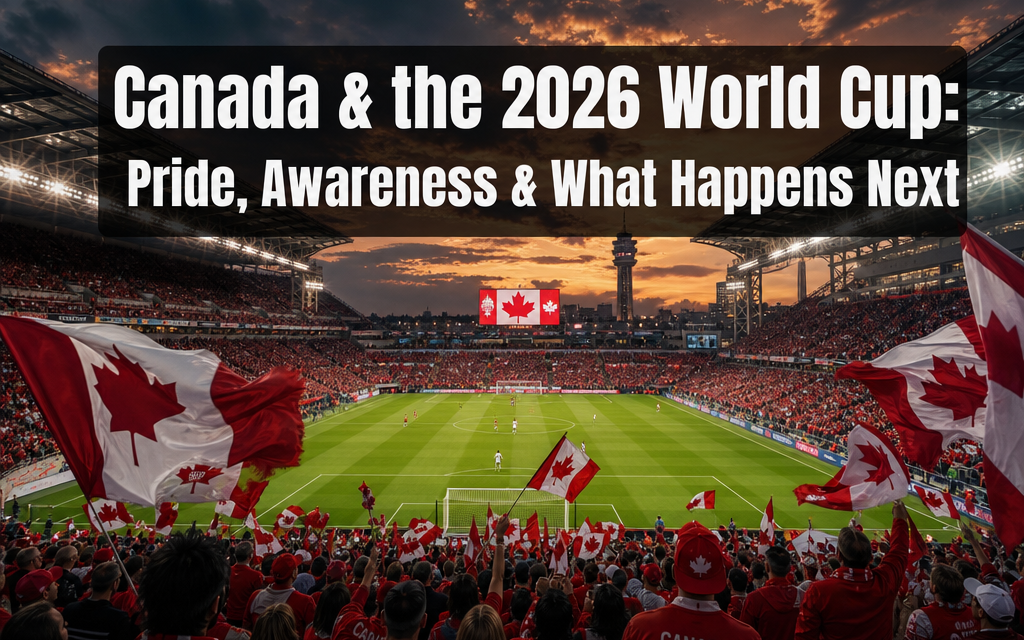
Quick Answer: Canada is co-hosting the 2026 FIFA World Cup alongside the United States and Mexico, and for the first time in 36 years, the Canadian men’s national team has qualified to play in it. That combination — home soil plus a competitive squad — has converted millions of passive Canadians into genuinely engaged soccer fans. The question now is how that awareness translates into real attendance, spending, and long-term sport culture.
Key Takeaways
- Canada is hosting World Cup matches in Toronto (BMO Field) and Vancouver (BC Place) in 2026.
- The Canadian men’s team qualified for the 2022 World Cup — their first since 1986 — and carried that momentum into 2026.
- Awareness is high, but conversion (buying tickets, attending matches, purchasing gear) is the real story.
- Top players to watch include Alphonso Davies, Jonathan David, and Tajon Buchanan.
- Economic forecasts (from Canadian government and FIFA planning documents) estimate billions in tourism and infrastructure spending across host cities.
- Soccer now ranks among Canada’s fastest-growing sports by youth registration and TV viewership.
- Common fan mistakes include waiting too long for tickets and underestimating travel costs to host venues.
What Makes the 2026 World Cup Different for Canada
This is not just another major sporting event passing through Canada. For the first time, Canada is both a host nation and a competing team, which creates a dual source of national pride that previous tournaments never offered. In 2026, Canadians don’t have to choose between cheering for a home city and cheering for their country — they can do both at once.
The 2026 tournament is also the first expanded 48-team World Cup, meaning more matches, more nations, and more chances for Canada to advance past the group stage.
Why Weren’t Canadians Excited About Soccer Before?
Historically, soccer competed poorly against hockey, CFL football, and basketball for Canadian attention. The men’s national team’s 36-year absence from the World Cup (1986 to 2022) meant entire generations grew up with no emotional connection to the team’s tournament performance.
That changed sharply after Canada’s 2022 qualification. Youth soccer registrations had already been climbing for years, driven by immigration from soccer-dominant cultures across Latin America, Africa, and Europe. The 2022 campaign gave those communities — and curious new fans — a national team worth following.
Who Are the Top Canadian Soccer Players to Watch in 2026
Three names lead every conversation about Canada’s 2026 squad:
- Alphonso Davies (Bayern Munich) — widely considered one of the world’s best left backs, his speed and creativity make him Canada’s most recognizable global star.
- Jonathan David (Lille) — a clinical striker with a strong European goal-scoring record; Canada’s most reliable finisher.
- Tajon Buchanan (Inter Milan) — a versatile winger whose club form has elevated his international profile significantly.
Supporting depth from players like Alistair Johnston, Stephen Eustáquio, and Cyle Larin gives Canada more competitive balance than at any previous World Cup.
How Likely Is Canada to Advance, and What Do Experts Predict?
Canada’s realistic ceiling in 2026 is a round of 16 finish, with an outside chance at the quarterfinals depending on the draw. Soccer analysts generally place Canada in the second tier of competitive nations — dangerous enough to beat weaker opponents, but not yet among the top eight favorites.
The home-crowd advantage is real. Playing in front of Canadian fans in Toronto or Vancouver would be a significant psychological boost, something the 2022 squad never experienced at the tournament level.
“Canada has the talent to surprise teams. The question is whether the squad can handle the pressure of performing at home.”
— a sentiment repeated across multiple soccer analyst platforms heading into 2026.
Which Canadian Cities Are Hosting World Cup Matches

Two Canadian cities are official 2026 FIFA World Cup host venues:
CityVenueCapacityTorontoBMO Field (expanded)~45,000VancouverBC Place~54,500
Toronto and Vancouver will each host multiple group stage matches and potentially knockout rounds. Fans in other cities — Calgary, Montreal, Ottawa — are expected to follow via large-scale public screenings and broadcaster events.
How Much Do World Cup Tickets Cost in Canada
FIFA’s official ticket pricing for the 2026 tournament ranges from roughly USD $80 for lower-tier group stage seats to well over USD $1,000+ for knockout rounds, with Canadian dollar equivalents fluctuating based on exchange rates. Hospitality packages and resale market prices run significantly higher.
Common mistake: Many Canadian fans assumed tickets would be easy to get because matches are “local.” In practice, global demand for World Cup tickets — especially for Canada’s own matches — means inventory sells out fast. Fans who didn’t register during the early ballot windows are largely relying on resale platforms.
What Economic Impact Will the World Cup Have on Canadian Cities
Toronto and Vancouver are projected to see substantial economic activity from the 2026 tournament. Government and FIFA planning estimates (cited in federal and municipal impact assessments) point to hundreds of millions in direct tourism spending per host city, covering hotels, restaurants, transportation, and retail.
Beyond the tournament window, infrastructure upgrades to transit, stadiums, and public spaces represent longer-term civic investments. Small businesses near host venues — bars, restaurants, merchandise shops — are among the most direct beneficiaries.
How Does Hosting the World Cup Change Canada’s Sports Reputation
Co-hosting the World Cup places Canada on a short list of nations that have organized the sport’s biggest event. That carries real credibility with FIFA, international broadcasters, and global sports organizations considering future bids.
Domestically, it accelerates soccer’s rise relative to other sports. The Canadian Premier League (CPL) and MLS franchises in Toronto, Vancouver, and Montreal all benefit from the visibility spike — more casual fans converted during the World Cup tend to follow club soccer afterward.
How to Convert World Cup Excitement Into Real Engagement: What Happens Next
Awareness is the easy part. Here’s how Canadian fans can move from passive interest to genuine participation:
- Check FIFA’s official resale portal for remaining ticket inventory before using third-party sites.
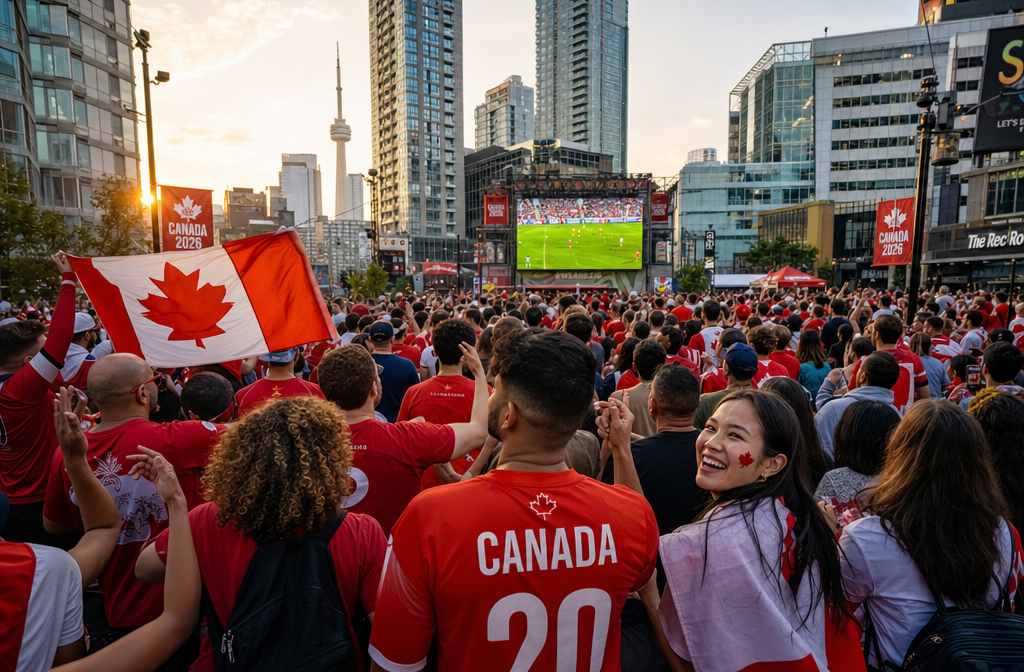
- Register for fan zones in Toronto and Vancouver — free or low-cost public viewing areas that create the stadium atmosphere without ticket prices.
- Follow the Canadian national team’s warm-up matches leading into the tournament to build familiarity with the squad.
- Buy licensed merchandise early — past host nations saw merchandise sell out weeks before opening matches.
- Plan travel logistics now — hotels near BMO Field and BC Place booked up months in advance.
FAQ
Q: When does Canada play its first 2026 World Cup match?
The official match schedule is set by FIFA. Check FIFA.com for Canada’s confirmed group stage fixtures and kickoff times.
Q: Can I watch Canada’s matches for free in 2026?
Yes. Both Toronto and Vancouver are planning official fan zones with free public screenings. National broadcasters (CBC/Radio-Canada and TSN/CTV) hold Canadian broadcast rights.
Q: Is the 2026 World Cup bigger than previous tournaments?
Yes. The 2026 edition expanded to 48 teams (up from 32), meaning more matches across more venues in Canada, the U.S., and Mexico.
Q: How does Canada’s squad compare to 2022?
The 2026 squad is considered more experienced than the 2022 group, with key players having added multiple seasons of top European club football since Qatar.
Q: What’s the biggest risk for Canada at the tournament?
Pressure. Playing at home raises expectations, and Canada’s squad is still relatively young at the international level. Managing the emotional weight of a home crowd is a genuine challenge.
Q: Will the World Cup help grow soccer long-term in Canada?
Most sports economists and soccer administrators expect a measurable “host effect” — increased youth registrations, higher TV ratings for club soccer, and stronger MLS/CPL attendance for two to three years post-tournament.
Q: Are there World Cup events outside Toronto and Vancouver?
Yes. Fan fests, broadcaster events, and sponsor activations are planned in major cities across Canada, even those not hosting matches.
Q: How does this compare to the 1994 World Cup Canada co-hosted?
In 1994, Canada hosted matches but did not qualify as a team. The 2026 edition is the first time Canada both hosts and competes, making national investment in the tournament far deeper.
Conclusion: From Awareness to Action
Why Canadians are suddenly more excited about the 2026 World Cup comes down to a simple but powerful shift: for the first time, Canada has skin in the game on both sides of the equation — as a host and as a competitor. The awareness is already there. The pride is real. What happens next depends on whether fans take the steps to show up, tune in, and stay engaged beyond the final whistle.
The practical moves are clear: secure tickets or fan zone access early, follow the squad’s preparation, and treat this tournament as the cultural moment it genuinely is. Canada’s soccer identity is being written right now. The 2026 World Cup is both the headline and the turning point.
Content, illustrations, and third-party video appearing on GEORGIANBAYNEWS.COM may be generated or curated with AI assistance or reproduced pursuant to the fair dealing provisions of the Copyright Act, R.S.C. 1985, c. C-42. Attribution and hyperlinks to original sources are provided in acknowledgment of applicable intellectual property rights. Such referencing is intended to direct traffic to and support the original rights holders’ platforms.
Much Appreciate You Sharing This Post - It Helps MUCH!!!