























🇨🇦 Canada Day – One of the Most Respected Countries in the World | Let’s Keep It That Way!

Last updated: July 1, 2026
On July 1, 1867, four provinces signed a document that quietly created one of the most stable democracies on earth. Nearly 160 years later, Canada still ranks in the global top 10 for quality of life, peacekeeping contributions, and international trust — and Canada Day remains the moment the country pauses to recognize why.
Quick Answer
Canada Day, celebrated every July 1, marks the 1867 Confederation that united British North American colonies into the Dominion of Canada. It’s a federal statutory holiday featuring fireworks, parades, citizenship ceremonies, and community gatherings. Canada continues to rank among the world’s most respected countries thanks to its stable democracy, universal healthcare, multicultural policy, and long record of humanitarian leadership.
Key Takeaways
- Canada Day falls on July 1 every year and commemorates the British North America Act of 1867.
- It is a statutory holiday across all provinces and territories — most banks, government offices, and many businesses close.
- Canada consistently ranks in the top 10 globally for quality of life, education, and safety (U.S. News Best Countries, 2024).
- Traditions include fireworks, parades, backyard barbecues, and new-citizen swearing-in ceremonies.
- Canada Day differs from U.S. Independence Day: it marks peaceful confederation, not a revolution.
- Canadians abroad celebrate through embassies, expat meetups, and hockey-themed parties.
- The holiday has evolved from “Dominion Day” (renamed in 1982) to a more inclusive national reflection.

What Is Canada Day and Why Do Canadians Celebrate It?
Canada Day celebrates the birth of Canada as a self-governing nation. On July 1, 1867, the British North America Act joined the provinces of Canada (now Ontario and Quebec), New Brunswick, and Nova Scotia into a single federation called the Dominion of Canada.
Canadians celebrate to honour that founding moment, but the day has grown into something broader — a recognition of shared values like peace, order, good government, and diversity.
When Is Canada Day 2026?
Canada Day 2026 falls on Wednesday, July 1. Because it lands mid-week, many employers offer a long weekend option, and major cities schedule official events on both the weekend before and the holiday itself.
How Is Canada Day Different from American Independence Day?
Canada Day marks a peaceful legal transition; the Fourth of July marks a violent break from Britain.
| Feature | Canada Day (July 1) | U.S. Independence Day (July 4) |
|---|---|---|
| Founding event | Confederation of colonies, 1867 | Declaration of Independence, 1776 |
| Path to nationhood | Legislative, peaceful | Revolutionary war |
| Tone | Reflective, communal | Patriotic, loud |
| Head of state | Constitutional monarch | Elected president |
Canadians tend to celebrate with quieter community events, though fireworks remain a shared tradition.
What Are the Best Canada Day Events and Fireworks Near Me?
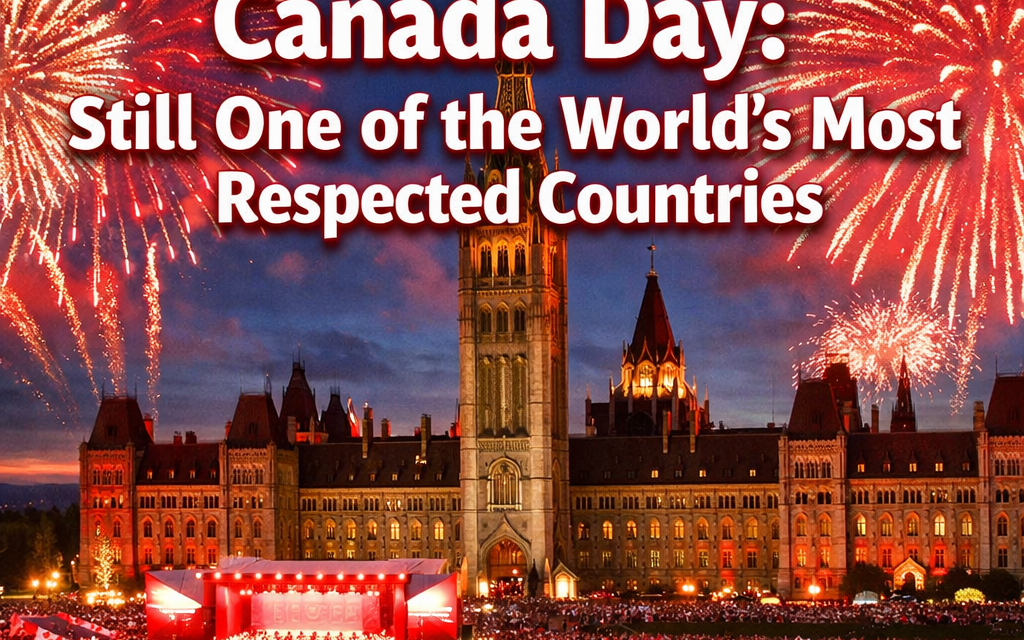
The biggest official celebration happens on Parliament Hill in Ottawa, broadcast nationally. Other major events include Toronto’s harbourfront fireworks, Vancouver’s Canada Place festival, and Montreal’s Old Port celebration.
For readers in cottage country, southern Georgian Bay communities host lakeside fireworks in towns like Collingwood, Wasaga Beach, and Midland — often the best small-town displays in Ontario.
Why Is Canada Considered One of the Most Respected Countries?
Canada earns global respect through consistent action, not slogans. The country ranks 3rd overall in U.S. News & World Report’s 2024 Best Countries index and regularly places in the top 5 for quality of life on the UN Human Development Index.
Key reasons include:
- Peacekeeping legacy: Canada helped invent modern UN peacekeeping under Lester B. Pearson in 1956.
- Humanitarian aid: Consistent contributions to global disaster relief, refugee resettlement, and vaccine sharing.
- Stable democracy: Peaceful transitions of power for over 150 years.
- Universal healthcare and strong public education.
- Multiculturalism as national policy since 1971 — a global first.
Canadians have led on issues from banning landmines (the 1997 Ottawa Treaty) to championing girls’ education worldwide. That long record of standing up for Canada and its allies underpins its reputation.
Canada Day Traditions and How People Celebrate
Most Canadians spend the day outside. Common traditions include:
- Attending community parades or free public concerts
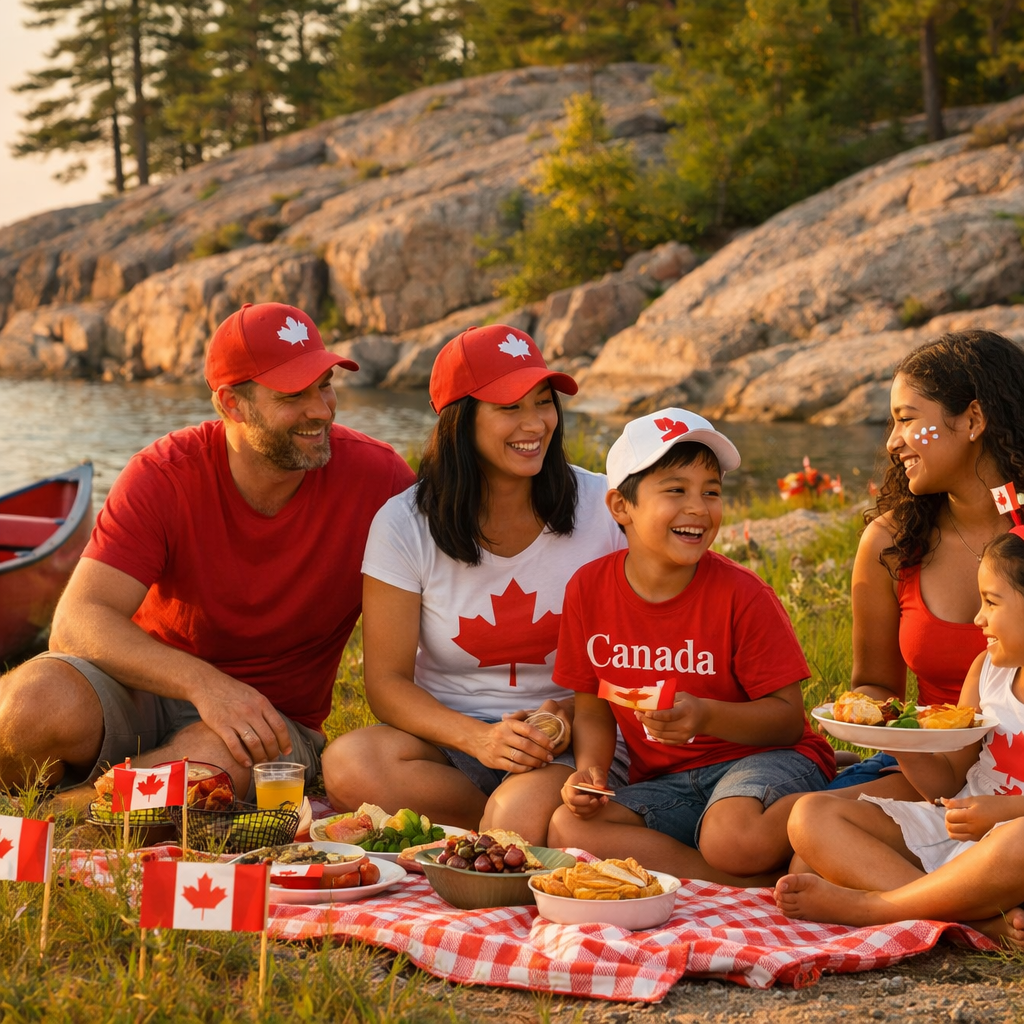
- Wearing red and white, often with maple leaf face paint
- Backyard barbecues with family and neighbours
- Fireworks after dusk
- Watching new Canadians take the citizenship oath at official ceremonies
Is Canada Day a Statutory Holiday and Do Businesses Close?
Yes — Canada Day is a federal statutory holiday in every province and territory. Banks, government offices, post offices, and most schools close. Grocery stores, restaurants, and retailers vary by province; Ontario and Alberta generally allow retail to open, while Quebec and Nova Scotia see wider closures.
If July 1 falls on a Sunday, the holiday is observed Monday, July 2.
What’s the History Behind Canada Day and Confederation?
The road to Confederation began at the Charlottetown Conference in 1864. Political leaders from British North American colonies wanted stronger defence against U.S. expansion after the Civil War, plus economic union.
The British North America Act received Royal Assent on March 29, 1867, and took effect July 1. The holiday was called “Dominion Day” until October 27, 1982, when Parliament officially renamed it Canada Day. Sir John A. Macdonald became the first Prime Minister, and the country has since grown from four provinces to ten provinces and three territories.
Canada Day Activities for Families with Kids
Family-friendly ideas that work every year:
- Morning pancake breakfast at a local firehall or community centre
- Face painting and craft tables at town celebrations
- Splash pads or lakeside swims
- Building a maple-leaf-themed picnic
- Reading age-appropriate books about Canadian history
- Watching the Ottawa fireworks broadcast together

How Do Canadians Abroad Celebrate Canada Day?
Expat Canadians gather through embassies, high commissions, and community groups. Popular traditions include Canada Day pub nights in London, Sydney, and Hong Kong, and rooftop parties in New York. Many embassies host public receptions with Tim Hortons coffee, butter tarts, and hockey highlights on repeat.
What Makes Canada Highly Ranked in Global Respect and Quality of Life?
Canada scores well on measurable indicators: low corruption, high press freedom, strong rule of law, and world-class universities. The country consistently ranks in the top 10 of the World Happiness Report and top 15 of the Global Peace Index.
Investments in clean energy and small nuclear reactors and steady immigration policy also support long-term economic stability.
Canada Day Food and Recipes: What Do People Eat?
The classic menu is casual and outdoor-friendly:
- BBQ: burgers, peameal bacon, grilled corn
- Poutine: fries, cheese curds, gravy
- Butter tarts and Nanaimo bars for dessert
- Maple-glazed salmon on the West Coast
- Ketchup chips and Canadian craft beer or cider — many from local makers like Spy Cider House Distillery
- A red-and-white maple leaf cake with strawberries and whipped cream
Common Misconceptions About Canada Day
- “It’s Canada’s independence day.” Not quite — Canada gained full legislative independence gradually, culminating in the Constitution Act of 1982.
- “It was always called Canada Day.” It was Dominion Day until 1982.
- “Everyone gets the day off.” Essential workers, retail staff in some provinces, and hospitality workers often work.
- “It’s just like the Fourth of July.” The tone, history, and meaning are different.
How Has Canada Day Changed Over the Years?
Early Dominion Day celebrations were modest — church services, small parades, and speeches. The centennial in 1967 transformed the holiday into a national spectacle, and the 1982 renaming reframed it around modern Canadian identity. Today, celebrations increasingly acknowledge Indigenous history and reconciliation, with many communities pairing festivities with moments of reflection.
FAQ
Is Canada Day the same as Confederation Day?
Yes. It marks the 1867 Confederation, though the holiday was officially renamed from Dominion Day to Canada Day in 1982.
Do stores close on Canada Day?
It depends on the province. Banks and government offices close everywhere; retail rules vary.
Why is Canada so respected globally?
Stable democracy, universal healthcare, multiculturalism, peacekeeping history, and consistent humanitarian aid.
What colours represent Canada Day?
Red and white — the colours of the national flag adopted in 1965.
Is Canada Day celebrated outside Canada?
Yes, through Canadian embassies and expat communities worldwide.
When did Canada become fully independent?
Legislative independence was completed with the Constitution Act of 1982, which patriated the constitution.
Conclusion
Canada Day is more than fireworks and flags — it’s a yearly checkpoint on a national project that has quietly worked for nearly 160 years. The country’s reputation for fairness, peacekeeping, and welcoming newcomers didn’t happen by accident; it was built through steady choices generation after generation.
Next steps for July 1:
- Check your municipality’s website for local fireworks times.
- Plan a simple backyard menu with Canadian classics.
- Take five minutes to read about a Canadian who shaped the country’s global reputation — Lester Pearson, Roméo Dallaire, or Viola Desmond are great starts.
- If you’re new to Canada, look up a citizenship ceremony near you — they’re open to the public and genuinely moving.
Sources
- U.S. News & World Report, Best Countries Rankings, 2024
- United Nations Human Development Index, 2024
- Government of Canada, “History of Canada Day,” canada.ca, 2024
- World Happiness Report, 2024
Content, illustrations, and third-party video appearing on GEORGIANBAYNEWS.COM may be generated or curated with AI assistance or reproduced pursuant to the fair dealing provisions of the Copyright Act, R.S.C. 1985, c. C-42. Attribution and hyperlinks to original sources are provided in acknowledgment of applicable intellectual property rights. Such referencing is intended to direct traffic to and support the original rights holders’ platforms.
Much Appreciate You Sharing This Post - It Helps MUCH!!!