





















🗻 The Great Story of Blue Mountain Pottery: How Canada’s Ceramic Empire Faded Away

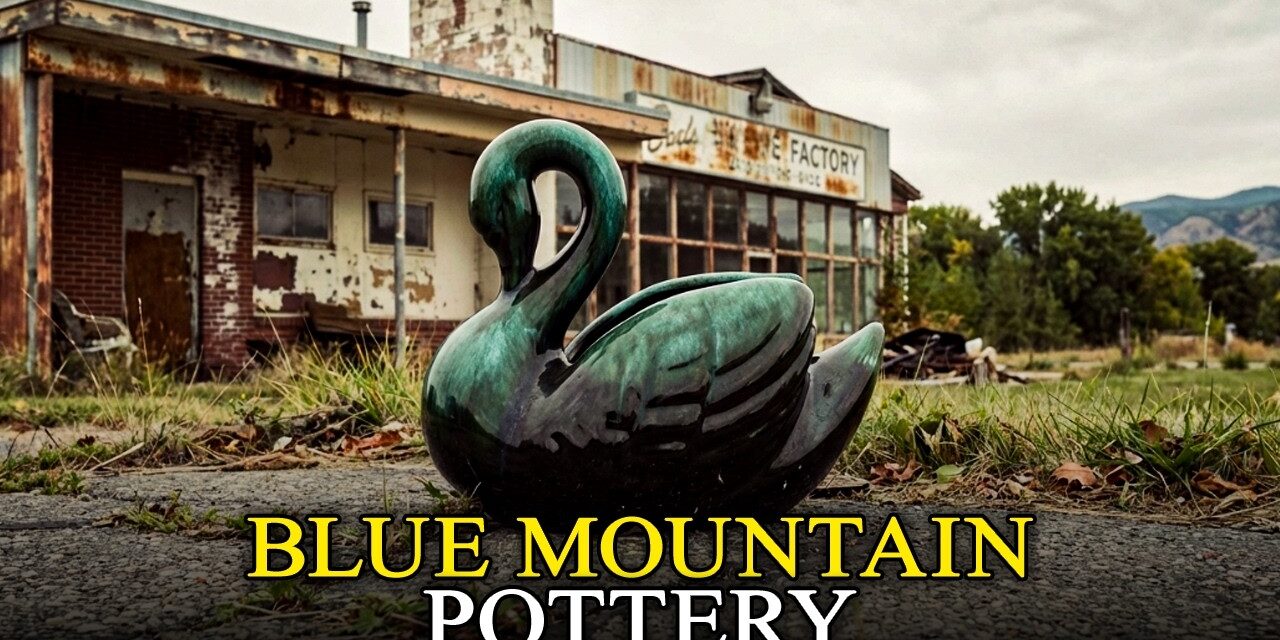
In the heart of Collingwood, Ontario, there once stood a Canadian cultural phenomenon—the massive Blue Mountain Pottery factory where Eastern European immigrants who’d fled post-WWII Europe brought their Old World ceramic craftsmanship to Canada and created the iconic, flowing green-and-blue glazed ceramic animals and vases that defined Canadian home décor for generations. Thanks to Industrial North for this great story!!!
Blue Mountain wasn’t merely a pottery company; it was ubiquitous Canadian identity, the place where from the 1960s to the 1980s you couldn’t walk into a Canadian living room without seeing one of their distinctive pieces—ceramic deer on mantels, glazed vases on shelves, those unmistakable blue-green colours that meant quality Canadian craftsmanship, popular wedding gifts and grandmother treasures that represented affordable art for middle-class Canadian homes. These were pieces made in massive Collingwood kilns by skilled workers who understood glazes and firing temperatures, proof that immigrant craftsmanship could build a Canadian ceramic empire that dominated domestic markets. But as tastes modernized in the 1990s and cheap Asian ceramics flooded Canadian stores, Blue Mountain struggled to survive. Younger Canadians found the green-blue glazed animals old-fashioned and dated, preferring minimalist modern décor over their grandmothers’ ceramic collections, while retailers filled shelves with disposable Asian imports that cost a fraction of Collingwood-made pottery.

Blue Mountain couldn’t compete with changing aesthetics and import prices while maintaining Canadian production and quality standards. In 2004, the company finally closed its massive kilns forever, ending decades of continuous production and leaving Collingwood without the factory that had employed generations of workers and defined the town’s identity. Today, vintage Blue Mountain pieces are collectibles sought by nostalgic Canadians who remember when those distinctive green-blue glazes filled their childhood homes, while the Collingwood factory is gone and the affordable Canadian ceramic art that once decorated every middle-class home is replaced by generic imports with no cultural connection.
This is the tragic story of how Canada’s ceramic empire faded away as tastes modernized and Asian imports made Collingwood production obsolete, how immigrant craftsmanship that built a Canadian icon couldn’t survive when the culture moved on—and what that 2004 closure says about Canadian decorative identity being lost to disposable imports, leaving Blue Mountain’s distinctive glazes as memories of when Canadian homes displayed Canadian-made art that meant something beyond mere decoration.
Content, illustrations, and third-party video appearing on GEORGIANBAYNEWS.COM may be generated or curated with AI assistance or reproduced pursuant to the fair dealing provisions of the Copyright Act, R.S.C. 1985, c. C-42. Attribution and hyperlinks to original sources are provided in acknowledgment of applicable intellectual property rights. Such referencing is intended to direct traffic to and support the original rights holders’ platforms.
Much Appreciate You Sharing This Post - It Helps MUCH!!!