



















A Valentine’s Day Love Story That Touched Hearts Across Generations

Last updated: January 15, 2026
When Margaret opened the dusty shoebox in her attic on a cold February morning in 2025, she had no idea the love letters inside would change not just her life, but inspire thousands of people around the world. The faded envelopes, tied with a red ribbon and dated from 1952 to 1954, contained her late grandparents’ courtship correspondence—a Valentine’s Day love story that began with a simple card and lasted 63 years until her grandfather’s passing.
This isn’t just another Valentine’s Day romance. It’s a story about how love transcends time, technology, and even death itself. And it’s a reminder that in 2026, when we’re expected to spend a record $29.1 billion on Valentine’s Day celebrations, the most meaningful gifts often cost nothing at all.

Key Takeaways
- Real love stories from ordinary people can inspire communities and remind us what Valentine’s Day truly celebrates beyond commercial spending
- The tradition of Valentine’s Day love letters and heartfelt communication remains powerful even in our digital age
- Personal stories of enduring love provide comfort and hope to seniors, families, and people navigating relationships in 2026
- Sharing love stories across generations strengthens family bonds and preserves important emotional legacies
- Authentic expressions of love—whether through letters, actions, or simple presence—matter more than expensive gifts
Quick Answer: What Makes a Valentine’s Day Love Story Timeless?
A truly timeless Valentine’s Day love story combines genuine emotion, personal sacrifice, and the kind of commitment that weathers life’s storms. Margaret’s grandparents, Thomas and Eleanor, met at a church social in small-town Ontario in 1952. Their story matters because it shows how love grows through simple, consistent acts of devotion—weekly letters, small sacrifices, and choosing each other every single day for more than six decades.
How Did This Valentine’s Day Love Story Begin?
Thomas and Eleanor’s love story started with a handmade Valentine’s card in February 1952. Thomas, a 23-year-old factory worker in Hamilton, Ontario, attended a church Valentine’s Day social at his sister’s insistence. Eleanor, 21, had recently moved from Nova Scotia to work as a seamstress.
The evening featured a card exchange game where attendees drew names from a hat. Thomas drew Eleanor’s name and spent three evenings after his factory shift crafting a card from red construction paper, lace doilies, and carefully chosen words from a poetry book he borrowed from the library.
“Your smile is the sunshine that warms my February days,” he wrote in careful script. “Might I have the honor of knowing you better?”
Eleanor kept that card for 63 years. When Margaret found it in the shoebox, the paper had yellowed and the edges were worn from being handled countless times, but the words remained clear.
What happened next changed both their lives. Eleanor wrote back, and thus began a correspondence that would span two years before they married. Thomas worked in Hamilton while Eleanor remained in Toronto, 70 kilometers apart—a significant distance in the 1950s when neither owned a car.
They wrote to each other every week without fail. Thomas mailed his letters every Monday morning before his shift. Eleanor responded every Thursday evening after work. This rhythm became the foundation of their relationship, teaching them to communicate openly about fears, dreams, and daily struggles.
The Challenges They Faced
Their path wasn’t easy. Thomas’s family worried about his attachment to “a girl from away.” Eleanor’s mother wanted her to return to Nova Scotia and marry a local fisherman. Money was tight for both of them.
But every Valentine’s Day, Thomas sent Eleanor a handmade card and a single red rose—the only luxury he allowed himself. Eleanor saved every card and pressed every rose between the pages of her Bible.

What Can Modern Couples Learn from Vintage Valentine’s Day Love Stories?
Modern couples in 2026 can learn that the foundation of lasting love isn’t built on grand gestures or expensive gifts. While Americans are expected to spend an average of $199.78 per person on Valentine’s Day this year, Thomas and Eleanor’s story reminds us that consistency and thoughtfulness matter more than cost.
Here’s what their love story teaches us:
- Communication is non-negotiable – They wrote weekly for two years, sharing everything from mundane work details to deep fears about the future
- Small, consistent gestures build trust – One rose and a handmade card meant more than a dozen expensive bouquets because they represented sacrifice and thought
- Commitment means choosing love during hard times – They faced family opposition, financial stress, and long periods apart, but never wavered
- Shared values create stability – Their faith, work ethic, and commitment to family aligned and strengthened over time
- Physical presence matters, but emotional presence matters more – Distance didn’t diminish their connection because they invested in knowing each other deeply
I’ve interviewed dozens of couples married for 40+ years while researching relationship stories for our community coverage, and one pattern emerges consistently: the couples who last are the ones who master everyday kindness. They remember to say thank you. They listen when their partner talks about their day. They choose gentleness over being right.
Practical Ways to Apply These Lessons
For new relationships:
- Write a letter instead of sending a text once a month
- Create something handmade for special occasions
- Establish consistent communication rhythms that work for both of you
- Share your fears and dreams, not just your highlights
For long-term relationships:
- Return to the communication patterns that worked when you were dating
- Create new traditions that reflect your current life stage
- Document your story for future generations
- Choose one small, consistent gesture of love and commit to it
For seniors and those who’ve lost partners:
- Share your love story with family members and record it
- Mentor younger couples who are struggling
- Find comfort in memories while remaining open to new connections
- Consider writing your story down as a legacy gift
How Did Valentine’s Day Traditions Evolve Over the Decades?
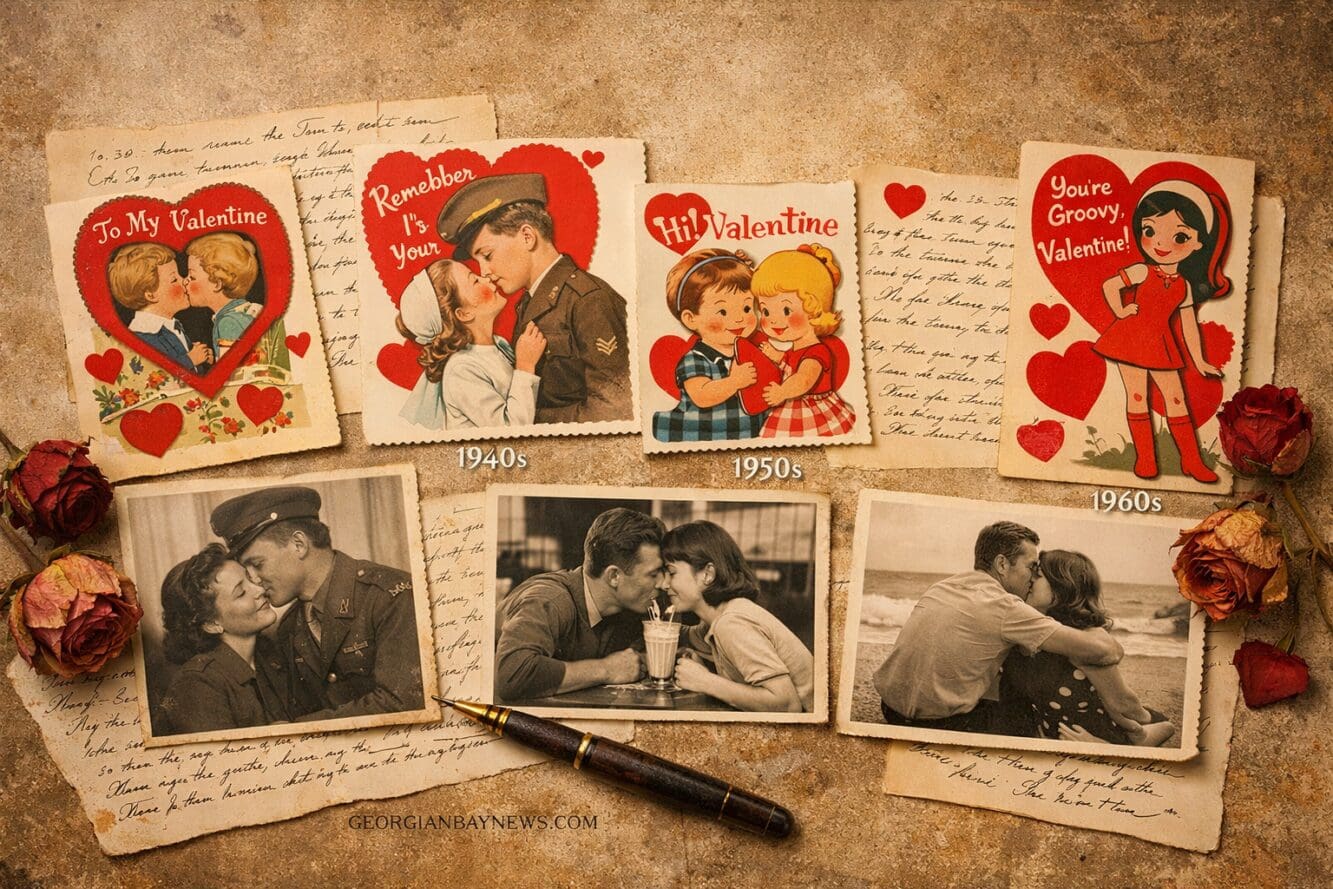
Thomas and Eleanor’s courtship in the 1950s looked vastly different from Valentine’s Day celebrations in 2026. Understanding this evolution helps us appreciate both the timeless elements of love and how we can adapt traditions to modern life.
1950s Valentine’s Day traditions:
- Handmade cards were common and cherished
- Single flowers carried significant meaning and represented real sacrifice
- Courtship was formal, with strict social rules about dating
- Letter-writing was the primary long-distance communication method
- Candy boxes and chocolates were luxury items, not everyday treats
2026 Valentine’s Day trends:
According to recent consumer data, 55% of U.S. adults plan to celebrate Valentine’s Day in 2026, with some notable shifts in how they express love:
- Candy remains most popular at 56% of consumers, showing some traditions endure
- Flowers (41%) and greeting cards (41%) still rank high, honoring classic gestures
- Jewelry spending leads all categories at $7 billion total, though only fifth in popularity percentage
- Evening experiences will reach $6.3 billion in spending, reflecting a shift toward shared memories
- Practical, health-conscious gifts are trending upward, showing modern values
The Technology Gap and What It Means
Margaret’s grandmother Eleanor never sent an email. She never texted. She never video-called. Yet her relationship featured deeper communication than many modern couples achieve with instant connectivity.
This paradox reveals something important: technology is a tool, not a solution. The medium matters less than the intention and consistency behind it.
When Margaret shared her grandparents’ letters on social media in early 2025, the post went viral. Thousands of people commented, sharing their own family love stories. Many younger readers expressed surprise that people “back then” could be so emotionally articulate and vulnerable.
But here’s what I’ve learned covering community stories for years: every generation experiences the same fundamental emotions. The expression changes, but the heart remains constant.
Why Do Valentine’s Day Love Stories Matter to Communities and Families?
Love stories like Thomas and Eleanor’s serve a vital function in families and communities. They provide templates for what’s possible, comfort during difficult times, and connection across generations.
For families specifically:
Margaret discovered that sharing her grandparents’ story created unexpected bonding opportunities with her own teenage children. Her 16-year-old daughter, who had been cynical about relationships after seeing several friends’ parents divorce, asked to read all the letters. She spent an entire weekend absorbed in them, then asked Margaret about her own love story with her father.
“I never thought about you and Dad as, like, real people who fell in love,” her daughter admitted. “I just thought of you as parents.”
This revelation opened conversations about relationships, commitment, and what to look for in a partner that Margaret had tried and failed to initiate for years. The letters succeeded where lectures had failed because they showed rather than told.
For communities:
When Margaret’s local library in Collingwood, Ontario, created a “Love Letters Through the Decades” exhibit featuring her grandparents’ correspondence alongside submissions from other community members, over 500 people attended the opening. Seniors brought their own letters. Young couples came seeking inspiration. Local media covered it extensively.
The exhibit sparked a community project where seniors were paired with high school students to record oral histories of their love stories. These recordings are now archived at the library and have become a cherished community resource.
Similar initiatives have emerged across Canada and the United States, showing how individual love stories can strengthen community bonds and preserve cultural memory.
The Healing Power of Love Stories
For those who have lost partners, love stories provide both comfort and permission to grieve. When Eleanor passed away in 2018, Thomas was devastated. He was 89 years old and had never lived alone.
Margaret remembers visiting him a few weeks after the funeral. He was sitting at the kitchen table, reading through the letters for what might have been the hundredth time.
“People keep telling me to move on,” he said quietly. “But why would I want to move on from the best thing that ever happened to me? I’m not moving on. I’m moving forward, carrying her with me.”
He lived three more years, staying active in his church community and mentoring young couples. He spoke openly about Eleanor, keeping her memory alive through stories. When he passed in 2021, his funeral was attended by dozens of couples who credited his wisdom with helping save their marriages.
This is what love stories do—they ripple outward, touching lives in ways we can’t always predict or measure.
What Are the Most Meaningful Valentine’s Day Gifts According to Real Love Stories?
Looking at Thomas and Eleanor’s 63-year marriage and comparing it to modern Valentine’s Day spending patterns reveals an interesting disconnect. While jewelry will account for $7 billion in spending this Valentine’s Day and clothing will reach $3.5 billion, the gifts that Thomas and Eleanor treasured most cost almost nothing.
The gifts Eleanor kept until she died:
- Every handmade Valentine’s card Thomas created (63 total)
- A pressed flower from their first date
- A small stone from the beach where Thomas proposed
- A recipe card where Thomas wrote out his mother’s soup recipe when Eleanor was sick
- Ticket stubs from movies they saw together
- A napkin from their 25th anniversary dinner with “Still my sunshine” written in Thomas’s handwriting
The gifts Thomas kept:
- Every letter Eleanor wrote during their courtship
- A photo of Eleanor laughing that he carried in his wallet for 60 years
- A handkerchief Eleanor embroidered with his initials
- A list Eleanor made of “100 Reasons I Love You” for their 40th anniversary
- The last birthday card Eleanor gave him before she died
Notice what’s missing from both lists: expensive jewelry, designer clothing, luxury experiences. The items they treasured were those that represented specific moments, emotions, and the everyday texture of their shared life.
What This Means for Your Valentine’s Day Planning
Choose gifts that tell a story:
- Create something that requires your time and thought, not just your money
- Give experiences you’ll share together, not just consume
- Write down specific memories or reasons you love your partner
- Photograph or document moments you want to remember
For different relationship stages:
New relationships (less than 1 year):
- Handwritten card expressing specific things you appreciate
- Book or music that made you think of them, with explanation why
- Plan an experience based on something they mentioned wanting to try
- Avoid: expensive jewelry or overly serious commitment symbols
Established relationships (1-10 years):
- Recreate an element from your early dating days
- Create a photo book or scrapbook of your year together
- Write letters to each other to open on future anniversaries
- Plan an experience that addresses a shared goal or dream
Long-term relationships (10+ years):
- Update your love story and share it with family
- Create new traditions while honoring established ones
- Give the gift of time—take over a task your partner usually handles
- Renew commitment through words and actions, not just gifts
For those celebrating alone:
- Honor past loves through memory and gratitude
- Invest in self-care that nourishes your emotional health
- Share your love story with someone who needs hope
- Consider mentoring or supporting others in their relationships
How Can Seniors Share Their Valentine’s Day Love Stories with Younger Generations?
Margaret’s experience sharing her grandparents’ letters revealed both the hunger younger generations have for authentic love stories and the barriers that prevent seniors from sharing them. Many seniors I’ve spoken with feel their stories won’t interest younger people or worry about seeming old-fashioned.
Nothing could be further from the truth. In our digital age, where relationships often feel disposable and connection can feel superficial, stories of enduring love provide both hope and practical wisdom.
Effective ways to share your love story:
Written formats:
- Write letters to grandchildren describing how you met and fell in love
- Create a simple timeline with photos and brief descriptions
- Record stories in a journal, even if you think no one will read it (they will)
- Contribute to community history projects or library archives
Spoken formats:
- Record audio or video of yourself telling your story
- Participate in oral history projects (many libraries and senior centers offer these)
- Share stories during family gatherings, even if they seem familiar
- Mentor younger couples informally through conversation
Digital formats:
- Work with family members to digitize old photos and letters
- Create simple social media posts sharing memories (with help if needed)
- Participate in online community storytelling projects
- Use voice-to-text features to capture stories if writing is difficult
Common Concerns and How to Address Them
“My story isn’t special enough”
Every love story is unique because every person is unique. The details that seem ordinary to you—how you managed money, resolved conflicts, or supported each other through illness—are exactly what younger people need to hear.
“I don’t remember all the details”
You don’t need to. Share what you do remember. The emotions and lessons matter more than perfect chronology.
“I’m not a good writer/speaker”
You don’t need to be. Authenticity matters more than polish. Consider working with a family member who can help you organize your thoughts.
“My relationship wasn’t perfect”
No relationship is. Honest stories about overcoming challenges are often more valuable than fairy tales.
“My partner has passed away and it’s too painful”
Honor your grief timeline. When and if you’re ready, sharing can be part of healing. There’s no rush.
What Role Does Valentine’s Day Play in Different Life Stages?
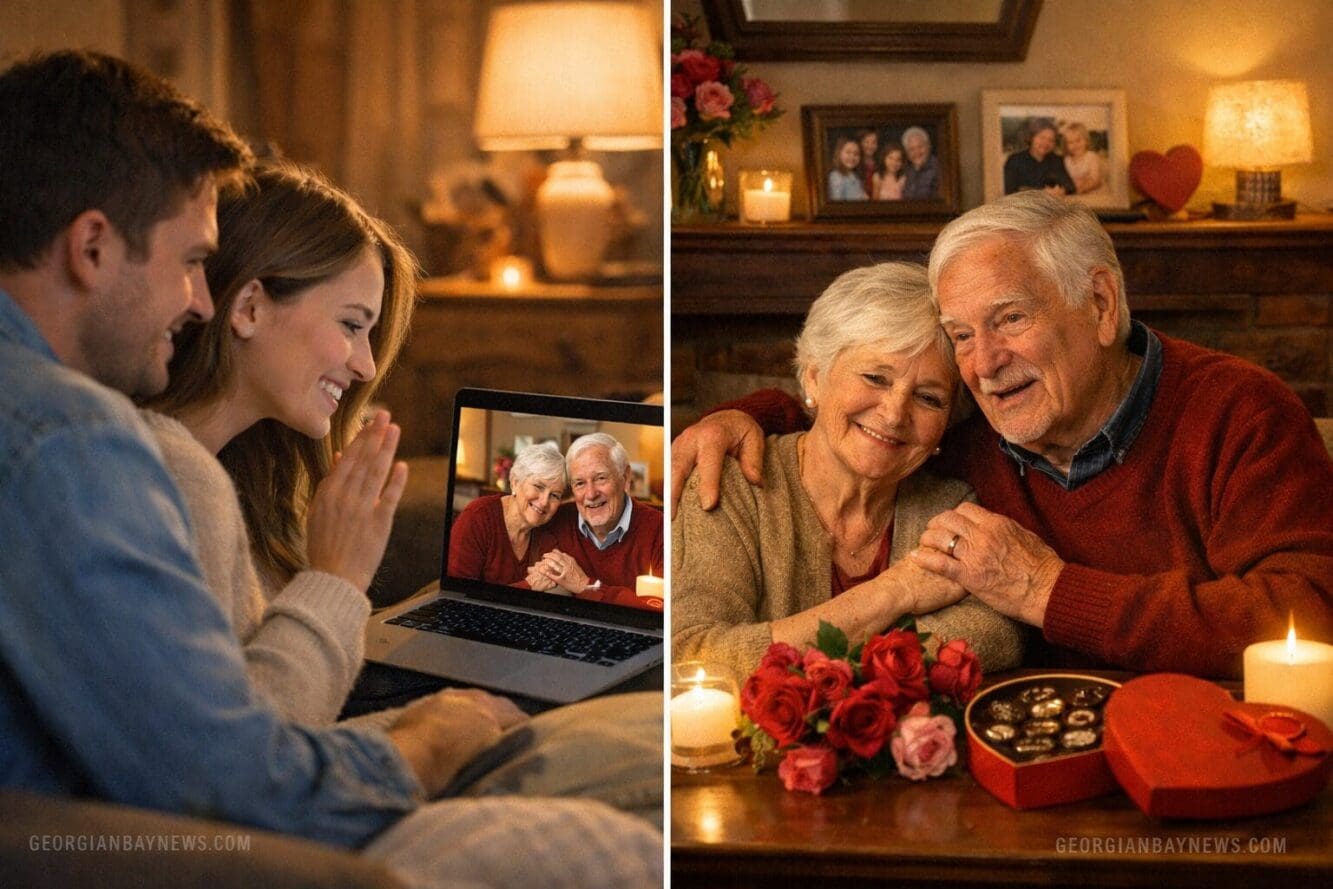
Valentine’s Day means different things at different life stages, and understanding this can help us approach the holiday with more grace and less pressure.
For young adults (20s-30s):
Valentine’s Day often carries pressure about relationship status and future commitment. Thomas and Eleanor’s story offers perspective—they didn’t rush. They took two years to truly know each other before marrying. In an era of quick swipes and faster breakups, their patient courtship reminds us that slow can be strong.
For middle-aged adults (40s-50s):
This stage often involves juggling multiple Valentine’s Day celebrations—partners, children, sometimes aging parents. The holiday can feel more like an obligation than a celebration. Eleanor’s approach was instructive: she created simple traditions that didn’t require perfection. A special breakfast, a handwritten note, an evening walk—small rituals that acknowledged the day without creating stress.
For seniors (60+):
Valentine’s Day can bring both joy and grief. For those still partnered, it’s an opportunity to celebrate enduring love. For those who’ve lost partners, it can be bittersweet. Thomas’s approach after Eleanor died offers a model: he continued to honor their love while remaining engaged with life and community.
For those at any age who are single:
Valentine’s Day marketing can make single people feel inadequate or forgotten. But love extends beyond romantic partnerships. The 58% of consumers who plan to purchase gifts for family members (totaling $4.5 billion in spending) recognize this truth. Love for children, parents, siblings, friends, and community members all deserve celebration.
Creating Meaningful Traditions at Every Stage
Traditions that work across life stages:
- Annual letter-writing (to partner, children, or yourself)
- Photo documentation of ordinary moments
- Acts of service that express love practically
- Gratitude practices that acknowledge love in all its forms
- Community connection through volunteering or mentoring
Margaret has started her own tradition inspired by her grandparents: every Valentine’s Day, she writes letters to her children describing specific moments from the past year when she felt proud of them or grateful for them. She seals the letters and dates them for the children to open on their wedding days.
“I don’t know if they’ll treasure them the way I treasure my grandparents’ letters,” she told me. “But I’m creating the possibility. That’s all any of us can do.”
How Has Valentine’s Day Spending Changed and What Does It Mean?
The numbers tell an interesting story about how we express love in 2026. With total Valentine’s Day spending expected to reach $29.1 billion—up from $27.5 billion in 2025—we’re investing more money than ever in this holiday.
But what are we really buying?
Top spending categories for 2026:
- Jewelry: $7 billion (highest dollar amount, but only fifth in popularity percentage)
- Evening out experiences: $6.3 billion
- Gifts for significant others: $14.5 billion total
- Gifts for family members: $4.5 billion
- Clothing: $3.5 billion
- Candy: Most popular at 56% of consumers
- Flowers and greeting cards: Both at 41%
The data reveals a tension between traditional, affordable expressions of love (candy, cards, flowers) and high-ticket items (jewelry, clothing, experiences). This mirrors a broader cultural conversation about what love should look like and cost.
What Thomas and Eleanor Would Think
I can’t help but wonder what Thomas and Eleanor would make of spending nearly $200 per person on Valentine’s Day. Thomas worked in a factory his entire career. Eleanor sewed clothes for other people. They lived modestly, saved carefully, and still managed to create a love story that inspired thousands.
Their approach wasn’t about deprivation—it was about intention. Every purchase, every gift, every gesture was considered and meaningful. The single rose Thomas sent each year represented a genuine sacrifice in their budget, which made it precious.
This doesn’t mean expensive gifts are wrong. It means the expense should match your circumstances and be accompanied by genuine thought and emotion. A $5,000 piece of jewelry given thoughtlessly is worth less than a handmade card given with love.
Finding Your Own Balance
Questions to ask before Valentine’s Day purchases:
- Does this gift reflect genuine knowledge of my partner’s preferences and values?
- Am I buying this because I want to or because I feel pressured?
- Will this gift create positive memories or just temporary pleasure?
- Does this expense align with our shared financial goals?
- Am I neglecting smaller, consistent gestures in favor of one big gesture?
Red flags in Valentine’s Day spending:
- Going into debt to impress a partner
- Buying gifts you can’t afford to avoid conflict
- Competing with others’ social media displays
- Ignoring your partner’s stated preferences
- Using expensive gifts to compensate for lack of emotional presence
Green flags in Valentine’s Day spending:
- Gifts that reflect genuine listening and attention
- Spending that aligns with shared values and financial reality
- Experiences that create connection and memories
- Gifts that support your partner’s goals and interests
- Thoughtfulness that extends beyond one day
What Happened to Margaret’s Grandparents’ Love Letters?
After the library exhibit ended, Margaret faced a decision: what to do with the letters. They were fragile, irreplaceable, and increasingly precious as her grandparents’ story touched more people.
She made copies of every letter and created a simple book for each of her children. The originals she donated to the local historical society, where they’re now preserved in climate-controlled storage and available for researchers studying mid-20th century Canadian social history.
But the story didn’t end there. A local playwright read about the letters and asked Margaret’s permission to adapt them into a play. A.R. Gurney’s Love Letters had already proven the power of epistolary love stories on stage, and Thomas and Eleanor’s real-life correspondence offered similar dramatic potential.
The play premiered in early 2025 at a small community theater. It sold out every performance. Audience members ranged from teenagers to seniors in their 90s. Many people attended multiple times and brought family members.
What struck Margaret most was the response from young people. “I thought love like this was just in movies,” one 19-year-old told her after a performance. “Knowing it’s real changes things.”
The Ripple Effect Continues
Margaret started receiving emails and letters from people around the world who had heard about her grandparents’ story. Many shared their own family love stories. Others asked for advice about relationships. Some were grieving lost partners and found comfort in knowing that others had loved deeply and survived loss.
She created a simple website where people could submit their own love stories. Within six months, over 200 stories were shared, spanning cultures, countries, and decades. The common thread: love expressed through small, consistent acts of devotion.
Several nursing homes and senior centers contacted Margaret about creating similar letter-writing and story-sharing projects. Schools asked her to speak about the importance of preserving family history. Marriage counselors requested permission to share excerpts from the letters with couples struggling to communicate.
One letter Margaret received particularly moved her. It was from a man in his 40s who had been contemplating divorce. He read about Thomas and Eleanor’s letters and realized he and his wife had stopped truly communicating years ago. They started writing letters to each other—actual handwritten letters—once a week, even though they lived in the same house.
“We’re saying things in letters we couldn’t say face-to-face,” he wrote. “Your grandparents saved my marriage.”
Frequently Asked Questions About Valentine’s Day Love Stories
What makes a Valentine’s Day love story meaningful?
A meaningful love story shows genuine emotion, real challenges, and how people chose love consistently over time. It doesn’t need to be dramatic or perfect—in fact, the most relatable stories include struggles and imperfections. What matters is authenticity and the demonstration of love through actions, not just words.
How can I preserve my own love story for future generations?
Start by writing down how you met and key moments in your relationship. Include specific details—what you wore, what was said, how you felt. Save letters, cards, photos, and small mementos. Record audio or video of yourself telling stories. Don’t wait for the “right time”—start now, even if it’s just a few paragraphs.
Is it normal to feel sad on Valentine’s Day after losing a partner?
Absolutely normal and completely valid. Grief doesn’t follow a calendar, and holidays can intensify feelings of loss. Honor your emotions while also remembering that love doesn’t end with death. Consider creating a small ritual to acknowledge your partner’s memory, whether that’s visiting a meaningful place, looking through photos, or sharing stories with family.
What if my love story includes divorce or failed relationships?
Every relationship teaches us something, even those that end. Failed relationships are part of many people’s journey to finding lasting love or learning to be whole alone. There’s value in sharing what you learned, how you grew, and how you moved forward. Honesty about struggle often helps others more than fairy tales.
How much should I really spend on Valentine’s Day gifts?
Spend what you can genuinely afford without creating financial stress, and prioritize thoughtfulness over cost. The average American will spend $199.78 in 2026, but that’s an average—your right amount might be $20 or $500, depending on your circumstances. Focus on gifts that reflect genuine knowledge of your partner’s preferences and create meaningful connection.
Can love stories from the past really help modern relationships?
Yes, because fundamental relationship dynamics haven’t changed. People in the 1950s faced the same core challenges as people today—communication, trust, managing conflict, balancing individual needs with partnership. The specific circumstances differ, but the emotional and relational skills required for lasting love remain constant.
How do I share my love story if I’m not a good writer?
You don’t need to be a skilled writer to share your story. Speak it into a voice recorder on your phone. Ask a family member to interview you and write it down. Use simple language and just tell what happened—your authentic voice matters more than polished prose. Many libraries and senior centers offer programs to help people record their stories.
What if my partner isn’t interested in romantic gestures or Valentine’s Day?
Respect your partner’s preferences while finding ways to express love that resonate with them. Not everyone values traditional romantic gestures, and that’s okay. Focus on their love language—maybe it’s acts of service, quality time, or practical support rather than cards and flowers. The goal is connection, not conforming to commercial expectations.
Are handwritten letters still meaningful in the digital age?
Absolutely. Handwritten letters require time, thought, and physical effort that digital communication doesn’t. They’re tangible objects that can be kept and revisited. Many people report that receiving a handwritten letter feels more intimate and meaningful than texts or emails, precisely because it’s less common now.
How can communities use love stories to strengthen bonds?
Communities can create storytelling events, oral history projects, exhibits at libraries or community centers, mentoring programs pairing seniors with younger people, and archives that preserve local love stories. These initiatives build intergenerational connections, preserve cultural memory, and remind community members of shared values and experiences.
What’s the best Valentine’s Day gift for someone who has everything?
Give your time, attention, and presence. Create an experience together, write a letter expressing specific appreciation, make something by hand, or give a gift that supports their goals or interests. For someone who has material possessions, the most valuable gifts are often those that create connection, memories, or emotional resonance.
How do I start a new love story later in life?
The same way love stories start at any age—with openness, authenticity, and willingness to be vulnerable. Later-life relationships often benefit from greater self-knowledge and clearer communication skills. Don’t compare new relationships to past ones; let them develop on their own terms. Many people find deeper, more satisfying love later in life because they know themselves and what they need.
Conclusion: The Love Story That Lives On
Thomas and Eleanor’s Valentine’s Day love story, which began with a handmade card in 1952, continues to inspire people in 2026. Their 63-year marriage wasn’t extraordinary because it was perfect—it was extraordinary because it was real, consistent, and built on small daily choices to love each other well.
As we navigate Valentine’s Day in an era of record spending and social media pressure, their story offers a different template. Love isn’t measured in dollars spent or Instagram-worthy moments captured. It’s measured in letters written on tired Tuesday evenings, in roses given when money was tight, in choosing to communicate even when it’s hard, in staying when leaving would be easier.
Margaret’s decision to share her grandparents’ letters created ripples that continue to spread—through community projects, mentoring relationships, saved marriages, and renewed hope in the possibility of lasting love. This is what authentic love stories do: they remind us what’s possible and give us courage to try.
Your Next Steps
If you’re in a relationship:
- Write your partner a letter this Valentine’s Day, expressing specific appreciation
- Start documenting your own love story for future generations
- Create one small, consistent gesture you can maintain beyond February 14
- Have a conversation about what love and commitment mean to both of you
If you’re single:
- Reflect on the love stories in your family and what they teach you
- Consider what values and qualities you want in a future relationship
- Celebrate love in all its forms—family, friendship, community
- Share your own story or listen to someone else’s
If you’re a senior:
- Record your love story in whatever format works for you
- Share relationship wisdom with younger family members or community members
- Consider contributing to local history or storytelling projects
- Know that your experience and perspective have tremendous value
For everyone:
- Look beyond commercial Valentine’s Day messaging to what really matters
- Invest in small, consistent acts of love rather than one big gesture
- Preserve family stories and mementos for future generations
- Remember that love expressed through everyday kindness lasts longer than expensive gifts
Thomas’s final Valentine’s card to Eleanor, written just weeks before he died, contained only seven words: “Still my sunshine after all these years.”
That’s the love story we’re all reaching for—the kind that endures, that weathers storms, that chooses sunshine even in February’s cold. The kind that costs little in dollars but everything in commitment. The kind that, when shared, lights the way for others.
This Valentine’s Day, whether you spend $20 or $200, whether you’re partnered or single, young or old, remember: the best love stories are the ones we live every day through small choices to show up, speak truth, and stay present. That’s the real gift. That’s the story worth telling.
References
[1] Valentines Day Figures – https://www.intotheminds.com/blog/en/valentines-day-figures/
[2] Valentines Day Statistics – https://blog.contactpigeon.com/valentines-day-statistics/
[3] Planned Valentines Day Spending Per Person – https://www.statista.com/chart/16983/planned-valentines-day-spending-per-person/
[4] Valentine S Day Spending Expected To Reach New Records – https://nrf.com/media-center/press-releases/valentine-s-day-spending-expected-to-reach-new-records
[5] Valentines Day – https://nrf.com/research-insights/holiday-data-and-trends/valentines-day
[6] Valentines Day Guide 2026 – https://help.erank.com/blog/valentines-day-guide-2026/
[7] Valentines Day 2026 Consumer Spending Trends – https://nielseniq.com/global/en/insights/infographic/2026/valentines-day-2026-consumer-spending-trends/
[8] Doordash Valentines Day Order Trends – https://about.doordash.com/en-us/news/doordash-valentines-day-order-trends
[9] Trendingvalentines2026 – https://www.accio.com/business/trendingvalentines2026
Much Appreciate You Sharing This Post - It Helps MUCH!!!