



















Best Beaches in Ontario: Great Lakes, Inland Lakes, and Family-Friendly Summer Escapes

Last updated: June 7, 2026
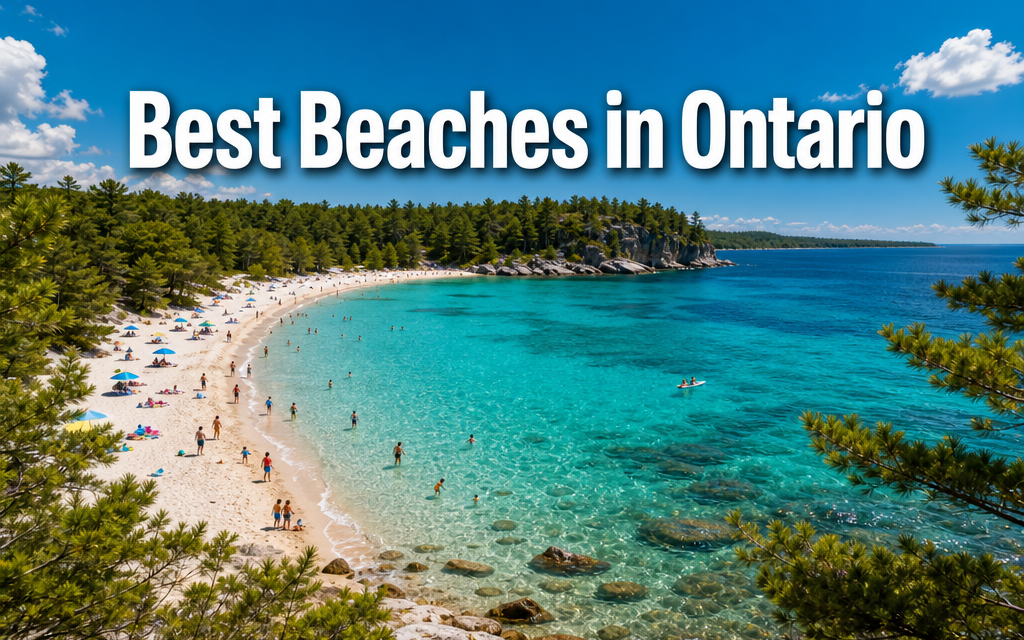
Quick Answer: Ontario has more than 250 public beaches across the Great Lakes and hundreds of inland lakes, ranging from the world’s longest freshwater beach at Wasaga to the turquoise dunes of Sandbanks Provincial Park. The best beaches in Ontario offer a mix of sandy shores, warm shallow water, lifeguard coverage, and free or low-cost access. For families, couples, and day-trippers in 2026, the top picks vary by water temperature, sand quality, crowd levels, and available facilities.
Key Takeaways
- Wasaga Beach on Georgian Bay is the world’s longest freshwater beach, with wide sand and shallow, calm water suited to young children [1]
- Sandbanks Provincial Park (Lake Ontario) has the clearest, shallowest water and the largest freshwater sand dunes in the world [1]
- Lake Erie beaches (Long Point, Crystal Beach) are consistently the warmest for swimming in Ontario during July and August [3]
- Many top Ontario beaches charge a day-use or parking fee of roughly $10 to $20 per vehicle; some city beaches remain free [2]
- Lifeguard coverage is seasonal (late June to Labour Day) and not universal — always check before visiting with young children
- Great Lakes beaches tend to have more open sand and stronger wave action; inland lake beaches are typically calmer and less crowded
- Peak season runs late June through mid-August; shoulder season (late May, early September) means smaller crowds and similar water temperatures
- Accessible beach infrastructure exists at Crystal Beach (Fort Erie), Woodbine Beach (Toronto), and select provincial parks [3]
- Toronto Islands beaches are the most convenient option for city residents — a short ferry ride with skyline views included [1]
- Pancake Bay on Lake Superior offers the most visually striking water colour in the province, resembling a Caribbean bay [5]
What Are the Top-Rated Beaches Near Toronto for Families
The best family beaches near Toronto are the Toronto Islands (Centre Island and Ward’s Island beaches), Woodbine Beach Park, and Bluffer’s Park Beach — all reachable within an hour of downtown. Each offers shallow entry points, washrooms, and picnic areas.
- Toronto Islands: A 10-minute ferry from the Jack Layton Ferry Terminal. Centre Island beach has a small amusement park nearby, making it ideal for kids. Skyline views add a bonus backdrop [1].
- Woodbine Beach Park: 15.2 hectares of sand on Lake Ontario’s eastern waterfront with volleyball courts, a splash pad, and paved trails. Free to access [2].
- Bluffer’s Park Beach: Sits at the base of the Scarborough Bluffs, with a large shallow swimming area and a marina. The dramatic cliff backdrop is a draw for older kids and photographers [5].
Choose Woodbine Beach if you want free parking alternatives (street parking nearby) and quick transit access. Choose Toronto Islands if the kids want a full-day outing with more activities.

How Cold Are Lake Ontario Beaches in Summer
Lake Ontario water temperatures typically reach 18 to 22 degrees Celsius (64 to 72°F) by mid-July, which most swimmers find comfortable for 20 to 30 minutes of active play. Early June water can still sit at 12 to 15°C, which is cold enough to cause discomfort for young children.
Lake Erie beaches (Crystal Beach, Long Point) warm faster due to shallower depth and can reach 24 to 26°C in July and August, making them the warmest Great Lakes option in Ontario [3]. Georgian Bay beaches like Wasaga also warm quickly in sheltered bays.
Tip: Water temperature apps and Environment Canada’s beach monitoring pages publish weekly readings. Check before you drive.
Which Ontario Beach Has the Clearest Water
Pancake Bay Provincial Park on Lake Superior has the clearest, most visually striking water in Ontario — a turquoise blue that resembles a tropical bay, set against 3.2 kilometres of white sand [5]. For families closer to southern Ontario, Sandbanks Provincial Park (Lake Ontario) offers notably clear, shallow water over a sand-bar bottom [1].
Inland lakes such as those in Muskoka and Haliburton can also offer excellent clarity, but public beach access varies by municipality.
Are There Sandy Beaches or Mostly Rocky Shorelines
Ontario has both, and the type depends heavily on location. The Great Lakes shorelines along Lake Huron and Georgian Bay are predominantly sandy. Lake Superior and parts of Lake Ontario tend toward rocky or pebbly shores, with notable sandy exceptions like Pancake Bay and Sandbanks.
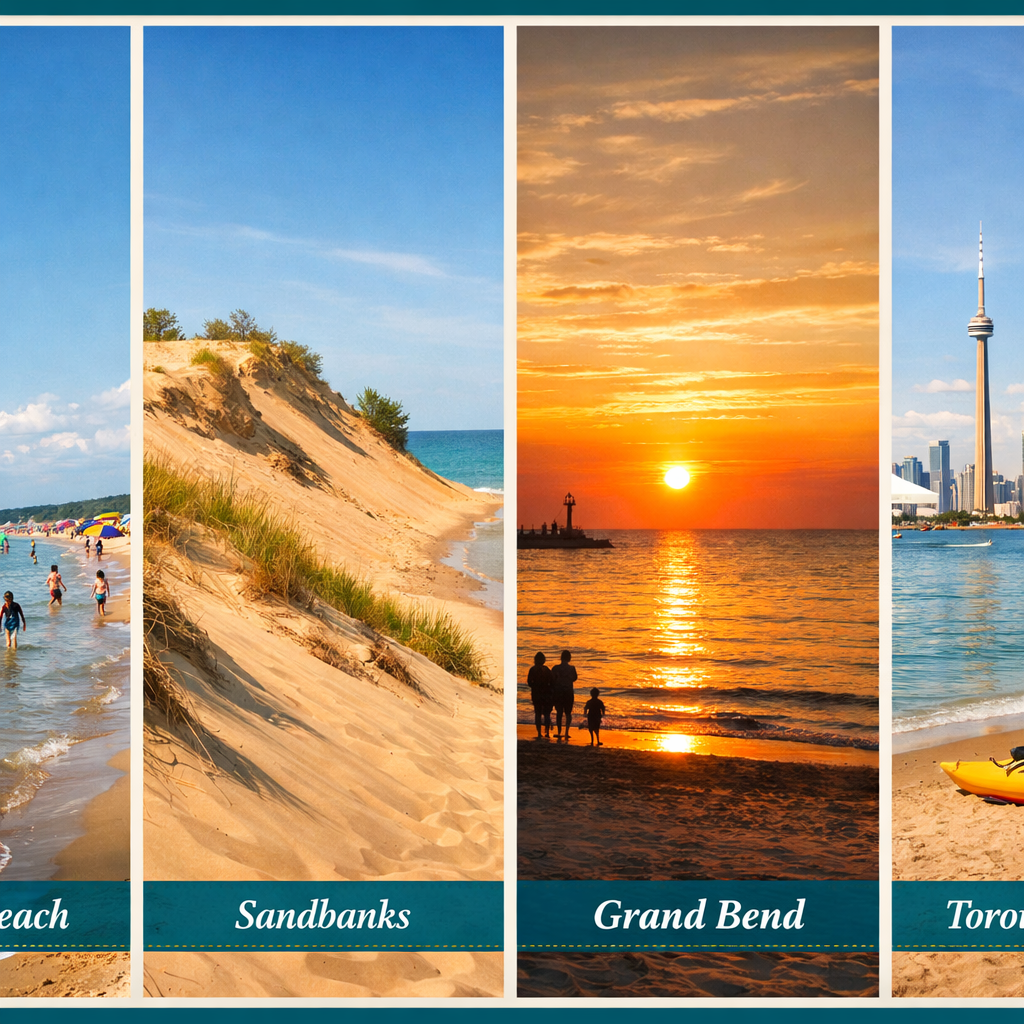
BeachShoreline TypeWater ColourWasaga BeachWide, fine sandLight blue-greenSandbanks Provincial ParkSand dunes, soft sandClear, pale blueGrand Bend (Lake Huron)Clean sandBlue-greenPancake Bay (Lake Superior)Sugar-white sandTurquoiseBluffer’s Park (Lake Ontario)Sand with pebble mixBlue-greyCrystal Beach (Lake Erie)Fine sandClear blue-green
What Is the Difference Between Great Lakes and Inland Lake Beaches
Great Lakes beaches are larger, more exposed, and subject to wave action and wind. They often have more developed infrastructure (parking lots, concession stands, lifeguards) but can get crowded on summer weekends. Water temperatures vary by lake, with Lake Erie the warmest and Lake Superior the coldest.
Inland lake beaches — found throughout Muskoka, Haliburton, the Kawarthas, and the South Georgian Bay region — are typically smaller, calmer, and less crowded. Many are attached to provincial parks or conservation areas. They suit families with toddlers because wave action is minimal, but amenities may be limited.
How Much Does It Cost to Park and Access Ontario Beaches
Most provincial park beaches charge a daily vehicle permit fee. In 2026, Ontario Parks day-use fees are roughly $12 to $22 per vehicle depending on the park and season. Sandbanks and Wasaga Beach are among the pricier options during peak weekends.
City-run beaches like Woodbine Beach and Sunnyside Beach in Toronto are free to enter, though paid parking lots nearby can run $10 to $25 for the day. Grand Bend and Sauble Beach have a mix of free street access and paid municipal lots [1][3].
Money-saving tip: Arrive before 9 a.m. on weekends to find free street parking within walking distance of most beach towns.
What Beaches Are Safe for Young Kids to Swim, and Which Have Lifeguards
The safest beaches for young children are those with gradual sandy entries, minimal wave action, and active lifeguard supervision. Top picks include:
- Wasaga Beach (Georgian Bay): Exceptionally shallow for a long distance from shore; supervised sections during peak season [1]
- Sandbanks (Lake Ontario): Shallow sandbar extends far out; lifeguards on duty in designated areas [1]
- Crystal Beach (Fort Erie, Lake Erie): Renovated with accessible ramps, playground, and supervised swim zones [3]
- Providence Bay Beach (Manitoulin Island): Calm, shallow water with a family-friendly pace [4]
Lifeguard coverage at Ontario beaches is generally active from late June to Labour Day, during designated hours (typically 10 a.m. to 6 p.m.). Always look for posted signs confirming coverage on the day of your visit.
Are There Free Public Beaches With Good Amenities
Yes. Several Ontario beaches combine free entry with solid facilities. Woodbine Beach in Toronto is free and includes washrooms, volleyball courts, a splash pad, and food vendors [2]. Sunnyside Beach (Toronto) is also free, with a restored Art Deco pool complex nearby.
In smaller communities, many waterfront parks along Lake Huron and Georgian Bay offer free beach access with basic washrooms and picnic tables. The Southern Georgian Bay area has several such spots that locals rely on throughout summer.
What Time of Year Is Best for Beach Trips in Ontario
Late June through mid-August is peak beach season in Ontario, with the warmest water and longest daylight hours. However, peak season also means the largest crowds, especially at Wasaga Beach and Grand Bend on weekends.
Best windows by goal:
- Warmest water: Late July to mid-August
- Fewest crowds: Late May to mid-June, or after Labour Day
- Best weather consistency: Mid-July to early August
- Budget travel: Early June or September (lower parking fees, fewer vendors)
Water temperatures in most southern Ontario lakes reach their peak in late July and hold through August before dropping noticeably in September [1][5].
What Common Mistakes Do Tourists Make at Ontario Beaches
- Arriving mid-day on a Saturday in July: Parking lots at Wasaga, Sandbanks, and Grand Bend fill by 10 a.m. on peak weekends. Plan to arrive early or take transit where available.
- Assuming lifeguards are always present: Coverage is not guaranteed at every beach or every hour. Check posted schedules.
- Ignoring blue-green algae advisories: Warm, calm inland lakes can develop algae blooms in late summer. Always check local health unit advisories before swimming.
- Underestimating Lake Superior’s cold: Pancake Bay looks tropical but Lake Superior rarely exceeds 15°C even in August. Wetsuits are common.
- Skipping sunscreen on cloudy days: UV exposure is high near open water regardless of cloud cover.
Are There Wheelchair Accessible Beaches in Ontario
Yes, several Ontario beaches have invested in accessibility infrastructure. Crystal Beach in Fort Erie has accessible ramps, change rooms, and a playground designed for mobility device users [3]. Wasaga Beach has accessible washroom facilities and paved paths to the waterfront. Woodbine Beach in Toronto includes accessible routes from the parking area to the sand [2].
Visitors with specific accessibility needs should contact the beach or park directly before visiting, as equipment like beach wheelchairs may require advance booking.
What Beach Towns Have the Best Overall Summer Experience
For a full summer town experience beyond the sand itself, these locations stand out:
- Grand Bend (Lake Huron): Lively main strip with restaurants, live music, and consistent beach conditions. Best for couples and groups [1].
- Sauble Beach (Lake Huron): Known for stunning sunsets and a relaxed pace. Great for families who want a quieter vibe [1].
- Wasaga Beach (Georgian Bay): The most complete beach town with the widest range of accommodations and activities. The South Georgian Bay region surrounding Wasaga also offers hiking, cycling, and summer events throughout the season.
- Tobermory (Georgian Bay/Lake Huron): Less of a beach town and more of an adventure hub, but the water clarity for snorkelling is unmatched in Ontario.
FAQ
What is the most family-friendly beach in Ontario?
Wasaga Beach on Georgian Bay is widely considered the most family-friendly, with its exceptionally shallow water, wide sandy shore, and range of nearby amenities [1].
Which Ontario beach has the warmest water?
Lake Erie beaches, particularly Crystal Beach and Long Point, have the warmest water in Ontario, often reaching 24 to 26°C in July and August due to Lake Erie’s shallow depth [3].
Is Sandbanks Provincial Park worth the entrance fee?
Yes. Sandbanks offers world-class sand dunes, clear shallow water, and well-maintained facilities. It books up fast — reserve a day-use permit or campsite well in advance [1].
Can you swim at Toronto Islands beaches?
Yes. Centre Island and Ward’s Island beaches are open for swimming when water quality tests pass. Check the City of Toronto’s beach water quality page before visiting.
Are dogs allowed on Ontario beaches?
Most provincial park beaches and many municipal beaches prohibit dogs during peak season (late June to Labour Day). Off-season access varies by location.
How far is Wasaga Beach from Toronto?
Wasaga Beach is approximately 150 kilometres north of Toronto, roughly a 90-minute drive under normal traffic conditions.
Is Pancake Bay good for families?
Yes, but note that Lake Superior water is cold even in summer. The beach itself is stunning and the park is well-maintained, making it a great choice for families who enjoy nature over warm-water swimming [5].
Do Ontario beaches close due to algae?
Yes. Blue-green algae advisories can close inland lake beaches and occasionally affect Great Lakes bays during hot, calm spells in late summer. Check local public health unit websites before visiting.
Conclusion
Ontario’s beaches span a remarkable range, from the world’s longest freshwater shoreline at Wasaga to the Caribbean-coloured waters of Pancake Bay. For families with young children, the safest bets are Wasaga Beach, Sandbanks Provincial Park, and Crystal Beach, all of which combine shallow water, sandy entries, and lifeguard coverage. Couples and day-trippers looking for a lively atmosphere will find Grand Bend and Sauble Beach hard to beat. Budget-conscious visitors should target free city beaches like Woodbine or plan shoulder-season trips to avoid peak parking fees.
Actionable next steps for 2026:
- Book Sandbanks or Wasaga Beach day-use permits online through Ontario Parks well before your visit — spots sell out weeks in advance.
- Check Environment Canada and local health unit pages for water quality and algae advisories the day before you go.
- Arrive before 9 a.m. on summer weekends to secure parking at popular beach towns.
- If visiting with young children, call ahead to confirm lifeguard hours and accessible facility availability.
Whether the goal is a quick city escape or a week-long cottage-country adventure, the best beaches in Ontario: Great Lakes, inland lakes, and family-friendly summer escapes offer something for every type of traveller.
References
[1] Beaches In Ontario Canada – https://beacheverywhere.com/beaches-in-ontario-canada/?utm_source=openai
[2] Top Beaches In Ontario – https://isure.ca/inews/top-beaches-in-ontario/?utm_source=openai
[3] Best Beaches In Southwest Ontario – https://www.lifeinpleasantville.com/best-beaches-in-southwest-ontario/?utm_source=openai
[4] Lake Huron Beaches – https://northernontario.travel/paddling/lake-huron-beaches?utm_source=openai
[5] 10 Ontario Best Beaches – https://www.canadianliving.com/life-and-relationships/travel/article/10-ontario-best-beaches?utm_source=openai
[6] Ontario Best Beaches – https://travel.destinationcanada.com/en-us/things-to-do/ontario-best-beaches?utm_source=openai
Much Appreciate You Sharing This Post - It Helps MUCH!!!