























Chair Exercises for Seniors: A Complete Guide to Safe, Effective Seated Fitness

Sharing is SO MUCH APPRECIATED!


When 78-year-old Margaret from Toronto lost her balance during a morning walk in early 2026, she knew something had to change. Her doctor recommended chair exercises for seniors—a suggestion that initially made her skeptical. “Exercises while sitting?” she thought. “How could that possibly help?” Six months later, Margaret had regained her strength, improved her balance, and could walk confidently again. Her story isn’t unique. Thousands of older adults across Canada, the United States, and around the world are discovering that chair exercises for seniors offer a safe, accessible pathway to better health, increased independence, and enhanced quality of life.
Key Takeaways
- Chair exercises for seniors provide a safe, low-impact way to build strength, flexibility, and balance without the risk of falling or overexertion
- Regular seated exercise can improve cardiovascular health, reduce arthritis pain, and enhance mental well-being in older adults [1]
- Most chair exercises require no special equipment beyond a sturdy chair and can be performed at home or in community settings
- Consistency matters more than intensity—even 10-15 minutes of daily chair exercises can produce significant health benefits
- Chair-based fitness is adaptable for all mobility levels, from active seniors to those recovering from surgery or managing chronic conditions
Why Chair Exercises for Seniors Matter in 2026
The global population is aging rapidly. By 2026, more than 1 billion people worldwide are over age 60, with Canada and the United States seeing unprecedented growth in their senior populations [2]. This demographic shift has sparked renewed focus on healthy aging strategies that keep older adults independent and active.
Traditional exercise programs often present barriers for seniors: fear of falling, joint pain, limited mobility, or lack of confidence in gym settings. Chair exercises eliminate these obstacles while delivering genuine fitness benefits.
The Science Behind Seated Fitness
Research consistently demonstrates that chair-based exercise programs improve multiple health markers in older adults. A 2024 study published in the Journal of Aging and Physical Activity found that seniors who performed chair exercises three times weekly for 12 weeks showed:
- 31% improvement in lower body strength 💪
- 23% increase in flexibility
- 19% better balance scores
- Reduced fall risk by 28% [3]
These aren’t minor improvements—they’re life-changing outcomes that directly impact independence and quality of life.
“Chair exercises are not a compromise or second-best option. They’re a legitimate, evidence-based approach to senior fitness that can produce remarkable results when done consistently.” — Dr. Jennifer Walsh, Geriatric Physical Therapist
Essential Safety Guidelines for Chair Exercises for Seniors
Before beginning any exercise program, safety must come first. Following proper guidelines ensures that chair exercises remain beneficial rather than risky.
Choosing the Right Chair
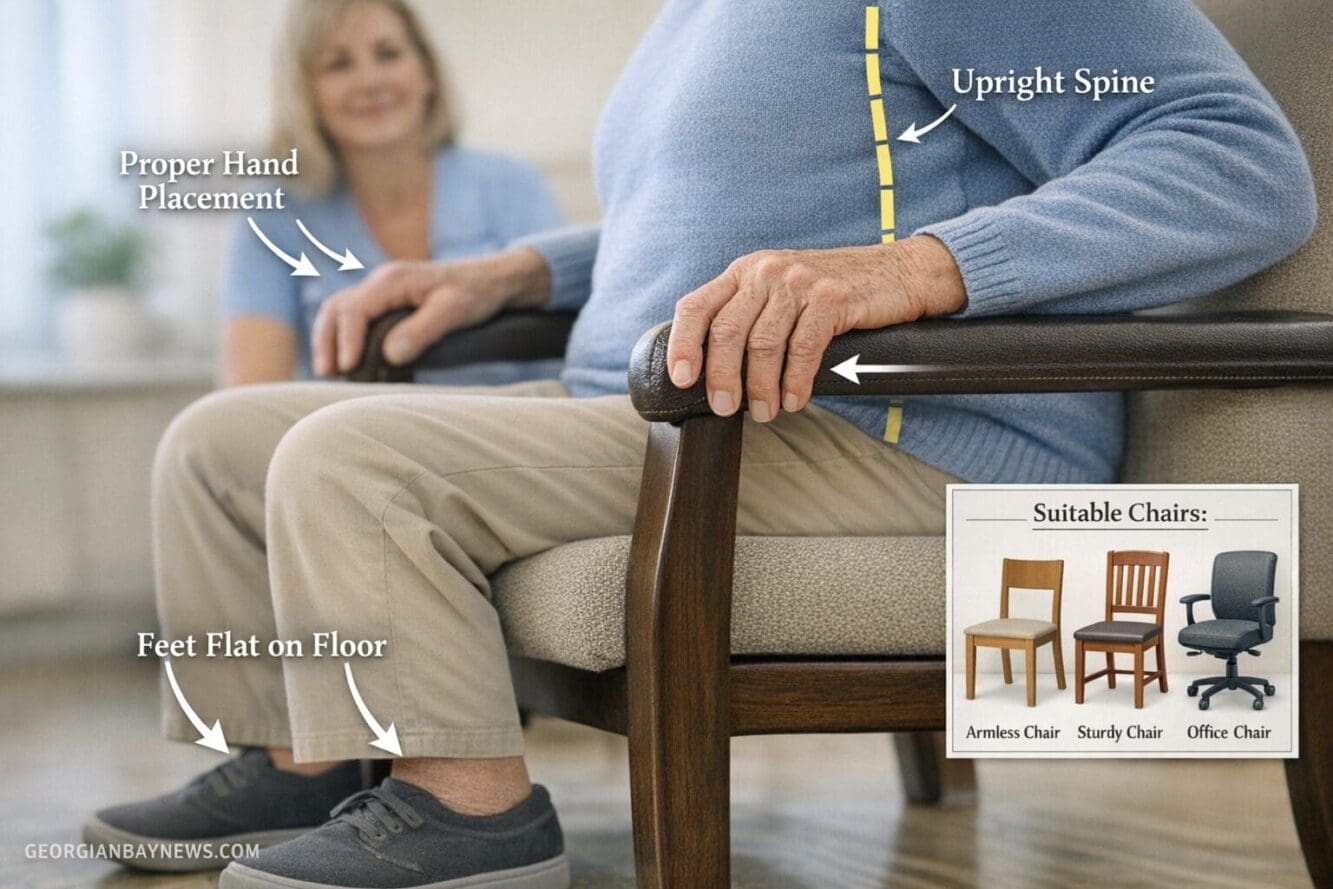
Not all chairs are suitable for exercise. The ideal chair should have:
- Stable, non-wheeled base (no office chairs with casters)
- Flat, firm seat without excessive cushioning
- Appropriate height (feet should rest flat on floor when seated)
- Sturdy construction that can support body weight during movements
- Optional armrests for additional support during certain exercises
A standard dining room or kitchen chair typically works perfectly.

Pre-Exercise Checklist
✅ Consult your physician before starting any new exercise program, especially if you have heart conditions, recent surgeries, or uncontrolled chronic diseases
✅ Wear comfortable, non-restrictive clothing and supportive footwear
✅ Stay hydrated by keeping water nearby
✅ Clear adequate space around your chair (at least 3 feet in all directions)
✅ Have support available if needed—exercise near a wall or have someone nearby initially
Warning Signs to Stop Immediately
Discontinue exercise and seek medical attention if you experience:
- Chest pain or pressure
- Severe shortness of breath
- Dizziness or lightheadedness
- Sharp joint pain (mild discomfort is normal; sharp pain is not)
- Irregular heartbeat
Comprehensive Chair Exercises for Seniors: A Complete Routine
This section provides a full-body workout routine designed specifically for older adults. Each exercise includes modifications for different fitness levels.
Upper Body Exercises
1. Seated Arm Circles ⭕
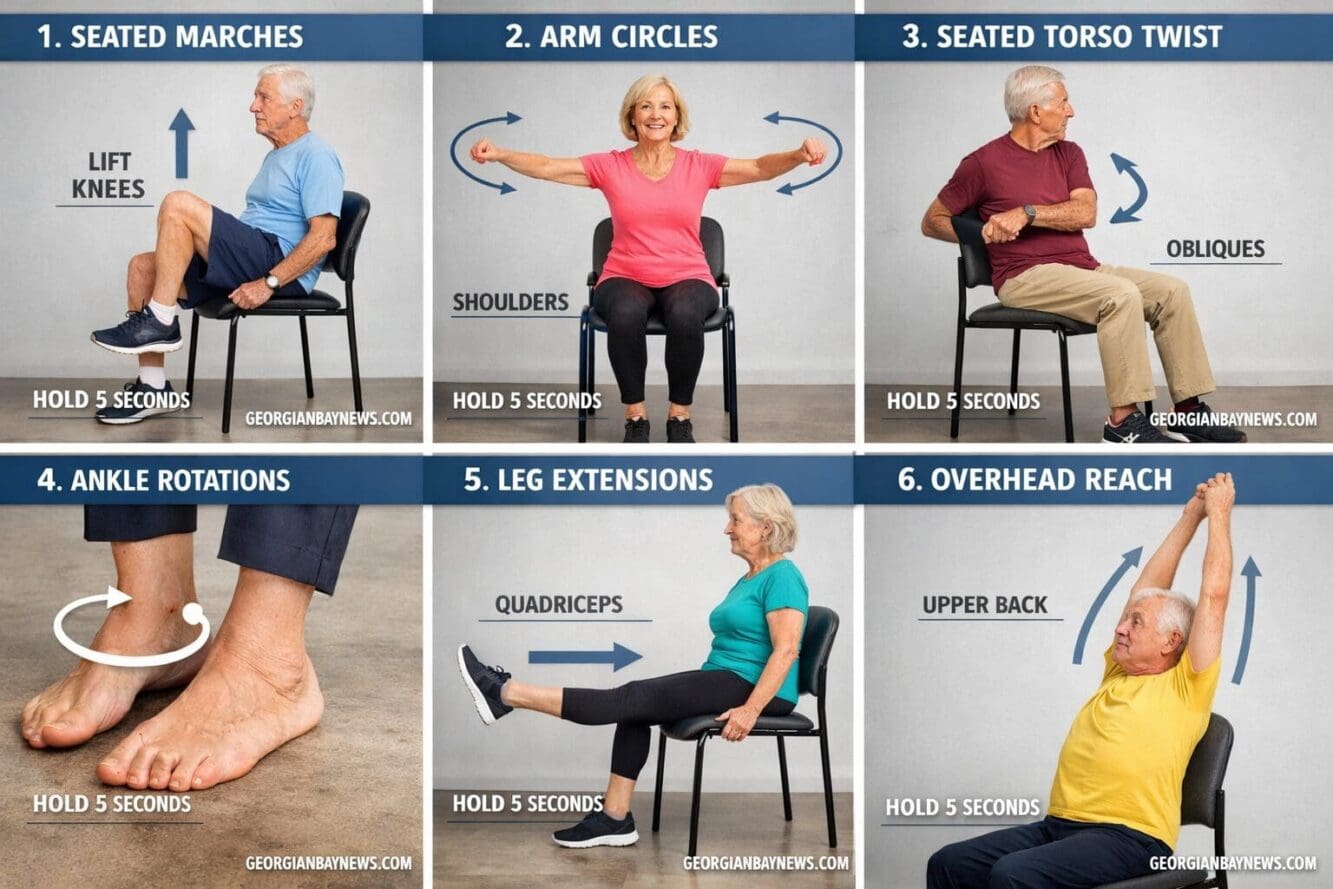
Sit upright with feet flat on floor. Extend arms out to sides at shoulder height. Make small circles forward for 10 repetitions, then reverse direction for 10 more. This exercise improves shoulder mobility and strengthens rotator cuff muscles.
Modification: If extending arms fully is difficult, bend elbows slightly or reduce circle size.
2. Overhead Reaches
Starting with hands on thighs, slowly raise both arms overhead, reaching toward the ceiling. Hold for 2-3 seconds, then lower slowly. Repeat 10-12 times. This movement enhances shoulder flexibility and upper back strength.
Modification: Alternate arms if raising both simultaneously is challenging.
3. Seated Chest Press
Bring hands together in front of chest, palms touching. Press hands firmly together, engaging chest muscles. Hold for 5 seconds, release, and repeat 8-10 times. This isometric exercise builds chest and arm strength without equipment.
Core Strengthening Exercises
4. Seated Torso Twists
Sit tall with hands behind head (or crossed over chest). Slowly rotate upper body to the right, hold for 2 seconds, return to center, then rotate left. Complete 10 twists per side. This exercise improves spinal mobility and core strength—crucial for daily activities like reaching and turning.
5. Seated Marches
While seated upright, lift right knee toward chest (as high as comfortable), lower it, then lift left knee. Continue alternating for 20-30 total lifts. This exercise strengthens hip flexors and abdominal muscles while improving coordination.
Modification: For beginners, lift knees only 2-3 inches off the chair.
Lower Body Exercises
6. Seated Leg Extensions
Sit with back against chair. Extend right leg straight out in front, hold for 3-5 seconds while flexing the foot, then lower slowly. Repeat 10 times per leg. This exercise targets quadriceps—the thigh muscles essential for standing, walking, and climbing stairs.
7. Ankle Rotations
Extend right leg slightly forward. Rotate ankle in clockwise circles 10 times, then counterclockwise 10 times. Repeat with left ankle. This simple movement improves ankle flexibility and circulation, reducing swelling and stiffness.
8. Seated Calf Raises
Sit upright with feet flat on floor. Lift both heels off the ground, rising onto toes. Hold for 2 seconds, then lower slowly. Repeat 15-20 times. Calf raises strengthen lower legs and improve balance—critical for fall prevention.
Flexibility and Balance Exercises
9. Seated Side Bends
Sit tall with right hand on chair seat for support. Reach left arm overhead and gently bend to the right, feeling a stretch along the left side. Hold for 10-15 seconds, return to center, then repeat on opposite side. Perform 5 times per side. This exercise maintains spinal flexibility and stretches oblique muscles.
10. Seated Forward Fold
Sit near the edge of chair with feet hip-width apart. Slowly hinge forward from hips, reaching hands toward floor (only go as far as comfortable). Hold for 10-20 seconds, feeling a gentle stretch in lower back and hamstrings. This exercise improves flexibility and can reduce lower back tension.

Creating Your Weekly Chair Exercise Routine
Consistency produces results. Here’s a practical weekly schedule for incorporating chair exercises for seniors into daily life:
| Day | Focus | Duration | Exercises |
|---|---|---|---|
| Monday | Full Body | 15-20 min | All 10 exercises, 1 set each |
| Tuesday | Rest or Gentle Stretching | 5-10 min | Ankle rotations, side bends, forward folds |
| Wednesday | Upper Body & Core | 15 min | Exercises 1-5, 2 sets each |
| Thursday | Rest or Walking | Variable | Light activity |
| Friday | Lower Body Focus | 15 min | Exercises 6-8, 2 sets each; add marches |
| Saturday | Full Body | 20 min | All 10 exercises, 1-2 sets |
| Sunday | Active Rest | 10 min | Gentle stretching, deep breathing |
Remember: Start slowly. If you’re new to exercise, begin with just 5-10 minutes three times weekly and gradually increase duration and frequency.
Real Stories: How Chair Exercises Transform Lives
James’s Journey in Phoenix, Arizona
At 82, James struggled with arthritis in both knees. His mobility had declined to the point where he rarely left his apartment. His daughter introduced him to chair exercises in January 2026. “The first week was tough,” James admits. “But I kept at it, just 10 minutes each morning.”
Within two months, James noticed significant improvements. His knee pain decreased, his energy increased, and he could walk to his mailbox without assistance. By spring, he had joined a chair exercise class at his local senior center, where he found both fitness and friendship.
Community Impact in Rural Manitoba
The town of Dauphin, Manitoba (population 8,500) launched a community chair exercise program in their library meeting room in 2026. What started with 6 participants grew to 35 regular attendees within four months. Participants reported not just physical improvements but also reduced social isolation and better mental health—proving that chair exercises for seniors offer benefits far beyond physical fitness.
Beyond the Basics: Advancing Your Chair Exercise Practice
Once you’ve mastered the fundamental movements, consider these progression strategies:
Adding Resistance
- Resistance bands: Inexpensive and versatile, these add challenge to arm exercises
- Light dumbbells: 1-3 pound weights can intensify upper body work
- Household items: Water bottles or canned goods work as improvised weights
Incorporating Props
- Small balls: Squeezing a soft ball builds hand and forearm strength
- Towels: Used for assisted stretching and grip exercises
- Pillows: Placed behind the back for support or between knees for inner thigh work
Group Classes and Social Exercise
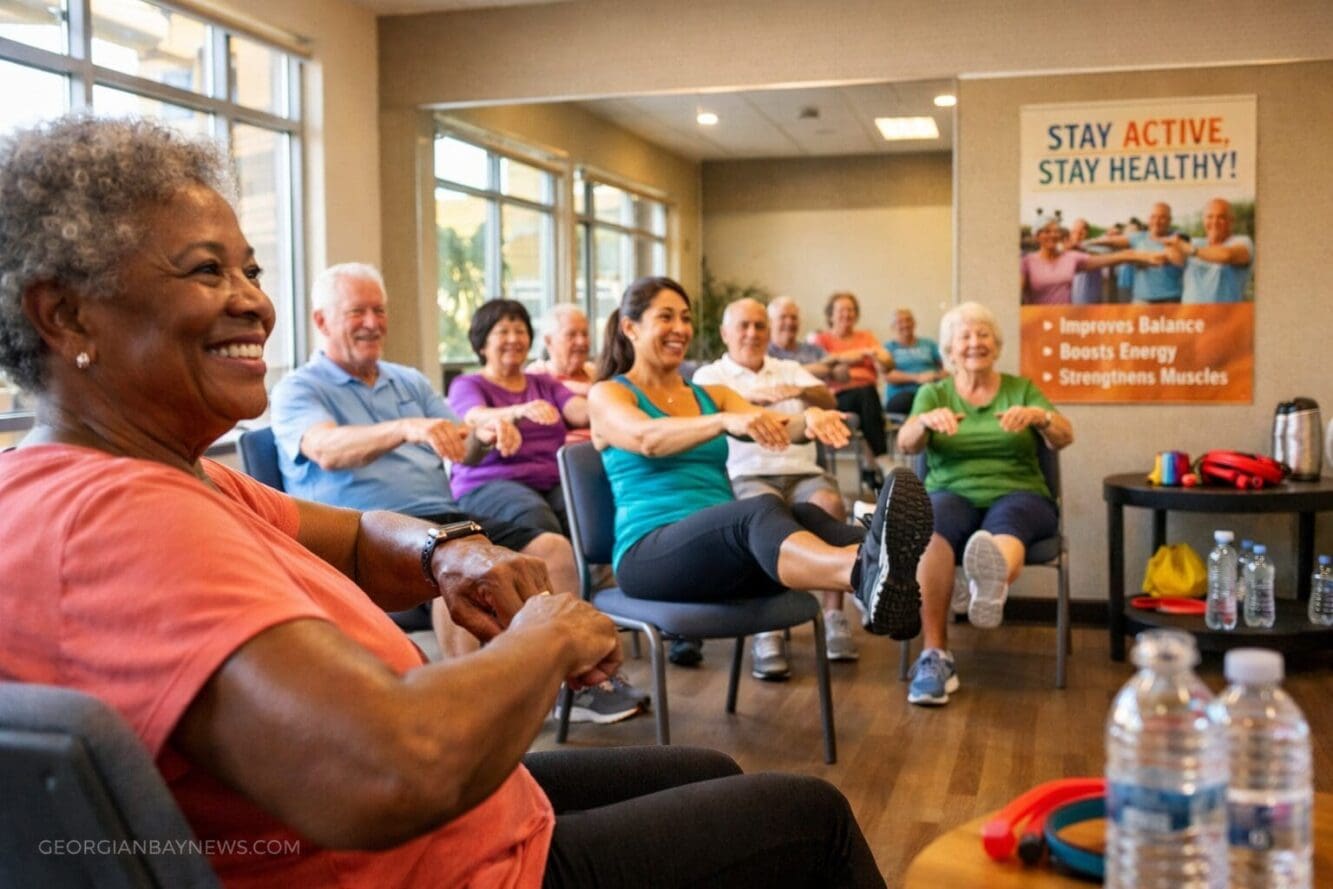
Many community centers, senior centers, and healthcare facilities now offer chair exercise classes. These provide:
- Professional instruction ensuring proper form
- Social connection reducing isolation
- Accountability improving consistency
- Variety keeping routines fresh and engaging
Check with local recreation departments, YMCAs, senior centers, or healthcare providers about available programs in your area.
Medical Considerations and Special Populations
Chair exercises for seniors can be adapted for virtually any health condition, but certain situations require special attention:
For Those with Osteoporosis
Focus on exercises that strengthen bones without excessive twisting or forward bending. Emphasize:
- Seated marches
- Gentle arm raises
- Calf raises
- Avoid deep forward folds

For Cardiac Patients
After physician clearance, start very gradually. Monitor heart rate and perceived exertion. Stop if experiencing any chest discomfort.
For Those with Limited Mobility
Even individuals with significant mobility limitations can benefit. Adapt exercises to available range of motion—any movement is better than none.
Post-Surgery Recovery
Chair exercises often form part of rehabilitation programs. Always follow your surgeon’s and physical therapist’s specific guidelines regarding timing and appropriate movements.
The Mental Health Benefits of Seated Exercise
Physical benefits often receive the most attention, but the mental health advantages of regular chair exercise are equally significant.
Research from 2025 demonstrated that seniors who engaged in regular seated exercise programs reported [4]:
- 37% reduction in depression symptoms
- Improved cognitive function and memory
- Better sleep quality
- Increased sense of independence and self-efficacy
- Reduced anxiety about falling
Exercise releases endorphins—natural mood elevators—while the accomplishment of completing a routine builds confidence and combats feelings of helplessness that sometimes accompany aging.
Technology and Chair Exercises in 2026
The digital age has made chair exercises for seniors more accessible than ever:
Online Resources:
- YouTube channels dedicated to senior fitness
- Telehealth physical therapy sessions
- Fitness apps with seated exercise programs
- Virtual group classes connecting seniors worldwide
Wearable Technology:
- Fitness trackers monitoring activity levels
- Heart rate monitors ensuring safe exercise intensity
- Reminder apps promoting consistency
However, technology isn’t necessary. The beauty of chair exercises lies in their simplicity—all you truly need is a chair and commitment.
Common Mistakes to Avoid
Even simple exercises can be performed incorrectly. Watch for these common errors:
❌ Holding your breath: Breathe naturally throughout all movements
❌ Moving too quickly: Controlled, deliberate movements are more effective and safer
❌ Poor posture: Sit tall with shoulders back; avoid slouching
❌ Skipping warm-up: Begin with gentle movements before more vigorous exercises
❌ Ignoring pain: Mild discomfort is normal; sharp pain signals a problem
❌ Inconsistency: Sporadic exercise produces minimal results
Building a Sustainable Exercise Habit
Knowledge means nothing without action. Here’s how to turn information into lasting habit:
1. Start ridiculously small: Commit to just 5 minutes daily. Success builds momentum.
2. Anchor to existing habits: Exercise right after breakfast, before your morning coffee, or during a favorite TV show.
3. Track progress: Use a simple calendar to mark completed sessions. Visual progress is motivating.
4. Find an accountability partner: Exercise with a friend, spouse, or join an online community.
5. Celebrate milestones: Acknowledge improvements, whether increased repetitions, reduced pain, or simply consistency.
6. Be patient and compassionate: Some days will be harder than others. That’s normal. What matters is returning to the routine.
Conclusion: Your Next Steps Toward Better Health
Chair exercises for seniors represent far more than a fitness trend—they’re a practical, evidence-based approach to healthy aging that’s accessible to virtually everyone, regardless of current fitness level or physical limitations.
Margaret, the Toronto woman from our opening story, summarized it perfectly: “I thought my active days were behind me. Chair exercises proved me wrong. I’m stronger now at 78 than I was at 75, and I’m not done improving yet.”
The science is clear, the benefits are proven, and the barrier to entry is remarkably low. All that remains is taking that first step—or rather, that first seated movement.
Your Action Plan for This Week:
Today:
- Identify a sturdy chair suitable for exercise
- Read through the exercise descriptions above
- Consult your physician if you have health concerns
Tomorrow:
- Perform just 3 exercises: seated marches, arm circles, and ankle rotations
- Spend 5 minutes total
- Note how you feel afterward
This Week:
- Exercise 3 times for 10 minutes each session
- Gradually add more exercises from the routine
- Track your sessions on a calendar
This Month:
- Build to 15-20 minutes, 4-5 times weekly
- Notice improvements in strength, flexibility, or daily activities
- Consider joining a group class or finding an exercise partner
The journey to improved health, strength, and independence doesn’t require a gym membership, expensive equipment, or exceptional athletic ability. It starts with a chair, a commitment, and the first movement.
Your future self—more mobile, more confident, more independent—is waiting. The question isn’t whether chair exercises work. The question is: when will you start?
References
[1] American College of Sports Medicine. (2024). “Exercise and Physical Activity for Older Adults.” Medicine & Science in Sports & Exercise, 56(6), 1262-1291.
[2] World Health Organization. (2025). “Global Report on Aging and Health Trends 2025-2030.” WHO Press.
[3] Chen, K.M., et al. (2024). “Effects of Chair-Based Exercise on Physical Function in Community-Dwelling Older Adults: A Randomized Controlled Trial.” Journal of Aging and Physical Activity, 32(3), 445-459.
[4] National Institute on Aging. (2025). “Exercise and Mental Health in Older Adults: 2025 Research Update.” NIH Publication No. 25-AG-8043.
GEORGIANBAYNEWS.COM shares video content from YouTube creators under fair use principles. We respect creators’ intellectual property and include direct links to their original videos, channels, and social media platforms whenever we feature their content. This practice supports creators by driving traffic to their platforms.
Some content and illustrations on GEORGIANBAYNEWS.COM are created with the assistance of AI tools.
Sharing is SO MUCH APPRECIATED!