
























Lymphatic System: what it does, why it matters, and how to support it

Sharing is SO MUCH APPRECIATED!


Last updated: March 14, 2026
Quick Answer
The Lymphatic System is the body’s drainage and defense network. It collects extra fluid from tissues, filters that fluid through lymph nodes, and helps the immune system spot germs, damaged cells, and other threats. When the Lymphatic System does not work well, swelling, frequent infections, and slower healing can happen.

Key Takeaways
- The Lymphatic System moves a clear fluid called lymph through vessels and lymph nodes.
- It helps control fluid balance and supports immune defense.
- Main parts include lymph vessels, lymph nodes, spleen, thymus, tonsils, and lymph fluid.
- Common problems include lymphedema, infections, blockages, and inflammation.
- Researchers now link lymphatic dysfunction to chronic conditions including heart failure, diabetes, and inflammatory bowel disease [1].
- ARPA-H launched major 2026 programs to improve lymphatic medicines and diagnostics, including GLIDE and LIGHT [1][2].
- Current lymphatic imaging is still limited, which is why better diagnostics are a major research focus [2][3].
- Gentle movement, hydration, medical care, and early evaluation of swelling can help protect lymphatic health.
- Sudden one-sided swelling, chest pain, fever, or redness needs prompt medical attention.
What is the Lymphatic System?
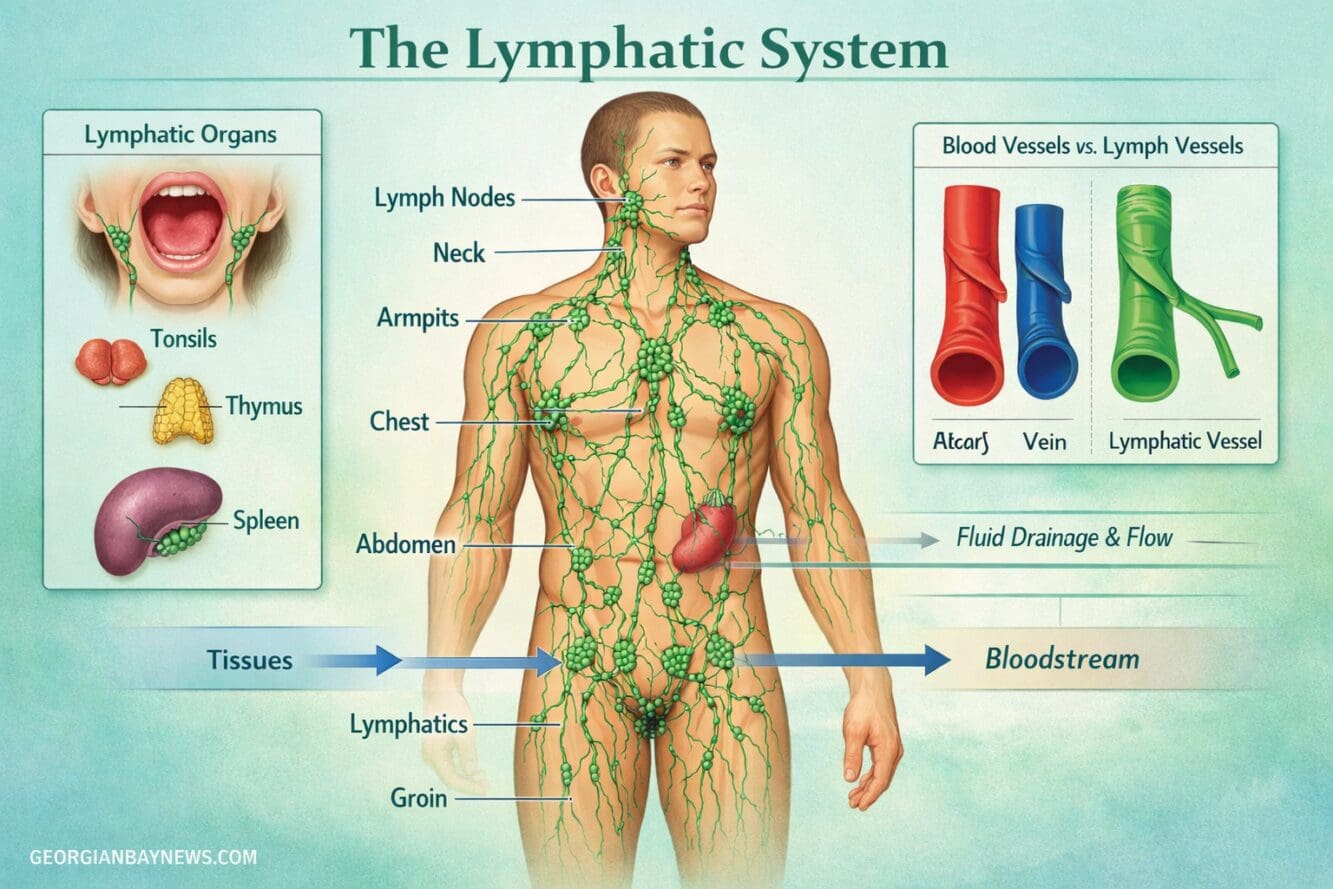
The Lymphatic System is a network of vessels, nodes, and organs that returns extra fluid to the bloodstream and helps the body fight infection. It works quietly in the background, but it is essential for daily health.
Think of it as the body’s cleanup and security route. Blood vessels deliver fluid to tissues. Some of that fluid stays behind, and the lymphatic network collects it.
Main parts of the system
| Part | What it does |
|---|---|
| Lymph | Clear fluid carrying water, proteins, fats, and immune cells |
| Lymph vessels | Small channels that move lymph through the body |
| Lymph nodes | Filters that trap germs, damaged cells, and foreign material |
| Spleen | Helps filter blood and supports immune responses |
| Thymus | Helps certain immune cells mature, especially earlier in life |
| Tonsils/adenoids | Help defend the mouth and throat area |
“The Lymphatic System is both a drainage system and an immune surveillance system.”
Quick example: A child gets a sore throat, and the neck glands feel swollen. Those “glands” are often lymph nodes reacting to infection.
What does the Lymphatic System do in the body?
The Lymphatic System has three core jobs: managing fluid balance, supporting immunity, and absorbing some fats from the digestive tract. If any of these jobs breaks down, symptoms can spread well beyond swelling.
Its key functions
- Returns excess fluid from body tissues to the bloodstream
- Filters lymph through lymph nodes
- Transports immune cells where they are needed
- Helps absorb dietary fats from the small intestine
A simple story makes the point. After a long flight, many people notice mild ankle swelling. Usually, movement helps fluid circulate again. But when swelling stays, especially on one side, the lymphatic network may need medical review.
Common mistake: Assuming all swelling is “just water retention.” Ongoing swelling can point to a lymphatic or vascular problem and should be checked.
For broader wellness topics that connect movement and body recovery, readers may also like this piece on 10-minute stress-relieving stretch somatic chair yoga.

Why is the Lymphatic System important for immunity?
The Lymphatic System is important for immunity because it helps the body detect and respond to germs, abnormal cells, and inflammation. Lymph nodes act like checkpoints where immune cells examine what is moving through the lymph.
When bacteria or viruses enter the body, immune cells gather in nodes and other lymphatic tissues. That is why nodes in the neck, armpit, or groin may enlarge during illness.
How immune defense works
- Tissue fluid enters lymph vessels.
- Lymph travels toward nearby nodes.
- Nodes filter harmful material.
- Immune cells react if a threat is found.
Research attention has grown because lymphatic dysfunction may contribute to or worsen several chronic diseases, including heart failure, diabetes, and inflammatory bowel disease [1].
Decision rule: Choose routine monitoring if swelling is mild and brief after exercise, travel, or heat. Choose medical assessment if swelling lasts, worsens, becomes painful, or comes with redness or fever.
Health innovation is also changing how hidden body systems are studied. A related local read on emerging tools is recent developments in healthcare using artificial intelligence.
What can go wrong with the Lymphatic System?
The Lymphatic System can develop leaks, blockages, valve problems, or abnormal tissue growth. These problems may cause visible swelling, pain, repeated infections, or internal organ effects [1].
ARPA-H program leaders highlighted four major dysfunction patterns: leaky vessels, blockages, faulty valves, and overgrown lymph nodules [1].
Common lymphatic problems
- Lymphedema: chronic swelling, often in an arm or leg
- Lymphadenitis: inflamed lymph nodes, usually from infection
- Lymphatic obstruction: reduced drainage from surgery, cancer, scarring, or injury
- Lymphatic malformations: abnormal vessel development
One common real-life example appears after breast cancer treatment. Around 20% of women who have lymph nodes removed as part of breast cancer treatment develop lymphedema in New Zealand, and there is currently no cure [4].
Edge case: Some people have internal lymphatic dysfunction without obvious limb swelling. Symptoms may be vague, which is one reason better diagnostics matter.

How do doctors check the Lymphatic System?
Doctors check the Lymphatic System using symptoms, physical examination, medical history, and selected imaging or lab tests. The challenge is that current imaging for lymph flow is still limited.
Researchers note that today’s imaging tools are still “very rudimentary,” and there is not yet a practical way to image lymph flow in real time in the same person more than once [3]. That gap is driving major diagnostic work through ARPA-H’s LIGHT program, which will fund up to $135.7 million over five years [2].
What evaluation may include
- Review of swelling pattern and duration
- Skin exam and limb measurements
- Ultrasound or other imaging to rule out blood clots or other causes
- Lymphatic imaging in specialty settings
- Biomarker and genetics research in advanced centers
USF Health’s LIGHT work focuses on three areas: diagnosis and monitoring through biomarker discovery, imaging technologies, and prevention, prediction, and diagnostic confirmation [3].
Common mistake: Waiting months to mention new swelling after surgery. Earlier reporting can lead to better symptom control.
What new research is changing Lymphatic System care in 2026?
Lymphatic research is moving faster in 2026 because federal programs are now targeting both treatment and diagnosis. That matters for patients with lymphedema, chronic inflammation, and conditions where lymphatic dysfunction may play a hidden role.
ARPA-H launched the GLIDE program with up to $158 million over five years to develop medicines and interventions aimed at the lymphatic system [1]. In parallel, the LIGHT program is building better tools to detect lymphatic problems earlier [2].
Key 2026 developments
- GLIDE: focused on lymphatic medicines and interventions [1]
- LIGHT: focused on diagnostics and imaging [2]
- USF Health: received a $3.3 million ARPA-H award to study lymphatic dysfunction in disease [3]
- University of Auckland: found that insulin-like growth factor (IGF) accelerated lymphatic vessel growth in zebrafish and human lymphatic cells, which may help future lymphedema treatment research [4]
USF researchers are also building a multi-omics database linking genomes, gene expression, protein profiles, and lymphatic function to support biomarker discovery and simulation models [3]. At the same time, teams funded through LIGHT aim to improve practical imaging in hospitals and use AI-driven biomarker discovery for liver and gut lymphatics [2].
For readers interested in how public systems evolve over time, this local story on a smart door access system study offers another example of how hidden infrastructure can shape daily life.
How can people support Lymphatic System health?
Most people can support the Lymphatic System with movement, skin care, hydration, and prompt medical review of unusual swelling. These steps do not replace treatment, but they may reduce strain on the system.
Practical habits
- Move often: walking and gentle exercise support fluid flow
- Change position: avoid staying still for long periods
- Stay hydrated: dehydration can make body systems work harder
- Protect the skin: cuts and infections can worsen swelling risks
- Follow post-surgery advice: especially after lymph node removal
- Use compression only if advised: proper fit matters
Choose medical guidance if: swelling is persistent, one-sided, painful, or starts after cancer treatment or surgery.
A brief human story: a retired teacher noticed a ring becoming tight on one hand months after treatment. She thought it was normal aging. A therapist later identified early lymphedema, and simple daily care helped prevent worse swelling. Small signs matter.
For community-focused wellness reading, see Georgian Bay News welcomes Dr. Bridget McMaster, ND and the reflective feature on Emma’s journey to a fulfilled life.
When should someone seek medical help for a lymphatic problem?
A person should seek medical help when swelling is new, ongoing, painful, or paired with redness, warmth, fever, or shortness of breath. Fast evaluation is especially important after surgery, cancer treatment, or injury.
Get urgent care for
- Sudden swelling in one limb
- Red, hot, tender skin
- Fever with swelling
- Chest pain or breathing trouble
- Rapidly growing lumps
Book a non-urgent medical visit for
- Swelling that lasts more than a few days
- Repeated swollen lymph nodes
- Heaviness, tightness, or reduced range of motion
- Swelling after lymph node removal
Troubleshooting tip: If symptoms seem to come and go, take photos and note timing, triggers, and location. That record can help a clinician spot patterns.
FAQ
Is the Lymphatic System part of the immune system?
Yes. The Lymphatic System is a major part of immune defense because it carries immune cells and filters lymph through lymph nodes.
Can you live without lymph nodes?
A person can live after some lymph nodes are removed, but removal can raise the risk of swelling and infection in the affected area.
What does swollen lymph nodes usually mean?
Swollen lymph nodes often mean the body is responding to infection, inflammation, or another immune trigger.
Is lymphedema curable?
Current care can help manage lymphedema, but there is no cure in many cases as of 2026 [4].
Does drinking more water “flush” the lymphatic system?
Hydration supports normal body function, but water alone does not treat lymphatic disease.
Is exercise good for the Lymphatic System?
Yes. Gentle, regular movement often helps lymph flow, though severe swelling should be managed with professional advice.
How is lymph different from blood?
Blood circulates in a closed pump-driven system. Lymph is a clear tissue fluid that moves through lymph vessels and relies more on muscle movement and valves.
Why is lymphatic research getting attention now?
Researchers now recognize that lymphatic dysfunction may affect many diseases, and major 2026 funding is pushing treatment and diagnostic advances [1][2].
Conclusion
The Lymphatic System is not a minor side network. It is a core part of fluid balance, immune defense, and whole-body health. When it struggles, the effects can show up as swelling, infection risk, discomfort, or chronic disease patterns that are easy to miss.
Next steps:
- Notice persistent swelling, especially after surgery or cancer treatment.
- Keep moving, protect skin, and follow medical guidance if at risk.
- Ask a clinician about lymphatic evaluation if symptoms do not improve.
- Stay informed, because 2026 research is opening the door to better diagnostics and future treatments [1][2][3][4].
References
[1] Arpa H Launches 158m Effort Aid First Ever Lymphatic System Medicines – https://www.fiercebiotech.com/research/arpa-h-launches-158m-effort-aid-first-ever-lymphatic-system-medicines
[2] Arpa H Awards 1357m Illuminate Bodys Hidden Highway – https://arpa-h.gov/news-and-events/arpa-h-awards-1357m-illuminate-bodys-hidden-highway
[3] Lymphatic Light – https://www.usf.edu/health/news/2026/lymphatic-light.aspx
[4] 2026 02 Igf Lymphatic Vessel Growth Hinting – https://medicalxpress.com/news/2026-02-igf-lymphatic-vessel-growth-hinting.html
Content, illustrations, and third-party video appearing on GEORGIANBAYNEWS.COM may be generated or curated with AI assistance or reproduced pursuant to the fair dealing provisions of the Copyright Act, R.S.C. 1985, c. C-42. Attribution and hyperlinks to original sources are provided in acknowledgment of applicable intellectual property rights. Such referencing is intended to direct traffic to and support the original rights holders’ platforms.
Sharing is SO MUCH APPRECIATED!