
























Blanching Vegetables: Do it right and $AVE on RISING food costs in 2026

Sharing is SO MUCH APPRECIATED!


Last updated: March 14, 2026
Quick Answer
Blanching vegetables means briefly heating vegetables in boiling water or steam, then cooling them fast in ice water. The main goal is to slow enzyme action before freezing so vegetables keep better color, flavor, and texture during storage [1][3]. For most home cooks, blanching is worth doing when freezing garden produce or sale-priced vegetables in bulk.

Key Takeaways
- Blanching vegetables helps protect color, texture, and flavor before freezing [1][3].
- Use 1 gallon of water per pound of prepared vegetables for water blanching [1][3].
- The water should return to a full boil within 1 minute after vegetables are added [3].
- Cool vegetables in ice water for the same amount of time as the blanching step [1][3].
- Most vegetables freeze better after blanching, but timing varies by type and cut.
- Broccoli, carrots, peas, Brussels sprouts, corn, and beans are common candidates.
- Bulk blanching during peak season can help reduce waste and lower grocery costs.
- Rising fuel and transport costs can push produce prices up, so preserving seasonal vegetables may stretch a food budget.
- Overblanching softens vegetables, and underblanching can leave enzymes active, so timing matters [1][5].

What is blanching vegetables, and why does it matter?
Blanching vegetables is a short heat treatment followed by rapid cooling. It matters because freezing alone does not fully stop enzyme action that can reduce quality over time [1][3].
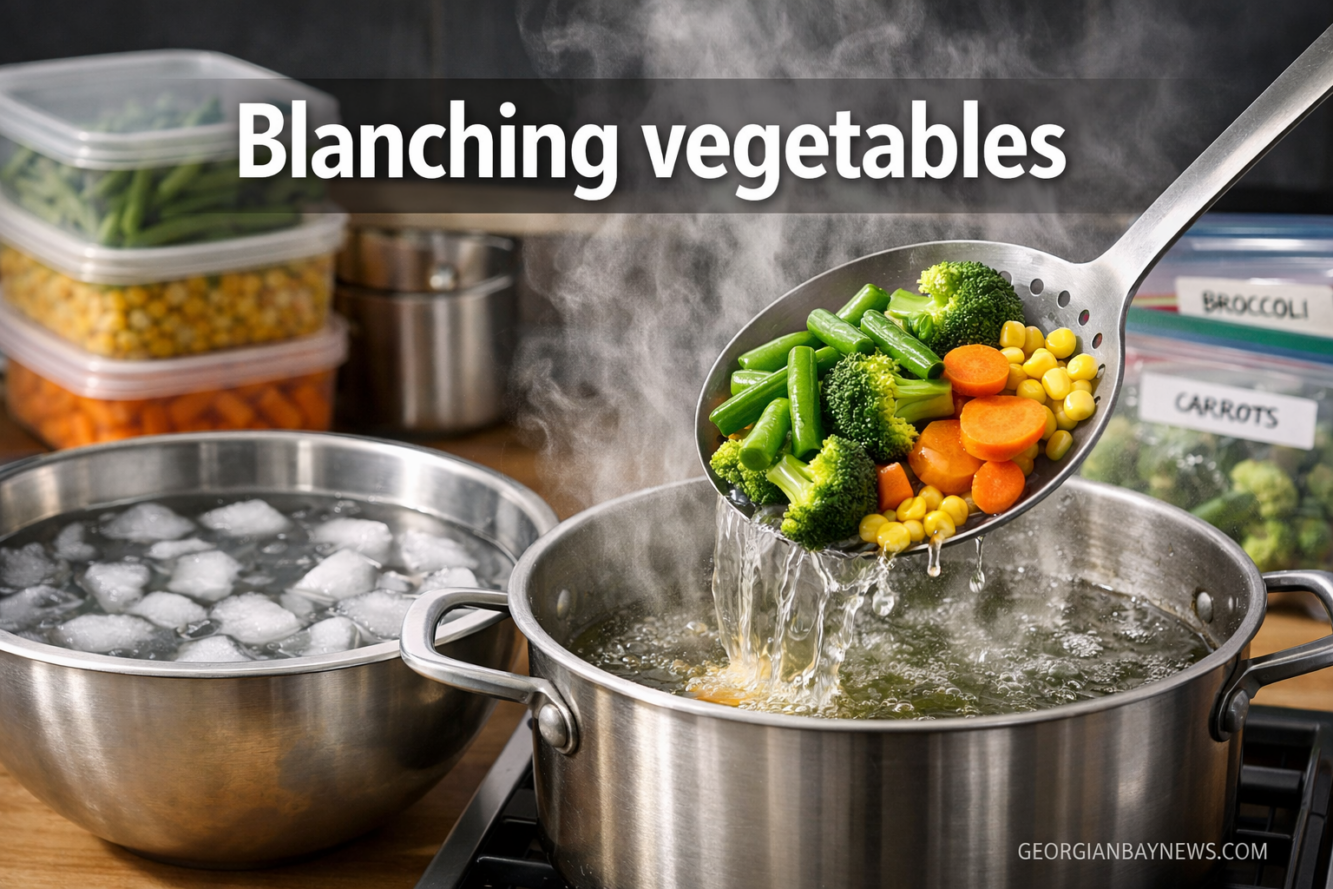
In plain terms, blanching is a prep step, not full cooking. The process:
- Brings water to a strong boil or uses steam
- Heats vegetables for a set time
- Moves them into ice water immediately
- Drains and freezes them
“Blanching is small effort upfront that prevents bigger losses later.”
A common kitchen story says it best: a family freezes green beans straight from the garden in August, then opens a bag in January and finds dull color and flat flavor. The next year, the same beans are blanched first, and the winter meals taste much closer to fresh-picked produce. That difference is the reason blanching remains the standard home-freezing method [3][5].
For readers interested in the broader cost pressure behind food preservation, local coverage on gas and climate pressures and the shift to cleaner energy helps explain why transport and fuel costs can affect household budgets.
Which vegetables are good candidates for blanching vegetables?
Most vegetables meant for freezing are good candidates for blanching. Good choices include vegetables that lose quality quickly in the freezer without heat treatment [1][4].
Common vegetables to blanch:
- Broccoli
- Brussels sprouts
- Carrots
- Corn
- Green beans
- Peas
- Cauliflower
- Spinach
- Asparagus
- Summer squash and some winter squash preparations [1]
A few specific examples from extension guidance:
- Broccoli: water blanch 3 minutes or steam blanch 5 minutes [1]
- Brussels sprouts: small 3 minutes, medium 4, large 5 in water [1][4]
- Carrots: sliced or diced 2 minutes in water; small whole carrots 5 minutes [1]
- Peas: green peas 2½ minutes in water [1]
- Corn on the cob: 7 to 11 minutes in water depending on ear size [1]
Choose blanching if the vegetable will be frozen for later meals.
Skip guessing if a vegetable has a special prep rule, such as eggplant needing acidified water or mushrooms benefiting from an antidarkening treatment [1].

How do you blanch vegetables step by step?
The best way to blanch vegetables is to prep them evenly, heat them in small batches, then cool them fast. The method is simple, but the details decide the final quality [1][3].
Step-by-step checklist
- Wash and trim vegetables.
- Cut to even size so pieces heat evenly.
- Bring a large pot to a full rolling boil.
- Use 1 gallon of water per pound of prepared vegetables [1][3].
- Add one batch only. The water should return to a boil within 1 minute [3].
- Start timing as directed for that vegetable.
- Transfer vegetables to ice water at 60°F or below [1].
- Cool for the same length of time as blanching [1][3].
- Drain well, pat dry, pack, label, and freeze.
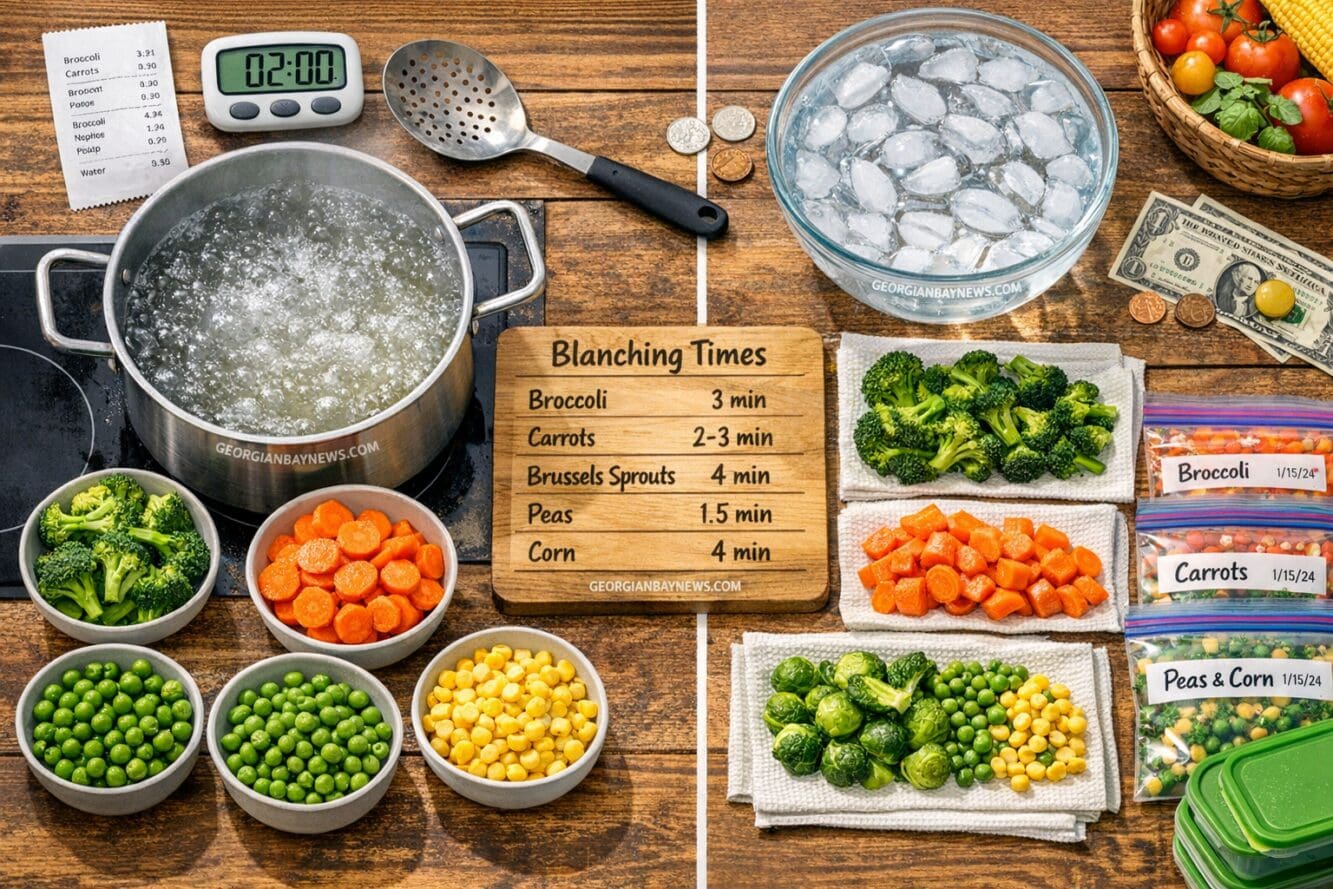
Common mistake: adding too many vegetables at once. If the pot takes too long to reboil, the blanch is weak and uneven [3].
A practical tip for busy households: set up the pot, ice bath, tray, and freezer bags before the first batch starts. That small bit of staging makes the process much faster on a harvest day.
What are the best blanching times for popular vegetables?
The best blanching time depends on the vegetable and the cut size. Short, accurate timing helps vegetables freeze well without turning soft [1][4].
| Vegetable | Water blanch time | Steam blanch time | Notes |
|---|---|---|---|
| Broccoli | 3 min | 5 min | Flowerets up to 1½ inches [1] |
| Brussels sprouts, small | 3 min | 5 min | Size matters [1][4] |
| Brussels sprouts, medium | 4 min | 6 min | Size matters [1][4] |
| Brussels sprouts, large | 5 min | 7 min | Size matters [1][4] |
| Carrots, sliced/diced | 2 min | 3 min | Small cuts blanch fast [1] |
| Carrots, small whole | 5 min | 8 min | Longer for whole carrots [1] |
| Peas, green | 2½ min | 5 min | Use tender young peas [1] |
| Corn on cob, small | 7 min | 10 min | Depends on ear size [1] |
| Corn on cob, medium | 9 min | 13 min | Depends on ear size [1] |
| Corn on cob, large | 11 min | 16 min | Depends on ear size [1] |
Quick example: sliced carrots for soup need only 2 minutes, while large ears of corn need much longer [1].
Is water blanching or steam blanching better?
Water blanching is the standard method for most vegetables, and it is usually the easiest for home cooks. Steam blanching can work well for certain vegetables, but it often takes about 1½ times longer [1][2].
Choose water blanching if:
- The vegetable has a standard extension recommendation in boiling water
- A fast, simple method is needed
- Large batches are being done
Choose steam blanching if:
- The vegetable is specifically suited to steam, such as grated summer squash or sprouts [1]
- Less water contact is preferred
- The setup allows steady steam and accurate timing
Common mistake: treating steam and water times as interchangeable. They are not [1][2].
Some households also pair blanching with seasonal planning. If summer heat is intense, articles on cooling centres during hot weather can help families plan safer kitchen workdays when doing large preservation batches.
How can blanching vegetables save money?
Blanching vegetables can save money by helping households buy in season, preserve garden harvests, and cut waste. The savings usually come from preventing spoilage, not from the blanching step alone.
Ways blanching helps a budget:
- Buy vegetables when prices are lower during peak season
- Freeze extras from a garden before they spoil
- Preserve large sale packs from markets or warehouse stores
- Reduce last-minute takeout when freezer-ready vegetables are on hand
A familiar example: a neighbor grows too many beans and zucchini every August. Instead of watching them soften in the fridge, the household blanches and freezes meal-size portions. Winter soups, stir-fries, and side dishes become cheaper because the vegetables were already paid for months earlier.
Fuel costs can affect grocery prices because produce often travels long distances by truck. When transport costs rise, retail prices may also rise. That is one reason many households in 2026 are thinking harder about seasonal buying and home freezing. For more context, see local reporting on climate and fossil fuel costs and cleaner energy transitions.
For people growing food at home, reap what you sow is a useful reminder that preserving harvests is part of gardening, not an afterthought.
What mistakes should you avoid when blanching vegetables?
The biggest mistakes are underblanching, overblanching, and poor cooling. Any one of those can lower freezer quality [1][3][5].
Watch for these problems:
- Too much food in the pot: slows the boil and weakens the blanch [3]
- Wrong timing: too short leaves enzymes active, too long softens texture [5]
- Weak ice bath: vegetables keep cooking after removal from heat [1]
- Poor draining: extra water can cause ice crystals
- Uneven cuts: some pieces overcook while others stay underblanched
Edge case: eggplant and mushrooms need special handling. Eggplant uses acidified blanching water, and mushrooms may need an antidarkening dip before steam blanching [1].
A simple decision rule helps: if the vegetable is delicate and cut small, be extra strict with timing.
What if blanching vegetables does not fit your situation?
Blanching vegetables is best for freezing, but it is not always necessary for every kitchen goal. If vegetables will be eaten within a few days, simple refrigeration may be enough.
Alternatives include:
- Refrigerating for short-term use
- Pickling
- Dehydrating
- Pressure canning, where appropriate and only with proper guidance
- Cooking dishes fully, then freezing the finished meal
Choose blanching if the goal is freezer storage with better quality later.
Choose another method if freezer space is limited or the vegetable is better preserved another way.
Related reading: if seasonal disruptions affect fresh food planning, local updates on storm impacts across Canadian communities and power restoration efforts show why keeping preserved food on hand can be practical.
FAQ
Do all vegetables need blanching before freezing?
No. Most vegetables benefit from blanching before freezing, but the need and timing depend on the vegetable [1][4].
How long should vegetables stay in ice water?
Vegetables should stay in ice water for the same amount of time used for blanching [1][3].
Can blanching be done with steam instead of boiling water?
Yes. Steam blanching works for some vegetables, but it usually takes longer than water blanching [1][2].
Why did frozen vegetables turn mushy?
Mushy texture usually comes from overblanching, slow cooling, or freezing poor-quality produce.
What is the best pot size for blanching vegetables?
Use enough water to keep a strong boil, typically 1 gallon of water per pound of prepared vegetables [1][3].
Can blanching vegetables really help save money?
Yes. Blanching can reduce waste and make bulk seasonal purchases more useful over time.
What happens if the water does not return to a boil quickly?
If the water does not return to a full boil within 1 minute, the batch is too large for the pot and water volume [3].
Are fresh garden vegetables better for blanching than old store vegetables?
Yes. Fresher vegetables usually freeze with better texture and flavor than older produce.
Conclusion
Blanching vegetables is one of the simplest ways to protect food quality and stretch a grocery budget. The method is straightforward: use enough boiling water, blanch for the right time, cool in ice water just as long, then drain and freeze.
The next best step is practical: pick one vegetable, such as broccoli, carrots, or peas, and do a small test batch this week. Label the bag with the date and compare the results later. For households watching food costs in 2026, that small habit can reduce waste, make seasonal buying smarter, and put better vegetables on the table months from now.
References
[1] Gh1503 – https://extension.missouri.edu/publications/gh1503
[2] Importance Of Blanching In Frozen Vegetable Processing – https://www.flexfoodsltd.com/blog/importance-of-blanching-in-frozen-vegetable-processing.php
[3] Blanching Vegetables – https://nchfp.uga.edu/how/freeze/freeze-general-information/blanching-vegetables/
[4] Freezing Vegetables – https://extension.unh.edu/resource/freezing-vegetables
[5] Ellis Veg Blanching – https://extension.okstate.edu/articles/2021/ellis-veg-blanching.html
Content, illustrations, and third-party video appearing on GEORGIANBAYNEWS.COM may be generated or curated with AI assistance or reproduced pursuant to the fair dealing provisions of the Copyright Act, R.S.C. 1985, c. C-42. Attribution and hyperlinks to original sources are provided in acknowledgment of applicable intellectual property rights. Such referencing is intended to direct traffic to and support the original rights holders’ platforms.
Sharing is SO MUCH APPRECIATED!