






















Medication Management for Seniors: How to Prevent Dangerous Drug Interactions, Duplicates, and Side Effects

Last updated: June 3, 2026
Quick Answer
Nearly 100,000 adults aged 65 and older are hospitalized every year due to adverse drug events, with blood thinners and diabetes medications among the leading causes [1]. Effective medication management for seniors means keeping a complete, current list of all prescriptions, over-the-counter drugs, and supplements, sharing it with every provider, and scheduling regular pharmacy or physician reviews. Done consistently, these steps prevent dangerous drug interactions, duplicate prescriptions, and avoidable side effects.
Key Takeaways
- About 40% of adults 65 and older take five or more medications at once, a condition called polypharmacy [2]
- Age-related changes in kidney and liver function slow how the body processes drugs, raising the risk of side effects at standard doses [3]
- The American Geriatrics Society’s Beers Criteria identifies specific drugs that are potentially inappropriate for older adults, including certain sleep aids and antihistamines [4]
- Pharmacists can review an entire medication list at no charge through Medication Therapy Management (MTM) programs covered by Medicare Part D
- Keeping one master medication list and bringing it to every appointment is the single most effective organizational habit for older adults
- Warning signs of a dangerous drug interaction include sudden confusion, unusual bleeding, severe dizziness, or a rapid heartbeat
- Herbal supplements such as ginkgo biloba and St. John’s Wort can interact seriously with common prescriptions [6]
- Smartphone apps and blister-pack dispensing services are practical tools for seniors managing complex schedules
- Talking openly with a doctor about reducing medication complexity (deprescribing) is safe and often beneficial for adults over 75
- If an accidental overdose is suspected, call Poison Control (1-800-222-1222 in the US) immediately
What Are the Most Common Medication Mistakes Seniors Make
Seniors most often run into trouble by seeing multiple specialists without coordinating their medication lists, taking OTC drugs without telling their doctor, and skipping doses to stretch a prescription. Each of these habits creates gaps or overlaps that raise the risk of harm.
Common mistakes include:
- Duplicate therapy: Two doctors prescribing drugs from the same class without knowing it
- Self-medicating with OTC drugs: NSAIDs like ibuprofen, for example, can increase gastrointestinal bleeding risk and worsen kidney function in older adults [5]
- Stopping a drug abruptly: Particularly risky with blood pressure medications and antidepressants
- Ignoring supplements: Herbal products are not inert; ginkgo biloba, for instance, can raise bleeding risk when combined with warfarin [6]
- Using outdated medications: Potency and safety change after expiration
Decision rule: If a senior sees three or more specialists, a formal medication reconciliation appointment with a primary care physician or pharmacist is warranted at least once a year.
How Do I Know If My Medications Are Safe to Take Together
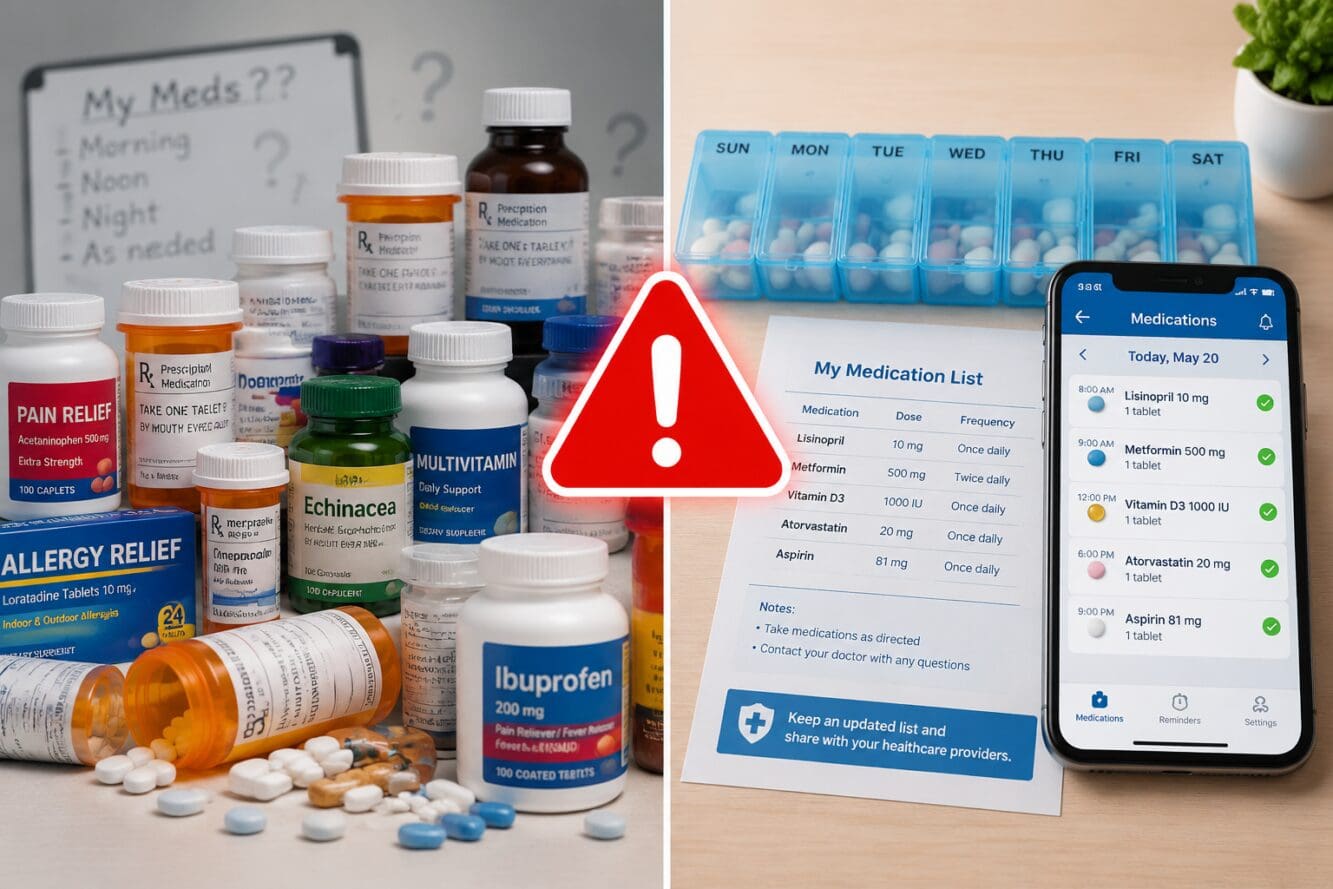
The safest way to check for drug interactions is to have a pharmacist or physician run every medication, including supplements, through a clinical interaction checker. No online tool replaces a professional review, but reputable databases such as those used by pharmacists flag most major interactions reliably.

Steps to verify safety:
- Write down every drug, dose, and frequency, including vitamins and herbal products
- Bring the list to a pharmacist and ask specifically about interactions
- Ask the prescribing doctor whether each drug is still needed at its current dose
- Use a single pharmacy for all prescriptions so the dispensing system can flag conflicts automatically
Warning Signs of Dangerous Drug Interactions
A dangerous drug interaction can appear within hours of starting a new medication or adding a supplement. Seniors and caregivers should watch for sudden changes that did not exist before a new drug was introduced [8].
Stop the new medication and seek care promptly if any of these appear:
- Sudden confusion or significant memory change
- Unusual bruising or bleeding
- Severe dizziness or fainting
- Irregular or racing heartbeat
- Difficulty breathing
- Severe nausea, vomiting, or abdominal pain
- Yellowing of the skin or eyes (possible liver involvement)
These symptoms do not always mean the drug is wrong, but they always warrant a call to a healthcare provider the same day.
Which Medications Are Most Risky for Seniors Over 75
Certain drug categories carry elevated risk for adults over 75 because aging kidneys and livers clear these substances more slowly, allowing them to accumulate to harmful levels [3]. The American Geriatrics Society’s Beers Criteria is the standard clinical reference for this [4].
High-risk categories for older adults:
Drug CategoryCommon ExamplesPrimary RiskBenzodiazepinesDiazepam, lorazepamFalls, confusionAnticholinergicsDiphenhydramine (Benadryl), some antidepressantsCognitive impairment, urinary retentionNSAIDsIbuprofen, naproxenGI bleeding, kidney damageSulfonylureasGlipizide, glyburideSevere low blood sugarAnticoagulantsWarfarinSerious bleeding events
Blood thinners and diabetes medications together account for a disproportionate share of senior hospitalizations from adverse drug events [1].
Can Pharmacists Help Review My Entire Medication List for Free
Yes. Medicare Part D includes a benefit called Medication Therapy Management (MTM), which provides a free, comprehensive medication review with a pharmacist for eligible enrollees. Eligibility generally requires having multiple chronic conditions and taking several covered drugs.
Even outside MTM, most community pharmacists will review a printed medication list at no cost during a scheduled consultation. This review can catch interactions, duplicates, and doses that may be too high for an older adult’s current kidney function [7].
Best Apps or Tools for Tracking Senior Medication Schedules
Several practical tools help seniors and caregivers manage complex medication schedules without relying on memory alone. The right tool depends on the person’s comfort with technology and the complexity of their regimen.
Options ranked by simplicity:
- Printed weekly pill organizer: Low-tech, reliable, and easy for caregivers to check at a glance
- Blister-pack dispensing: Many pharmacies pre-pack medications by day and time, reducing sorting errors
- Smartphone reminder apps: Medisafe and similar apps send alerts, track doses, and flag interactions; useful for adults comfortable with a smart phone
- Automated pill dispensers: Devices that lock compartments and dispense the correct dose at the scheduled time, well suited for someone with early memory changes
- Caregiver check-in apps: Allow a family member or friend to confirm remotely that a dose was taken
How to Organize Medications for Someone With Memory Problems
For a senior with dementia or mild cognitive impairment, the goal is to remove decision-making from the medication process entirely. Relying on the person to remember whether they took a dose is not a safe strategy [8].
Effective approaches:
- Use a locked automatic dispenser that releases only the correct compartment at the right time
- Assign one caregiver or family member to manage refills and weekly loading
- Keep a laminated medication card on the refrigerator listing every drug, dose, and prescriber
- Coordinate with the pharmacy to synchronize all refill dates to one pickup per month
- Ask the doctor about simplifying the regimen; once-daily formulations exist for many common conditions
For families managing care from a distance, connecting with social inclusion programs and local senior services can help identify in-home medication support.
What Medical Conditions Make Seniors More Vulnerable to Drug Interactions
Kidney disease, liver disease, heart failure, and diabetes each affect how the body absorbs, distributes, and eliminates drugs. A senior with reduced kidney function, for example, may reach toxic drug levels at a dose that would be safe for someone with healthy kidneys [3].
Conditions that increase vulnerability:
- Chronic kidney disease (slows drug clearance)
- Liver disease (impairs drug metabolism)
- Heart failure (affects drug distribution through circulation)
- Dehydration (concentrates drug levels in the blood)
- Low body weight (standard doses become proportionally higher)
Polypharmacy itself compounds these risks because each additional drug adds another variable to an already complex system [6].
How Do I Talk to My Doctor About Reducing My Medication Complexity
Bring a complete medication list to the appointment and ask directly: “Is every drug on this list still necessary at its current dose?” This is called deprescribing, and it is a recognized, evidence-supported practice, not a request to cut corners on care.
Specific questions to ask:
- “What would happen if we stopped this medication?”
- “Is there a once-daily version of any of these drugs?”
- “Are any of these treating a side effect caused by another drug on this list?”
- “Does my current kidney function change the safe dose for any of these?”
Doctors respond well to specific, prepared questions. Bringing a caregiver or trusted connection to the appointment helps ensure nothing is missed.
Alternatives to Multiple Daily Prescriptions for Older Adults
Reducing the number of medications is not always possible, but lifestyle changes can sometimes reduce the dose or eliminate the need for certain drugs. These are not replacements for medical advice, but they are worth discussing with a physician.
- Blood pressure: Regular physical activity, reduced sodium intake, and stress management can lower readings meaningfully
- Type 2 diabetes: Dietary changes and weight management can reduce the need for oral medications in some cases
- Insomnia: Cognitive behavioral therapy for insomnia (CBT-I) is more effective long-term than sleep medications and avoids the fall risk associated with sedatives [4]
- Anxiety and mild depression: Structured social engagement, exercise, and counseling may reduce reliance on medications with anticholinergic effects
For seniors interested in active aging and community participation, programs like Special Olympics or local fitness initiatives can support the lifestyle changes that complement medication reduction.
What Should I Do If I Accidentally Take Too Much of a Prescription
Call Poison Control immediately at 1-800-222-1222 (US) or the equivalent emergency line in your country. Do not wait for symptoms to appear. Provide the name of the drug, the dose taken, and the approximate time.
If the person is unconscious, having a seizure, or not breathing, call 911 first.
Do not:
- Induce vomiting unless specifically instructed by Poison Control
- Give additional medications to counteract the overdose
- Assume a small accidental double-dose is always harmless, especially with blood thinners or diabetes drugs [1]
How Much Do Medication Management Services for Elderly Cost
Costs vary widely depending on the type of service. Medicare Part D’s MTM program covers a comprehensive pharmacist review at no out-of-pocket cost for eligible seniors. Private geriatric care managers who specialize in medication oversight typically charge between $100 and $200 per hour, though rates vary by region.
Cost overview:
- MTM through Medicare Part D: $0 for eligible enrollees
- Community pharmacist consultation: Often free or low-cost
- Automatic pill dispensers: $30 to $150 for the device; some rental programs exist
- Private medication management services: $100 to $200 per hour (estimate; varies by location and provider)
- Blister-pack dispensing from a pharmacy: Often included in dispensing fees or a small add-on charge
For seniors on fixed incomes, understanding social security benefits and Medicare coverage is a practical first step before paying out of pocket for any service.
Conclusion
Medication management for seniors is not a one-time task. It requires a current medication list, regular reviews with a pharmacist or physician, and honest conversations about whether every drug is still earning its place in the regimen. The risks are real: hospitalizations from adverse drug events number in the tens of thousands each year [1], and polypharmacy affects roughly four in ten older adults [2]. But those risks are largely preventable with consistent habits.
Actionable next steps:
- Write a complete medication list today, including all OTC drugs, vitamins, and herbal supplements
- Schedule a Medication Therapy Management review through Medicare Part D or ask a pharmacist for a consultation
- Ask the prescribing physician whether any drug on the list can be reduced or stopped
- Choose one pharmacy for all prescriptions and ask them to flag interactions automatically
- Set up a pill organizer, reminder app, or automatic dispenser matched to the senior’s level of independence
Taking these steps before a problem arises is far easier than managing a preventable hospitalization after one.
FAQ
What is polypharmacy and why does it matter for seniors?
Polypharmacy means taking five or more medications at the same time. It matters because each additional drug increases the chance of an interaction, a duplicate, or a side effect that gets mistaken for a new illness [2].
Can over-the-counter drugs cause serious problems for older adults?
Yes. NSAIDs like ibuprofen can cause gastrointestinal bleeding and kidney damage in older adults, and common antihistamines like diphenhydramine can cause confusion and falls [5].
What is the Beers Criteria?
The Beers Criteria is a list published by the American Geriatrics Society that identifies medications considered potentially inappropriate for adults 65 and older, including certain sleep aids, muscle relaxants, and anticholinergic drugs [4].
How often should a senior’s medications be reviewed?
At minimum, once a year. After any hospitalization, new diagnosis, or addition of a new drug, a review should happen sooner.
Are herbal supplements safe to take with prescription medications?
Not always. Ginkgo biloba can increase bleeding risk with blood thinners, and St. John’s Wort can reduce the effectiveness of several medications, including antidepressants and anticoagulants [6].
What does a pharmacist check during a medication review?
A pharmacist checks for drug-drug interactions, duplicate therapies, doses that may be too high given age or kidney function, and medications that may no longer be needed.
Is it safe to split pills to save money?
Only if the prescriber or pharmacist confirms the specific pill is safe to split. Extended-release and coated tablets should never be split, as doing so can release the full dose at once.
What is deprescribing?
Deprescribing is the supervised process of reducing or stopping medications that are no longer necessary or that pose more risk than benefit. It is a standard, evidence-supported practice in geriatric care.
Can a drug interaction develop after taking two medications safely for years?
Yes. A new drug added to an existing regimen, a change in kidney function, or even a dietary change (such as eating more grapefruit) can trigger an interaction that did not exist before.
Who should I call if I am unsure whether a symptom is a drug side effect?
Call the prescribing physician or pharmacist first. If symptoms are severe or sudden, call 911 or Poison Control at 1-800-222-1222.
References
[1] Hospitalization Of Seniors From Medication – https://www.poison.org/articles/hospitalization-of-seniors-from-medication?utm_source=openai
[2] Senior Medication Management – https://nationalseniorcareauthority.com/senior-medication-management?utm_source=openai
[3] You Age You And Your Medicines – https://www.fda.gov/drugs/tips-seniors/you-age-you-and-your-medicines?utm_source=openai
[4] Art 20572714 – https://www.mayoclinic.org/healthy-lifestyle/healthy-aging/in-depth/medications-older-adults/art-20572714?p=1&utm_source=openai
[5] Drugs To Approach With Care – https://healthy.kaiserpermanente.org/health-wellness/senior-health/drugs-to-approach-with-care?utm_source=openai
[6] Polypharmacy In Adults 60 And Older – https://www.hopkinsmedicine.org/health/wellness-and-prevention/polypharmacy-in-adults-60-and-older?utm_source=openai
[7] Why Medication Management Is Critical Older Adults – https://www.kbtx.com/2026/03/27/why-medication-management-is-critical-older-adults/?utm_source=openai
[8] Medication Side Effects Elderly Adults Critical Warning Signs Polypharmacy Risks You Cant Ignore 474539 – https://www.medicaldaily.com/medication-side-effects-elderly-adults-critical-warning-signs-polypharmacy-risks-you-cant-ignore-474539?utm_source=openai
Content, illustrations, and third-party video appearing on GEORGIANBAYNEWS.COM may be generated or curated with AI assistance or reproduced pursuant to the fair dealing provisions of the Copyright Act, R.S.C. 1985, c. C-42. Attribution and hyperlinks to original sources are provided in acknowledgment of applicable intellectual property rights. Such referencing is intended to direct traffic to and support the original rights holders’ platforms.
Much Appreciate You Sharing This Post - It Helps MUCH!!!