



















Pickleball for Seniors: Low-Impact Exercise and Social Connection in Your 60s and Beyond


Sharing is SO MUCH APPRECIATED!


Last updated: June 12, 2026
Quick Answer: Pickleball is one of the most accessible sports for adults in their 60s and beyond. It combines gentle cardiovascular exercise with strategic play on a compact court, making it far easier on joints than tennis. Research shows it improves blood pressure, cardiorespiratory fitness, and social well-being, and in 2025, nearly 3.74 million Americans aged 65 and over were already playing regularly [1].
Key Takeaways
- Pickleball is genuinely low-impact: the smaller court, underhand serve, and slower ball reduce stress on knees, hips, and shoulders compared to racquet sports like tennis.
- A study cited by the Cleveland Clinic found that one hour of pickleball three days per week for six weeks improved blood pressure, cholesterol, and cardiorespiratory fitness in middle-aged and older adults [3].
- Beginner equipment costs between roughly $30 and $150 for a starter paddle and balls, making the sport affordable to try.
- Seniors with arthritis can often play comfortably using lightweight paddles and proper warm-up routines, though a doctor’s clearance is always advisable.
- Ontario has a growing network of senior-friendly pickleball clubs, recreation centres, and drop-in sessions, especially in communities around Georgian Bay.
- Common beginner mistakes include skipping warm-ups, using a paddle that is too heavy, and moving too aggressively at the kitchen line.
- The sport’s social structure naturally builds stronger bonds and reduces isolation, which is a documented risk factor for cognitive decline in older adults.
How Does Pickleball Compare to Tennis for Older Adults?
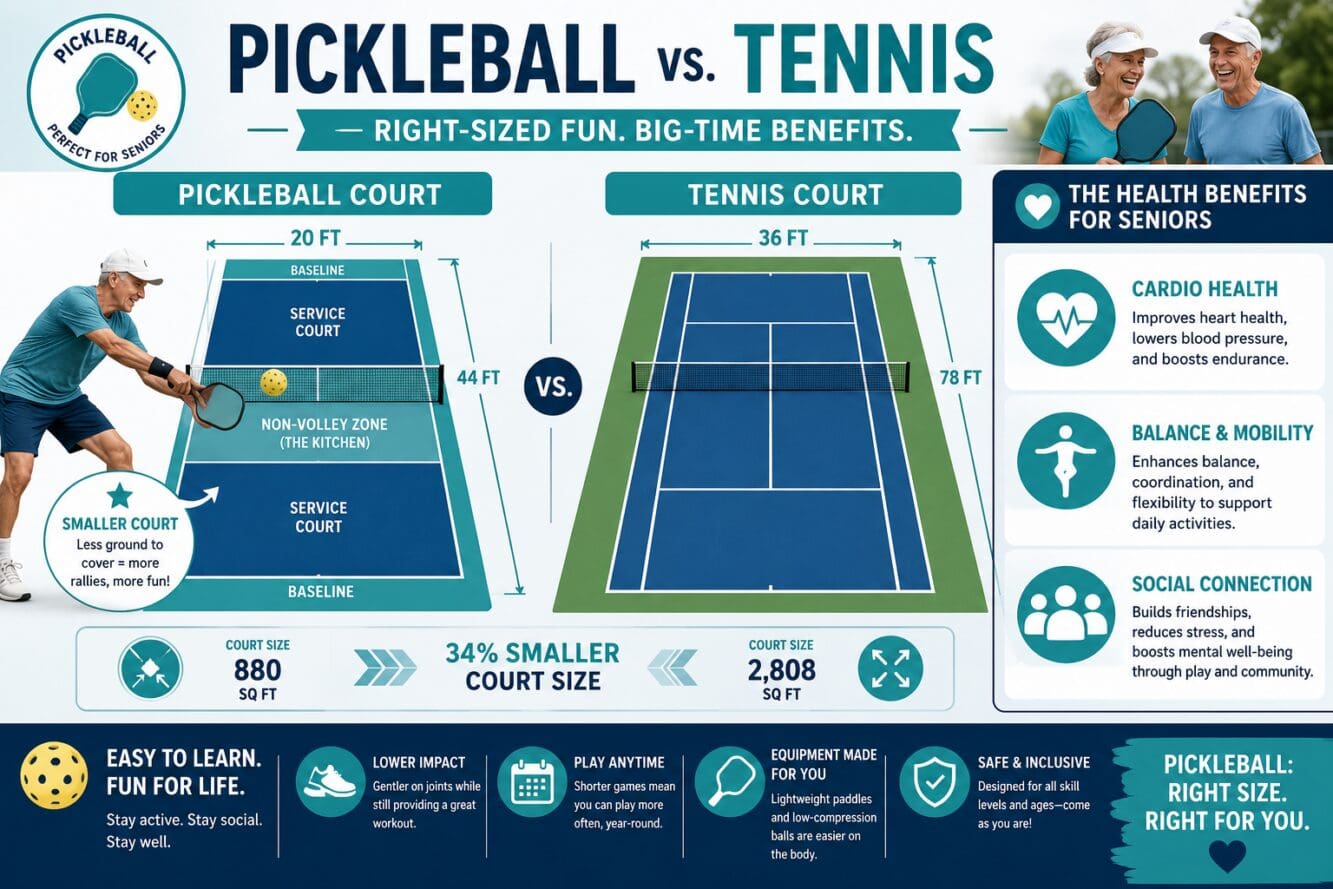
Pickleball is significantly easier on the body than tennis for older adults. The court is about one-quarter the size of a tennis court, the paddle is lighter, and the plastic ball travels more slowly, which means less running, less shoulder strain, and shorter rallies.
For seniors who loved tennis in their 40s but find it too demanding now, pickleball offers a direct path back to racquet sport competition. The underhand serve alone removes much of the rotator cuff strain that sidelines older tennis players. Reaction times required are shorter, and doubles play (the most popular format among seniors) keeps individual court coverage manageable.
Choose pickleball over tennis if: you have knee or hip concerns, limited shoulder mobility, or have been inactive for more than a year and want a gradual re-entry into sport.
What Fitness Level Do You Need to Start Playing Pickleball in Your 60s?
No baseline fitness level is required to begin pickleball in your 60s. The sport is genuinely beginner-friendly, and most recreation centres offer drop-in sessions where new players learn the rules in under 30 minutes [6].
That said, being able to walk briskly for 20 minutes without stopping is a reasonable starting point. Players who are recovering from surgery or managing chronic conditions should get medical clearance first. The beauty of pickleball is that intensity scales naturally: beginners rally gently at the kitchen line, while advanced players move quickly and compete in tournaments.
Is Pickleball Safe for People With Arthritis?
Yes, pickleball is generally safe for people with arthritis, particularly osteoarthritis of the knees and hips. The low-impact nature of the sport, combined with the option to play doubles and avoid excessive lateral sprinting, makes it manageable for many arthritis sufferers [5].
Key adaptations for arthritic players:
- Choose a lightweight paddle (under 7.5 oz) with a cushioned grip to reduce wrist and finger strain.
- Wear court-specific shoes with lateral support to protect ankles and knees.
- Warm up for at least 10 minutes before play, focusing on gentle leg swings, wrist rotations, and shoulder circles.
- Play shorter sessions (30 to 45 minutes) and increase duration gradually.
Consult a rheumatologist or physiotherapist before starting if arthritis is severe or affects multiple joints.
What Medical Conditions Might Prevent Playing Pickleball?
Most seniors can play pickleball safely, but certain conditions warrant caution or a full medical evaluation first. These include uncontrolled heart disease or arrhythmia, severe osteoporosis with high fracture risk, recent joint replacement surgery (within six months), and significant balance disorders that increase fall risk [5][7].
Conditions that are manageable with modifications include mild to moderate hypertension, Type 2 diabetes, and mild balance issues. In those cases, playing doubles, staying near the kitchen line, and avoiding sudden directional changes reduces risk considerably. Always stay healthier by disclosing your full medical history to your doctor before starting any new sport.
Can Pickleball Help Prevent Age-Related Muscle Loss?
Pickleball contributes to slowing muscle loss (sarcopenia) but works best as part of a broader fitness routine. The sport builds leg strength through lateral movement and improves core stability through paddle swings and quick directional changes [7].
Regular participation, defined as three or more sessions per week, also supports balance and agility, which are crucial for fall prevention in older adults. According to Mather Hospital, consistent pickleball play leads to measurable improvements in muscle strength and coordination [7]. Pairing pickleball with light resistance training two days per week produces the strongest results for preserving muscle mass. For more on longevity secrets and active aging, explore related wellness content.
Is Pickleball Good for Balance and Coordination in Older Adults?
Yes, pickleball directly trains balance and coordination. Every rally requires rapid weight shifts, hand-eye coordination, and spatial awareness, all of which decline with age if left unstimulated [4][7].
The sport’s stop-and-start nature mimics functional movements used in daily life, such as reaching, pivoting, and recovering from a stumble. Seniors who play regularly report feeling more confident walking on uneven surfaces, a practical benefit that extends well beyond the court.

How Many Calories Do Seniors Burn Playing Pickleball?
Calorie burn during pickleball varies by intensity and body weight, but estimates for adults aged 60 and over generally range from 250 to 400 calories per hour during recreational doubles play. Competitive singles play burns more, closer to 500 to 600 calories per hour, though that format is less common among older beginners.
These figures are estimates based on metabolic equivalent (MET) values for moderate racquet sports. Individual results depend on fitness level, court temperature, and play style. Even at the lower end, three sessions per week adds up to meaningful weekly energy expenditure that supports healthy weight management.
How Much Does Pickleball Equipment Cost for Beginners?
Starting pickleball costs very little compared to most sports. A complete beginner setup typically includes:
ItemEstimated Cost (CAD)Beginner paddle$40 – $100Pickleballs (3-pack)$10 – $20Court shoes (if needed)$60 – $120Paddle bag (optional)$20 – $40
Many recreation centres lend paddles and balls for drop-in sessions, so the real cost to try the sport can be zero. Once committed, a mid-range paddle in the $60 to $90 range suits most seniors well. Avoid the cheapest paddles (under $25) as they tend to be heavy and poorly balanced.
What Are the Best Pickleball Paddles for Older Players With Less Grip Strength?
Older players with reduced grip strength should prioritize lightweight paddles (6.5 to 7.5 oz) with a cushioned, wide grip handle. Graphite and carbon fibre face paddles in this weight range offer good control without requiring a tight grip.
Top features to look for:
- Grip circumference: 4 to 4.25 inches for smaller hands; add an overgrip wrap to customize.
- Elongated handle: Provides a two-handed backhand option for players with wrist weakness.
- Soft-core construction: Polymer cores dampen vibration, reducing strain on arthritic joints.
Brands such as Selkirk, Engage, and Paddletek offer senior-friendly options in the $60 to $120 range. Test paddles at a local club before buying if possible.
What Injuries Are Common in Senior Pickleball Players?
The most common injuries in senior pickleball players are ankle sprains, knee pain, and “pickleball elbow” (lateral epicondylitis, similar to tennis elbow). Falls at the kitchen line account for a significant portion of acute injuries, particularly wrist fractures from outstretched-hand landings [5].
Injury prevention strategies:
- Warm up fully before every session (10 minutes minimum).
- Wear court shoes with non-slip soles and lateral ankle support, not running shoes.
- Avoid the “erne” shot and aggressive net rushing until movement confidence is established.
- Strengthen the rotator cuff with resistance band exercises off-court.
- Stop play if sharp joint pain occurs rather than playing through it.
Are There Pickleball Classes Specifically Designed for Seniors?
Yes, senior-specific pickleball classes are increasingly available across Ontario and Canada. Recreation centres, YMCAs, and community halls in areas including Georgian Bay, Collingwood, and Barrie offer structured beginner clinics aimed at the 60-plus age group [6].
These programs typically run four to six weeks, cover rules, basic strokes, court positioning, and safe movement patterns. Search “senior pickleball clinic” plus your municipality, or contact your local parks and recreation department directly. The Smash Pickleball community is one local resource worth checking for Georgian Bay area programming.
Where Can Seniors Find Pickleball Leagues Near Them in Ontario?
Finding a senior pickleball group in Ontario is straightforward in 2026. Start with these resources:
- Pickleball Canada (pickleballcanada.org): Lists registered clubs by province and city.
- Local recreation centres: Most Ontario municipalities now offer weekly senior drop-in sessions.
- Facebook groups: Search “[your city] pickleball seniors” for informal groups and open play times.
- USA Pickleball’s Place2Play app: Also lists Canadian courts and open play sessions.
Georgian Bay area residents can explore community connection resources and local social activity listings to find nearby clubs. Many groups specifically welcome beginners and run “open play” mornings where no prior experience is needed.
What Are the Most Common Mistakes New Senior Pickleball Players Make?
New senior players most often make these errors:
- Skipping the warm-up. Cold muscles and joints are far more vulnerable to strains. Ten minutes of light movement before play is non-negotiable.
- Using a paddle that is too heavy. Heavier paddles cause elbow and wrist fatigue quickly. Start light.
- Rushing to the net too aggressively. Moving forward before the ball is in a safe position leads to awkward collisions and falls.
- Playing too long in the first few sessions. Enthusiasm is great, but two to three 30-minute sessions per week is enough to start. Overuse injuries are common in the first month.
- Ignoring footwear. Running shoes lack the lateral support needed for pickleball’s side-to-side movements.
The Social Benefits of Pickleball for Seniors
The social dimension of pickleball for seniors is as significant as the physical one. The sport’s doubles format means every session involves four players, and drop-in culture means meeting new people is built into the game [4].
Research links regular social engagement in older adults to reduced rates of depression, anxiety, and cognitive decline. Pickleball’s community naturally provides this: post-game coffee, club tournaments, and travel leagues all extend the social experience beyond the court. For seniors managing loneliness or transition (retirement, relocation, loss of a partner), a welcoming pickleball group can be genuinely life-changing. Exploring such as healthy aging content alongside sport participation gives a fuller picture of what active social living looks like in your 60s and beyond.
FAQ
Q: How long does it take to learn pickleball as a senior beginner?
Most seniors can learn the basic rules and play a casual game within one or two sessions. Consistent competence in rallying and scoring typically develops within four to six weeks of regular play.
Q: Can I play pickleball if I have had a knee replacement?
Many people play pickleball successfully after knee replacement, usually six to twelve months post-surgery with surgeon clearance. Doubles play on a flat court is the safest format.
Q: Is pickleball indoors or outdoors?
Both. Indoor pickleball is played on gymnasium floors (often converted badminton courts), while outdoor courts are dedicated asphalt or concrete surfaces. Indoor play is easier on joints and avoids weather issues.
Q: Do I need to be athletic to enjoy pickleball?
No. The sport is specifically praised for welcoming non-athletes. Strategy and positioning matter more than speed or power, which benefits older players with experience and patience.
Q: How often should seniors play pickleball for health benefits?
Three sessions per week of approximately one hour each is the frequency associated with measurable cardiovascular and fitness improvements in the research [3].
Q: Is pickleball free to play in Ontario?
Drop-in sessions at public recreation centres typically cost $3 to $8 per session. Many clubs charge annual membership fees of $30 to $100. Outdoor public courts are generally free.
Q: What should I wear to my first pickleball session?
Comfortable athletic clothing and court shoes with lateral support. Avoid open-toed shoes or running shoes with thick, unstable soles.
Q: Can pickleball help with depression in seniors?
Regular physical activity combined with social interaction, which pickleball provides, is associated with reduced symptoms of depression and anxiety in older adults [4]. It is not a clinical treatment but is a meaningful supportive activity.
Conclusion
Pickleball for seniors represents one of the most practical entries into active, social aging available in 2026. The sport is affordable to start, gentle enough for most joint conditions, and structured in a way that builds friendships naturally. The evidence for cardiovascular, muscular, cognitive, and social benefits is credible and growing.
Actionable next steps for seniors in Ontario:
- Get medical clearance from your family doctor, especially if managing heart disease, osteoporosis, or recent surgery.
- Contact your local recreation centre or search Pickleball Canada’s club directory to find a beginner drop-in session near you.
- Borrow a paddle for your first session before buying equipment.
- Commit to three sessions per week for six weeks and track how you feel.
- Pair pickleball with a simple resistance training routine twice per week to maximize muscle and bone benefits.
The court is smaller than you think, the learning curve is shorter than you expect, and the community waiting on the other side of the net is genuinely welcoming.
References
[1] Pickleball Statistics 2025 – https://www.thepickleballera.com/pickleball-statistics-2025/?utm_source=openai
[2] U.S. Pickleball Participation – https://sfia.org/research/u-s-pickleball-participation/?utm_source=openai
[3] Pickleball For Seniors Health Benefits Backed By Science – https://pickleland.com/pickleball-for-seniors-health-benefits-backed-by-science/?utm_source=openai
[4] Pickleball For Seniors What Are The Health Benefits – https://www.seniorlifestyle.com/resources/blog/pickleball-for-seniors-what-are-the-health-benefits/?utm_source=openai
[5] Is Pickleball Good For Seniors – https://www.orthofeet.com/blogs/news/is-pickleball-good-for-seniors?utm_source=openai
[6] Pickleball For Seniors – https://www.storypoint.com/resources/health-wellness/pickleball-for-seniors/?utm_source=openai
[7] Why Pickleball Is The Perfect Sport For Seniors – https://www.matherhospital.org/wellness-at-mather/why-pickleball-is-the-perfect-sport-for-seniors/?utm_source=openai
Table of contents
- Key Takeaways
- How Does Pickleball Compare to Tennis for Older Adults?
- What Fitness Level Do You Need to Start Playing Pickleball in Your 60s?
- Is Pickleball Safe for People With Arthritis?
- What Medical Conditions Might Prevent Playing Pickleball?
- Can Pickleball Help Prevent Age-Related Muscle Loss?
- Is Pickleball Good for Balance and Coordination in Older Adults?
- How Many Calories Do Seniors Burn Playing Pickleball?
- How Much Does Pickleball Equipment Cost for Beginners?
- What Are the Best Pickleball Paddles for Older Players With Less Grip Strength?
- What Injuries Are Common in Senior Pickleball Players?
- Are There Pickleball Classes Specifically Designed for Seniors?
- Where Can Seniors Find Pickleball Leagues Near Them in Ontario?
- What Are the Most Common Mistakes New Senior Pickleball Players Make?
- The Social Benefits of Pickleball for Seniors
- FAQ
- Conclusion
- References
Content, illustrations, and third-party video appearing on GEORGIANBAYNEWS.COM may be generated or curated with AI assistance or reproduced pursuant to the fair dealing provisions of the Copyright Act, R.S.C. 1985, c. C-42. Attribution and hyperlinks to original sources are provided in acknowledgment of applicable intellectual property rights. Such referencing is intended to direct traffic to and support the original rights holders’ platforms.
Sharing is SO MUCH APPRECIATED!