




















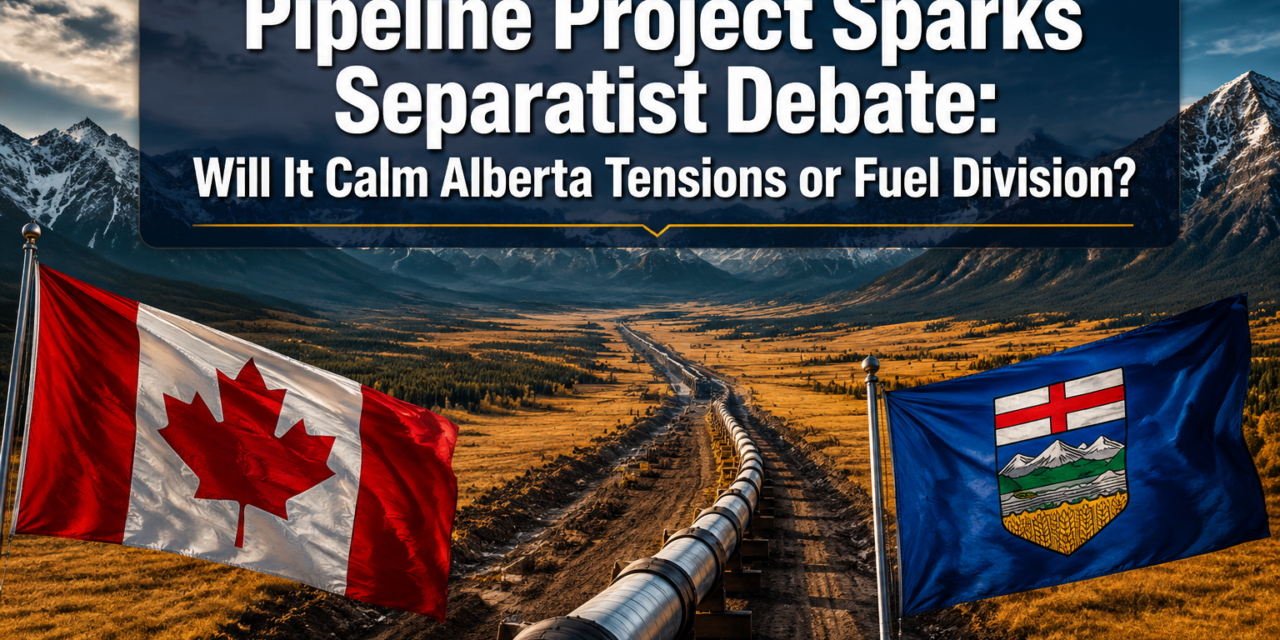
On May 4, 2026, a convoy of volunteers hauled 302,000 signatures to Elections Alberta’s Edmonton headquarters—more than enough to trigger what could become Canada’s first-ever provincial independence referendum [2]. That same week, a proposed crude oil pipeline from Alberta to Wyoming inched closer to securing the industry commitments needed to break ground [9]. These two events are now on a collision course, and the outcome could reshape Canadian confederation. The question at the heart of this pipeline project sparks separatist debate: will it calm Alberta tensions or fuel division?
The answer depends on who benefits, who gets left behind, and whether economic opportunity can outpace political frustration in a province that has felt overlooked by Ottawa for decades.
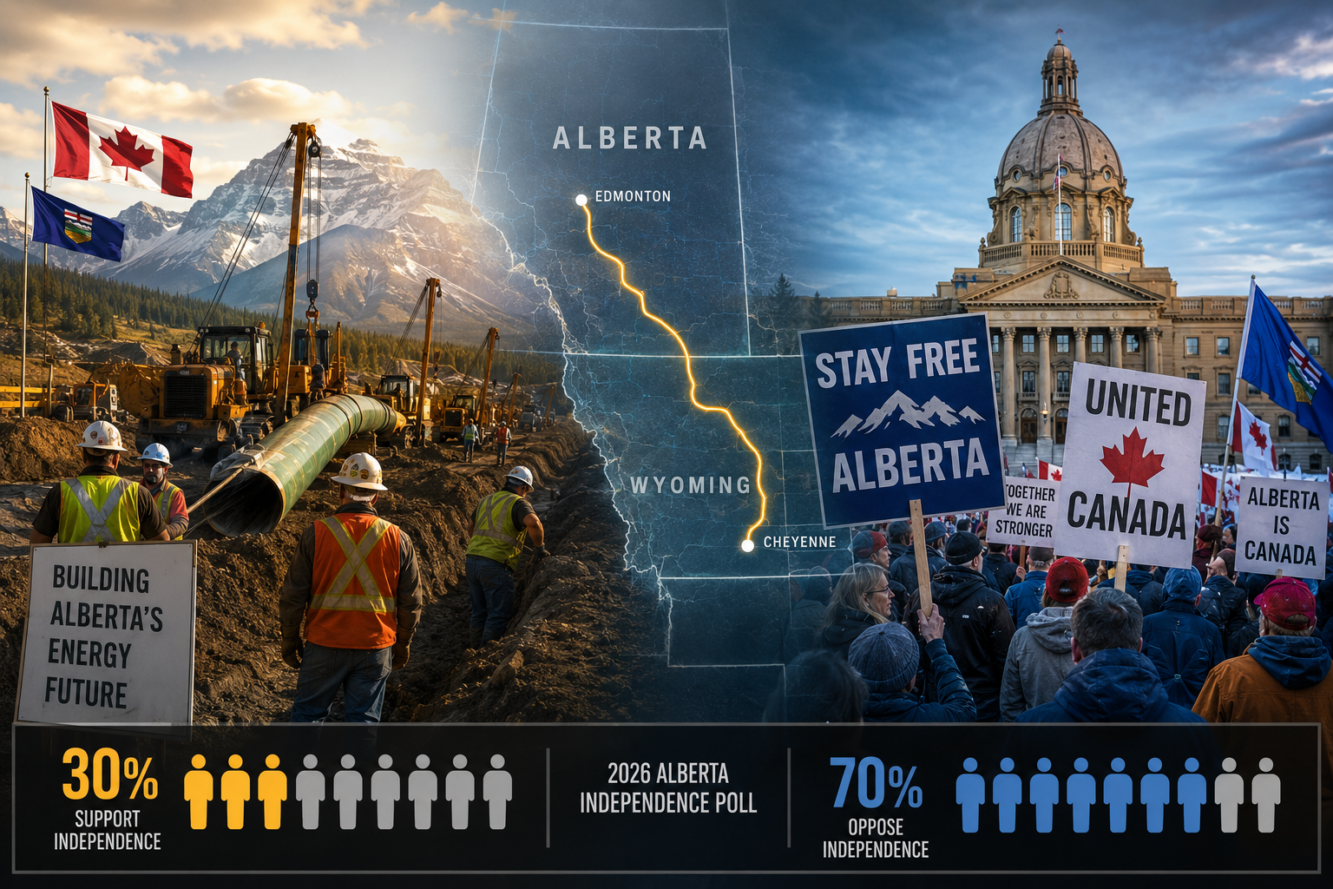
Alberta’s frustration with the federal government is not new. For decades, many Albertans have argued that Ottawa takes too much in taxes and resource revenues while giving too little back. Federal carbon pricing, pipeline delays, and perceived indifference to the energy sector have deepened the rift.
The group “Stay Free Alberta,” led by organizer Mitch Sylvestre, channeled that frustration into action. By collecting over 302,000 verified names—well above the 178,000 needed (10% of eligible voters)—the movement forced the province to confront the independence question head-on [2][9].
“A lot gets solved when people have a well-paying job.” — Premier Danielle Smith, linking pipeline development to reducing separatist sentiment [4]
However, the path to a referendum is not clear. Justice Shaina Leonard imposed a month-long stay on signature certification in April 2026 following legal challenges from First Nations groups [2]. Indigenous stakeholders argue that any secession process must account for treaty rights and the duty to consult—obligations that predate Canadian confederation itself.
A decision on those challenges was expected in late May, meaning the earliest possible referendum date could be October 2026, potentially coinciding with a broader constitutional referendum on immigration and governance [2].
At the center of the economic argument is a proposed crude oil pipeline developed by South Bow Corp (a Canadian firm) and its U.S. partner Bridger Pipeline. The project is close to securing the minimum commitments from oil companies needed to move forward [9].
| Detail | Information |
|---|---|
| Route | Alberta, Canada → Wyoming, USA |
| Export Impact | Could increase Canada’s crude exports to the U.S. by 12%+ |
| U.S. Permit | Cross-border permit signed by President Trump [9] |
| Federal Application | Alberta “on track” to submit to Major Projects Office by June 2026 [4] |
| Historical Context | Follows Biden’s 2021 revocation of the Keystone XL permit |
The Trump administration’s decision to fast-track the cross-border permit stands in sharp contrast to the Biden-era cancellation of Keystone XL—a wound that still stings in Alberta’s energy communities [9]. Premier Smith has been meeting with federal officials to finalize an energy agreement and submit the pipeline application on schedule [4].
For pipeline supporters, the math is simple: more pipeline capacity means more jobs, higher royalties, and better public services. If Albertans feel economically secure and respected by Ottawa, the argument for separation weakens.
This is where the story gets complicated. The pipeline could cut both ways in the separatist debate.
The pipeline is a double-edged sword: it can either prove that federalism works for Alberta or demonstrate that Alberta’s future lies south of the border.
No analysis of this pipeline project sparks separatist debate—will it calm Alberta tensions or fuel division—is complete without addressing Indigenous perspectives.
First Nations communities hold constitutionally protected treaty rights across Alberta. Any pipeline construction or secession process must navigate these obligations. The judicial stay imposed by Justice Leonard reflects the legal weight of Indigenous concerns [2].
Key considerations include:
The outcome of the late-May legal decision could determine whether the referendum moves forward at all—giving Indigenous voices an outsized role in shaping Alberta’s political future.
Despite the headline-grabbing signature count, public opinion tells a more nuanced story.
| Metric | Figure |
|---|---|
| Signatures for independence referendum | 302,000 [2] |
| Signatures for “United Canada” petition | 430,000+ [2][6] |
| Albertans supporting independence | ~30% [2] |
| Albertans favoring remaining in Canada | ~70% [2] |
The gap is significant. While separatist organizers exceeded the legal threshold, the opposing petition collected even more names. Polling consistently shows that seven in ten Albertans want to remain part of Canada [2][6].
This matters because a referendum is not the same as a successful vote. Even if the ballot question reaches voters in October 2026, current numbers suggest independence would fail—unless economic conditions deteriorate or federal relations collapse further.
Premier Danielle Smith occupies an unusual position. She personally opposes separation but has committed to supporting a referendum if the signatures are verified—a stance that balances democratic principles with political pragmatism [2].
Her strategy appears to rest on three pillars:
Whether this strategy succeeds depends heavily on what happens between now and October 2026.
Alberta’s economy in 2026 remains heavily tied to energy. The proposed pipeline would:
If the pipeline moves forward and delivers on these promises, the economic case for separation weakens considerably. But if federal delays, Indigenous legal challenges, or environmental opposition stall the project, separatist frustration could intensify heading into a potential October vote.
The pipeline project sparks separatist debate—will it calm Alberta tensions or fuel division?—because it sits at the exact intersection of economics, identity, and sovereignty that defines Alberta’s relationship with Canada in 2026.
The evidence suggests the pipeline is more likely to reduce separatist pressure than increase it, but only if three conditions are met:
What to watch next:
For Albertans, Canadians, and international observers alike, the coming months will determine whether a pipeline can hold a country together—or whether it becomes the final argument for tearing one apart. 🇨🇦
[2] Whats Behind The Secessionist Movement In The Canadian Province Alberta – https://www.aljazeera.com/news/2026/5/6/whats-behind-the-secessionist-movement-in-the-canadian-province-alberta
[3] Canada–United States Relations Regarding Alberta Separatism – https://en.wikipedia.org/wiki/Canada%E2%80%93United_States_relations_regarding_Alberta_separatism
[4] Smith Alberta Separatism Pipeline West Block – https://globalnews.ca/news/11841282/smith-alberta-separatism-pipeline-west-block/
[6] Cy8ylqx0zw4o – https://www.bbc.com/news/articles/cy8ylqx0zw4o
[9] Oh Canada Alberta Is Looking To Leave – https://statelinenetworkextra.com/2026/05/05/oh-canada-alberta-is-looking-to-leave/