




















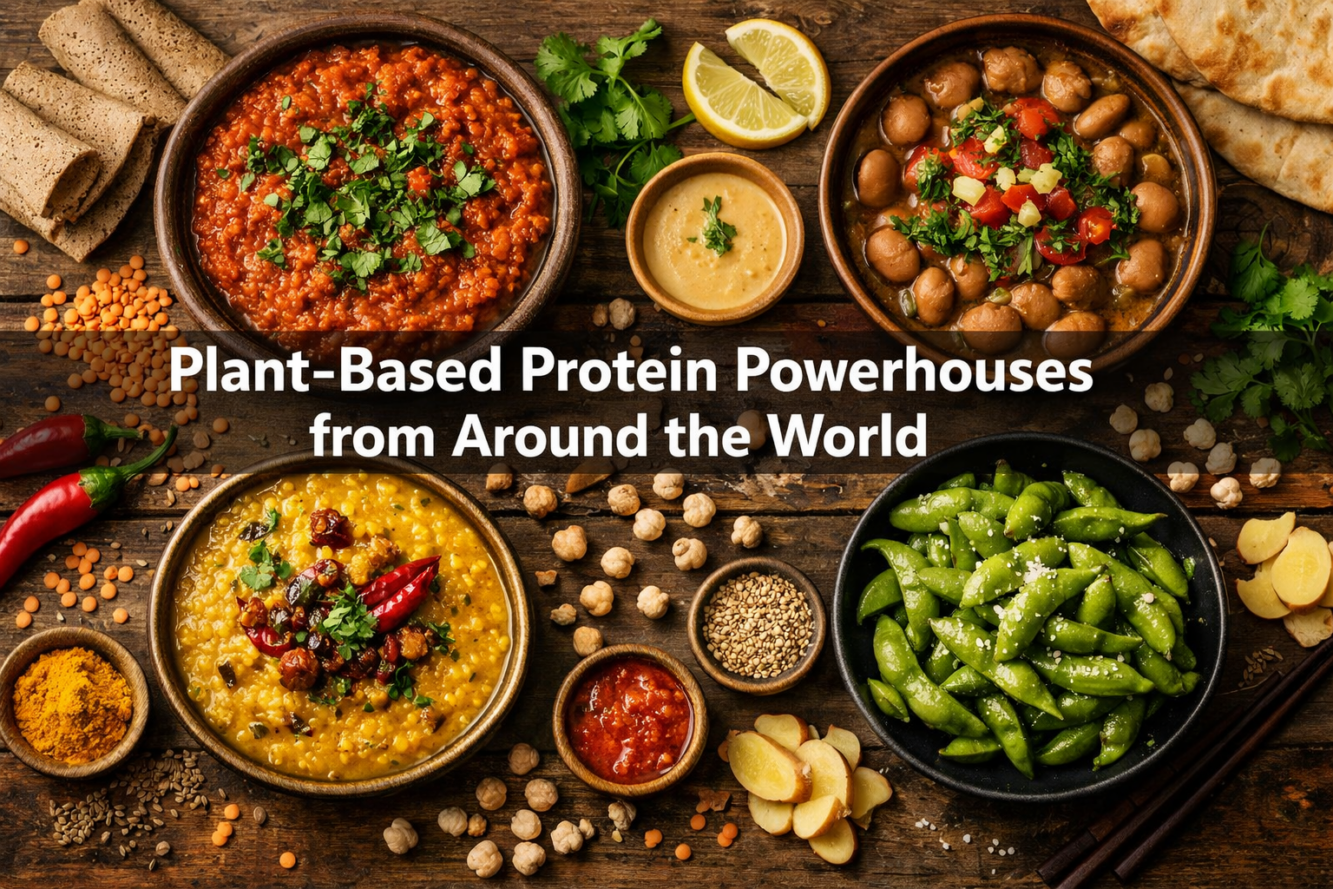
Plant-Based Protein Powerhouses from Around the World: Affordable Legume-Forward International Recipes
What if the world’s most protein-rich meals had nothing to do with meat — and had been hiding in plain sight for centuries? 🌍
From the smoky lentil stews of Ethiopia to the silky chickpea dips of Lebanon and the fermented soybean cakes of Indonesia, global cuisines have long mastered the art of building complete, satisfying meals around legumes. Now, the 2026 US Dietary Guidelines have caught up — and the timing couldn’t be better for anyone exploring plant-based protein powerhouses from around the world: legume-forward international recipes aligned to 2026 dietary guidelines.
Key Takeaways 🌱
- The 2026 Dietary Guidelines raise daily protein targets to 1.2–1.6 g per kilogram of body weight, making legume-rich global cuisines more relevant than ever.
- One cup of cooked lentils delivers 18 grams of protein and 15 grams of fiber with virtually zero saturated fat.
- Combining plant proteins — such as beans and rice — in a single meal provides all essential amino acids the body needs.
- Middle Eastern, African, and Asian cuisines offer dozens of lesser-known legume dishes that are naturally complete-protein meals.
- Prioritizing plant-based proteins over red and processed meats aligns with both the American Heart Association and leading global dietary models.
Why the 2026 Dietary Guidelines Are a Game-Changer for Plant-Based Eaters
The 2026 US Dietary Guidelines represent a significant shift. Daily protein recommendations have jumped to 1.2–1.6 grams per kilogram of body weight — up from the previous 0.8 grams. For a 150-pound (68 kg) person, that means 82–109 grams of protein daily.
Critically, the guidelines explicitly recommend beans, peas, lentils, nuts, seeds, and soy as priority protein sources over red and processed meats. The American Heart Association reinforces this, urging consumers to prioritize plant-based proteins and limit saturated fats to just 6% of daily calories.
💬 “Protein needs are best determined by a healthcare provider or registered dietitian, as consuming excess protein can still be converted to fat.” — Harvard Nutrition Source
Finland’s 2024 dietary guidelines go even further, setting a specific daily legume target of 50–100 grams and recognizing legumes as beneficial for both human health and the planet. Mexico’s guidelines classify meat and dairy together as just 10% of recommended total intake — a powerful signal that plant-forward eating is a global trend, not a niche preference.
If you’re also thinking about where your food comes from, exploring how industries have historically downplayed environmental harm offers important context for why food system shifts matter today.
Global Legume Dishes That Deliver Complete Proteins
Most plant proteins are not “complete” on their own — meaning they don’t contain all nine essential amino acids. But combining sources in one meal solves this entirely. The good news? Traditional cuisines around the world figured this out long before modern nutrition science did.
🌿 Middle Eastern Marvels
Ful Medames (Egypt & Levant) — Slow-cooked fava beans mashed with garlic, lemon, and olive oil. Served with flatbread, this dish becomes a complete protein meal and has fueled Egyptians for thousands of years.
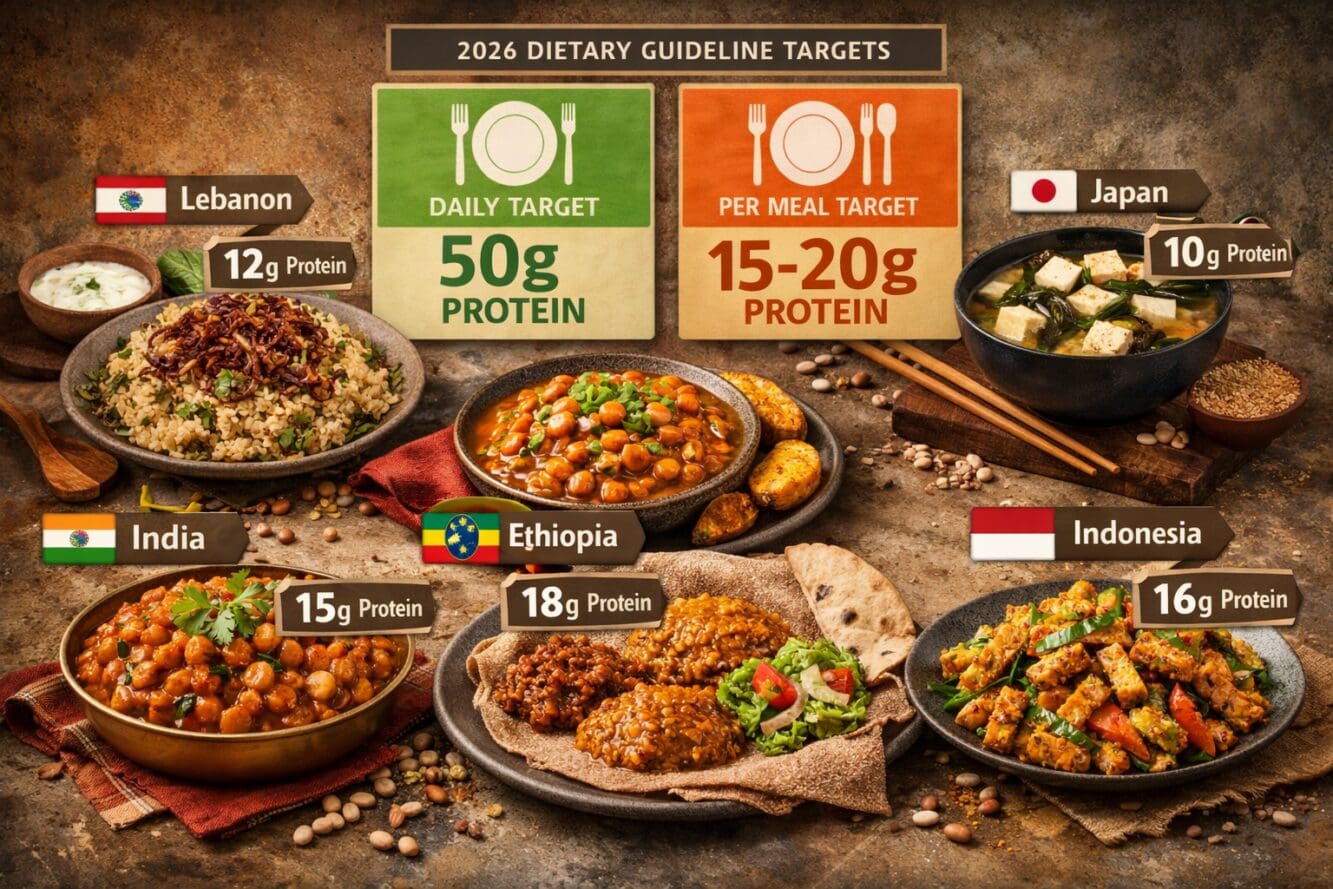
Mujaddara (Lebanon/Syria) — Lentils and rice cooked together and topped with crispy caramelized onions. This pairing is a textbook example of complementary proteins delivering all essential amino acids in one bowl. A single serving provides roughly 15–18 grams of protein.
Hummus bi Tahini — Beyond the grocery store staple, traditional hummus made with whole chickpeas, tahini (sesame paste), and lemon is a protein and calcium powerhouse. The ProVeg Food Plate model recommends filling one quarter of every plate with exactly these kinds of legume-based foods.
🌍 African Protein Traditions
Misir Wat (Ethiopia) — A deeply spiced red lentil stew cooked with berbere spice blend, served on injera flatbread. The lentil-grain combination provides complete amino acids and extraordinary flavor. Lentils here do the heavy lifting: 18 grams of protein per cooked cup with virtually no saturated fat.
Black-Eyed Pea Stew (West Africa / Akara) — Black-eyed peas are blended into fritters or simmered in tomato-based stews across Nigeria, Ghana, and Senegal. Rich in folate, iron, and plant protein, these dishes align perfectly with 2026 dietary protein targets.
Nyama na Irio (Kenya) — A mashed combination of peas, corn, and potatoes. The pea base contributes meaningful protein while the starch provides sustained energy — a budget-friendly, nutrient-dense meal.
🍜 Asian Legume Legends
Tempeh Stir-Fry (Indonesia) — Fermented soybeans pressed into firm cakes, tempeh contains up to 21 grams of protein per 100 grams and is a complete protein on its own. Fermentation also improves digestibility and adds beneficial probiotics.
Dal Tadka (India) — Yellow lentils tempered with mustard seeds, cumin, and turmeric. India’s vast dal tradition spans dozens of regional variations, all built around legumes as the primary protein source.
Edamame & Miso Soup (Japan) — Whole soybeans (edamame) and miso (fermented soybean paste) both deliver complete proteins. Japan’s plant-forward culinary tradition has long supported longevity and low rates of chronic disease.
Curious about how global food culture intersects with sustainability? Check out this creamy roasted cauliflower soup recipe for another plant-forward kitchen inspiration.
Practical Tips: Building a Legume-Forward Plate 🥗
| Legume | Protein (per cooked cup) | Best Paired With | Global Cuisine |
|---|---|---|---|
| Lentils | 18g | Rice, flatbread | Ethiopian, Indian |
| Chickpeas | 15g | Tahini, whole grains | Middle Eastern |
| Black-eyed peas | 13g | Tomato stew, corn | West African |
| Tempeh (100g) | 21g | Stir-fry vegetables | Indonesian |
| Edamame | 17g | Miso soup, rice | Japanese |
Quick wins for hitting 2026 protein targets:
- 🫘 Add a half-cup of lentils to soups, grain bowls, or salads
- 🧆 Swap meat in tacos with spiced black beans or chickpeas
- 🥙 Use hummus as a protein-rich spread instead of butter or mayo
- 🍱 Batch-cook dal or misir wat — both freeze beautifully
USDA-funded researchers are actively exploring how to mix lentils or beans with less meat to meet the new protein guidelines affordably — validating what global cuisines have practiced for generations.
For those growing their own ingredients, avoiding common raised bed garden mistakes can help you cultivate fresh legumes and vegetables at home. And if you’re sourcing local produce, the Collingwood Downtown Farmers Market is a great place to find seasonal ingredients that complement plant-forward cooking.
For those thinking about the bigger picture of food and environmental choices, voting in a time of climate chaos explores how individual and collective decisions shape the food system we all depend on.
Conclusion: Eat Globally, Nourish Powerfully ✅
The world’s kitchens have always known what nutrition science is now confirming: legumes are among the most powerful, affordable, and sustainable protein sources on the planet. The plant-based protein powerhouses from around the world — legume-forward international recipes aligned to 2026 dietary guidelines — aren’t trend foods. They are ancient, tested, and delicious.
Actionable next steps:
- This week: Try one new legume dish — start with mujaddara or misir wat.
- This month: Audit your weekly meals and aim for legumes at least 4–5 times per week.
- Ongoing: Consult a registered dietitian to personalize protein targets based on the 2026 guidelines.
- Explore: Visit local farmers markets and international grocery stores for authentic legume ingredients.
The 2026 guidelines have opened the door. Global cuisines are ready to walk through it. 🌱
Content, illustrations, and third-party video appearing on GEORGIANBAYNEWS.COM may be generated or curated with AI assistance or reproduced pursuant to the fair dealing provisions of the Copyright Act, R.S.C. 1985, c. C-42. Attribution and hyperlinks to original sources are provided in acknowledgment of applicable intellectual property rights. Such referencing is intended to direct traffic to and support the original rights holders’ platforms.