






















Shorter Season Vegetables for Unpredictable Canadian Summers: Quick-Maturing Peppers, Eggplants, and Early Greens for 2026

Sharing is SO MUCH APPRECIATED!


Last updated: March 12, 2026
Quick Answer: Canadian gardeners dealing with unpredictable summers need vegetables that mature in 45–75 days. For 2026, focus on ultra-fast pepper and eggplant varieties started indoors early, combined with cold-tolerant greens like spinach, kale, and lettuce planted outdoors in late April. This strategy gives you harvests before early frosts or sudden heat waves cut the season short.
Key Takeaways
- 🌶️ Peppers and eggplants need warm soil (above 18°C) — plant transplants in early June, not immediately after last frost [1]
- 🥬 Cold-season greens (spinach, kale, lettuce, peas) can go in the ground as early as late April in most Canadian regions [1]
- ⏱️ Choose varieties that mature in 45–60 days to beat early frosts and erratic heat
- 🇨🇦 Canadian hardiness zones 0–9 determine which quick-maturing varieties will actually work in your area
- 🌧️ Unpredictable weather in 2026 makes variety selection more critical than ever — check regional planting charts before buying seeds
- 🌱 Starting peppers and eggplants 8–10 weeks indoors before transplant date is essential for short-season success
- 📅 Regional planting guides from sources like West Coast Seeds cover BC, Prairies, Ontario, and Quebec with zone-specific timing [1]
- 🏡 Row covers and cold frames can extend the effective growing season by 2–4 weeks on either end
Why Short-Season Varieties Matter for Canadian Gardens in 2026
Canadian summers are getting harder to predict. A late frost in May, a dry spell in July, or an early cold snap in August can wipe out a full season’s work. Shorter season vegetables for unpredictable Canadian summers solve this by compressing the time between planting and harvest, reducing the window where weather can cause damage.
For 2026, gardeners across Ontario, Quebec, the Prairies, and BC should prioritize varieties with days-to-maturity ratings of 45–75 days. This applies especially to heat-loving crops like peppers and eggplants, which need every warm day they can get.
When Should Peppers and Eggplants Be Planted in Canada?
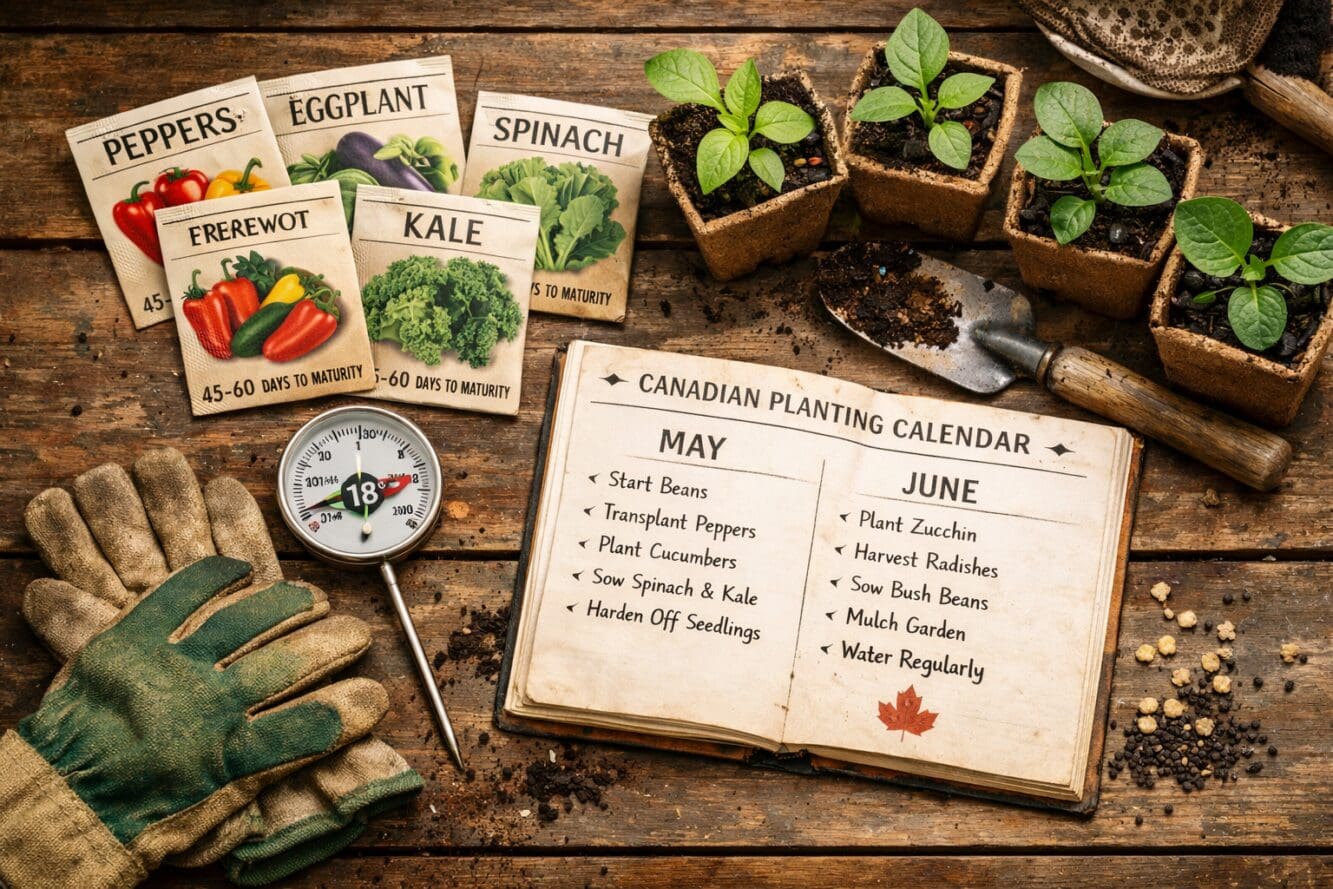
Plant pepper and eggplant transplants in early June for most Canadian regions with a late-May last frost date — not immediately after frost risk passes. Cold, wet soil following the frost date can stress or kill these warm-season crops. Soil temperature should be consistently above 18°C before transplanting [1].
Recommended indoor start dates by transplant target:
| Region | Last Frost (Est.) | Start Indoors | Transplant Outdoors |
|---|---|---|---|
| Southern Ontario | May 15–25 | Early March | Early June |
| Quebec (Montreal area) | May 20–30 | Mid-March | Early June |
| BC Lower Mainland | March 15–April 1 | Mid-January | Mid-April |
| Prairie provinces | May 25–June 1 | Late March | Early June |
Common mistake: Many gardeners transplant peppers the moment frost risk is gone. A cold, rainy week after transplanting can set plants back by 2–3 weeks — or kill them outright. Wait for settled, warm weather [1].
Which Pepper Varieties Mature Fastest for Short Canadian Seasons?
Choose pepper varieties rated at 60–70 days to maturity for the best results in short Canadian summers. Standard bell peppers often need 75–90 days and are a risky bet north of Zone 6. Smaller-fruited types consistently outperform them.
Best bets for 2026:
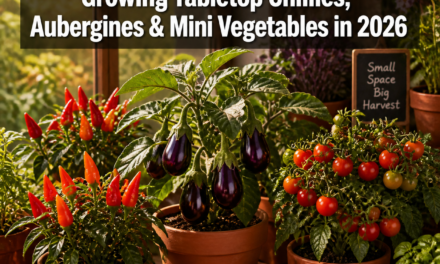
- Earliest Red Sweet (60 days) — compact plant, reliable in cooler summers
- Gypsy (65 days) — pale yellow to red, very productive
- Lipstick (53 days) — sweet pimento type, one of the fastest available
- Jalapeno M (70 days) — hot pepper that handles cooler nights better than most
Decision rule: Choose Lipstick or Earliest Red Sweet if your season is under 100 frost-free days. Use Gypsy or Jalapeno M if you’re in Zone 5 or warmer with a reliable June–August window.
Which Eggplant Varieties Work Best in Unpredictable Canadian Summers?
Eggplants are the trickiest warm-season crop for Canadian gardeners — but short-season varieties like Ichiban and Hansel can succeed in Zone 5 and warmer with the right timing. Standard globe eggplants need 80+ days and rarely perform well north of Zone 6 without a greenhouse.
Short-season eggplant options:
- Ichiban (61 days) — long, slender Japanese type; handles cooler nights
- Hansel (55 days) — small, finger-sized fruits; very early and productive
- Orient Express (58 days) — reliable in short seasons, good flavor
Edge case: If your region sees frequent cool August nights (below 12°C), grow eggplants in black plastic mulch or against a south-facing wall to retain heat. Even 2–3°C of extra warmth can make the difference between a full harvest and a disappointing one.
What Early Greens Can Canadian Gardeners Plant Before Summer?
Cold-season greens are the easiest win for Canadian gardeners — spinach, kale, lettuce, peas, and parsley can all go in the ground in late April in most northern regions, weeks before warm-season crops are ready [1].
These crops actually prefer cooler temperatures and will bolt (go to seed) in peak summer heat, so planting them early makes practical sense.
Late April planting list:
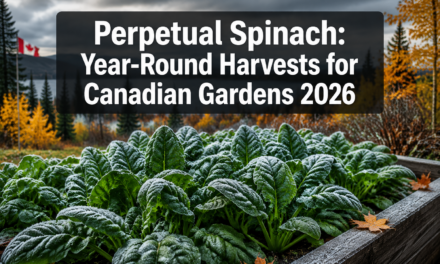
- Spinach (harvest in 40–50 days)
- Leaf lettuce (45–55 days)
- Kale (55–65 days)
- Peas (60–70 days)
- Arugula (30–40 days — the fastest green available)
- Parsley (70–90 days, but cold-tolerant from the start)
Pro tip: Succession-plant lettuce and arugula every 2–3 weeks from late April through June. This gives continuous harvests and avoids the mid-summer glut that leads to bolting.
For gardeners in the Collingwood and Georgian Bay area, understanding local microclimates matters — local environmental initiatives and land use discussions can signal how regional development is affecting growing conditions year over year.
How Do Canadian Hardiness Zones Affect Variety Selection?
Canadian plant hardiness zones range from 0 (coldest, far north) to 9 (warmest, coastal BC), and they directly determine which short-season varieties are realistic choices [1]. Gardeners in Zone 5 or lower face the tightest constraints and should stick to the fastest-maturing varieties available.
Zone-based guidance:
- Zone 3–4 (northern Prairies, northern Ontario): Greens only outdoors; peppers and eggplants need a greenhouse or high tunnel
- Zone 5 (southern Prairies, central Ontario/Quebec): Fastest pepper and eggplant varieties possible (under 65 days); use row covers
- Zone 6 (southern Ontario, parts of BC interior): Most short-season varieties work reliably
- Zone 7–9 (Lower Mainland BC, Vancouver Island): Wider selection; even standard varieties often succeed
Use the Garden.org planting calendar to look up frost dates and recommended planting windows by postal code or region [2].
What Yield-Boosting Tips Apply Specifically to Short Canadian Seasons?
Three practices consistently improve yields for short-season gardeners: starting transplants early indoors, using season-extension tools, and choosing the right planting site. None of these require expensive equipment.
Step-by-step checklist:
- Start peppers and eggplants 8–10 weeks before transplant date — this is non-negotiable for short seasons
- Use black plastic mulch on pepper and eggplant beds to warm soil faster
- Install row covers or cloches for the first 2 weeks after transplanting to protect against cool nights
- Choose a south-facing, sheltered spot — a fence or wall reflecting heat adds measurable warmth
- Water consistently — irregular watering causes blossom drop in peppers, cutting yield significantly
- Pinch early blossoms on eggplants to redirect energy to plant establishment first
Sustainable gardening practices also matter for long-term soil health. Articles on biodiversity and environmental stewardship offer useful context for gardeners thinking beyond a single season.
Where Can Canadian Gardeners Find Reliable Seed Sources in 2026?
For 2026, the most reliable seed sources for short-season Canadian varieties are West Coast Seeds, William Dam Seeds, and OSC Seeds — all Canadian companies with regionally tested selections [1]. Ordering early (January–February) is important because fast-maturing varieties sell out quickly.
Recommended sources:
- West Coast Seeds — regional planting charts available by province; strong selection for BC and Prairies [1]
- William Dam Seeds — Ontario-based; excellent short-season pepper and eggplant trials
- OSC Seeds — widely available at Canadian garden centers; good for last-minute purchases
- Garden.org planting calendar — free tool to cross-reference variety timing with local frost dates [2]
Also check seed catalogs released in early 2026 for newly trialed quick-maturing varieties, as breeders continue to release faster-maturing cultivars each year.
Conclusion: Make 2026 Your Most Productive Short-Season Garden Yet
Shorter season vegetables for unpredictable Canadian summers are not a compromise — they’re a strategy. By selecting ultra-fast varieties, timing transplants correctly, and pairing warm-season crops with cold-tolerant greens, Canadian gardeners can build a productive, resilient garden even when the weather refuses to cooperate.
Actionable next steps for 2026:
- Identify your hardiness zone and local frost dates using the Garden.org calendar [2]
- Order seeds by February — Lipstick pepper, Hansel eggplant, and arugula are top picks
- Start peppers and eggplants indoors in early March for a June transplant
- Plant greens outdoors in late April to get harvests rolling before summer heat arrives [1]
- Use row covers and black mulch to extend the effective season on both ends
- Check West Coast Seeds’ regional planting charts for your province before finalizing your plan [1]
With the right varieties and a clear timeline, a short, unpredictable Canadian summer becomes manageable — and often surprisingly productive.
FAQ
Q: Can peppers really grow in Canadian summers?
Yes — with the right variety and timing. Short-season peppers like Lipstick (53 days) and Earliest Red Sweet (60 days) succeed in Zone 5 and warmer when started indoors 8–10 weeks early and transplanted in early June.
Q: What is the fastest vegetable to grow in Canada?
Arugula matures in 30–40 days and is the fastest option for most Canadian gardeners. Radishes are comparable. Among warm-season crops, Hansel eggplant (55 days) and Lipstick pepper (53 days) are among the quickest.
Q: When should I start pepper seeds indoors in Canada?
For a June transplant date, start pepper seeds indoors in early-to-mid March. Peppers need 8–10 weeks of indoor growth before they’re ready for outdoor conditions [1].
Q: What greens can I plant in April in Canada?
Spinach, leaf lettuce, arugula, kale, peas, and parsley are all cold-tolerant enough to plant in late April across most Canadian regions [1].
Q: Is eggplant worth growing in Canada?
In Zone 5 and warmer, yes — if you choose fast-maturing varieties like Hansel or Ichiban and use season-extension tools. In Zone 3–4, eggplant is only practical in a greenhouse.
Q: How do I know my Canadian hardiness zone?
Agriculture and Agri-Food Canada publishes official hardiness zone maps. Most Canadian gardening websites also include zone lookup tools by postal code.
Q: What soil temperature do peppers need before transplanting?
Soil should be consistently above 18°C before transplanting peppers or eggplants. Planting into cold soil stresses plants and can cause significant setbacks [1].
Q: Can I grow peppers in containers in Canada?
Yes — containers warm up faster than garden beds and can be moved indoors during cold snaps. Use a minimum 12-litre container per plant and a dark-colored pot to absorb heat.
Q: What’s the biggest mistake Canadian gardeners make with warm-season vegetables?
Transplanting too early. Planting peppers and eggplants immediately after the last frost date — rather than waiting for consistently warm soil — is the most common cause of poor yields [1].
Q: Where can I find a planting calendar specific to my Canadian region?
The Garden.org planting calendar and West Coast Seeds’ regional planting charts both offer region-specific guidance for Canadian gardeners [1][2].
References
[1] Regional Planting Charts – https://www.westcoastseeds.com/blogs/regional-planting-charts
[2] Calendar – https://garden.org/apps/calendar/?q=Ontario
Content, illustrations, and third-party video appearing on GEORGIANBAYNEWS.COM may be generated or curated with AI assistance or reproduced pursuant to the fair dealing provisions of the Copyright Act, R.S.C. 1985, c. C-42. Attribution and hyperlinks to original sources are provided in acknowledgment of applicable intellectual property rights. Such referencing is intended to direct traffic to and support the original rights holders’ platforms.
Sharing is SO MUCH APPRECIATED!