

























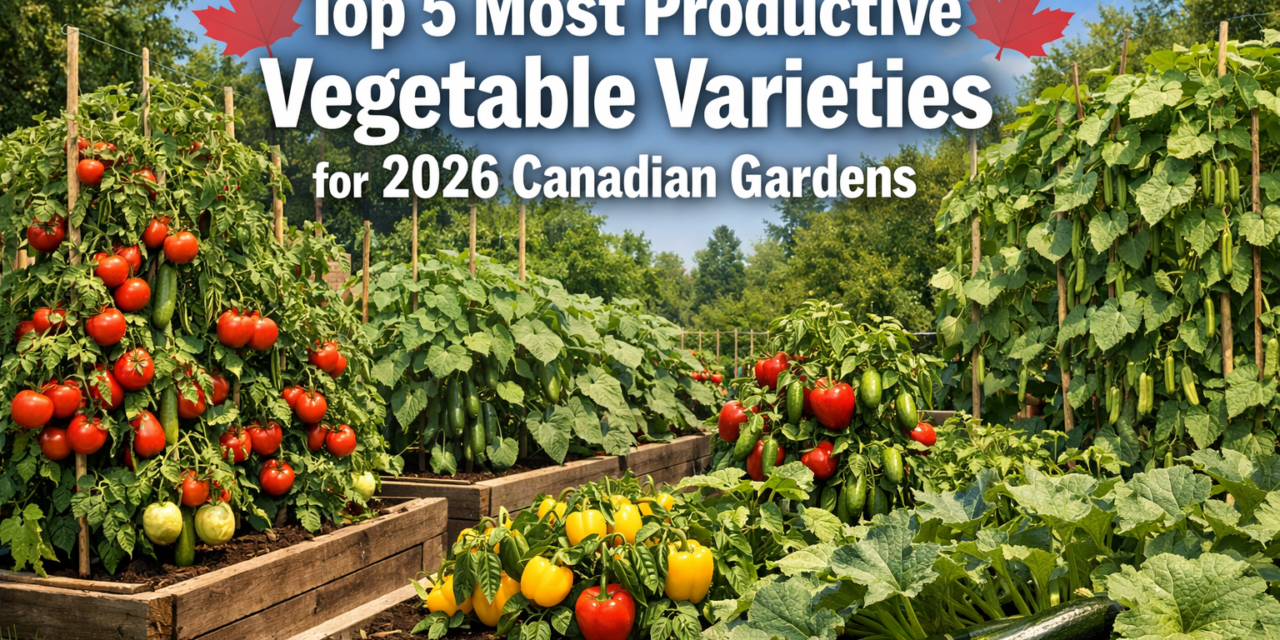
Top 5 Most Productive Vegetable Varieties for 2026 Canadian Gardens: Tested Winners for Heat, Disease, and High Yields

Last updated: April 5, 2026
Quick Answer
The top 5 most productive vegetable varieties for 2026 Canadian gardens — tested for heat tolerance, disease resistance, and consistent yields — are Brandy Boy tomato, Merlin cucumber, Red Impact sweet pepper, Sanabria zucchini, and Garden Salsa hot pepper. These varieties were identified after testing hundreds of options across North American growing conditions, including climates that closely mirror Canada’s short, sometimes unpredictable summers. [1][2]
Key Takeaways 🌱
- Brandy Boy tomato delivers reliable harvests even in hot, humid, and wet Canadian summers — a common challenge from Ontario to B.C.
- Merlin cucumber was selected from hundreds of tested varieties for productivity, disease resistance, and flavor. [2]
- Red Impact sweet pepper (hybrid) performs strongly in challenging growing conditions, including cool starts and heat spikes. [2]
- Sanabria zucchini produces compact, manageable vines with high fruit output — ideal for smaller Canadian garden plots.
- Garden Salsa hot pepper is early-maturing and prolific, making it well-suited to Canada’s shorter growing season.
- All five varieties are available through major Canadian seed suppliers and online retailers.
- 2026 AAS (All-America Selections) award winners were tested across 80+ North American trial sites for flavor, yield, and disease resistance. [1]
- Container growing works well for peppers and compact eggplant varieties if garden space is limited.
- Starting seeds indoors 6–8 weeks before last frost is critical for peppers and tomatoes in most Canadian zones.
- Pairing high-yield varieties with good soil preparation and consistent watering dramatically improves results.
Why These 5 Varieties Stand Out for Canadian Growers
Canadian gardeners face a specific set of challenges: short frost-free windows, unpredictable summer heat, and persistent disease pressure from humidity. The top 5 most productive vegetable varieties for 2026 Canadian gardens were selected because they performed well under exactly these conditions — not just in ideal test plots, but in real-world trials across North America. [2]
Choosing the wrong variety can mean a full season of effort with disappointing results. Choosing the right one can mean harvesting armloads of produce from a modest raised bed.

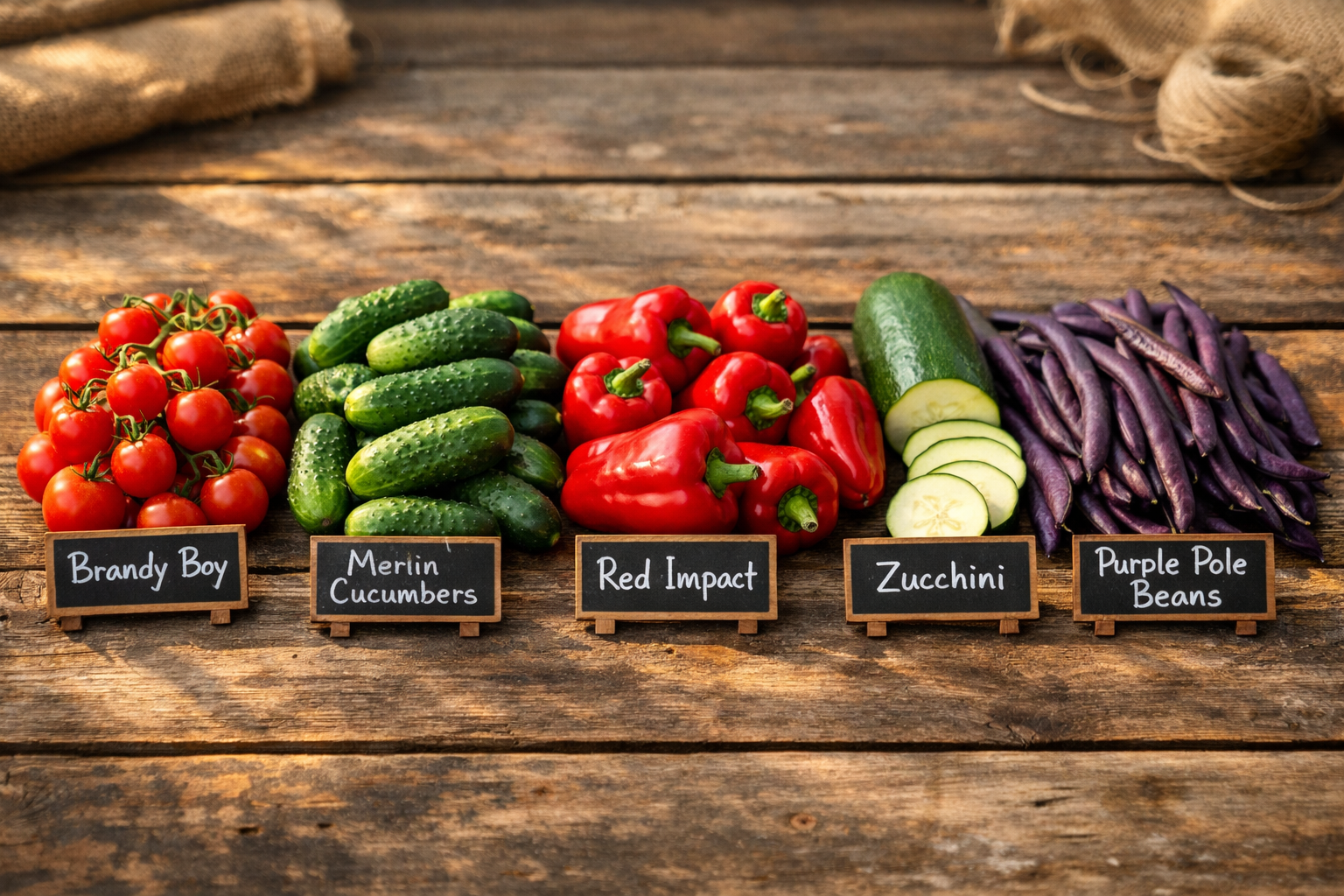
The Top 5 Most Productive Vegetable Varieties for 2026 Canadian Gardens: Tested Winners for Heat, Disease, and High Yields
Here is a closer look at each variety, why it was selected, and how to grow it successfully in a Canadian garden.
1. 🍅 Brandy Boy Tomato — Best for Humid, Wet Summers
Brandy Boy ranks among the most productive tomatoes tested for 2026, specifically because it holds up in hot, humid, and wet summer conditions — the kind that rot lesser varieties from the inside out. [2]
- Type: Hybrid beefsteak-style tomato
- Key strength: Reliable performance when weather turns unpredictable
- Best for: Ontario, Quebec, and B.C. gardeners dealing with humid July–August periods
- Growing tip: Start indoors 6–8 weeks before last frost. Stake or cage plants early — vines get heavy with fruit.
Choose Brandy Boy if your summers tend to swing between dry heat spells and rainy stretches. It handles both better than most heirloom types.
2. 🥒 Merlin Cucumber — High Yield, Disease-Resistant
Merlin cucumber was identified after testing hundreds of vegetable varieties for productivity, disease resistance, heat tolerance, and flavor. It earned its place on this list by outperforming competitors across all four criteria. [2]
- Type: Slicing cucumber (hybrid)
- Key strength: Consistent production even under disease pressure
- Best for: All Canadian growing zones with a trellis or vertical support
- Growing tip: Cucumbers need warm soil (above 18°C) to germinate well. Use black plastic mulch to warm beds early in northern zones.
Common mistake: Planting too early in cold soil stalls growth and invites disease. Wait until two weeks after last frost.
3. 🫑 Red Impact Sweet Pepper — Strong in Challenging Conditions
Red Impact (hybrid) ranks among the five most productive pepper varieties for 2026 and shows strong performance even when growing conditions are far from ideal. [2]
- Type: Sweet bell-style pepper (hybrid)
- Key strength: Performs well through cool starts and heat spikes
- Best for: Raised beds and containers in zones 5–8
- Growing tip: Start seeds indoors 8–10 weeks before last frost. Peppers are slow starters — patience pays off.
| Feature | Red Impact | Standard Bell Pepper |
|---|---|---|
| Heat tolerance | High | Moderate |
| Disease resistance | Strong | Variable |
| Days to maturity | ~70 days | 75–85 days |
| Container-friendly | Yes | Partially |
4. 🥒 Sanabria Zucchini — Compact Vines, Big Output
Sanabria zucchini is a standout for Canadian gardeners with limited space. Its compact vines produce a high volume of fruit without sprawling across the entire garden bed.
- Type: Bush-type zucchini
- Key strength: Space-efficient with excellent fruit set
- Best for: Small urban gardens, raised beds, and community plots
- Growing tip: Direct sow after last frost or start indoors 3–4 weeks early. Harvest fruits at 15–20 cm for best flavor and to encourage continued production.
Edge case: In very short-season zones (zone 3–4), starting Sanabria indoors gives it the head start it needs to produce before fall frost.
5. 🌶️ Garden Salsa Hot Pepper — Early, Prolific, and Drought-Tolerant
Garden Salsa is an early-maturing hot pepper that produces heavily throughout the season. It’s well-suited to Canada’s shorter growing windows and handles dry spells without dropping fruit.
- Type: Hot pepper (open-pollinated)
- Key strength: Early maturity, high fruit count, drought tolerance
- Best for: All Canadian zones; excellent in containers and raised beds
- Growing tip: Start indoors 10 weeks before last frost. Peppers started early in Canada consistently outperform late-started plants.
For gardeners in the Collingwood and Georgian Bay area looking for locally sourced plants to complement these varieties, the Collingwood Garden Club Plant Sale at Trinity Church is a great seasonal resource.
How to Get the Most from These Varieties in a Canadian Garden
Even the best varieties underperform without proper setup. Here are the key steps that make the biggest difference:
- Amend soil before planting. Add compost to raise organic matter — all five varieties respond well to rich, well-draining soil.
- Use row covers early in the season. Extend the effective growing season by 2–3 weeks in zones 4–6.
- Water consistently. Inconsistent watering causes blossom end rot in tomatoes and peppers and bitter cucumbers.
- Mulch heavily. Keeps soil moisture stable and suppresses weeds that compete for nutrients.
- Scout for pests weekly. Early detection of aphids, cucumber beetles, and squash vine borers prevents crop loss.
If you’re thinking about the environmental side of Canadian gardening, it’s worth reading about how fossil fuel use affects local growing conditions — a factor increasingly relevant to season planning across Canada.
Where to Source Seeds for Canadian Gardens in 2026
Most of these varieties are available through:
- West Coast Seeds (B.C.-based, ships across Canada)
- Veseys Seeds (P.E.I.-based, excellent for short-season varieties)
- Seed Savers Exchange (ships to Canada; strong source for open-pollinated types) [3]
- Local garden clubs and plant sales — check community events like the Collingwood Garden Club Plant Sale for regionally tested starts
FAQ: Top Vegetable Varieties for Canadian Gardens 2026
Q: Are these varieties available at Canadian garden centres?
Most are available through major seed suppliers that ship to Canada. Availability at local garden centres varies by region — ordering seeds in February or March ensures the best selection.
Q: Which variety is best for a first-time Canadian gardener?
Merlin cucumber and Sanabria zucchini are the easiest to grow. Both germinate reliably, produce quickly, and tolerate minor care mistakes better than tomatoes or peppers.
Q: Can these vegetables grow in containers?
Yes. Red Impact pepper, Garden Salsa hot pepper, and Sanabria zucchini all perform well in large containers (minimum 20L). Tomatoes need at least a 40L container for good yields.
Q: What Canadian hardiness zones do these varieties suit?
All five work in zones 5–8 with standard care. Zones 3–4 gardeners can succeed with row covers, indoor starts, and cold-hardy soil prep.
Q: Are any of these varieties organic or open-pollinated?
Garden Salsa hot pepper is open-pollinated, meaning seeds can be saved year to year. Brandy Boy, Merlin, and Red Impact are hybrids — seeds saved from hybrids won’t breed true.
Q: How do 2026 AAS winners compare to these top producers?
2026 AAS winners like ‘Rubybor’ kale and ‘Butter Lamp’ squash were tested across 80+ North American sites for yield and disease resistance [1] and are excellent additions alongside the top 5 listed here. They complement rather than replace the core five.
Q: When should Canadian gardeners start seeds indoors?
Tomatoes and peppers: 8–10 weeks before last frost. Cucumbers and zucchini: 3–4 weeks before last frost. Check local frost date maps for your specific zone.
Q: Is Brandy Boy a good choice for Quebec gardens?
Yes. Brandy Boy’s tolerance for humid, wet conditions makes it particularly well-suited to Quebec summers, which can be warm and rainy from July onward.
Conclusion: Actionable Next Steps for Your 2026 Canadian Garden
The top 5 most productive vegetable varieties for 2026 Canadian gardens — Brandy Boy tomato, Merlin cucumber, Red Impact sweet pepper, Sanabria zucchini, and Garden Salsa hot pepper — give Canadian growers a proven, tested lineup built for real conditions, not ideal ones.
Here’s what to do now:
- Order seeds immediately if you haven’t already — popular varieties sell out by late February.
- Map your frost dates using Agriculture Canada’s zone data and count back to set your indoor start schedule.
- Prepare beds now with compost and mulch so soil is ready when planting time arrives.
- Consider one AAS winner like ‘Butter Lamp’ squash or ‘Rubybor’ kale alongside the core five to diversify your harvest. [1][4]
- Connect locally — plant sales like the Collingwood Garden Club event at Trinity Church are excellent for finding regionally tested starts and getting advice from experienced local growers.
A well-chosen variety list is the single highest-leverage decision a Canadian gardener makes each season. Start with these five and build from there.
References
[1] Best New Vegetables for 2026 AAS Winners – https://www.youtube.com/watch?v=XYNB5moK2_U
[2] The 5 Most Productive Veggies You MUST Grow In 2026 – https://www.youtube.com/watch?v=UQLlEKMTxw0
[3] New Seed Varieties For 2026 – https://seedsavers.org/new-seed-varieties-for-2026/
[4] Seven New Edible Plant Varieties For 2026 – https://www.preen.com/learn/lawn-garden-tips/plants-trees-shrubs/fruits-veggies-herbs/seven-new-edible-plant-varieties-for-2026/
Content, illustrations, and third-party video appearing on GEORGIANBAYNEWS.COM may be generated or curated with AI assistance or reproduced pursuant to the fair dealing provisions of the Copyright Act, R.S.C. 1985, c. C-42. Attribution and hyperlinks to original sources are provided in acknowledgment of applicable intellectual property rights. Such referencing is intended to direct traffic to and support the original rights holders’ platforms.
Much Appreciate You Sharing This Post - It Helps MUCH!!!