
























The 5-Star Spaghetti Aglio e Olio Recipe | GEORGIANBAYNEWS.COM

Last updated: July 4, 2026
Quick Answer
A 5-star spaghetti aglio e olio comes down to four things: high-quality extra virgin olive oil, thinly sliced fresh garlic toasted (never burnt) to golden, starchy pasta water to emulsify the sauce, and correct timing. The whole dish takes about 15 minutes. Watching a step-by-step video helps you nail the garlic color and the emulsion, the two places most home cooks go wrong.

Key Takeaways
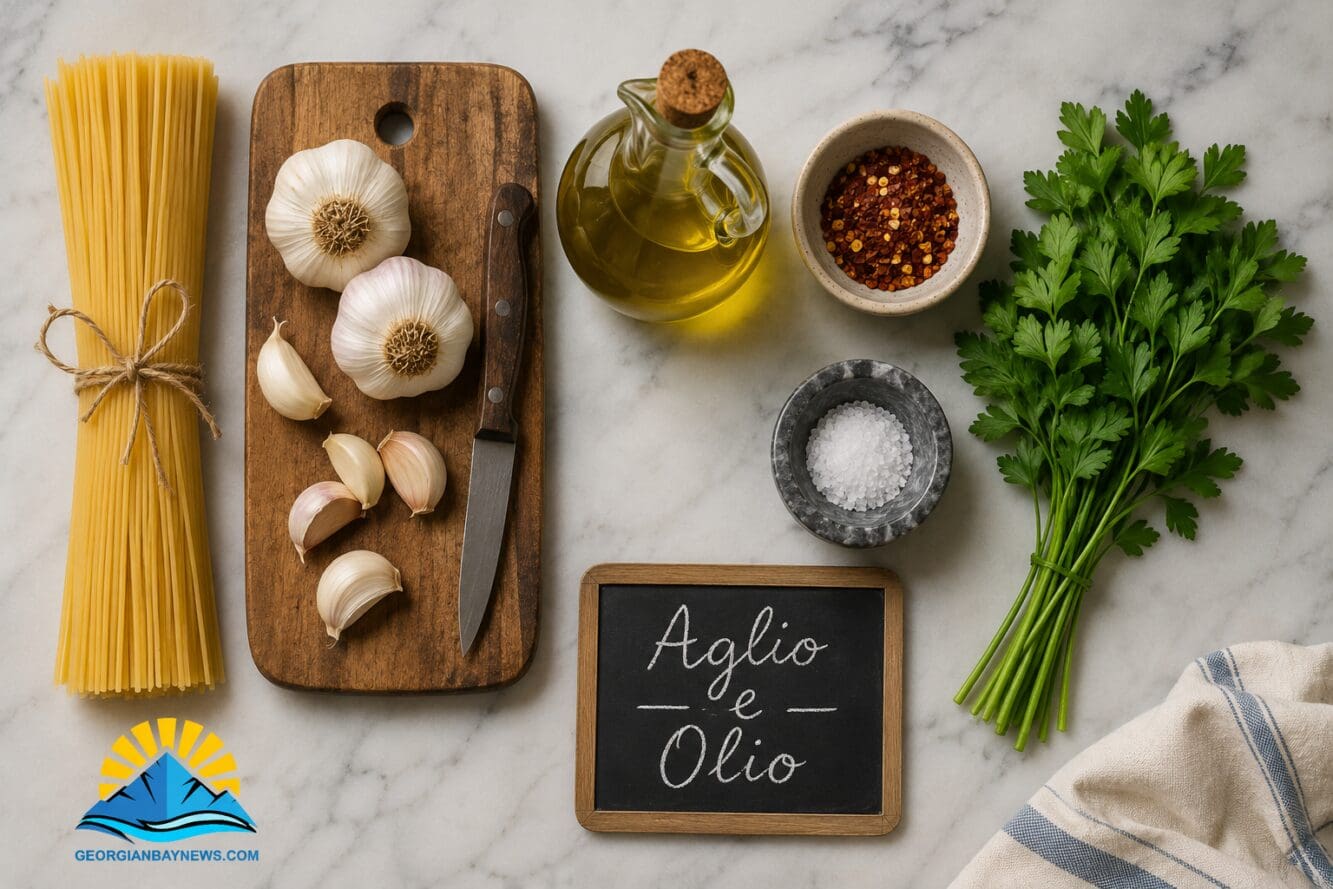
- Aglio e olio means “garlic and oil”, a 4-ingredient Roman-Neapolitan classic.
- Use bronze-die spaghetti and reserve at least 1 cup of pasta water.
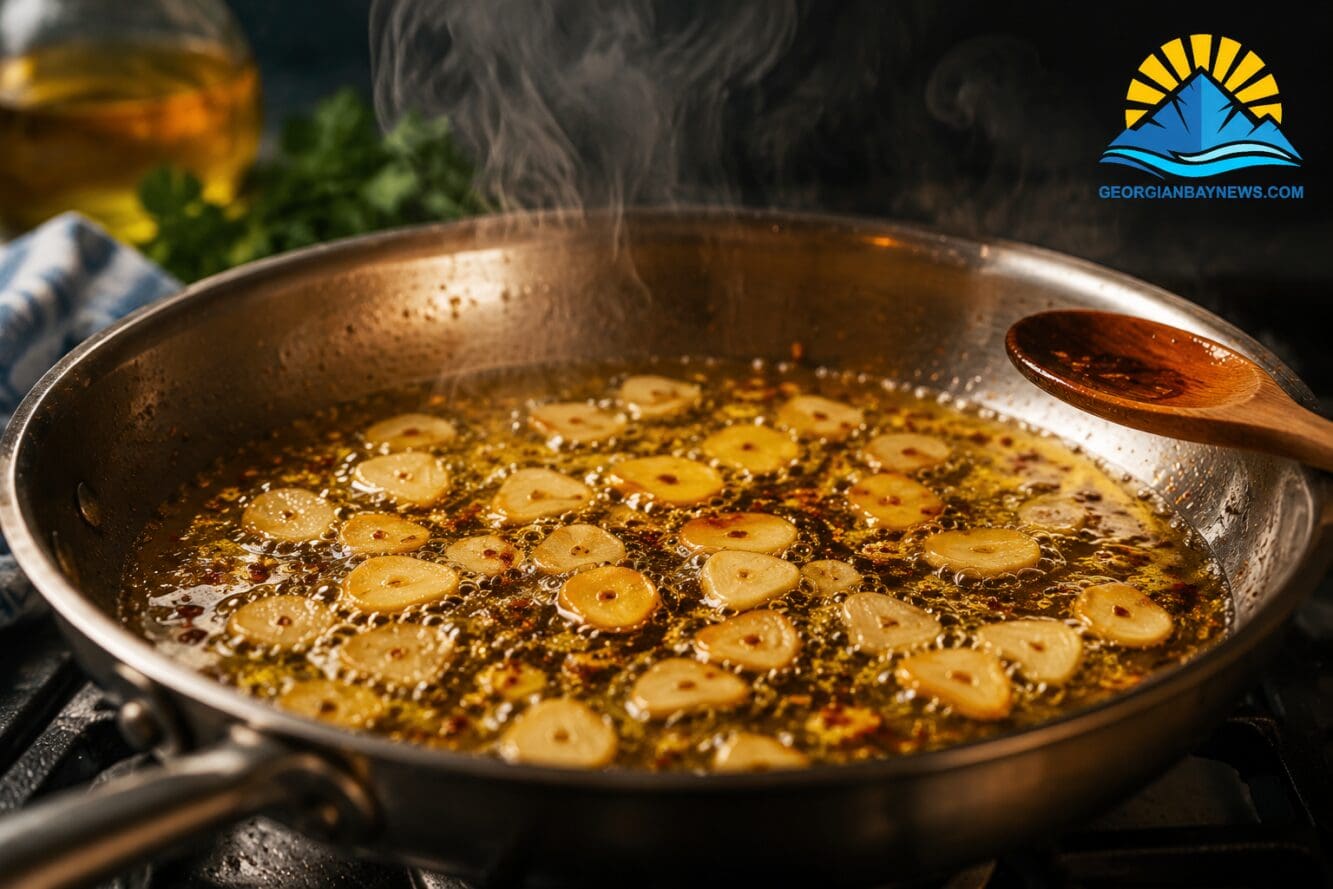
- Slice garlic thin; toast on low heat until pale gold, not brown.
- Emulsify off the heat by tossing pasta, oil, and starchy water vigorously.
- Extra virgin olive oil is essential, this is the main flavor.
- Red pepper flakes add heat; anchovies add depth (optional).
- Video tutorials from Gordon Ramsay and Serious Eats are the most trusted.

What Is Aglio e Olio and Why Is It So Popular?
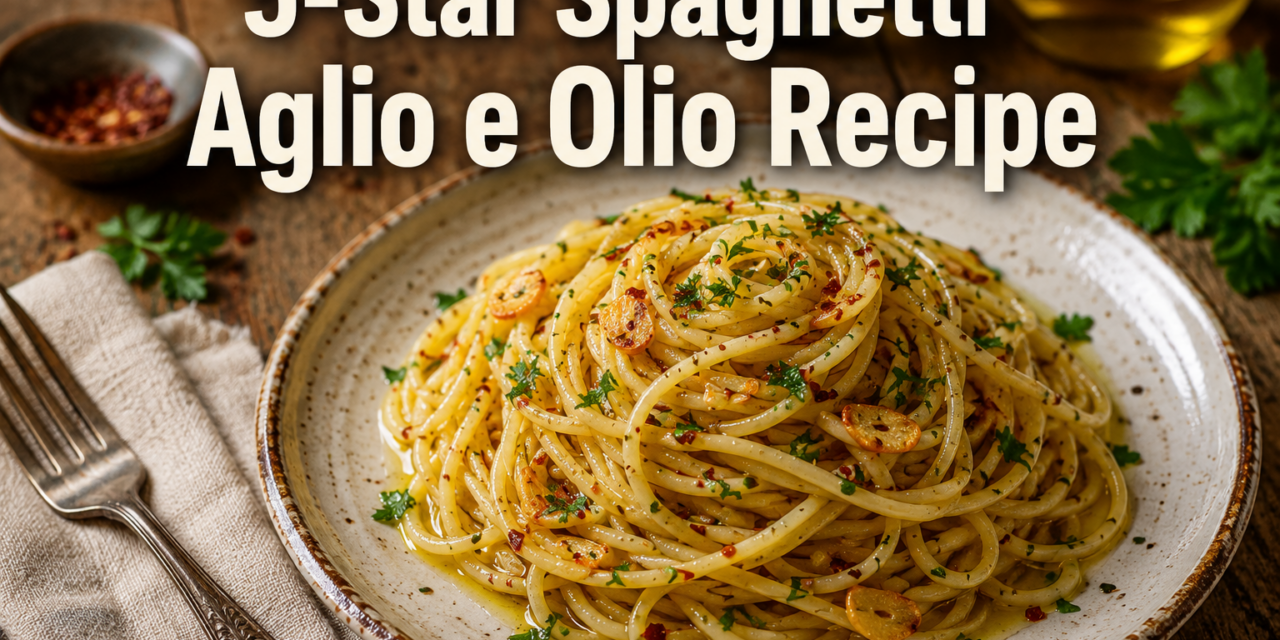
Spaghetti aglio e olio is a Neapolitan pasta dish made with spaghetti, garlic, extra virgin olive oil, red pepper flakes, and parsley. It’s popular because it’s fast (15 minutes), cheap, and uses pantry staples, yet delivers restaurant-level flavor when done correctly. The dish became globally famous after appearing in the 2014 film Chef.
It’s also the ultimate late-night pasta in Italy, often called spaghetti a mezzanotte (midnight spaghetti).
Best Spaghetti Aglio e Olio Recipe: Gordon Ramsay or Serious Eats?
Both are excellent, but they take different approaches. Gordon Ramsay’s version adds parmesan and lemon for brightness. Serious Eats (Daniel Gritzer) sticks closer to tradition, focusing on emulsion technique and no cheese. For purists, Serious Eats wins. For flavor-forward home cooks, Ramsay’s twist is more accessible.
Choose Ramsay if: you want a slightly richer, restaurant-style plate.
Choose Serious Eats if: you want authentic Italian technique.
Video tutorials from both chefs are widely available on YouTube and worth watching before your first attempt.
How to Make Aglio e Olio Taste Restaurant Quality at Home
The secret is the emulsion. Restaurant kitchens toss the pasta hard in a wide pan with oil and starchy water until the sauce turns silky and clings to every strand. Home cooks often skip this step and end up with dry, oily pasta.
Restaurant-quality checklist:
- Salt the pasta water heavily (like the sea).
- Cook spaghetti 1-2 minutes shy of al dente.
- Toast garlic in cold oil, warming it slowly.
- Finish pasta in the pan with pasta water, toss vigorously for 60-90 seconds.
- Kill the heat, then add parsley and a final drizzle of raw olive oil.
Aglio e Olio vs. Cacio e Pepe: What’s the Difference?
Both are Roman minimalist pastas, but the base is different. Aglio e olio uses garlic and olive oil; cacio e pepe uses pecorino romano cheese and black pepper. No cheese goes in traditional aglio e olio, and no oil goes in classic cacio e pepe.
FeatureAglio e OlioCacio e PepeMain fatOlive oilPecorino cheeseHeatRed pepper flakesBlack pepperRegionNaplesRomeCheese?No (traditional)Yes, lots
Can You Use Regular Garlic or Do You Need Fresh Garlic?
Use fresh garlic, always. Pre-minced jarred garlic is packed in acid and loses the sweet, nutty flavor that defines this dish. Fresh cloves, thinly sliced (not crushed), give you the golden color and mellow taste you want.
Powdered or granulated garlic will not work here.
What Type of Spaghetti Works Best?
Bronze-die (trafilato al bronzo) spaghetti is best. The rough surface holds the oil emulsion far better than smooth Teflon-extruded pasta. Look for brands like De Cecco, Rustichella d’Abruzzo, or Setaro.
Spaghetti alternatives that work: linguine, bucatini, spaghettoni (thick spaghetti).
How Much Garlic Should You Use?
Standard ratio: 4-6 cloves per pound of spaghetti (serves 4). Slice thin, roughly the thickness of a coin. If you love garlic, go up to 8 cloves, but never exceed that or it overwhelms the oil.
Aglio e Olio Recipe Without Anchovies: Does It Still Taste Good?
Yes. Traditional Neapolitan aglio e olio doesn’t include anchovies. They’re an American-Italian addition popularized by Rachael Ray and others. Skipping them gives you a cleaner, sharper garlic flavor. Add anchovies only if you want deeper umami.
Why Is My Aglio e Olio Watery or Not Creamy Enough?
The most common failure. Watery aglio e olio means the oil and pasta water didn’t emulsify. Fix it by:
- Using enough starchy pasta water (at least ½ cup per serving).
- Tossing aggressively over medium heat for 60+ seconds.
- Adding pasta water gradually, not all at once.
- Cooking pasta in less water so the starch is more concentrated.
The finished sauce should look glossy and cling to the noodles, not pool at the bottom of the plate.
Aglio e Olio Cooking Time: How Long Should It Really Take?
Total time: 12-15 minutes. Boil water (5 min), cook spaghetti (8-10 min), toast garlic while pasta cooks (5 min), toss and finish (2 min). Anything longer usually means burnt garlic. If your food news feed loves quick weeknight dinners like a fresh regional soup recipe, this belongs in the rotation.
Best Olive Oil for Aglio e Olio: Extra Virgin or Light?
Extra virgin, always. Since olive oil is the primary flavor, use a good bottle, but not your most expensive finishing oil for cooking. A mid-tier Italian, Greek, or Spanish EVOO works. Save the fancy stuff for the final drizzle.
Aglio e Olio Recipe Video Tutorial: Step by Step
Search YouTube for these highly rated tutorials before cooking:
- Gordon Ramsay, 10-minute version with Parmesan and lemon.
- Serious Eats / Daniel Gritzer, technique-focused, emulsion masterclass.
- Vincenzo’s Plate, authentic Italian home cook version.
- Bon Appétit, Test Kitchen breakdown.
Watching the toss and emulsion in real time is the fastest way to learn.
Can You Make Aglio e Olio Ahead of Time?
No. This is a made-to-order dish. The emulsion breaks within minutes, and reheated garlic turns bitter. Prep your garlic and parsley in advance, but cook right before serving.
Aglio e Olio with Red Pepper Flakes: How Much Is Too Much?
Start with ½ teaspoon per pound of pasta. Aggressive heat lovers can push to 1 teaspoon. Anything more masks the garlic and oil, the whole point of the dish.
Related Reading
- Explore other simple dinner ideas in our food and lifestyle stories.
- For weekend cooking inspiration, check out Sol Kitchen features.
- Pair your pasta night with a local drink from Spy Cider House Distillery.
- Curious about wellness eating? See our longevity secrets coverage.
- Browse more community Georgian Bay lifestyle content.
FAQ
Is aglio e olio Italian or American?
Italian, from Naples. It became internationally famous through Italian-American home cooking.
Do Italians put cheese in aglio e olio?
Traditionally no. Some regions add a light dusting of pecorino, but purists skip it.
Can I use butter instead of olive oil?
No, that changes the dish entirely. Olive oil is non-negotiable.
What wine pairs well?
A crisp Vermentino, Falanghina, or dry Pinot Grigio.
Is aglio e olio vegan?
Yes, without cheese or anchovies. It’s naturally vegan.
How many calories per serving?
Roughly 500-600 calories per plate, depending on oil quantity.
Can I add shrimp or chicken?
Yes, shrimp aglio e olio is a popular variation. Add cooked shrimp in the final toss.
Why did my garlic turn bitter?
It burned. Toast on low-medium heat only, and pull it off the heat when pale gold.
Conclusion
A 5-star spaghetti aglio e olio recipe with supporting videos is genuinely one of the easiest ways to cook like a restaurant chef at home. Nail the four fundamentals, fresh garlic, good olive oil, starchy pasta water, and a hard toss, and you’ll produce a dish that rivals any trattoria in Naples. Watch a trusted video tutorial once, cook it three times, and it becomes second nature.
Next steps: buy a bottle of bronze-die spaghetti, a fresh head of garlic, and a decent extra virgin olive oil this week. Then set aside 15 minutes tonight to try it.
Content, illustrations, and third-party video appearing on GEORGIANBAYNEWS.COM may be generated or curated with AI assistance or reproduced pursuant to the fair dealing provisions of the Copyright Act, R.S.C. 1985, c. C-42. Attribution and hyperlinks to original sources are provided in acknowledgment of applicable intellectual property rights. Such referencing is intended to direct traffic to and support the original rights holders’ platforms.
Much Appreciate You Sharing This Post - It Helps MUCH!!!