
























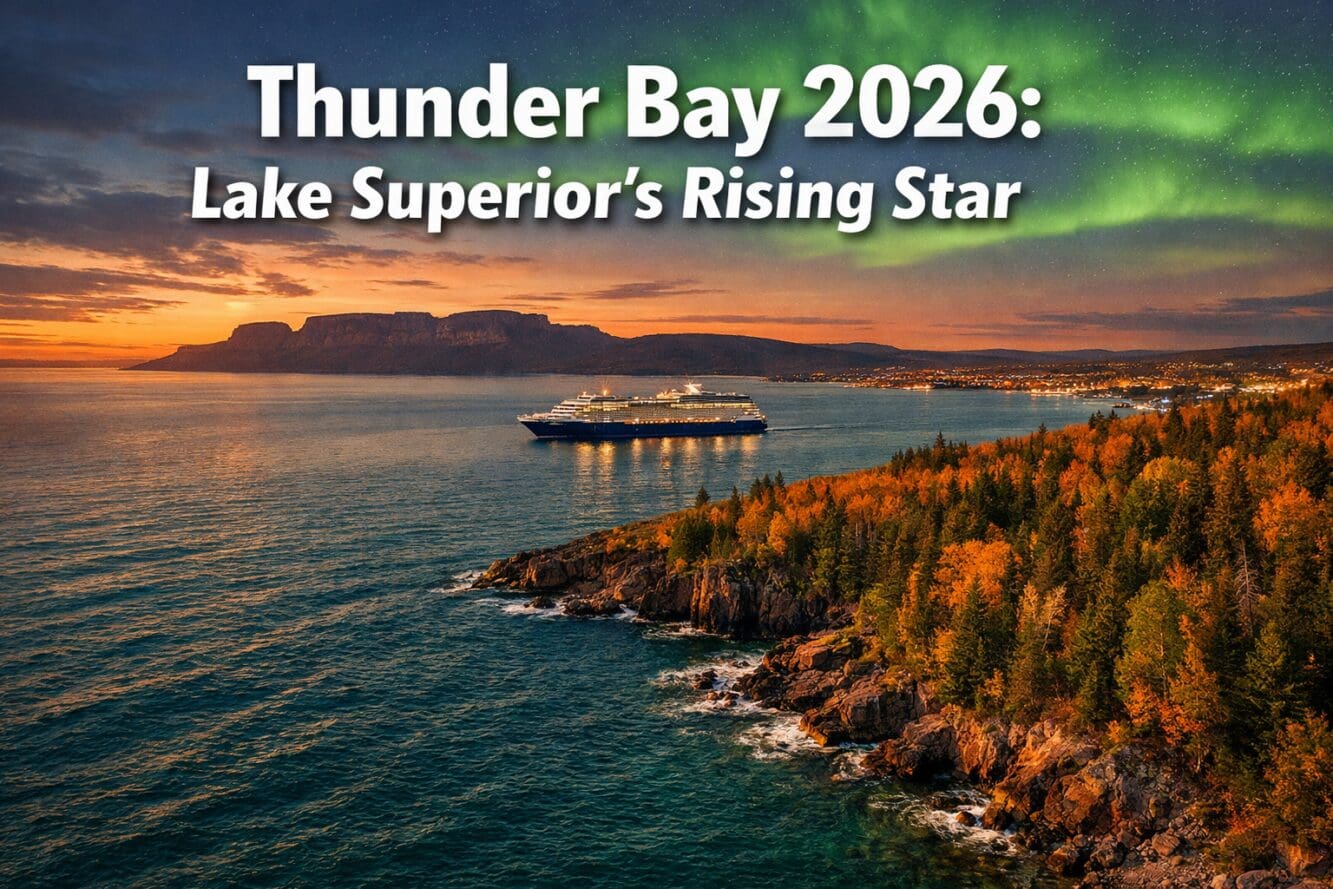
Thunder Bay 2026: Lake Superior’s Rising Star for Hiking, Northern Lights, and Record Tourism Boom

Last updated: February 21, 2026
Key Takeaways
- Thunder Bay’s tourism economy exceeds $125 million annually, and 2026 is shaping up to be a record-breaking season with new hotels, attractions, and government-backed trail investments [2].
- Summer 2025 hotel occupancy hit 87%, airport traffic grew 7%, and visitor center foot traffic surged 21% year-over-year [2].
- While U.S. “drive-in” tourism dropped 10% in 2025, Thunder Bay more than offset the loss through domestic Canadian travelers, European visitors, and inclusivity-focused marketing [1].
- 13 cruise ship visits in 2025 generated roughly $3.1 million for the local economy, with more scheduled for 2026 [2].
- New 2026 openings include the Hyatt House hotel, Kisselgoff Motorcycle Museum, and Rock Room rock climbing gym, broadening the city’s appeal beyond traditional outdoor tourism [3].
Quick Answer

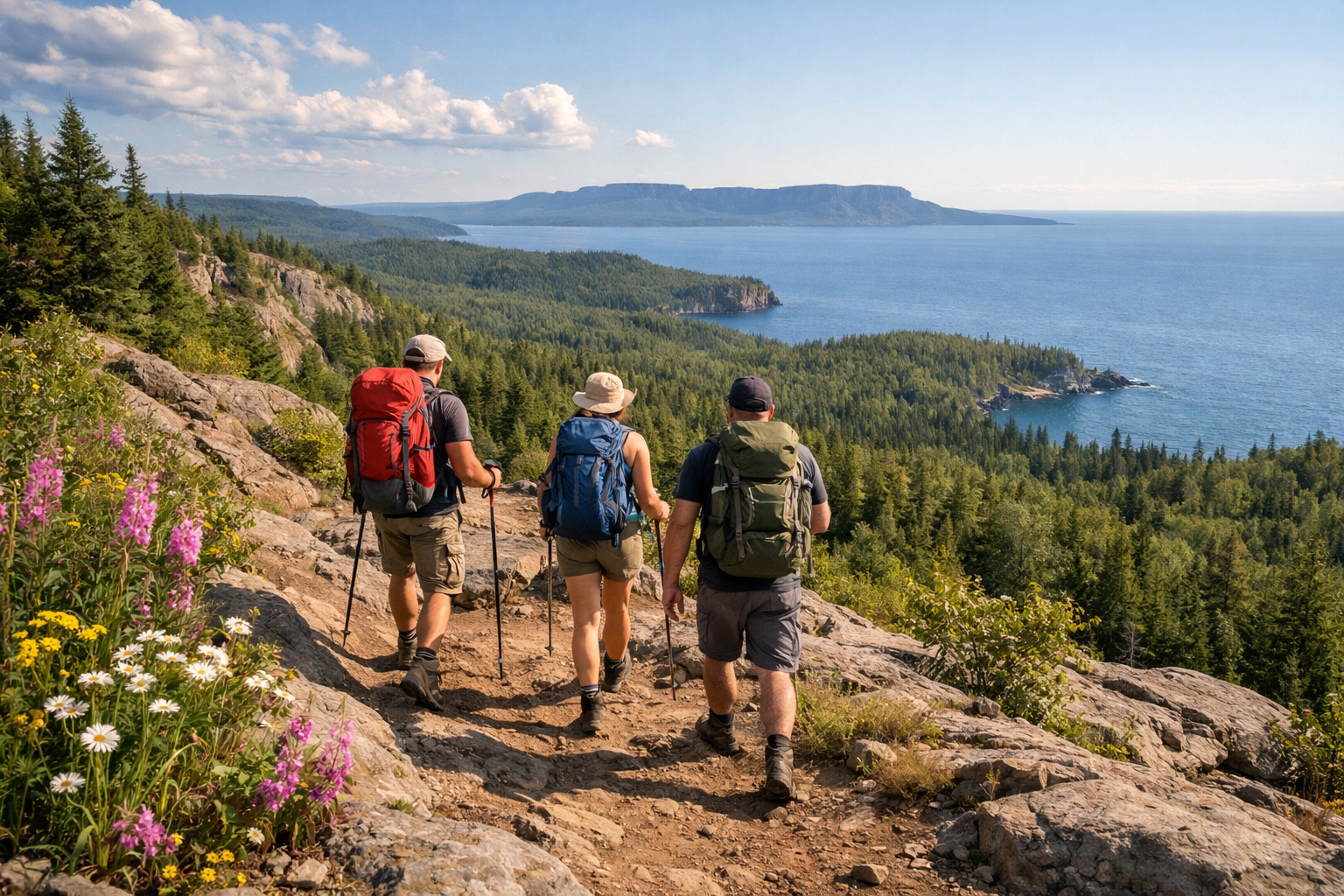
Thunder Bay, Ontario, is no longer a well-kept secret. Sitting on the northwest shore of Lake Superior, this city of roughly 110,000 people has become one of Canada’s fastest-growing adventure tourism destinations in 2026. A combination of world-class hiking trails, reliable Northern Lights viewing, Great Lakes cruising, and strategic government investment has pushed Thunder Bay past the “hidden gem” label and into genuine contender territory. For travelers who want big wilderness without big crowds, and for anyone curious about Thunder Bay 2026: Lake Superior’s rising star for hiking, Northern Lights, and record tourism boom, the numbers and the new infrastructure tell a compelling story.

Why Is Thunder Bay Experiencing a Record Tourism Boom in 2026?
Thunder Bay’s tourism surge isn’t accidental. It’s the result of several forces converging at once: federal investment in outdoor infrastructure, a shift in Canadian travel habits, growing European interest in Canadian wilderness, and a deliberate marketing pivot toward inclusivity.
The numbers from 2025 set the stage:
| Metric | 2025 Result | Source |
|---|---|---|
| Summer hotel occupancy | 87% | [2] |
| Airport traffic growth | +7% year-over-year | [2] |
| Visitor center traffic growth | +21% year-over-year | [2] |
| Cruise ship visits | 13 (record) | [2] |
| Cruise economic impact | ~$3.1 million | [2] |
| Annual tourism economy | $125+ million | [2] |
Paul Pepe, Manager of Tourism Thunder Bay, noted that 2025 saw “more Canadians exploring Canada,” a trend he expects to accelerate through 2026 [3]. Programs like FedNor are channeling federal dollars into outdoor and adventure tourism infrastructure, which means better trails, improved access points, and upgraded facilities across the region [2].
What’s new for 2026 specifically:
- Hyatt House hotel: A branded hotel that adds capacity and signals to corporate and leisure travelers that Thunder Bay is ready for higher volumes [3].
- Kisselgoff Motorcycle Museum: A niche attraction that draws road-trip enthusiasts along the Trans-Canada Highway [3].
- Rock Room rock climbing gym: An indoor option that extends the tourism season beyond summer and appeals to younger adventure travelers [3].
- 2026 Thunder Bay Experience Guide: Nearly 60,000 copies distributed globally, featuring local artist Chelsea Virginia’s cover art celebrating the city’s connection to land, water, and food [5].
The city’s tourism office released the guide at the Thunder Bay Art Gallery in January 2026, positioning Thunder Bay as “a premier inclusive travel destination, welcoming leisure, corporate, and sport visitors from around the world” [5].
For those who enjoy celebrating culture and community events across Ontario, Thunder Bay’s growing festival and arts scene adds another reason to visit.
What Makes Thunder Bay One of Ontario’s Best Hiking Destinations?
Thunder Bay offers some of the most dramatic and accessible hiking in Ontario, with trails that range from easy waterfront walks to multi-day backcountry routes through boreal wilderness.
The city sits at the gateway to Sleeping Giant Provincial Park, whose 100+ kilometers of trails wind through old-growth forest, along cliff edges with 200-meter drops to Lake Superior, and past secluded inland lakes. The park’s signature “Top of the Giant” trail is widely considered one of the best day hikes in Canada, offering panoramic views of Lake Superior and the surrounding boreal landscape.
Other notable hiking areas near Thunder Bay include:
- Cascades Conservation Area: A short drive from downtown, with waterfalls, river gorges, and moderate trail loops suitable for families.
- Centennial Park: Urban wilderness with 15+ kilometers of trails, a logging camp museum, and wildlife viewing.
- Ouimet Canyon Provincial Park: A 150-meter-wide, 100-meter-deep gorge with rare Arctic-alpine plants growing on its shaded floor.
- Kakabeka Falls Provincial Park: Ontario’s second-highest waterfall at 40 meters, with accessible viewing platforms and connecting trails.
- Superior Hiking Trail (Canadian sections): Multi-day routes along the Lake Superior coastline, with backcountry camping and remote beach access.
FedNor investment is specifically targeting outdoor and adventure tourism infrastructure in the Thunder Bay region, which means trail improvements, better signage, and upgraded trailhead facilities are actively underway [2].
Choose Thunder Bay hiking if you want rugged Canadian Shield terrain, Lake Superior views, and far fewer crowds than Algonquin or Bruce Peninsula. It’s best suited for hikers who are comfortable with moderate to challenging terrain and who value solitude over convenience.
A common mistake visitors make is underestimating distances. Thunder Bay is a big region, and trailheads can be 30 to 90 minutes apart by car. Plan driving time into any multi-trail day.
For those who appreciate the value of spending time in nature for rest and restoration, Thunder Bay’s trail network offers exactly that kind of experience, with far less competition for space than southern Ontario parks.
Can You Really See the Northern Lights from Thunder Bay?
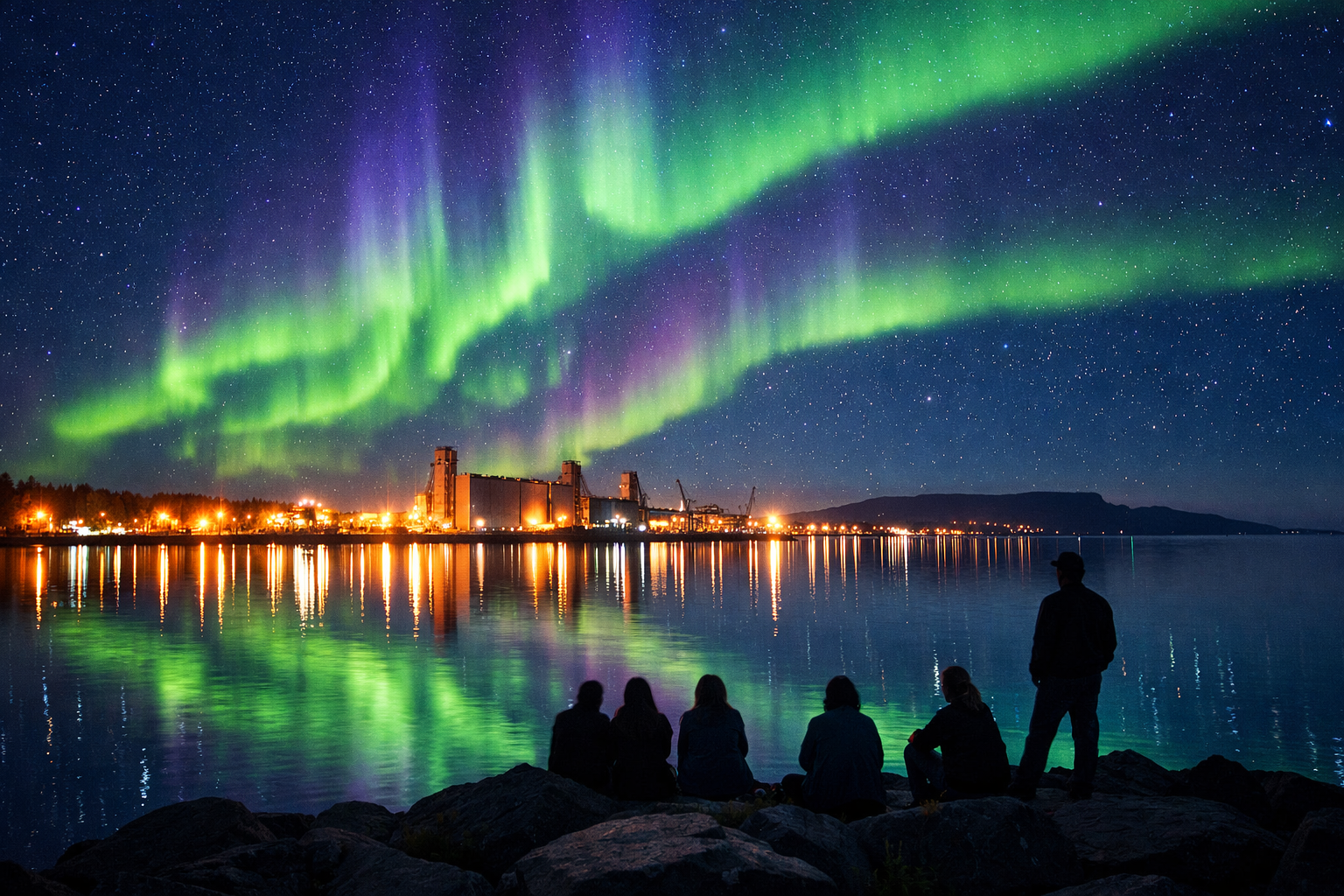
Yes, and more reliably than almost anywhere else in Ontario. Thunder Bay’s latitude (approximately 48.4°N), combined with its position away from major light pollution sources, makes it one of the best places in the province to see the aurora borealis.
Key factors that make Thunder Bay strong for Northern Lights viewing:
- Latitude: Far enough north to fall within the auroral oval during moderate to strong geomagnetic storms.
- Low light pollution: While the city itself produces some light, short drives north or east along Lake Superior put viewers in genuinely dark skies.
- Lake Superior horizon: The massive open water to the south and east provides an unobstructed horizon, which makes even lower-intensity auroras visible.
- Season range: Northern Lights are visible from Thunder Bay roughly from September through April, with peak activity typically around the equinoxes (September and March).
Best viewing spots near Thunder Bay:
- Silver Islet: A historic mining village at the tip of the Sibley Peninsula, with dark skies and a Lake Superior horizon.
- Wild Goose Beach: North of the city, with minimal light interference.
- Sleeping Giant Provincial Park: After dark, the park’s remote location provides excellent conditions.
- Highway 17 East pulloffs: Multiple roadside viewpoints between Thunder Bay and Nipigon offer wide-open northern sky views.
Edge case to know about: Northern Lights are not guaranteed on any given night. They depend on solar activity, cloud cover, and moonlight. The best approach is to plan a multi-night stay and use aurora forecast apps (like NOAA’s Space Weather Prediction Center or the “My Aurora Forecast” app) to track conditions. Thunder Bay’s growing accommodation options, including the new Hyatt House [3], make extended stays more practical than in previous years.
Tourism Thunder Bay has increasingly promoted Northern Lights viewing as a shoulder-season draw, helping extend the tourism calendar beyond the traditional June-to-September peak.
How Is Thunder Bay’s Tourism Boom Changing the Local Economy?
Thunder Bay’s tourism sector is now worth over $125 million annually [2], and the growth trajectory is accelerating. The economic impact extends well beyond hotels and restaurants.
Municipal Accommodation Tax (MAT) revenue has grown significantly, partly because of increased compliance from short-term rental operators. These funds are being reinvested directly into community tourism and recreation projects [2]. Paul Pepe noted that “more people are travelling and staying longer,” which means higher per-visitor spending [2].
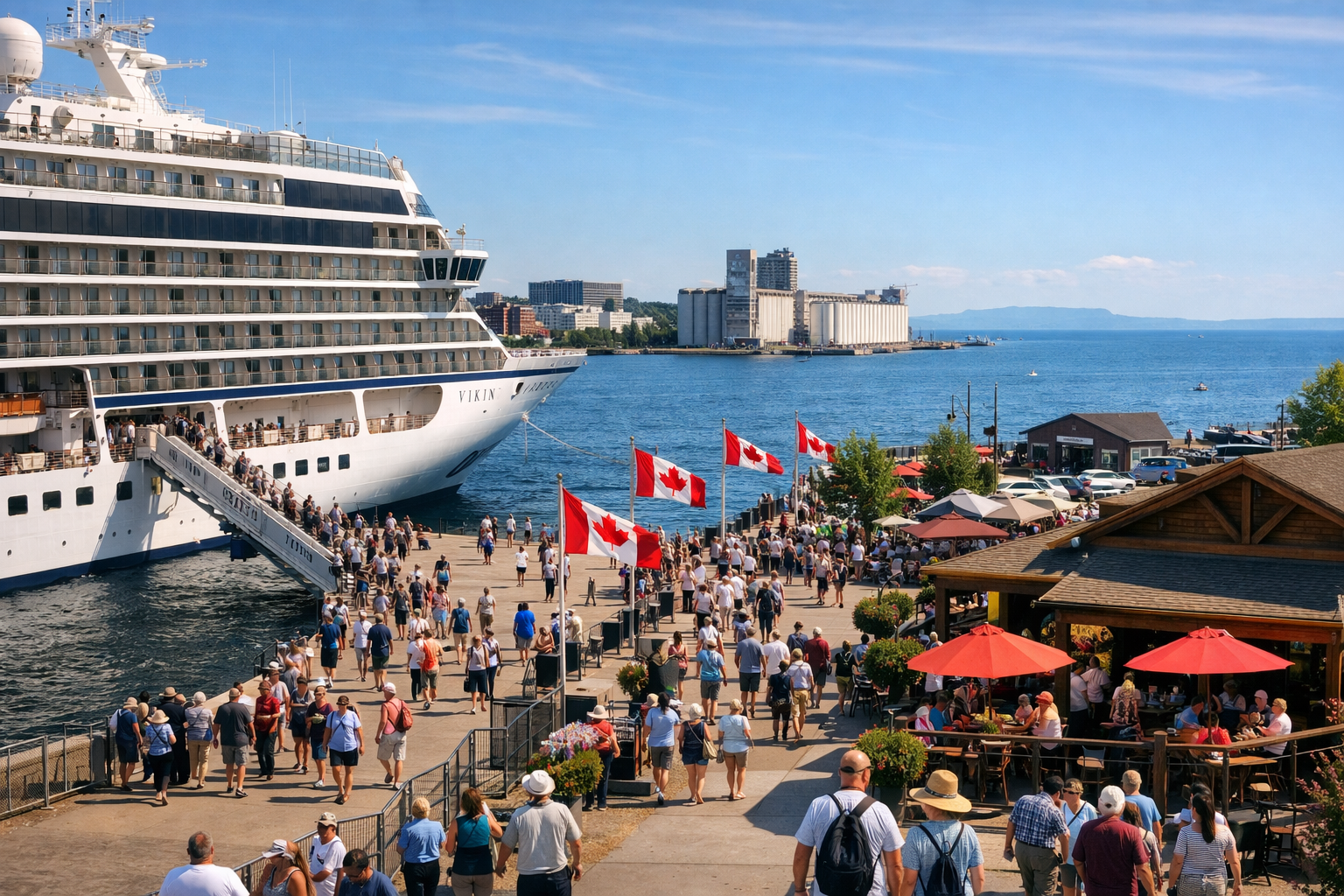
The cruise industry is a major new revenue stream. In 2025, Thunder Bay welcomed 13 cruise ship visits from lines including Viking, Pearl Seas, and Hapag-Lloyd [1]. Those visits generated approximately $3.1 million for the local economy [2]. Cruise passengers weren’t just passing through; they were dining at local restaurants, shopping downtown, and booking excursions to area attractions.
Breakdown of Thunder Bay’s tourism growth drivers:
- Domestic Canadian visitors: The largest growth segment. Travelers from Manitoba and Southern Ontario are increasingly choosing Thunder Bay over traditional destinations [1].
- European visitors: Tourists from Germany and the United Kingdom are choosing Canadian wilderness over U.S. outdoor destinations, a trend Tourism Thunder Bay is actively cultivating [1].
- Inclusivity-focused U.S. visitors: While traditional U.S. drive-in traffic dropped 10%, Thunder Bay’s marketing pivot toward diversity and inclusivity attracted new American visitors, particularly from the Midwest [1].
- Cruise passengers: A high-value segment with strong per-visit spending [2].
The opening of new attractions like the Kisselgoff Motorcycle Museum and Rock Room climbing gym [3] also creates jobs and extends the range of visitor spending beyond traditional outdoor activities.
For context on how broader economic trends are affecting travel patterns, the shift in American sentiment has been one factor driving some U.S. travelers to reconsider Canadian destinations, while also prompting Canadians to explore domestically.
Who Should Visit Thunder Bay in 2026 (and Who Shouldn’t)?
Thunder Bay is an excellent fit for specific types of travelers, but it’s not for everyone. Here’s a straightforward breakdown.
Thunder Bay is a great choice if you:
- Love hiking, kayaking, fishing, or backcountry camping and want fewer crowds than southern Ontario parks
- Want to see the Northern Lights without flying to Yellowknife or Iceland
- Are interested in Great Lakes cruising and want a port city with genuine character
- Prefer a mid-sized city with good restaurants, breweries, and cultural attractions over a resort town
- Are a road-trip enthusiast traveling the Trans-Canada Highway
- Value inclusive, welcoming destinations (Thunder Bay has made this a core part of its tourism identity) [5]
Thunder Bay may not be the best fit if you:
- Want a beach vacation with warm water (Lake Superior is cold, even in August)
- Need a major international airport hub (Thunder Bay’s airport has grown but still has limited direct routes)
- Prefer luxury resort-style accommodations (the Hyatt House is a step up, but this isn’t Muskoka)
- Dislike driving (the region is spread out, and a car is essentially required)
- Are looking for nightlife or large-scale entertainment venues
Decision rule: If you’d choose Banff over Cancún, and Newfoundland over Niagara Falls, Thunder Bay is probably your kind of place.
Those interested in community engagement and local events will find Thunder Bay’s arts scene, Indigenous cultural experiences, and community festivals increasingly well-organized and welcoming.
What’s the Best Time to Visit Thunder Bay in 2026?
Each season offers something different, and the “best” time depends entirely on what you want to do.
| Season | Best For | Considerations |
|---|---|---|
| Summer (June–Aug) | Hiking, kayaking, cruises, camping, festivals | Peak season; 87% hotel occupancy in 2025 [2]. Book early. |
| Fall (Sept–Oct) | Fall colors, Northern Lights, fewer crowds | Spectacular foliage along Lake Superior. Temperatures drop fast in October. |
| Winter (Nov–Mar) | Northern Lights, cross-country skiing, snowshoeing, ice fishing | Cold (average January low around -22°C). But genuinely beautiful and uncrowded. |
| Spring (Apr–May) | Waterfalls at peak flow, birding, early hiking | Mud season on some trails. Unpredictable weather. |
For Northern Lights specifically, plan visits around the September or March equinoxes, when geomagnetic activity tends to peak. Winter offers the longest dark-sky hours but requires serious cold-weather gear.
For cruise visitors, the Great Lakes cruise season runs roughly from May through October, with most Thunder Bay port calls happening between June and September.
The 2026 Thunder Bay Experience Guide, distributed in nearly 60,000 copies worldwide, is a solid trip-planning resource that covers seasonal highlights, dining, and activity options [5].
How Does Thunder Bay Compare to Other Canadian Adventure Destinations?
Thunder Bay competes in a growing category of Canadian “hidden gem” destinations that are gaining national and international attention. Here’s how it stacks up against a few commonly compared alternatives.
| Feature | Thunder Bay, ON | Churchill, MB | Tofino, BC | Gaspésie, QC |
|---|---|---|---|---|
| Primary draw | Hiking, Northern Lights, cruises | Polar bears, Northern Lights | Surfing, rainforest, whale watching | Hiking, wildlife, coastal scenery |
| Accessibility | Drive or fly (regional airport) | Fly or train only | Fly or long drive | Drive from Quebec City (~6 hrs) |
| Accommodation cost | Moderate | High | High | Moderate |
| Crowd level | Low to moderate | Low | High in summer | Low |
| Season range | Year-round (varies by activity) | Summer + winter only | Year-round | Summer + fall primarily |
| Cruise access | Yes (Great Lakes) | Limited | No | Limited |
Thunder Bay’s advantage is its combination of accessibility (it’s on the Trans-Canada Highway and has a growing regional airport), affordability relative to destinations like Tofino or Churchill, and breadth of activities across all four seasons.
According to Travel and Tour World, Thunder Bay is leading a group of destinations including Churchill, Gibsons, and Atlantic Canada that are “rewriting Canada’s tourism playbook” in 2026 [2]. The common thread is authentic experiences, natural beauty, and a deliberate move away from mass tourism.
For readers interested in how summer concert series and cultural programming are drawing visitors to Ontario communities, Thunder Bay’s growing events calendar follows a similar model.
What Are the Common Mistakes Visitors Make When Planning a Thunder Bay Trip?
Even experienced Canadian travelers sometimes misjudge a few things about Thunder Bay. Here are the most frequent planning errors.
Underestimating distances: Thunder Bay is roughly 1,400 km from Toronto by car. That’s a 14- to 16-hour drive. Many visitors from southern Ontario underestimate this and arrive exhausted. Consider breaking the drive with an overnight stop in Sault Ste. Marie or flying directly.
Not booking accommodation early enough for summer: With 87% hotel occupancy during summer 2025 [2] and new attractions opening in 2026, peak-season rooms will sell out. Book at least 2-3 months ahead for July and August visits.
Skipping Indigenous cultural experiences: Thunder Bay is home to Fort William First Nation and has a rich Indigenous heritage. Visitors who skip these experiences miss a significant part of what makes the region distinctive.
Packing for only one type of weather: Lake Superior creates its own microclimate. Summer days can swing from 28°C to 12°C if the wind shifts off the lake. Layers are essential year-round.
Assuming everything is walkable: Unlike compact tourist towns, Thunder Bay’s attractions are spread across a wide area. A rental car is effectively mandatory.
Ignoring shoulder seasons: Fall and early winter offer Northern Lights, uncrowded trails, and lower accommodation costs. Many visitors default to summer and miss the best aurora viewing.
How Can Travelers Support Thunder Bay’s Tourism Growth Responsibly?
As Thunder Bay’s visitor numbers climb, responsible tourism practices matter more than ever.
- Stay at locally owned accommodations when possible, and ensure short-term rentals are properly registered (MAT compliance helps fund community projects) [2].
- Follow Leave No Trace principles on all trails, especially in Sleeping Giant Provincial Park and backcountry areas.
- Support Indigenous-owned businesses and tours to ensure tourism benefits are shared equitably.
- Visit during shoulder seasons to reduce pressure on peak-season infrastructure and extend economic benefits across more months.
- Use the official 2026 Thunder Bay Experience Guide for trip planning, as it highlights locally vetted businesses and experiences [5].
Those who care about environmental stewardship and going natural will appreciate Thunder Bay’s emphasis on wilderness preservation alongside tourism growth.
Frequently Asked Questions
How far is Thunder Bay from Toronto?
About 1,400 km by car (14-16 hours) or roughly a 1.5-hour direct flight. Porter Airlines and Air Canada operate regular service to Thunder Bay Airport.
Is Thunder Bay safe for tourists?
Yes. Like any mid-sized Canadian city, standard urban awareness applies downtown, but the tourism areas, parks, and trails are generally very safe.
Can you see the Northern Lights from Thunder Bay in summer?
Occasionally, during strong solar storms in June or July, but the short dark-sky window makes it unlikely. September through April is far more reliable.
How many cruise ships visit Thunder Bay?
In 2025, Thunder Bay had a record 13 cruise ship visits from lines including Viking, Pearl Seas, and Hapag-Lloyd [1]. More visits are expected in 2026.
What is the Municipal Accommodation Tax (MAT) in Thunder Bay?
It’s a tax on overnight accommodations that funds community tourism and recreation projects. Increased compliance from short-term rentals has boosted MAT revenue significantly [2].
Is Thunder Bay good for families with kids?
Yes. Centennial Park, Kakabeka Falls, and the new Rock Room climbing gym [3] are all family-friendly. Many trails have easier loop options suitable for children.
When is the best time to hike in Thunder Bay?
Late June through early October. July and August offer the warmest weather, but September brings spectacular fall colors and fewer crowds.
Do I need a car in Thunder Bay?
Effectively, yes. Public transit exists but doesn’t serve most trailheads or provincial parks. A rental car is strongly recommended.
What new attractions are opening in Thunder Bay in 2026?
The Hyatt House hotel, Kisselgoff Motorcycle Museum, and Rock Room rock climbing gym are all opening in 2026 [3].
Is Thunder Bay expensive to visit?
It’s moderate by Canadian standards. Accommodation and dining costs are lower than destinations like Tofino, Banff, or Muskoka, but higher than rural Quebec or Atlantic Canada.
Why are European tourists choosing Thunder Bay?
European travelers, particularly from Germany and the UK, are increasingly choosing Canadian wilderness destinations over U.S.-based outdoor spots, drawn by Canada’s welcoming travel climate [1].
What is the 2026 Thunder Bay Experience Guide?
It’s the official visitor guide published by Tourism Thunder Bay, with nearly 60,000 copies distributed globally. The 2026 edition features cover art by local artist Chelsea Virginia [5].
Conclusion
Thunder Bay’s transformation from northern Ontario’s best-kept secret to a nationally recognized adventure destination is backed by real numbers: $125 million in annual tourism revenue, 87% summer hotel occupancy, 13 cruise ship visits, and a 21% surge in visitor center traffic [2]. The story of Thunder Bay 2026: Lake Superior’s rising star for hiking, Northern Lights, and record tourism boom is not hype; it’s a measurable shift driven by federal investment, smart marketing, and a city that genuinely delivers on its outdoor adventure promise.
Actionable next steps for planning a 2026 visit:
- Download or request the 2026 Thunder Bay Experience Guide from Tourism Thunder Bay’s official site [5].
- Book summer accommodation now if visiting between June and August; occupancy rates will be high.
- Check aurora forecasts if visiting between September and April, and plan multi-night stays to maximize Northern Lights chances.
- Look into Great Lakes cruise itineraries from Viking, Pearl Seas, or Hapag-Lloyd that include Thunder Bay port calls.
- Rent a car regardless of season; it’s the only practical way to access the region’s best trails and attractions.
- Consider shoulder seasons (September-October or March-April) for fewer crowds, lower costs, and excellent Northern Lights viewing.
Thunder Bay is ready. The question is whether you’ll get there before everyone else does.
Key Takeaways
- Thunder Bay’s tourism economy surpasses $125 million annually and is on track for record growth in 2026 [2].
- 87% summer hotel occupancy in 2025 signals strong demand; early booking is essential for peak season [2].
- The 10% decline in U.S. drive-in traffic was more than offset by domestic Canadian, European, and inclusivity-focused U.S. marketing gains [1].
- 13 cruise ship visits in 2025 generated $3.1 million and established Thunder Bay as a Great Lakes cruise port [2].
- New 2026 attractions (Hyatt House, Kisselgoff Motorcycle Museum, Rock Room) expand the city’s appeal and capacity [3].
- Northern Lights viewing is a major shoulder-season draw, best from September through April.
- FedNor government investment is actively improving trail infrastructure and outdoor tourism facilities [2].
- Thunder Bay is leading Canada’s “hidden gems” tourism movement alongside Churchill, Gibsons, and Atlantic Canada [2].
- A car is essential for exploring the region’s spread-out attractions and trailheads.
- The 2026 Thunder Bay Experience Guide (60,000 copies distributed globally) is the best free trip-planning resource available [5].
References
[1] New Growth For Thunder Bay’s Tourism: Canadians, Europeans And The U.S. Market On The Rise – travelandtourworld.com
[2] Thunder Bay Leads Churchill, Gibsons And Atlantic Canada To Rewrite Canada’s Tourism Playbook And Steal The Spotlight In 2026 – travelandtourworld.com
[3] Thunder Bay Tourism Expecting More Visitors In 2026 – yourthunderbay.ca
[5] New 2026 Thunder Bay Experience Guide Now Available – gotothunderbay.ca
Some content and illustrations on GEORGIANBAYNEWS.COM are created with the assistance of AI tools.
GEORGIANBAYNEWS.COM shares video content from YouTube creators under fair use principles. We respect creators’ intellectual property and include direct links to their original videos, channels, and social media platforms whenever we feature their content. This practice supports creators by driving traffic to their platforms.
Much Appreciate You Sharing This Post - It Helps MUCH!!!