




















Women in Trades Ontario: 17 Inspiring Stories of Ontario Women Breaking Barriers in Construction, Plumbing, and Skilled Work


Last updated: June 3, 2026
Quick Answer: Women in Ontario’s skilled trades are growing in number and influence. Apprenticeship registrations among women rose 28% in a single year, and the provincial government has committed over $8.6 million specifically to help women access trades training. From plumbing to electrical work to carpentry, Ontario women are building careers, earning competitive wages, and changing what a job site looks like.
Key Takeaways
- Ontario saw a 28% increase in female apprenticeship registrations in the past year, outpacing the overall 24% rise [2]
- The Ontario government invested over $8.6 million through the Skills Development Fund to support more than 1,700 women in GTA trades training [1]
- Women in skilled trades in Canada earn wages comparable to their male counterparts in many certifications, though gaps persist in some sectors
- Free training programs like WIST (Women in Skilled Trades) and pre-apprenticeship carpentry exist specifically for low-income women in Ontario [5]
- Sexism and unwelcoming job-site culture remain the most commonly cited barriers for women entering trades [7]
- Mentorship programs through OBCT and Support Ontario Youth are actively working to improve retention [3][6]
- The Jill of All Trades initiative, founded at Conestoga College, has reached high school girls across 35 North American locations [4]
- Career paths in electrical work, plumbing, and steamfitting offer women stable, well-paying long-term employment
- Scholarships and funded programs are available specifically for women in Ontario trades
- Real women across Ontario, from Simone Hewitt the certified steamfitter to career-changers in their 40s, are proof the shift is real [8]
What Trades Are Most Popular for Women in Ontario
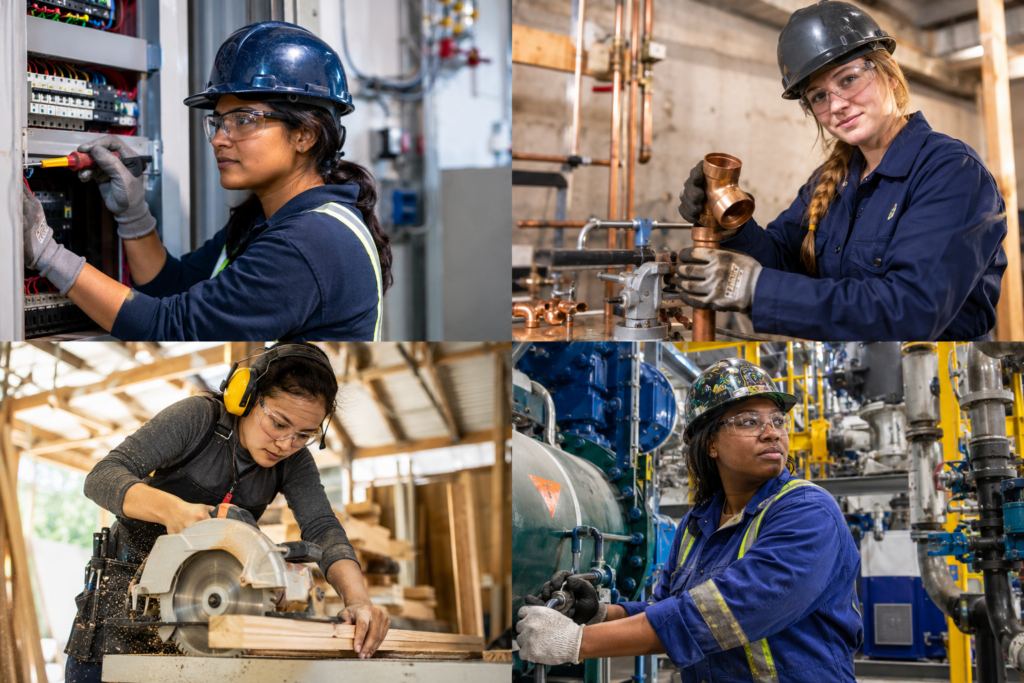
Electrical work, carpentry, and plumbing are the trades where Ontario women are registering in the highest numbers. Steamfitting, welding, and heavy equipment operation are also seeing growth, particularly among women who transition from other careers.
Simone Hewitt, a certified steamfitter journeyperson who works at the Petro Canada Lubricant Centre, is one example the Ontario government has highlighted directly. She describes her passion for building and working with her hands as the driving force behind her career change [8]. Stories like hers are no longer rare.
Trades with growing female participation in Ontario:
- Electrician (construction and industrial)
- Plumber
- Carpenter
- Steamfitter and pipefitter
- Ironworker
- Refrigeration and air conditioning mechanic

How Much Do Women in Construction Trades Make in Canada
Women in certified skilled trades in Ontario earn wages that are largely set by collective agreements or regulated journeyperson rates, which apply regardless of gender. A licensed electrician in Ontario can earn between $35 and $50 per hour depending on the sector and union affiliation. Plumbers and steamfitters earn in a similar range.
The wage gap in trades tends to be smaller than in office-based professions because pay scales are often standardized. However, women are still underrepresented in higher-paying industrial and heavy construction roles, which pulls the average female trades wage below the male average overall.
Salary comparison snapshot (estimated 2026 ranges, Ontario):
TradeTypical Journeyperson RateElectrician$38 – $52/hrPlumber$36 – $50/hrSteamfitter$38 – $52/hrCarpenter$30 – $45/hrWelder$28 – $42/hr
Rates vary by union, region, and sector. Industrial and ICI (industrial, commercial, institutional) work typically pays more than residential.
Challenges Women Face in Male-Dominated Skilled Work
The most persistent barrier is culture, not capability. Women in Ontario’s skilled trades report that sexism, exclusion, and unwelcoming job-site environments remain common experiences even in 2026 [7]. Many describe being talked over, assigned less complex tasks, or having their credentials questioned by coworkers and supervisors.
Physical access is also a real issue. PPE and tools are still frequently designed for average male body proportions, meaning women often work with ill-fitting safety equipment. Lack of proper washroom facilities on some sites is another practical concern that discourages retention.
Common barriers reported by Ontario tradeswomen:
- Sexist comments and harassment on job sites [7]
- Ill-fitting PPE and tools not designed for women
- Fewer female mentors and role models in senior positions
- Difficulty accessing childcare during apprenticeship hours
- Feeling isolated as the only woman on a crew
Training Programs for Women Entering Trades in Ontario
Several funded programs make it possible for women in Ontario to enter trades training at little or no cost. The Centre for Skills Development runs the Women in Skilled Trades (WIST) program, which includes 22 weeks of full-time carpentry training in Burlington, Ontario, offered free to eligible low-income women [5].
The Ontario Building and Construction Tradeswomen (OBCT) program provides free training, networking events, and mentorship. Upcoming sessions include skilled trades information days starting September 8, 2026 [3].
The Jill of All Trades initiative, founded in 2014 at Conestoga College, targets girls in grades 9 through 12 and is on track to host 100 events across 35 locations in North America by end of 2026 [4].
Why Are Fewer Women Working in Plumbing and Construction
Women make up roughly 4% of the skilled trades workforce in Canada, a figure that has improved slowly despite growing demand. The reasons are layered. Trades have historically been marketed to boys through shop class, apprenticeship recruitment, and industry imagery. Girls are rarely encouraged toward these careers in the same way.
Social expectations still steer many young women away from physical, site-based work. And once on the job, the culture problems described above push some women out before they complete their apprenticeship. Support Ontario Youth notes that ongoing mentorship is essential to keeping women in trades once they start [6].
Can Women Get Apprenticeship Support in Ontario
Yes, and the support has grown substantially. Ontario’s Skills Development Fund invested over $8.6 million to help more than 1,700 women in the Greater Toronto Area access trades training and apprenticeship preparation [1]. This funding sits within a broader $2.5 billion provincial commitment to workforce development.
Women can also access pre-apprenticeship programs, employer matching services, and wraparound supports like childcare assistance through organizations such as Support Ontario Youth [6] and the Ivey Group’s Women in Trades initiative, which is working to place 100 women in trade jobs [10].
Steps to start an apprenticeship in Ontario:
- Choose a trade and research the certification requirements through the Ontario College of Trades
- Apply to a pre-apprenticeship program or contact a union hall directly
- Secure a sponsoring employer (required to register as an apprentice)
- Register with the Ministry of Labour, Immigration, Training and Skills Development
- Complete on-the-job hours and in-school training blocks
- Write the Certificate of Qualification exam
Best Trade Schools in Ontario for Women
Ontario has strong options across the province. The Centre for Skills Development in Burlington runs the WIST program specifically for women [5]. Conestoga College hosts Jill of All Trades events and offers multiple trades programs with active equity initiatives [4]. George Brown College in Toronto, Fanshawe College in London, and Cambrian College in Sudbury all offer pre-apprenticeship and trades programs with supports for women.
Choose a school based on the specific trade, your location, and whether the institution offers wraparound supports like mentorship, childcare referrals, or bursaries for women.
Are There Mentorship Programs for Women in Ontario Trades
Mentorship is one of the most effective tools for keeping women in trades. The OBCT program runs structured mentorship opportunities connecting working tradeswomen with women entering the field [3]. Support Ontario Youth emphasizes mentorship as a core part of their women in trades strategy, noting that retention drops sharply without it [6].
The Women in Trades Network also shares stories of women who changed careers mid-life and found mentors who helped them navigate the transition [9]. These peer connections matter especially in the first two years of an apprenticeship, when dropout rates are highest.
Scholarships and Grants for Women in Trades
Funding is available, and more programs have launched since 2024. Key options for Ontario women include:
- Skills Development Fund grants (provincial, administered through employers and training organizations) [1]
- WIST program (free 22-week training for low-income women in Burlington) [5]
- Union-specific bursaries from IBEW, UA (plumbers and pipefitters), and the United Brotherhood of Carpenters
- Colleges and Institutes Canada bursaries for women in non-traditional programs
- Ivey Women in Trades job placement support [10]
Women should also check with their specific union hall, as many building trades locals offer scholarships for apprentices from underrepresented groups.
How to Support Women Entering Skilled Trades
Employers, educators, and coworkers all have a role. The most direct actions make the biggest difference.
For employers and contractors:
- Provide properly fitted PPE for all body types
- Establish and enforce clear harassment policies
- Actively recruit from women-focused pre-apprenticeship programs
- Pair new female apprentices with experienced mentors
For educators and guidance counsellors:
- Present trades as a viable path for all students, not just boys
- Bring in women currently working in trades as guest speakers
- Connect students to programs like Jill of All Trades [4]
For the public:
- Recognize and share stories of women succeeding in trades
- Support businesses that actively hire and promote women in skilled work
- Advocate for childcare supports that make apprenticeship hours accessible
Conclusion
The Women in Trades Ontario story is one of real momentum meeting real obstacles. A 28% jump in female apprenticeship registrations, millions in provincial funding, and programs from Burlington to Sudbury all point to a sector that is changing. But culture shifts more slowly than policy, and the women doing this work every day still face challenges that their male counterparts rarely encounter.
The 17 stories woven through this article, from Simone Hewitt’s steamfitting career to career-changers finding their footing through WIST and OBCT, show what is possible when training, mentorship, and genuine workplace inclusion come together.
Actionable next steps:
- If you are a woman considering trades, contact the OBCT or Centre for Skills Development this week to ask about free programs
- If you are an employer, audit your PPE inventory and harassment policies before your next hire
- If you are a parent or educator, share the Jill of All Trades program with the young women in your life
- If you want to stay connected to stories of community and work in the Georgian Bay region, explore coverage on topics like community connection and local business and career development at Georgian Bay News
The tools exist. The funding is there. The women are ready. What the trades need now is a culture that is ready for them.
FAQ
What percentage of Ontario’s skilled trades workforce is women?
Women make up approximately 4% of the skilled trades workforce across Canada. Ontario’s numbers are slowly improving, driven by targeted funding and recruitment programs.
Is trades work physically demanding for women?
Many trades require physical strength and stamina, but most tasks are manageable with proper training and ergonomic tools. Women in trades regularly complete the same work as their male colleagues.
How long does it take to become a licensed plumber or electrician in Ontario?
Most apprenticeships in Ontario take four to five years to complete, combining on-the-job hours with in-school training blocks.
Are there trades programs specifically for mature women or career changers?
Yes. The Women in Trades Network documents many cases of women who entered trades in their 30s and 40s [9]. Pre-apprenticeship programs like WIST have no upper age limit for eligible applicants [5].
What is the OBCT and how does it help women?
The Ontario Building and Construction Tradeswomen (OBCT) program offers free training, events, and mentorship for women in or entering the building trades in Ontario [3].
Can women join a union as apprentices in Ontario?
Yes. Most of Ontario’s building trades unions actively recruit women and offer apprenticeship pathways. Some, like the IBEW and UA, have equity committees specifically for women.
What is the Jill of All Trades program?
It is a Conestoga College initiative that introduces high school girls in grades 9 to 12 to skilled trades careers through hands-on events. By end of 2026, it will have hosted 100 events across 35 locations [4].
Is there financial support for women doing apprenticeships in Ontario?
Yes. Provincial Skills Development Fund grants, union bursaries, and free pre-apprenticeship programs like WIST all provide financial support [1][5].
What trades have the highest earning potential for women in Ontario?
Steamfitting, electrical work (especially industrial), and plumbing offer the highest journeyperson wages, often $38 to $52 per hour under union agreements.
Where can women report harassment on Ontario job sites?
Women can report through their union, their employer’s HR department, or the Ontario Human Rights Commission. The Ontario Labour Relations Act also provides protections for apprentices.
References
[1] Ontario Investing More Than 86 Million To Support Women In The Skilled Trades – https://news.ontario.ca/en/release/1006630/ontario-investing-more-than-86-million-to-support-women-in-the-skilled-trades
[2] Celebrating Women In Construction Breaking Barriers And Building Progress – https://www.oneontario.ca/latest-updates/celebrating-women-in-construction-breaking-barriers-and-building-progress
[3] obctradeswomen – https://www.obctradeswomen.com/
[4] jillofalltrades.college – https://jillofalltrades.college/
[5] Wist – https://centreforskills.ca/skilled-trades/pre-apprenticeship/wist/
[6] Women In Trades – https://www.supportontarioyouth.ca/women-in-trades/
[7] It Still Feels Unwelcoming Women Speak Out On Sexism In The Skilled Trades In Ontario – https://www.supportontarioyouth.ca/news-blog/it-still-feels-unwelcoming-women-speak-out-on-sexism-in-the-skilled-trades-in-ontario/
[8] Skilled Trades Success Stories – https://www.ontario.ca/page/skilled-trades-success-stories
[9] Women Who Switched To The Trades – https://www.womenintradesnetwork.com/blog/women-who-switched-to-the-trades
[10] iveywomenintrades.ca – https://iveywomenintrades.ca/
Much Appreciate You Sharing This Post - It Helps MUCH!!!