






















Pro Pickleball’s Global Rise in 2026: Asia Training Academies Spotlight and Top International Singles Contenders to Watch

Last updated: February 27, 2026
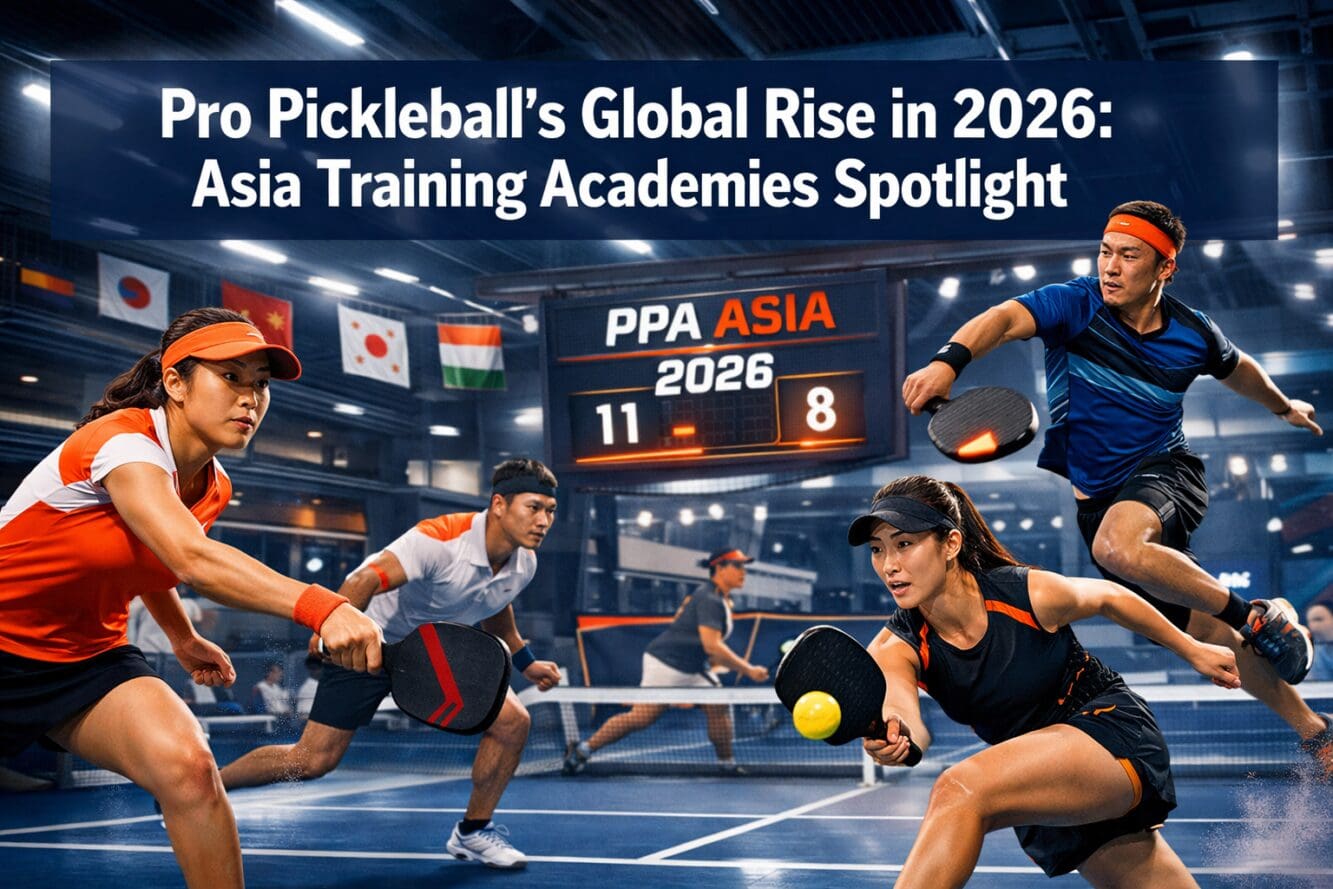
The fastest-growing sport in America is no longer just an American story. Pro Pickleball’s Global Rise in 2026: Asia Training Academies Spotlight and Top International Singles Contenders to Watch reveals how elite training facilities across Asia are producing world-class athletes ready to challenge U.S. dominance in the PPA and MLP circuits. With the global pickleball market reaching $2.03 billion in 2026 and over 500,000 players now active in the Asia-Pacific region, international talent is reshaping professional competition[2][3].
Key Takeaways
- Asia-Pacific player base has exploded to over 500,000 active participants, with the Philippines reaching 50,000+ players and India expanding to 250,000 by 2026[3]
- Elite training academies in Singapore, Manila, and Mumbai are producing singles contenders capable of top-5 PPA rankings
- International Federation of Pickleball now includes 78 member countries, double the number from five years ago[3][4]
- Global market value hit $2.03 billion in 2026, up from $1.82 billion in 2025, fueling international facility investment[2]
- PPA Asia and MLP Asia circuits have expanded to 15 major venues, creating professional pathways for non-U.S. talent[3]
- Court construction continues at a rate of more than one per day in the U.S. alone, with similar growth internationally[3]
- Emerging international singles players from the Philippines, India, Thailand, and Japan are posting wins against ranked American professionals
Quick Answer
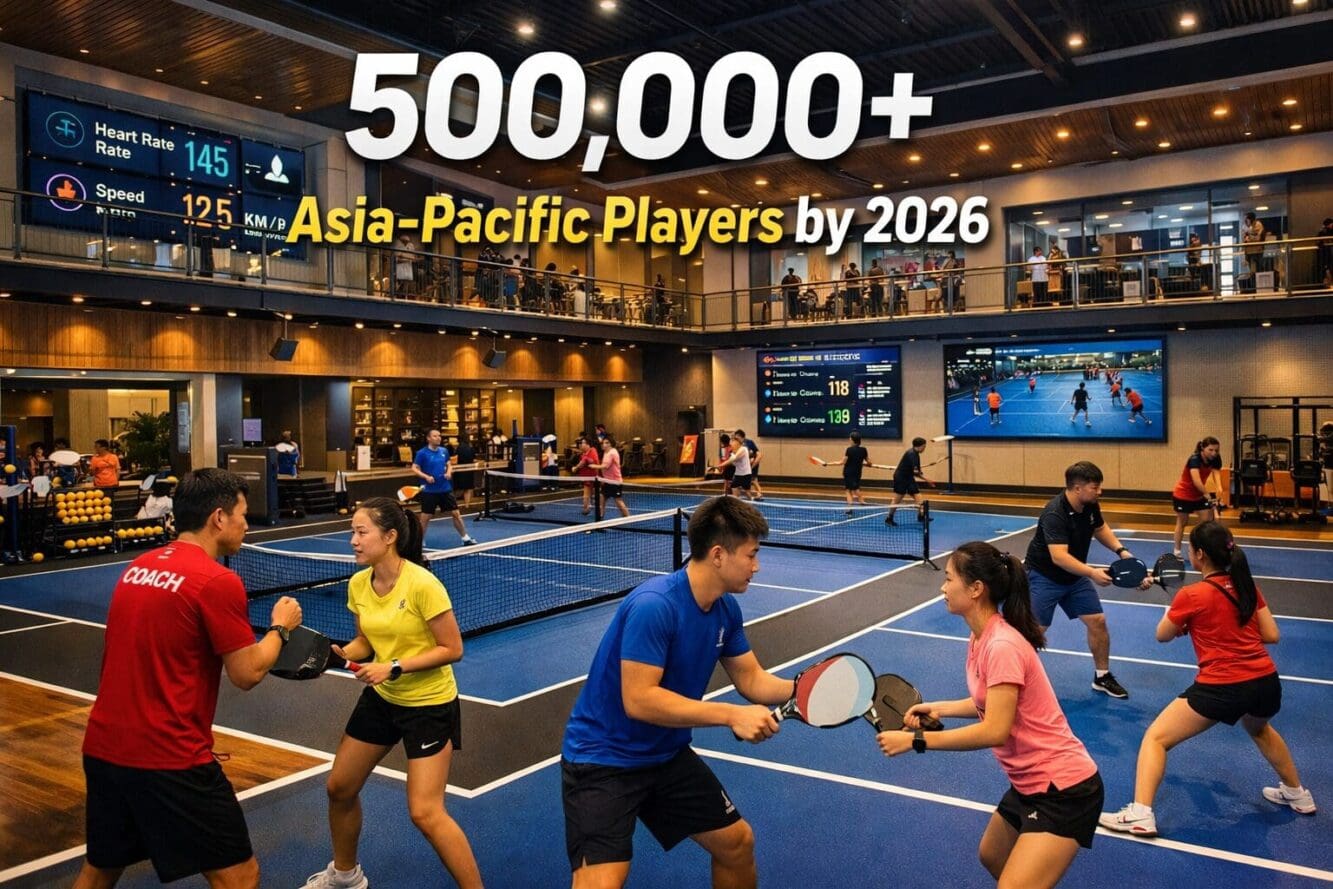
Pro pickleball’s global expansion in 2026 centers on Asia’s rapid development of world-class training academies and breakthrough singles talent. The Asia-Pacific region now hosts over 500,000 players, with specialized facilities in Singapore, Manila, and Mumbai producing athletes who compete directly with American professionals on PPA and MLP circuits. International contenders from the Philippines, India, Thailand, and Japan are challenging U.S. dominance through intensive academy training, regional tour experience, and increasing prize money opportunities.
What’s Driving Pro Pickleball’s Global Rise in 2026?
Pro pickleball’s international expansion stems from three converging factors: massive participation growth, professional circuit expansion, and strategic facility investment. The sport has grown 223% from 2020 to 2024, with over 50 million global players now participating worldwide[3][4].
The International Federation of Pickleball doubled its membership to 78 countries in just five years, creating infrastructure for professional competition[3][4]. This growth translates directly into market value, with the global pickleball market reaching $2.03 billion in 2026[2].
Key growth drivers include:
- Regional professional tours: PPA Asia and MLP Asia circuits now operate across 15 major venues
- Facility investment: Over $152.8 million invested in facilities during 2024 alone[3]
- Media coverage: International broadcasting deals bringing professional matches to Asian audiences
- Prize money increases: Tournament purses attracting top international athletes to full-time professional careers
The shift from recreational to professional participation is most visible in Asia, where dedicated training academies are producing tournament-ready athletes rather than casual players.
Where Are Asia’s Elite Pickleball Training Academies Located?
Asia’s premier pickleball training academies operate in Singapore, Manila (Philippines), Mumbai (India), Bangkok (Thailand), and Tokyo (Japan). These facilities combine American coaching expertise with local talent development, creating pipelines for professional singles competition.
Singapore Pickleball Performance Center leads in technology integration, using AI-powered shot analysis and biomechanics tracking. The facility trains athletes from across Southeast Asia, with several graduates now competing in PPA qualifying rounds.
Manila Pickleball Academy capitalizes on the Philippines’ explosive growth to 50,000+ players by 2026[3]. The academy focuses specifically on singles play, recognizing that Filipino athletes excel in the speed and agility required for one-on-one competition.
Mumbai International Pickleball Institute serves India’s expanding player base, which grew from 8,000 in 2024 to 250,000 by 2026[3]. The facility offers scholarship programs for promising juniors and partners with American professional coaches for intensive training camps.
Academy features that produce professional-level players:
- Full-time coaching staffs with PPA tournament experience
- Sports science departments (nutrition, psychology, injury prevention)
- Video analysis rooms with shot-tracking technology
- Strength and conditioning programs designed for pickleball-specific movements
- Tournament simulation environments with crowd noise and pressure situations
Choose an academy with professional coaching credentials if you’re serious about competing internationally. Recreational-focused facilities won’t provide the tournament preparation needed for PPA or MLP qualification.
Who Are the Top International Singles Contenders to Watch in 2026?
Several non-U.S. singles players are positioned for top-5 PPA breakthroughs in 2026, having posted wins against ranked American professionals in regional tournaments and international events.
Rising international singles stars include:
| Player | Country | Training Base | Notable Achievement | Playing Style |
|---|---|---|---|---|
| Marco Santos | Philippines | Manila Academy | Defeated #18 PPA player at Singapore Open | Aggressive baseline, exceptional speed |
| Priya Sharma | India | Mumbai Institute | Semifinalist at PPA Asia Championship | Consistent groundstrokes, strategic placement |
| Takeshi Yamamoto | Japan | Tokyo Performance Center | Won three consecutive Japan Pro Tour events | Precision control, drop shot specialist |
| Siriporn Wattana | Thailand | Bangkok Elite Academy | Qualified for PPA main draw twice | Power serve, net dominance |
These athletes share common characteristics: full-time training dedication, experience on regional professional circuits, and coaching from former PPA players. They’ve also benefited from competing against each other regularly on the expanding PPA Asia tour.
What sets them apart from American competition:
- Fresh tactical approaches: Less exposure to American playing styles creates matchup advantages
- Hunger and motivation: Representing entire countries rather than individual sponsorships
- Physical conditioning: Academy-based training produces exceptional fitness levels
- Tournament experience: Regional tours provide match play volume comparable to U.S. circuits
Watch for these players in PPA qualifying rounds and MLP draft selections. Several have already attracted attention from American team owners looking for international talent.
How Are Asian Players Challenging American Dominance?
Asian contenders challenge U.S. professionals through superior conditioning, innovative tactics, and intensive academy preparation that rivals or exceeds American training standards. The best pickleball action from recent tournaments shows international players competing at the highest levels.
Competitive advantages Asian players bring:
- Volume training: Academy athletes practice 6-8 hours daily versus 4-5 hours for many American pros
- Team support systems: Full coaching staffs versus individual coach relationships
- Financial backing: Government sports programs and corporate sponsorships in home countries
- Tactical innovation: Developing strategies specifically designed to counter American playing styles
The Philippines’ Marco Santos, for example, uses extreme court positioning that American players haven’t encountered regularly. His baseline speed allows defensive retrievals that force errors from opponents accustomed to winning points with standard shot sequences.
India’s Priya Sharma employs a consistency-based approach that neutralizes power players, extending rallies until opponents make mistakes. This style proved effective against American professionals who rely on finishing points quickly.
Common mistake: Assuming international players lack tournament experience. Many Asian contenders have played 40+ professional matches on regional circuits before entering PPA events, comparable to American professionals’ tournament schedules.
What’s the Impact on PPA and MLP Professional Circuits?
International talent expansion forces PPA and MLP to globalize their operations, creating regional circuits, international draft pools, and worldwide tournament schedules. The leagues recognize that American-only rosters won’t sustain growth as Asian markets develop.
PPA Asia circuit changes:
- 15 major tournament venues across Asia-Pacific region[3]
- Prize money pools matching U.S. regional events
- Qualification pathways to main PPA tour events
- Broadcasting partnerships with Asian sports networks
MLP international expansion:
- Draft eligibility for international players with regional tour experience
- Team ownership opportunities for Asian investors
- Exhibition matches in Singapore, Manila, and Mumbai
- Partnership with national pickleball federations for talent identification
This globalization benefits everyone. American players gain exposure to new playing styles and international markets. Asian athletes access professional opportunities and prize money. Fans worldwide see higher competition levels and more diverse matchups.
Choose international tournaments if you want exposure to different playing styles and tactical approaches. U.S.-only competition can create strategic blind spots that international players exploit.
How Can Aspiring Players Access Asia’s Training Academy Programs?
Most elite Asian pickleball academies offer tiered programs from recreational to professional, with scholarship opportunities for high-potential athletes. Application processes typically require video submissions, tournament results, and references from certified coaches.
Steps to access academy training:
- Document your current level: Record match play and drill sessions showing technical skills
- Compile tournament results: Include any competitive play, even local or regional events
- Obtain coaching references: Ask current coaches for written recommendations
- Research academy specializations: Match your goals (singles/doubles, recreational/professional) to facility strengths
- Prepare financially: Full-time programs cost $15,000-$40,000 annually, though scholarships reduce this significantly
- Apply 6-12 months ahead: Competitive programs fill early, especially for international students
Scholarship criteria typically include:
- Demonstrated athletic potential through tournament performance
- Commitment to full-time training (6+ hours daily)
- Age requirements (most programs focus on 16-28 age range)
- Academic standing for junior programs
- Financial need documentation
Manila Pickleball Academy offers the most generous scholarship program, covering up to 80% of costs for Filipino nationals and 50% for international athletes who demonstrate professional potential.
Edge case: If you’re over 30, focus on Mumbai International Pickleball Institute, which runs adult professional development programs without age restrictions.
What Does This Mean for the Future of Professional Pickleball?
Pro pickleball’s global rise in 2026 signals a permanent shift from American-dominated competition to truly international professional sport. Within three years, expect top-10 PPA rankings to include 3-4 non-U.S. players, with MLP teams actively recruiting international talent.
The sport’s 223% growth from 2020 to 2024 and expansion to 78 member countries creates a sustainable global ecosystem[3][4]. Unlike sports that peaked domestically before internationalizing, pickleball is globalizing during its growth phase, creating opportunities for international athletes to shape the sport’s development.
Future projections for 2027-2030:
- First non-U.S. PPA singles champion likely from Philippines or India
- MLP teams with 40%+ international rosters
- Global prize money exceeding $50 million annually across all circuits
- Olympic consideration as international participation reaches critical mass
- Regional professional leagues in Europe, South America, and Africa following Asia’s model
Investment continues to flow into international facilities and tournaments. The $152.8 million invested in facilities during 2024 represents just the beginning of global infrastructure development[3].
For American professionals, this means higher competition standards and the need to study international playing styles. For Asian athletes, it means viable professional careers in a sport where they can compete at the highest levels within 2-3 years of intensive training.
FAQ
How many pickleball players are there globally in 2026?
Over 50 million people play pickleball worldwide, with 22.7 million active players in the U.S. alone and 500,000+ in the Asia-Pacific region[3].
Which Asian country has the most pickleball players?
The Philippines leads Asian participation with 50,000+ players by 2026, representing 400% growth from 2024 levels[3].
Can international players compete in PPA tournaments?
Yes, international players can compete in PPA events through qualifying rounds or by earning ranking points on regional circuits like PPA Asia.
How much does training at an Asian pickleball academy cost?
Full-time professional programs range from $15,000 to $40,000 annually, with scholarships available reducing costs by 50-80% for qualified athletes.
What’s the fastest-growing pickleball market outside the U.S.?
India shows the fastest expansion, growing from 8,000 players in 2024 to 250,000 by 2026, representing over 3,000% growth[3].
Are there professional pickleball leagues in Asia?
Yes, PPA Asia and MLP Asia operate across 15 major venues throughout the Asia-Pacific region, offering professional competition and prize money[3].
How long does it take to become a professional pickleball player?
With intensive academy training, athletes can reach professional competition level in 18-24 months, though top-10 rankings typically require 3-5 years of dedicated training.
What skills do Asian players bring to professional competition?
Asian contenders excel in speed, conditioning, consistency, and tactical innovation, often training 6-8 hours daily in structured academy environments.
Can older athletes train at Asian pickleball academies?
Yes, Mumbai International Pickleball Institute and several other facilities offer adult professional development programs without age restrictions.
Will there be an Asian PPA champion soon?
Based on current player development trajectories, the first non-U.S. PPA singles champion will likely emerge from Asia within 2-3 years, most probably from the Philippines or India.
How do I get scouted by an Asian training academy?
Submit tournament results and match videos directly to academy websites, or compete in regional qualifying events where academy coaches actively scout talent.
What’s the prize money for PPA Asia tournaments?
PPA Asia events offer prize pools comparable to U.S. regional tournaments, ranging from $25,000 to $100,000+ for major championships.
Conclusion
Pro Pickleball’s Global Rise in 2026: Asia Training Academies Spotlight and Top International Singles Contenders to Watch represents more than geographic expansion—it signals professional pickleball’s evolution into a truly global sport. With over 500,000 Asia-Pacific players, world-class training facilities in five countries, and emerging singles contenders posting wins against American professionals, the competitive landscape is transforming rapidly[3].
The $2.03 billion global market and 78-country International Federation membership provide the infrastructure for sustained international growth[2][3]. Asian training academies are producing tournament-ready athletes through intensive programs that match or exceed American training standards, creating genuine competitive threats to U.S. dominance.
Take action now:
- Aspiring professionals: Research academy programs in Manila, Singapore, or Mumbai and prepare application materials 6-12 months in advance
- Current players: Study international playing styles and tactics to prepare for increasingly diverse competition
- Fans and investors: Follow PPA Asia and MLP Asia circuits to identify emerging talent before they break into top rankings
- Coaches: Consider international training methodologies and incorporate global best practices into your programs
The next PPA champion might not be American. The next MLP draft might prioritize international talent. And the next breakthrough playing style might come from an Asian training academy. Pro pickleball’s global rise in 2026 is just the beginning of a worldwide competitive revolution.
References
[1] Pickleball Market 112146 – https://www.industryresearch.biz/market-reports/pickleball-market-112146
[2] Pickleball Statistics – https://www.news.market.us/pickleball-statistics/
[3] Pickleball Is Americas Fastest Growing Sport – https://pickleballplacect.com/pickleball-is-americas-fastest-growing-sport/
[4] Pickleball Trends In 2025 And 2026 – https://pickleland.com/pickleball-trends-in-2025-and-2026/
[5] Annual Growth Report – https://usapickleball.org/about/annual-growth-report/
[6] Pickleball In 2026 A Forward Look – https://snoogle.ai/brief-bio-blogs/f/pickleball-in-2026-a-forward-look
[7] Pickleball Market – https://dimensionmarketresearch.com/report/pickleball-market/
Content, illustrations, and third-party video appearing on GEORGIANBAYNEWS.COM may be generated or curated with AI assistance or reproduced pursuant to the fair dealing provisions of the Copyright Act, R.S.C. 1985, c. C-42. Attribution and hyperlinks to original sources are provided in acknowledgment of applicable intellectual property rights. Such referencing is intended to direct traffic to and support the original rights holders’ platforms.
Much Appreciate You Sharing This Post - It Helps MUCH!!!