
























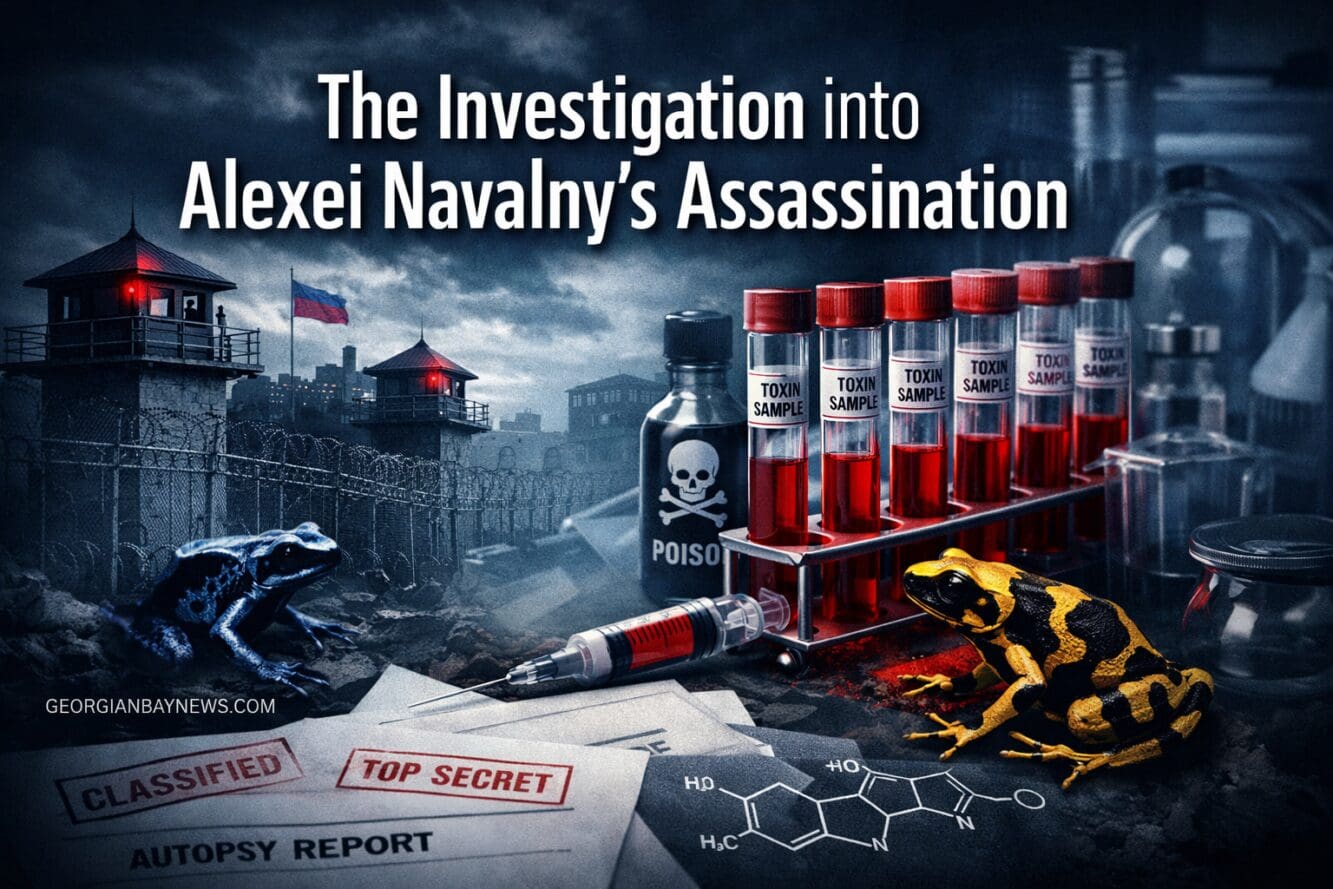
The Investigation into the Assassination of Alexei Navalny: What Five European Nations Discovered

Last updated: February, 16, 2026
When Alexei Navalny died in a Russian prison in February 2024, the Kremlin claimed he simply fell ill after a walk.
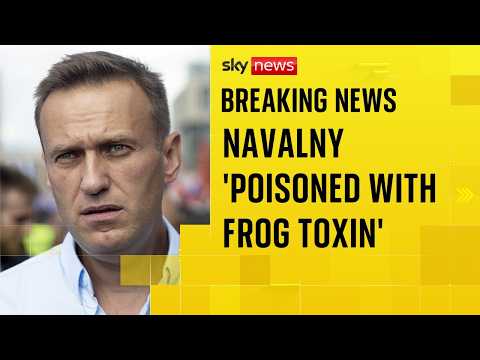
Two years later, a multinational investigation has revealed a far darker truth: the assassination of Alexei Navalny involved a rare toxin from South American poison dart frogs—a substance with no natural occurrence in Russia and no legitimate medical use.

Consider This
- Five European nations (France, Germany, Netherlands, Sweden, UK) confirmed epibatidine—a lethal poison dart frog toxin—killed Navalny in prison
- The toxin causes muscle paralysis and asphyxiation, with investigators concluding Russia had “means, motive and opportunity” to administer it
- Russia’s official story of natural death has been thoroughly discredited by forensic evidence from smuggled biological samples
- The findings represent violations of international Chemical Weapons and Biological Weapons conventions
- Navalny’s family considers the investigation a vindication, while the Kremlin dismisses it as “Western propaganda”
Quick Answer
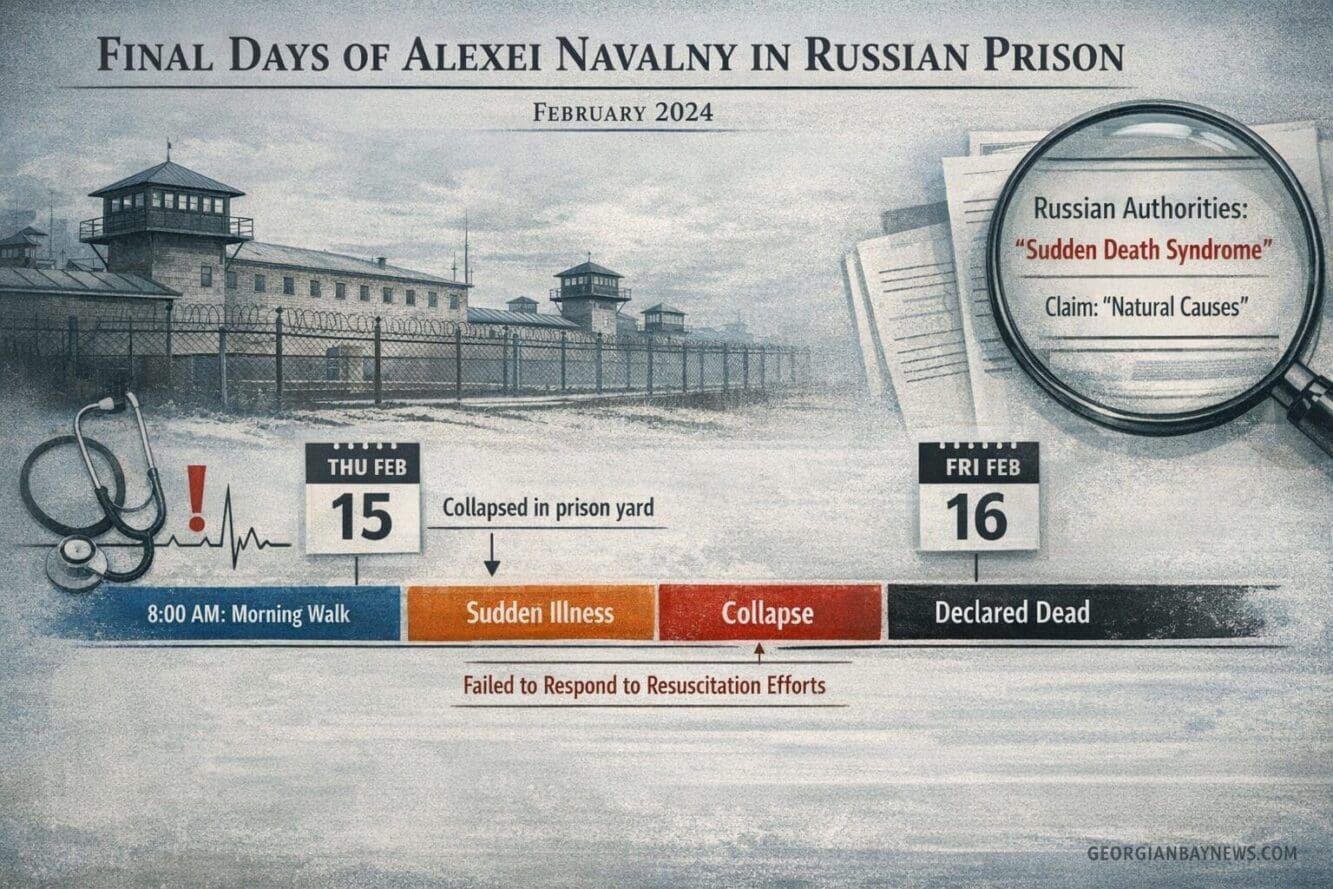
The assassination of Alexei Navalny has been confirmed by a joint investigation from five European countries, which found traces of epibatidine—a highly toxic substance from South American frogs—in his remains. This toxin, which causes fatal muscle paralysis, does not exist naturally in Russia and has no medical applications, pointing to deliberate poisoning while Navalny was imprisoned. The multinational findings directly contradict Russia’s claims that the prominent Kremlin critic died of natural causes.
What Happened to Alexei Navalny in February 2024?
Alexei Navalny, Russia’s most prominent opposition leader and anti-corruption activist, died on February 16, 2024, in the IK-3 penal colony in Russia’s Arctic region. Russian prison authorities initially claimed Navalny had gone for a walk, returned to his cell, and suddenly fell ill before losing consciousness.[4]
The official Russian narrative painted a picture of unexpected natural death. Prison service statements described Navalny as experiencing sudden health complications, with medical personnel allegedly attempting resuscitation. However, this account raised immediate suspicions among international observers, human rights organizations, and Navalny’s family.

Key timeline of events:
- February 16, 2024: Navalny dies in Russian custody at age 47
- Immediate aftermath: Russian authorities provide vague explanations about sudden illness
- February 2024-2025: Navalny’s family and supporters push for independent investigation
- September 2025: Yulia Navalnaya announces two independent laboratories found evidence of poisoning[2]
- February 2026: Five European nations publicly release joint investigation findings at Munich Security Conference[1]
The circumstances surrounding Navalny’s imprisonment were already controversial. He had been serving a 19-year sentence on charges widely considered politically motivated by international human rights groups. His transfer to the harsh Arctic penal colony was seen by many as an attempt to isolate him further from supporters and international scrutiny.
One detail that troubled investigators from the start: Navalny had survived a previous poisoning attempt in August 2020 with the nerve agent Novichok, a military-grade chemical weapon. That attack left him in a coma and required emergency medical evacuation to Germany. His survival and subsequent return to Russia in 2021—despite knowing he would be arrested—demonstrated his commitment to opposing the Kremlin.
What Did the European Investigation Discover About the Assassination of Alexei Navalny?
The multinational investigation by France, Germany, the Netherlands, Sweden, and the United Kingdom concluded that Navalny was killed by epibatidine, a highly potent toxin found in certain South American poison dart frogs.[1][2] This discovery represents the smoking gun that transforms suspicion into scientific certainty.
German Foreign Minister Johann Wadephul announced the findings at the Munich Security Conference, stating the five governments had independently verified the presence of this exotic toxin in Navalny’s biological samples.[1]
The Evidence Trail
The investigation relied on biological samples that were reportedly smuggled out of Russia after Navalny’s death. Yulia Navalnaya, his widow, had announced in September 2025 that laboratories in two different countries independently reached the same conclusion about poisoning.[2]
What makes this finding significant:
- Geographic impossibility: Epibatidine is not found naturally anywhere in Russia[2]
- No medical use: The toxin has no therapeutic applications due to its extremely narrow margin between any potential benefit and fatal dose[1]
- Sophisticated access required: The substance must either be extracted from specific South American frog species or synthesized in specialized laboratories[4]
- Clear intent: The presence of such an exotic toxin rules out accidental exposure or natural causes
The five European governments issued a joint statement concluding that Russia possessed “the means, motive and opportunity” to administer the lethal toxin to Navalny while he was held in state custody.[1]
How Epibatidine Works
Understanding the mechanism of this poison helps explain why investigators are certain about foul play. Epibatidine acts on the body’s nicotinic acetylcholine receptors, causing progressive muscle paralysis. Victims experience:
- Initial muscle weakness
- Respiratory muscle paralysis
- Inability to breathe independently
- Death by asphyxiation
The toxin is approximately 200 times more potent than morphine as a painkiller, but the dose that might relieve pain is dangerously close to the dose that causes death—making it useless for medicine but ideal for assassination.
Common mistake to avoid: Some observers initially wondered if Navalny could have been exposed accidentally. However, epibatidine’s extreme rarity, geographic specificity, and the controlled prison environment make accidental exposure essentially impossible.
How Did Investigators Obtain Evidence After Navalny’s Death?
The forensic investigation faced extraordinary challenges because Russian authorities controlled Navalny’s body and the death scene. Despite these obstacles, biological samples were obtained and analyzed by multiple independent European laboratories.
While the exact methods of sample collection remain partially classified for security reasons, Yulia Navalnaya’s September 2025 announcement provided crucial context. She revealed that laboratories in two different countries had independently analyzed samples and reached identical conclusions about poisoning.[2]
The Chain of Evidence
Sample collection and analysis process:
- Biological samples were secured shortly after Navalny’s death
- Materials were transported to at least two independent European laboratories
- France, Germany, Netherlands, Sweden, and UK coordinated analysis
- Multiple testing methodologies confirmed epibatidine presence
- Results were cross-verified before public announcement
The multinational approach strengthened the findings’ credibility. By having five different countries with independent intelligence and scientific capabilities reach the same conclusion, the investigation eliminated the possibility of error or bias from a single source.
Why Multiple Countries Participated
The decision to involve five European nations wasn’t arbitrary. Each country brought specific expertise:
- Germany: Had previously treated Navalny after the 2020 Novichok poisoning, providing baseline medical data
- France and UK: Possess advanced chemical weapons identification capabilities
- Netherlands: Hosts international legal institutions and chemical weapons expertise
- Sweden: Maintains sophisticated forensic toxicology programs
This collaborative approach mirrors the investigation into the 2018 Salisbury poisonings, where international cooperation proved essential to identifying Russian-origin nerve agents.
What Is Epibatidine and Why Does It Point to the Assassination of Alexei Navalny?
Epibatidine is a chlorinated alkaloid compound originally isolated from the skin of Epipedobates anthonyi, a poison dart frog species native to Ecuador and Peru. The substance represents one of nature’s most potent toxins, and its presence in Navalny’s body constitutes powerful evidence of deliberate poisoning.
Natural Origins and Synthetic Production
In nature, certain poison dart frog species produce epibatidine as a defense mechanism. The bright coloration of these frogs serves as a warning to potential predators—a visual signal that consuming them would be fatal.
Key characteristics:
- Natural source: Specific South American frog species
- Synthetic production: Can be manufactured in specialized chemistry laboratories[4]
- Potency: Extremely toxic even in minute quantities
- Detection: Requires sophisticated analytical chemistry to identify
- Stability: Remains detectable in biological tissues post-mortem
The fact that epibatidine can be synthesized expands the possible methods of administration. An assassin wouldn’t need to extract the toxin from frogs; a state-sponsored laboratory could produce it chemically.[4]
Why This Toxin Was Chosen
The selection of epibatidine for the assassination of Alexei Navalny reveals strategic thinking:
- Exotic origin makes accidental exposure implausible
- Rapid action causes death relatively quickly
- Muscle paralysis mimics certain natural medical emergencies
- Limited detection requires specific testing protocols
- Deniability is undermined only by sophisticated forensic analysis
Choose this interpretation if: You’re analyzing the tactical decisions behind the assassination method. The toxin choice suggests assassins expected either no autopsy would occur, or that Russian-controlled examinations would not test for such an exotic substance.
Geographic Significance
The five European countries specifically emphasized that epibatidine does not occur naturally anywhere in Russia.[2] This geographic fact eliminates any possibility of:
- Natural environmental exposure
- Accidental contact with local wildlife
- Contamination from Russian flora or fauna
- Unintentional poisoning
The toxin had to be deliberately obtained from South American sources or synthesized in a laboratory, then intentionally administered to Navalny while he was in a controlled prison environment where the Russian state monitored his every interaction.
How Has Russia Responded to the Assassination Findings?
The Kremlin has flatly rejected the European investigation’s conclusions, with spokesman Dmitry Peskov dismissing the findings as “biased and baseless” and characterizing them as a “Western propaganda hoax.”[4]
Russia’s official response follows a familiar pattern of denial that has characterized the government’s reaction to previous poisoning allegations, including the 2020 Novichok attack on Navalny and the 2018 Salisbury poisonings in the UK.
Official Russian Position
Key elements of Russia’s denial:
- Claims the investigation is politically motivated
- Rejects the scientific evidence as fabricated
- Maintains Navalny died of natural causes
- Refuses to acknowledge any state involvement
- Characterizes European findings as anti-Russian propaganda[4]
Dmitry Peskov’s statement attempted to discredit the multinational investigation by suggesting Western nations coordinated a false narrative. However, this argument struggles against the scientific reality that five independent countries with sophisticated forensic capabilities all identified the same exotic toxin.
Pattern of Denial
Russia’s response to the assassination of Alexei Navalny mirrors previous reactions:
- 2020 Novichok poisoning: Initially denied, then claimed Navalny faked illness
- 2018 Salisbury attack: Denied involvement despite clear evidence
- 2006 Litvinenko poisoning: Rejected polonium-210 findings for years
- 2024 Navalny death: Continues to insist on natural causes despite toxicology
This consistent pattern of denial persists even when confronted with overwhelming forensic evidence. The strategy appears designed for domestic Russian consumption rather than international credibility.
Why the Denials Ring Hollow
Several factors undermine Russia’s rejection of the findings:
- Multiple independent verifications from five different countries
- Scientific consensus on toxin identification
- State custody means Russia controlled Navalny’s environment
- Previous poisoning establishes a pattern of attacks
- Motive is clear given Navalny’s opposition activities
Common mistake: Some observers give equal weight to Russia’s denials and the European evidence. However, scientific forensic findings from multiple independent sources carry far more credibility than blanket political denials without supporting evidence.
What Do International Laws Say About the Assassination of Alexei Navalny?
The five European countries stated that the assassination of Alexei Navalny represents violations of both the Chemical Weapons Convention and the Biological and Toxin Weapons Convention—two foundational international treaties designed to prevent the weaponization of toxic substances.[2]
Chemical Weapons Convention Violations
The Chemical Weapons Convention (CWC), which entered into force in 1997, prohibits the development, production, stockpiling, and use of chemical weapons. Russia is a signatory to this treaty.
Key provisions violated:
- Article I: Prohibits use of toxic chemicals as weapons
- Article II: Defines toxic chemicals as those causing harm to humans
- State party obligations: Requires destruction of chemical weapons stockpiles
- Verification mechanisms: Mandates cooperation with investigations
Epibatidine, when used to kill a human being, clearly falls under the CWC’s definition of a chemical weapon. The toxin serves no legitimate purpose in this context—its sole function was to cause death.
Biological and Toxin Weapons Convention
The Biological and Toxin Weapons Convention (BTWC), effective since 1975, prohibits biological agents and toxins “of types and in quantities that have no justification for prophylactic, protective or other peaceful purposes.”
Since epibatidine has no medical applications and was present in quantities sufficient to cause death, its use violates this convention’s core principles.
Precedent and Accountability
The assassination of Alexei Navalny joins a troubling list of apparent Russian violations:
| Incident | Year | Substance | Victim | Convention Violated |
|---|---|---|---|---|
| Litvinenko poisoning | 2006 | Polonium-210 | Alexander Litvinenko | BTWC |
| Skripal attack | 2018 | Novichok | Sergei Skripal | CWC |
| Navalny attack #1 | 2020 | Novichok | Alexei Navalny | CWC |
| Navalny death | 2024 | Epibatidine | Alexei Navalny | CWC, BTWC |
Enforcement Challenges
Despite clear violations, international enforcement mechanisms face significant obstacles:
- Russia holds UN Security Council veto power
- International Criminal Court jurisdiction is limited
- Economic sanctions have proven insufficient deterrents
- Diplomatic pressure has not changed behavior patterns
Choose sanctions if: Your country prioritizes targeted consequences for specific officials involved, though historical evidence suggests limited effectiveness in preventing future attacks.
Choose international tribunals if: You believe long-term documentation and potential future accountability outweigh immediate enforcement challenges.
How Has Navalny’s Family Responded to the Investigation?
Navalny’s mother stated she felt vindicated by the European assessment, telling reporters: “We knew that our son did not simply die in prison, he was murdered.”[1] This response captures the family’s long-held conviction that Russian authorities were responsible for his death.
Yulia Navalnaya’s Leadership
Yulia Navalnaya, Navalny’s widow, has emerged as a prominent voice continuing her husband’s anti-corruption work and demanding accountability for his assassination. Her September 2025 announcement about independent laboratory findings laid crucial groundwork for the February 2026 multinational report.[2]
Her key actions:
- Secured and facilitated analysis of biological samples
- Coordinated with multiple European governments
- Maintained international pressure for investigation
- Continued Navalny’s anti-corruption mission
- Advocated for sanctions against Russian officials
Yulia’s determination to uncover the truth about the assassination of Alexei Navalny reflects both personal grief and political commitment. She has stated publicly that exposing the circumstances of her husband’s death serves not only justice for their family but also accountability for Russia’s political opposition more broadly.
The Family’s Quest for Justice
The Navalny family faced enormous obstacles in their pursuit of truth:
- Russian obstruction: Authorities controlled the body and death scene
- Limited access: Family members were denied independent autopsy
- International complexity: Required cooperation across multiple countries
- Security risks: Speaking out endangered family members still in Russia
- Time pressure: Biological samples degrade, making rapid action essential
Despite these challenges, the family’s persistence proved crucial. Without their efforts to secure and smuggle biological samples out of Russia, the definitive forensic evidence might never have reached European laboratories.
Personal Toll and Public Courage
Navalny’s mother’s statement about vindication carries profound personal weight. She lost her son under circumstances the Russian government refused to explain honestly. The European investigation’s findings transform private grief into documented historical fact—her son was indeed murdered, and the evidence proves it.
This vindication matters beyond the personal. It establishes a factual record that cannot be erased by propaganda or denial. Future historians, legal proceedings, and accountability mechanisms now have scientific evidence rather than merely circumstantial suspicion.
What Does the U.S. Say About the Assassination of Alexei Navalny?
Secretary of State Marco Rubio stated the United States is “not disputing” the European findings and called the report “very troubling and very serious.”[2] This measured response indicates American intelligence agencies have reviewed the evidence and find it credible.
U.S. Intelligence Assessment
While the United States did not participate as a formal partner in the five-nation investigation, American intelligence services maintain sophisticated capabilities for analyzing chemical and biological weapons use. The State Department’s endorsement of the European findings suggests U.S. agencies independently verified or corroborated the conclusions.
Factors influencing the U.S. position:
- Intelligence sharing agreements with European allies
- Independent technical analysis capabilities
- Previous experience with Russian poisoning operations
- Diplomatic considerations regarding Russia relations
- Domestic political factors in 2026
The phrase “not disputing” represents careful diplomatic language. It signals agreement without claiming direct participation in the investigation, allowing European allies to take the lead while the U.S. provides supporting validation.
Historical Context of U.S.-Russia Relations
The assassination of Alexei Navalny occurs against a complex backdrop of U.S.-Russia relations that have deteriorated significantly since 2014. Previous Russian poisoning operations have strained diplomatic ties:
- 2018 Salisbury poisonings: U.S. joined coordinated expulsion of Russian diplomats
- 2020 Navalny Novichok attack: U.S. imposed targeted sanctions
- 2024 Navalny death: Initial U.S. response focused on calls for investigation
The 2026 findings place the U.S. government in a position of needing to respond to confirmed assassination rather than suspected foul play. This shift from suspicion to scientific certainty changes the diplomatic calculus.
Potential U.S. Actions
Secretary Rubio’s characterization of the findings as “very troubling and very serious” suggests potential policy responses:
- Additional targeted sanctions on Russian officials
- Support for international accountability mechanisms
- Enhanced security cooperation with European allies
- Restrictions on Russian diplomatic activities
- Coordination with world leaders on unified response
Common mistake: Expecting dramatic immediate action. Diplomatic responses to international crimes often unfold gradually, with coordinated multilateral measures proving more effective than unilateral reactions.
What Are the Broader Implications for International Security?
The assassination of Alexei Navalny using an exotic biological toxin represents more than a single criminal act—it signals a disturbing pattern of state-sponsored assassinations using weapons banned by international treaties.
Erosion of International Norms
The Chemical Weapons Convention and Biological Weapons Convention were designed to prevent exactly this type of attack. Russia’s apparent willingness to violate these treaties with impunity undermines the entire framework of international arms control.
Consequences of norm erosion:
- Other nations may feel less constrained by treaty obligations
- Chemical and biological weapons become normalized assassination tools
- International verification mechanisms lose credibility
- Arms control agreements face existential threats
- Deterrence through international law weakens
When major powers violate treaties without significant consequences, smaller nations and non-state actors may conclude that international law lacks enforcement teeth. This erosion creates dangerous precedents.
Pattern of Russian Poisonings
The Navalny assassination fits a documented pattern of Russian state-sponsored poisonings targeting political opponents, defectors, and perceived enemies:
Notable cases:
- Alexander Litvinenko (2006): Polonium-210 in London
- Sergei Skripal (2018): Novichok in Salisbury, UK
- Alexei Navalny (2020): Novichok in Russia
- Alexei Navalny (2024): Epibatidine in Russian prison
This pattern suggests a deliberate strategy rather than isolated incidents. The use of exotic, traceable substances—despite their obvious evidentiary trail—may serve as a form of signature, sending a message to other potential dissidents.
Implications for Political Opposition
The confirmed assassination sends a chilling message to anyone considering opposition to authoritarian regimes: exile may not protect you, and even imprisonment may not be the final punishment.
Effects on political dissent:
- Increased fear among opposition figures
- Potential emigration of activists
- Self-censorship by critics
- Reduced willingness to challenge authority
- Normalization of political violence
For communities worldwide watching this case, the message is sobering. If Russia can assassinate its most prominent opposition leader in a state prison using banned weapons without facing meaningful consequences, what protections exist for lesser-known activists?
International Response Coordination
The five-nation investigation demonstrates that coordinated international responses remain possible even in an era of declining multilateralism. France, Germany, Netherlands, Sweden, and the UK showed that allied democracies can work together to establish facts and hold powerful states accountable—at least in the court of public opinion.
Lessons for future cases:
- Multinational investigations carry more credibility than single-country findings
- Scientific evidence transcends political disputes
- Coordinated announcements amplify impact
- Timing matters (two-year anniversary, major security conference)
- Family cooperation can be essential for evidence collection
Frequently Asked Questions
What toxin killed Alexei Navalny?
Epibatidine, a highly potent toxin found in certain South American poison dart frogs, killed Navalny according to investigations by France, Germany, Netherlands, Sweden, and the UK. This substance causes muscle paralysis and asphyxiation.[1][2]
When did Alexei Navalny die?
Navalny died on February 16, 2024, while imprisoned in the IK-3 penal colony in Russia’s Arctic region. Russian authorities initially claimed he fell ill after a walk, but the 2026 investigation revealed assassination by poison.[4]
How did investigators get evidence after Navalny’s death?
Biological samples were reportedly smuggled out of Russia and analyzed by laboratories in multiple European countries. Yulia Navalnaya announced in September 2025 that two independent laboratories had confirmed poisoning.[2]
Does epibatidine occur naturally in Russia?
No. The five European countries specifically emphasized that epibatidine is not found naturally anywhere in Russia, making its presence in Navalny’s body clear evidence of deliberate poisoning.[2]
What does Russia say about the investigation findings?
The Kremlin flatly rejected the findings, with spokesman Dmitry Peskov calling the accusations “biased and baseless” and dismissing them as “Western propaganda hoax.”[4] Russia maintains Navalny died of natural causes.
What international laws did the assassination violate?
The assassination violated both the Chemical Weapons Convention and the Biological and Toxin Weapons Convention, according to the five European governments. Both treaties prohibit using toxic substances as weapons.[2]
Can epibatidine be produced synthetically?
Yes. While epibatidine occurs naturally in South American poison dart frogs, experts note it can also be produced synthetically in specialized chemistry laboratories, expanding the possible methods of obtaining the toxin.[4]
What has the United States said about the findings?
Secretary of State Marco Rubio stated the U.S. is “not disputing” the European findings and called the report “very troubling and very serious,” indicating American acceptance of the investigation’s conclusions.[2]
How did Navalny’s family react to the investigation?
Navalny’s mother said she felt vindicated, stating “we knew that our son did not simply die in prison, he was murdered.” His widow Yulia had previously facilitated the analysis of biological samples that proved poisoning.[1]
Was this Navalny’s first poisoning?
No. Navalny survived a previous assassination attempt in August 2020 when he was poisoned with Novichok, a military-grade nerve agent. He was treated in Germany and recovered before returning to Russia in 2021.
What happens next in terms of accountability?
International accountability faces challenges because Russia holds UN Security Council veto power. Potential responses include additional sanctions, international tribunal documentation, and continued diplomatic pressure, though enforcement remains difficult.
Why did the announcement happen at the Munich Security Conference?
The Munich Security Conference is a major annual gathering of international security leaders. Announcing the findings there maximized visibility and allowed coordination with the two-year anniversary of Navalny’s death in February 2026.[1]
Key Takeaways
- Scientific certainty: Five European nations independently confirmed epibatidine—a South American poison dart frog toxin—killed Navalny, eliminating any doubt about assassination versus natural death
- Geographic impossibility: The toxin does not occur naturally in Russia, making deliberate poisoning the only plausible explanation for its presence in Navalny’s body
- International law violations: The assassination violated both the Chemical Weapons Convention and Biological and Toxin Weapons Convention that Russia signed
- Family vindication: Navalny’s mother and widow feel vindicated after years of knowing the truth but lacking scientific proof to counter Russian denials
- Pattern of behavior: This assassination represents the fourth major Russian poisoning operation since 2006, suggesting a deliberate state strategy
- Multinational cooperation: The joint investigation by France, Germany, Netherlands, Sweden, and UK demonstrates the value of coordinated international responses
- U.S. endorsement: American officials called the findings “very troubling and very serious” and did not dispute the European conclusions
- Kremlin denial: Russia continues to reject all evidence and characterize the investigation as Western propaganda, maintaining Navalny died naturally
- Enforcement challenges: Despite clear evidence of international law violations, meaningful accountability faces obstacles due to Russia’s UN Security Council veto power
- Broader implications: The assassination and subsequent impunity erode international norms against chemical and biological weapons use
Conclusion
The investigation into the assassination of Alexei Navalny has transformed suspicion into scientific certainty. Five European nations working independently reached the same conclusion: Russia’s most prominent opposition leader was murdered using epibatidine, an exotic toxin that does not exist naturally in Russia and has no legitimate medical purpose.
This finding matters beyond Navalny’s individual case. It documents a pattern of Russian state-sponsored poisonings using banned weapons, undermines international arms control treaties, and sends a chilling message to political dissidents worldwide. The Kremlin’s flat denials in the face of overwhelming forensic evidence demonstrate a willingness to reject scientific reality in favor of propaganda narratives.
For Navalny’s family, the investigation provides vindication—scientific proof that their loved one was murdered, not a victim of natural causes. For the international community, it presents a test of whether violations of chemical and biological weapons conventions will face meaningful consequences or merely diplomatic condemnation.
What You Can Do
For concerned citizens:
- Stay informed about developments through credible international news sources
- Support organizations working on human rights and political prisoner advocacy
- Contact elected representatives to encourage strong responses to international law violations
- Amplify the voices of Russian opposition figures continuing Navalny’s work
For policymakers and world leaders:
- Coordinate with allies on targeted sanctions against officials involved in the assassination
- Support international accountability mechanisms including potential tribunal documentation
- Strengthen enforcement of chemical and biological weapons conventions
- Provide security assistance to at-risk dissidents and opposition figures
For journalists and researchers:
- Continue investigating Russian poisoning operations and documenting patterns
- Preserve evidence for potential future accountability proceedings
- Report on the broader implications for international security and arms control
- Give voice to victims’ families and continuing opposition movements
The assassination of Alexei Navalny represents a pivotal moment for international law and human rights. The scientific evidence is clear, the violations are documented, and the world is watching how democracies respond when authoritarian regimes murder their critics with banned weapons. The choices made in 2026 will shape whether international norms retain meaning or become mere suggestions that powerful states can ignore with impunity.
References
[1] A 75986171 – https://amp.dw.com/en/alexei-navalny-supporters-mark-two-years-since-his-death/a-75986171
[2] Kremlin Critic Alexey Navalny Killed By Lethal Toxins In Jail European Countries Say South America Russia – https://abc3340.com/news/nation-world/kremlin-critic-alexey-navalny-killed-by-lethal-toxins-in-jail-european-countries-say-south-america-russia
[3] Kremlin Critic Alexey Navalny Killed By Lethal Toxins In Jail European Countries Say South America Russia – https://wach.com/news/nation-world/kremlin-critic-alexey-navalny-killed-by-lethal-toxins-in-jail-european-countries-say-south-america-russia
[4] 5241385 Kremlin Rejects European Assessment Navalny Died Poisoning – https://english.aawsat.com/world/5241385-kremlin-rejects-european-assessment-navalny-died-poisoning
Some content and illustrations on GEORGIANBAYNEWS.COM are created with the assistance of AI tools.
GEORGIANBAYNEWS.COM shares video content from YouTube creators under fair use principles. We respect creators’ intellectual property and include direct links to their original videos, channels, and social media platforms whenever we feature their content. This practice supports creators by driving traffic to their platforms.
Much Appreciate You Sharing This Post - It Helps MUCH!!!