
























The Winter Witch by Jennifer Chevalier: Cursed Brides and New France Secrets

Thanks to my friend MT for suggesting this new feature of Canadian Writers.
Last updated: February 22, 2026
Jennifer Chevalier’s debut novel The Winter Witch drops two sisters onto a bride ship bound for 17th-century Montreal, where scandal, supposed curses, and a mysterious stowaway collide with the brutal realities of colonial life. Published January 27, 2026, by Simon & Schuster, this 384-page historical fiction draws on the real history of Canada’s Filles du Roi — the “daughters of the king” sent to populate New France — and asks a sharp question: what happens when fear, ignorance, and desperation create a witch hunt? This article breaks down everything readers need to know about The Winter Witch by Jennifer Chevalier: Cursed Brides and New France Secrets, from plot and characters to historical accuracy, critical reception, and whether it belongs on your reading list.
Key Takeaways
- The Winter Witch is Jennifer Chevalier’s debut novel, published January 27, 2026, at 384 pages in paperback (ISBN 9781668216422) [4][5].
- The story follows sisters Élisabeth and Marthe Jossard from Normandy to Montreal aboard a bride ship, inspired by the historical Filles du Roi program [3].
- A central mystery revolves around Jeanne Roy, an enigmatic stowaway Élisabeth believes is a witch [2][3].
- Reviews praise the deep historical research and atmospheric writing, though note the first half builds slowly before accelerating into a gripping final act [1][2].
- The novel examines how lies, arrogance, and ignorance fuel witch hunts in any era [3].

Quick Answer

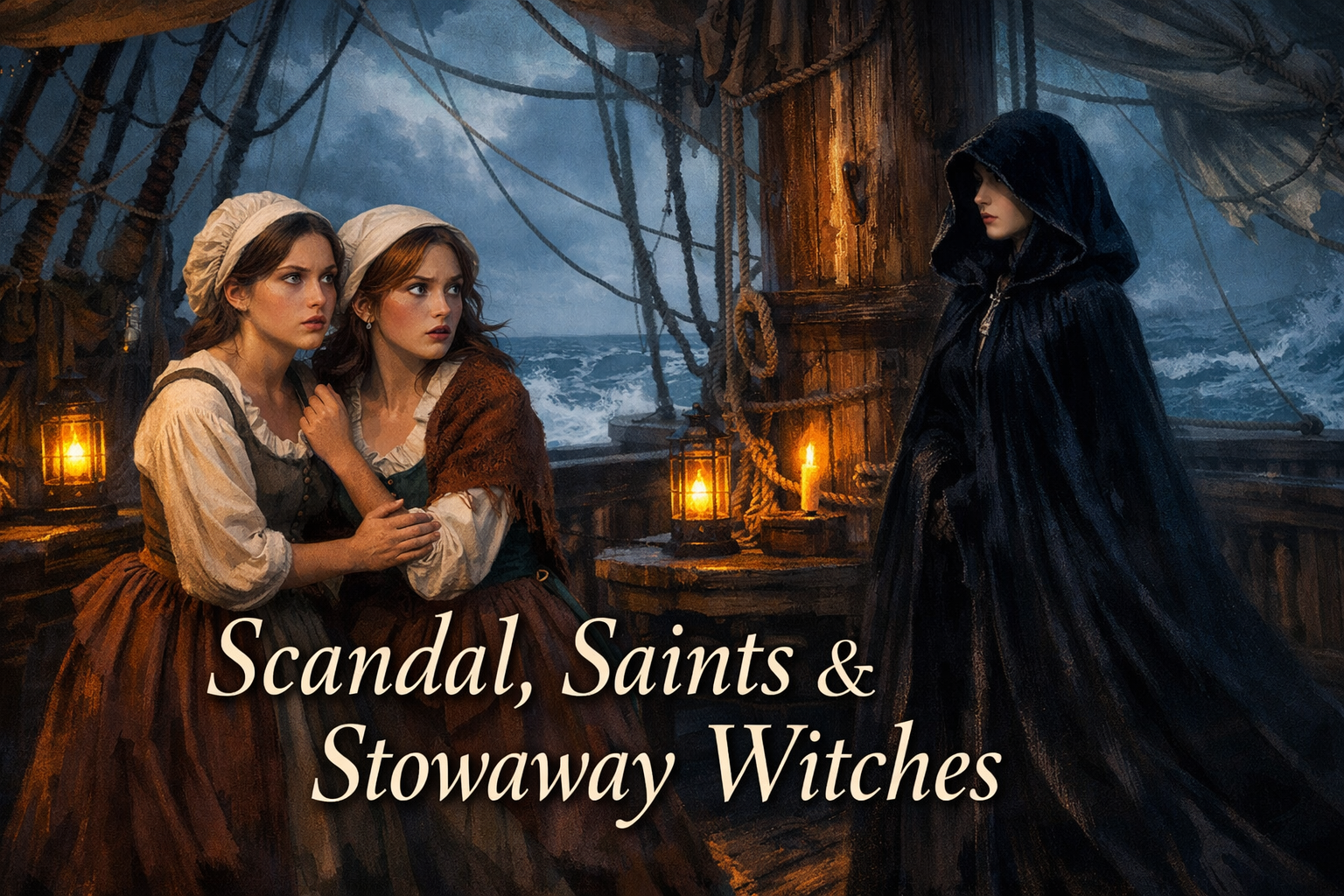
The Winter Witch by Jennifer Chevalier is a historical fiction novel set in 1660s Quebec that follows two French sisters forced onto a bride ship after a village scandal. Élisabeth believes she is cursed and seeks supernatural help from a mysterious woman named Jeanne Roy, while her pragmatic sister Marthe tries to build a new life. The book blends real Canadian history with themes of witchcraft, sisterhood, and survival, and has received strong early reviews for its research and atmosphere [1][3].
What Is The Winter Witch by Jennifer Chevalier About?
The Winter Witch tells the story of Élisabeth and Marthe Jossard, two sisters from a village in Normandy who board a bride ship to New France after a scandal forces them from their home. Each sister carries her own burden: Élisabeth harbors a dark secret and believes a demon or curse follows her, while Marthe — headstrong and ambitious — resents being dragged into exile but intends to make the most of it [1][3].
During the Atlantic crossing, the ship’s priest grows convinced a witch is aboard. A mysterious woman named Jeanne Roy, dressed in velvet and traveling as a stowaway, borrows Élisabeth’s letter of good conduct and returns it under strange circumstances [1]. Once the sisters arrive in Montreal and marry local settlers, their paths diverge:
- Élisabeth becomes consumed by her belief in demonic possession, praying to saints for relief and eventually seeking Jeanne Roy’s help.
- Marthe focuses on practical survival — running a bakery, improving her social standing, and managing the difficult widow of the previous baker who still lives in their home [1][2].
The novel builds toward a confrontation over witchcraft accusations, exploring how fear and superstition can destroy communities from the inside.
“Inspired by the tales of Canada’s Filles du Roi, The Winter Witch examines how lies, arrogance, and ignorance can lead to witch hunts in any society.” [3]
Who Were the Filles du Roi, and Why Do They Matter to This Story?
The Filles du Roi (“daughters of the king”) were roughly 800 young women sent from France to New France between 1663 and 1673, sponsored by King Louis XIV to address a severe gender imbalance in the colony. Most were poor, some were orphans, and all were expected to marry settlers and bear children to grow the French population in North America.
Chevalier builds her novel on this historical foundation. The sisters carry letters of good conduct signed by their village priest — a real requirement for Filles du Roi — and face the actual conditions these women encountered: arranged marriages to strangers, brutal winters, scarce food, and isolation [1][3].
What makes the novel’s approach distinctive is its focus on what happened after arrival. Many fictional treatments of the Filles du Roi concentrate on the ocean crossing or the matchmaking process. Chevalier spends significant time on the sisters’ first winter in Montreal, where the psychological and physical toll of settlement life becomes the real antagonist [1].
Historical sorcery cases in New France were rare compared to the Salem witch trials or European witch hunts, a fact Chevalier notes in her author’s afterword. The novel uses this relative absence as a canvas to explore what a witch hunt might have looked like in the colony, making the story both historically grounded and speculative [1]. For those interested in how stories from Canada’s past continue to surface in unexpected ways, this novel adds a compelling chapter.
According to canadashistory.ca, real cases of alleged sorcery did occur in 1660s New France, including the strange case of Barbe Hallé and Daniel Vuil in Beauport, where a house was reportedly plagued by flying stones and unexplained phenomena. Chevalier’s fiction draws on this same atmosphere of fear and superstition.
How Does Chevalier Handle the Cursed Brides and New France Secrets?
The “cursed brides” element works on two levels. On the surface, Élisabeth genuinely believes a supernatural force torments her. Her streak of terrible luck — loss, scandal, exile — reinforces this belief. On a deeper level, the novel treats Élisabeth’s conviction as a lens into 17th-century mental health, where grief, trauma, and anxiety had no clinical vocabulary and were often explained through religious or supernatural frameworks [1][3].
Chevalier uses alternating viewpoints between the two sisters, and both are unreliable narrators. Élisabeth sees sorcery and doom everywhere. Marthe’s ambition blinds her to danger right in front of her [6]. This dual perspective keeps readers uncertain about what’s real and what’s imagined, which is the novel’s strongest structural choice.
Key secrets and mysteries in the plot:
| Mystery | Who holds it | How it unfolds |
|---|---|---|
| Élisabeth’s village scandal | Both sisters | Revealed gradually in flashbacks over the first half |
| Jeanne Roy’s identity and motives | Jeanne Roy | Withheld until the final act |
| The “demon” tormenting Élisabeth | Élisabeth | Ambiguous — could be supernatural or psychological |
| The borrowed letter of good conduct | Jeanne Roy / Élisabeth | Creates tension aboard the ship and suspicion in Montreal |
| Marthe’s hidden vulnerabilities | Marthe | Emerges as her practical facade cracks under pressure |
The borrowed letter of good conduct is a particularly effective plot device. Without it, Élisabeth cannot prove her eligibility as a bride. Jeanne Roy’s mysterious handling of the document creates immediate stakes and links the two women’s fates [1].
What Do Critics Say About The Winter Witch by Jennifer Chevalier: Cursed Brides and New France Secrets?
Early reviews have been largely positive, with specific praise for the novel’s research and atmosphere.
Ami McKay, bestselling author of The Witches of New York, called it “the best kind of historical fiction — brimming with enticing details, sparkling dialogue, and unforgettable characters” [6]. Heather O’Neill described it as “a rollicking portrait of the filles du roi” that “centers these young vulnerable women and turns them into feisty, searching, transgressive heroines” [6].
Book review sites have offered more nuanced assessments:
- whatsbetterthanbooks.com gave it 8 out of 10, praising the “eloquent and descriptive” writing and “resilient, layered, and compelling” characters.
- miramichireader.ca noted that the story is “slow to get started” in the first half but becomes “riveting” once the sisters settle in Montreal [1].
Common points across reviews:
- Strengths: Deep historical research, atmospheric winter setting, complex sister dynamic, thoughtful treatment of witchcraft themes
- Weakness noted by multiple reviewers: The first 60% of the novel builds slowly, with the scandal backstory parceled out in small pieces across several chapters [1][2]
- Consensus: The payoff in the final third is worth the patient setup
For readers who enjoy cultural events and storytelling rooted in heritage, this novel’s deep engagement with French-Canadian history offers a similar sense of discovery.
Is The Winter Witch Historically Accurate?
Chevalier clearly did extensive research, and reviewers have specifically highlighted this as a strength [1][2]. The novel gets the following details right based on the historical record:
- Letters of good conduct: Real Filles du Roi needed these documents, typically signed by a parish priest, to prove their moral character before being allowed to marry in the colony.
- Marriage pressure: Women were expected to choose a husband quickly upon arrival. The novel captures this urgency.
- Settlement conditions: The deprivation, cold, and isolation of 1660s Montreal are rendered in detail that reviewers describe as immersive [2].
- Witchcraft in New France: As Chevalier notes in her afterword, New France did not experience the large-scale witch panics seen in New England or Europe, but individual accusations and fears of sorcery did occur [1].
Where the novel takes creative liberties is in the character of Jeanne Roy and the specific witchcraft plot, which are fictional constructions placed within an accurate historical framework. This is standard practice for the genre and clearly disclosed by the author.
One reviewer noted that Chevalier “has successfully recreated the past as a wholly imagined world” [2], suggesting the research serves the story rather than overwhelming it with historical exposition.
Who Should Read This Book (and Who Might Want to Skip It)?
Read it if you:
- Enjoy historical fiction set in colonial North America, particularly Canadian history
- Like novels about sisterhood, family secrets, and complicated female relationships
- Are drawn to stories about witchcraft that treat the subject with nuance rather than as pure fantasy
- Appreciate slow-burn narratives that reward patience with a strong final act
- Have read and enjoyed authors like Ami McKay, Emilia Hart, Sarah Penner, or Alix E. Harrow [3]
Consider skipping if you:
- Need fast pacing from the first chapter — the novel’s first half is deliberately slow [1][2]
- Prefer clear-cut supernatural elements (this book keeps the line between real and imagined deliberately blurry)
- Are looking for romance as the primary plot driver — the marriages here are practical arrangements, not love stories
- Want a light, easy read (the themes of possession, trauma, and persecution are heavy)
For those who enjoy spending time immersed in nature and reflection, the novel’s vivid descriptions of Quebec’s harsh winter landscape provide a similar contemplative quality, though with considerably more dread.
How Does The Winter Witch Compare to Similar Historical Fiction?
Chevalier’s publisher positions the novel alongside several comparable authors [3]. Here’s how it stacks up:
| Comparison | Similarity | Key Difference |
|---|---|---|
| Ami McKay (The Witches of New York) | Witchcraft themes, strong female characters, historical setting | McKay’s work is set in 19th-century New York; Chevalier goes further back to the 1660s |
| Emilia Hart (Weyward) | Multi-generational women’s stories, nature/magic themes | Hart uses a three-timeline structure; Chevalier stays in one period |
| Suzanne Desrochers (Bride of New France) | Same Filles du Roi subject matter | Desrochers focuses more on deprivation and survival; Chevalier adds the witchcraft investigation layer |
| Sarah Penner (The Lost Apothecary) | Mystery elements, historical women’s stories | Penner uses a dual-timeline modern/historical structure; Chevalier is fully historical |
Within Canadian literature specifically, The Winter Witch joins a growing body of work about the Filles du Roi, including Danielle Daniel’s Daughters of the Deer (which examines the same era from an Indigenous perspective) and Maxine Trottier’s middle-grade Alone in an Untamed Land [1]. Chevalier’s contribution is distinctive for centering the witchcraft angle and using unreliable narrators to keep readers guessing about what’s real.
Readers who appreciate stories that explore overlooked chapters of history will find this novel adds meaningfully to the conversation about early Canadian colonial life.
What Makes Jennifer Chevalier’s Background Relevant to This Novel?
Jennifer Chevalier is not a career novelist. She worked for several years at the BBC in London before returning to Ottawa, where she currently serves as showrunner for CBC Radio’s The House, a long-running weekly political affairs program. Her journalism and documentary work have earned a Gracie Award, multiple RTDNAs, and a CAJ Award for investigative journalism [1][3].
This background matters because it shows in the novel’s approach to research and evidence. Reviewers have noted that Chevalier treats historical sources the way a journalist would — carefully, with attention to what can be verified and what must be imagined [2]. The author’s note at the end of the book, where she discusses the historical record on witchcraft in New France, reads more like a documentary producer’s research brief than a novelist’s afterthought [1].
The Winter Witch is her debut novel [4], which makes the critical reception all the more notable. It’s relatively rare for a first novel to receive endorsements from established authors like Ami McKay and Heather O’Neill [6].
Where to Buy The Winter Witch
The novel is widely available as of February 2026:
- Format: Paperback, 384 pages To Purchase Click Here
- ISBN: 9781668216422
- Publisher: Simon & Schuster
- Price: $19.99 USD / approximately $24.99 CAD [5]
- Also available: Audiobook and e-book editions [5]
Purchase options include Barnes & Noble, Amazon, Audible, BiggerBooks, independent bookstores, and library systems. For Canadian readers, Simon & Schuster Canada distributes the title domestically.
Those who enjoy live cultural events and local arts may want to check whether Chevalier has upcoming readings or book tour dates in Ontario — debut authors from CBC often do regional appearances.
Frequently Asked Questions
What genre is The Winter Witch by Jennifer Chevalier?
Historical fiction with elements of mystery and literary women’s fiction. It is not fantasy — the supernatural elements are ambiguous and grounded in 17th-century belief systems [3].
Is The Winter Witch based on a true story?
It is inspired by the real Filles du Roi program that sent French women to New France as brides between 1663 and 1673. The specific characters and witchcraft plot are fictional, but the historical setting and conditions are well-researched [1][3].
How long is the book?
384 pages in paperback [5].
Is this Jennifer Chevalier’s first novel?
Yes. The Winter Witch is her debut novel, published January 27, 2026 [4].
What is Chevalier’s day job?
She is the showrunner for CBC Radio’s The House, a weekly political affairs program. She previously worked at the BBC in London [3].
Is the book appropriate for younger readers?
The novel deals with themes of demonic possession, trauma, scandal, and witch persecution. It is written for an adult audience. Parents of teens interested in the Filles du Roi might consider Maxine Trottier’s middle-grade Alone in an Untamed Land as an alternative [1].
Does the book have a slow start?
Multiple reviewers note that the first half builds gradually, with the backstory revealed in small pieces. The pace picks up significantly once the sisters arrive in Montreal [1][2].
Is there romance in the novel?
The marriages in the story are practical arrangements typical of the Filles du Roi experience, not romantic love stories. Élisabeth does have a love interest (Rémy) back in France, but this is part of the backstory rather than an active romance plot [1].
What is the significance of Jeanne Roy?
Jeanne Roy is an enigmatic stowaway on the bride ship who may or may not be a witch. She serves as a catalyst for the novel’s central conflict and holds secrets that drive the plot’s final act [1][3].
Are there content warnings?
The novel includes depictions of religious persecution, accusations of witchcraft, belief in demonic possession, grief, and the harsh physical conditions of colonial life. Readers sensitive to these themes should be aware.
How does the book handle the question of whether magic is real?
Chevalier deliberately keeps this ambiguous. Élisabeth believes she is cursed, but the novel can be read as a study of trauma and superstition rather than a supernatural story [1][6].
Where is the book set?
The novel begins in Normandy, France, moves to the Atlantic crossing aboard a bride ship, and spends the majority of its time in 1660s Montreal, New France (present-day Quebec, Canada) [1][3].
Key Takeaways
- The Winter Witch by Jennifer Chevalier is a well-researched debut historical novel about two sisters who travel to 17th-century Montreal as Filles du Roi brides [3][4].
- The central conflict blends a witchcraft mystery with a study of how fear and ignorance create persecution [3].
- Alternating unreliable narrators (Élisabeth and Marthe) keep readers guessing about what is supernatural and what is psychological [6].
- The novel’s first half is a slow build, but the final third delivers strong payoff according to multiple reviewers [1][2].
- Jennifer Chevalier’s journalism background shows in the careful historical research that underpins the story [1][2].
- The book is available now in paperback, audiobook, and e-book formats at $19.99 USD [5].
- Readers who enjoy Ami McKay, Emilia Hart, or Sarah Penner are the target audience [3].
- The novel adds meaningfully to the growing body of Canadian literature about the Filles du Roi and colonial New France.
- For readers interested in how communities navigate difficult histories, this book offers a thoughtful fictional lens on early Canadian colonial society.
- Pick up a copy from your preferred retailer and settle in for a cold, atmospheric read that rewards patience.
Conclusion
The Winter Witch by Jennifer Chevalier is a strong debut that fills a genuine gap in Canadian historical fiction. By centering two flawed, complicated sisters in one of the most fascinating and underexplored chapters of North American colonial history, Chevalier has produced a novel that works as both a character study and a cautionary tale about the mechanics of witch hunts. The slow first half will test impatient readers, but those who stay with it will find a rewarding final act built on secrets, betrayal, and hard-won survival.
Next steps for interested readers:
- Purchase the paperback ($19.99 USD) or audiobook edition from your preferred retailer.
- If you want historical context before reading, look into the real Filles du Roi program — the Canadian Museum of History has accessible resources.
- After finishing, pair it with Danielle Daniel’s Daughters of the Deer for an Indigenous perspective on the same era, or Suzanne Desrochers’ Bride of New France for another Filles du Roi story.
- Follow Jennifer Chevalier for updates on potential book tour dates or a second novel.
References
[1] The Winter Witch By Jennifer Chevalier – https://miramichireader.ca/2026/02/the-winter-witch-by-jennifer-chevalier/
[2] The Winter Witch By Jennifer Chevalier Book Review – https://readbakecreate.com/the-winter-witch-by-jennifer-chevalier-book-review/
[3] barnesandnoble – https://www.barnesandnoble.com/w/the-winter-witch-jennifer-chevalier/1147556512
[4] Congratulations On The Publication Of The Winter Witch By Jennifer Chevalier – https://transatlanticagency.com/2026/01/27/congratulations-on-the-publication-of-the-winter-witch-by-jennifer-chevalier/
[5] booksco – https://booksco.com/book/9781668216422
[6] A Spellbinding Debut – https://www.winnipegfreepress.com/arts-and-life/entertainment/books/2026/02/14/a-spellbinding-debut
Some content and illustrations on GEORGIANBAYNEWS.COM are created with the assistance of AI tools.
GEORGIANBAYNEWS.COM shares video content from YouTube creators under fair use principles. We respect creators’ intellectual property and include direct links to their original videos, channels, and social media platforms whenever we feature their content. This practice supports creators by driving traffic to their platforms.
Much Appreciate You Sharing This Post - It Helps MUCH!!!