























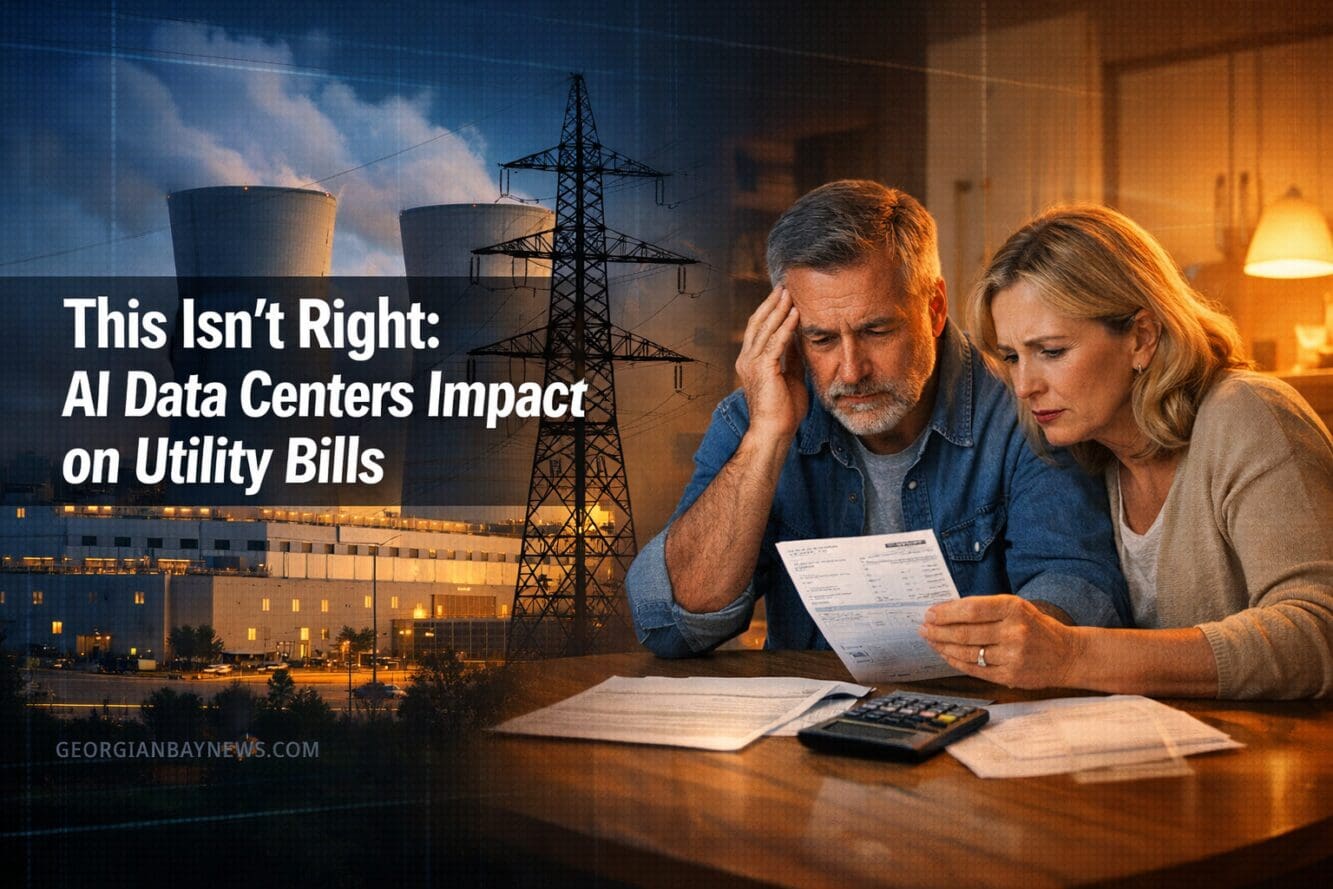
‘This Isn’t Right’: How AI Data Centers Are Driving Up Utility Bills for Everyday Residents

Last updated: February 20, 2026
Key Takeaways
- AI data centers now consume as much electricity as 100,000 homes each, with larger facilities using up to 20 times more power
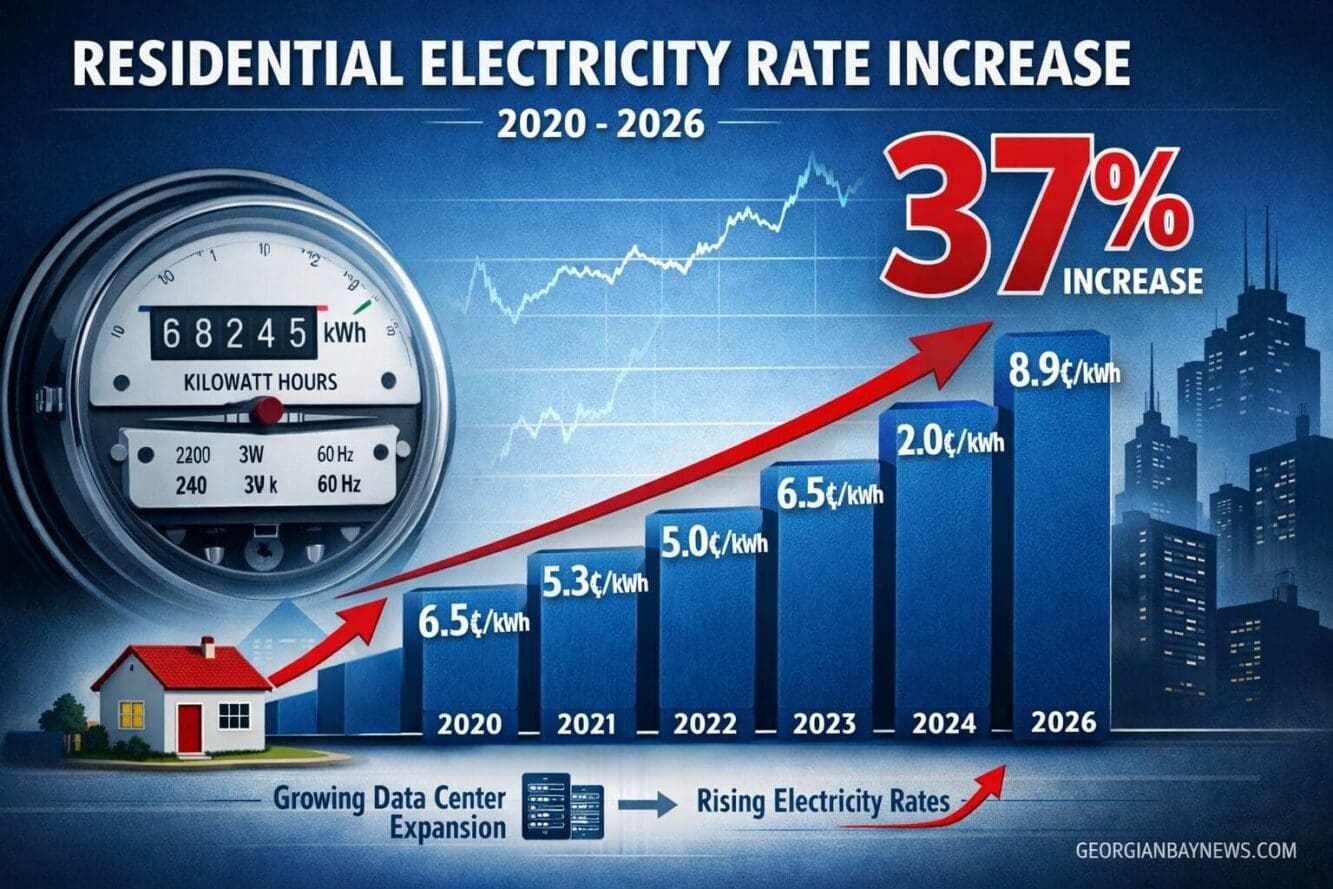
- Residential electricity rates have jumped 37% from 2020 to 2026, partly driven by utility infrastructure investments for data center expansion
- Middle-class families and small businesses bear the cost burden while tech giants spend $700 billion on AI infrastructure in 2026
- Bipartisan legislation introduced in February 2026 aims to prevent data center costs from trickling down to consumer utility bills
- Utilities may be overbuilding infrastructure based on optimistic projections, creating risk that residents will pay for unused capacity

Quick Answer
AI data centers are significantly impacting residential utility bills across North America. A single modern facility consumes enough power for 100,000 homes, and electricity rates have risen 37% since 2020[4]. Tech companies are projected to spend $700 billion on AI infrastructure in 2026[1], but middle-class Americans and small businesses are paying for grid upgrades through higher rates. New legislation aims to shift these costs back to the companies driving demand.
What Are AI Data Centers and Why Do They Use So Much Power?
AI data centers are specialized computing facilities that house thousands of high-performance servers running artificial intelligence models and machine learning algorithms. These facilities consume vastly more electricity than traditional data centers because AI processing requires constant, intensive computation.
A single modern AI data center can use as much power as 100,000 homes, with many larger facilities now being built expected to consume up to 20 times that amount[7]. This massive energy demand comes from:
- Graphics processing units (GPUs) that run continuously for AI model training
- Cooling systems that prevent servers from overheating during intensive computation
- Redundant power systems that ensure uninterrupted operation
- Network infrastructure that transfers massive amounts of data
The scale of expansion is staggering. Data center deals exceeded $61 billion in 2025 as hyperscalers like Alphabet, Microsoft, Meta, and Amazon expanded computational capacity for AI[1]. These same companies are projected to spend $700 billion on AI build-outs in 2026 alone[1].
Common mistake: Many people assume data centers are powered entirely by renewable energy. In reality, utilities across the Southeast are approving new natural gas-fired turbines specifically to meet data center demand[2].
For more context on the broader AI data center expansion, residents are increasingly questioning who should pay for this infrastructure.
How Are AI Data Centers Affecting Residential Electricity Rates?
Residential electricity rates have risen approximately 37% from 2020 to 2026[4], driven partly by utility capital expenditures for data center infrastructure. Middle-class Americans, small businesses, and working-class residents are more likely to bear the burden of paying for increased electricity to power data centers, rather than the technology companies themselves[1].
Here’s how the cost transfer happens:
- Utility companies invest in new power plants, transmission lines, and grid upgrades to meet data center demand
- Regulatory agencies approve rate increases to recover these capital expenditures
- All customers pay higher rates through their monthly utility bills, regardless of whether they benefit from the data centers
- Tech companies negotiate special rates or behind-the-meter power arrangements that shield them from the full cost
Computing facilities representing approximately 30% of all planned U.S. data center capacity plan to power their operations with behind-the-meter resources rather than drawing from the grid[4]. This means they avoid contributing to grid costs that other customers must cover.
“Middle-class Americans are paying for the data center AI boom through higher electric bills and food costs.” — Goldman Sachs analysts[1]
Choose this perspective if: You’re a homeowner or renter seeing unexplained utility bill increases and want to understand the underlying drivers beyond seasonal variation.
What Is the Broader Economic Impact Beyond Utility Bills?
The impact extends far beyond monthly electricity statements. Goldman Sachs analysts project trickle-down inflation from higher business production costs will increase prices for food, transportation, and clothing as data center construction strains supply chains and labor availability[1].
Secondary economic effects include:
- Manufacturing costs rise as industrial electricity rates increase
- Food production becomes more expensive due to higher processing and refrigeration costs
- Transportation costs climb as logistics companies face higher fuel and operational expenses
- Construction labor shortages develop as data center projects compete for skilled workers
- Housing affordability worsens in areas where data centers drive up property values and living costs
Small businesses are particularly vulnerable. Unlike large corporations that can negotiate special rates or invest in on-site power generation, local shops, restaurants, and service providers must absorb the full rate increases and either cut costs elsewhere or raise prices for customers.
Edge case: Some communities have seen short-term economic benefits from data center construction jobs and property tax revenue, but these gains often don’t offset long-term utility cost increases for residents.
What Are Utilities Planning for AI Data Center Growth?
Utilities across the Southeast are planning for the extreme high end of data center growth projections, creating risk that they will build more infrastructure than data centers actually need[2]. The Greenlink report estimates data center energy use in the region could grow by 2.2 to 8.7 gigawatts by 2031[2].
Georgia Power received approval for a 10 gigawatt expansion in late 2025 to meet projected demand mostly from data centers, following previous approvals for new natural gas-fired turbines for the same purpose[2].
The planning approach raises concerns:
- Utilities earn profits on capital investments, creating incentive to build more infrastructure
- Projections are based on optimistic growth scenarios that may not materialize
- If utilities overestimate demand and build excess infrastructure, regular residential and small business customers will likely pay for those unused assets through higher rates[2]
- Natural gas plants built for data centers will operate for decades, locking in fossil fuel dependence
Decision rule: If your utility announces major infrastructure projects justified by data center growth, request detailed demand forecasts and ask who bears the financial risk if projections prove too high.
For residents concerned about these developments, tracking utility planning decisions in your region is increasingly important.
What Legislation Is Being Proposed to Protect Consumers?
On February 12, 2026, Senators Josh Hawley (R-Mo.) and Richard Blumenthal (D-Conn.) introduced the Guaranteeing Rate Insulation From Data Centers (GRID) Act, which would prevent data-center-related price increases from affecting consumer utility bills and prioritize grid access for non-data-center consumers[1][3].
Key provisions of the GRID Act:
| Provision | Impact |
|---|---|
| Cost separation | Data center infrastructure costs cannot be passed to residential customers |
| Grid priority | Non-data-center consumers get priority access during capacity constraints |
| Transparency requirements | Utilities must disclose data center-related investments separately |
| Rate protection | Prevents cross-subsidization where homes subsidize corporate power use |
The bipartisan legislation reflects political pressure from both parties to ensure technology companies bear the burden of escalating energy costs rather than passing them to consumers[3]. Senator Hawley formalized President Trump’s commitment to prevent AI data center expansion from raising electricity rates[3].
Common question: Will this legislation actually pass? Bipartisan support increases the likelihood, but utility companies and some tech firms are expected to lobby against provisions that increase their costs.
Are Any Tech Companies Voluntarily Covering Consumer Cost Increases?
Anthropic announced on the same day as the GRID Act introduction that it will cover electricity price increases consumers face from its data centers, though the company did not share specific details on deals with electricity companies[1]. The commitment includes investing in curtailment systems and grid optimization tools[5].
This voluntary approach represents a different model:
- Direct compensation for rate increases attributable to Anthropic’s facilities
- Grid optimization investments that reduce overall demand during peak periods
- Curtailment systems that allow the company to reduce power use when the grid is stressed
- Transparency commitments about energy consumption and impact
Critical limitation: Anthropic operates far fewer data centers than hyperscalers like Amazon, Microsoft, and Google. The company’s commitment, while noteworthy, doesn’t address the majority of AI infrastructure expansion.
Choose this approach if: You’re evaluating which AI companies are taking responsibility for their infrastructure impact. Anthropic’s model could pressure competitors to make similar commitments.
For updates on corporate responsibility in the AI industry, monitoring company announcements provides insight into voluntary versus regulatory approaches.
What Can Residents and Communities Do to Protect Themselves?
Individuals and communities have several options to influence how data center costs are allocated and to protect themselves from unfair rate increases.
Individual actions:
- Review utility bills carefully for unexplained rate increases and demand itemized explanations
- Attend public utility commission hearings where rate cases are decided
- Submit public comments during regulatory review periods for proposed infrastructure projects
- Contact elected representatives to support legislation like the GRID Act
- Join or form community advocacy groups focused on utility affordability
Community-level strategies:
- Demand impact studies before approving data center development permits
- Negotiate community benefit agreements that include rate protection guarantees
- Require data centers to invest in local renewable energy that benefits all residents
- Establish independent oversight of utility planning assumptions and cost allocation
- Build coalitions with environmental and consumer advocacy organizations
Real example: Some communities have successfully negotiated agreements where data center developers fund solar installations on public buildings or contribute to energy assistance programs for low-income residents.
Common mistake: Waiting until after a data center is built to raise concerns about utility impacts. The time to negotiate protections is during the permitting and approval process.
What Are the Long-Term Implications for Energy Infrastructure?
The AI data center boom is reshaping energy infrastructure planning for decades to come. The decisions utilities and regulators make in 2026 will determine who pays for this transformation and whether it accelerates or slows the transition to clean energy.
Long-term infrastructure considerations:
- Grid capacity expansion may require hundreds of billions in investment over the next decade
- Natural gas dependence could increase if utilities build fossil fuel plants for data centers
- Renewable energy development might accelerate if data centers invest in dedicated clean power
- Energy storage systems become more critical to balance variable renewable generation with constant data center demand
- Transmission infrastructure needs upgrading to move power from generation sites to data center locations
The path forward depends on regulatory frameworks. If utilities can pass costs to residential customers while negotiating special rates for data centers, the incentive structure favors overbuilding and cost-shifting. If legislation like the GRID Act succeeds, tech companies will have stronger incentives to invest in energy efficiency and on-site generation.
Decision rule: Support policies that require data centers to pay the full cost of infrastructure they necessitate, including grid upgrades and backup capacity.
For Canadians and Americans concerned about energy policy, understanding these infrastructure decisions is essential for informed civic participation.
Frequently Asked Questions
How much do AI data centers increase my electricity bill?
The exact amount varies by location, but residential rates have risen 37% from 2020 to 2026[4], with data center infrastructure contributing to these increases. Individual household impacts depend on your utility’s cost allocation methods and the concentration of data centers in your service area.
Why don’t tech companies pay for their own power infrastructure?
Many do invest in some infrastructure, but utilities often build transmission lines, substations, and generation capacity with costs spread across all customers. Computing facilities representing 30% of planned U.S. data center capacity plan behind-the-meter power arrangements[4], avoiding grid cost contributions.
Will the GRID Act actually protect consumers?
If passed, the GRID Act would legally prevent data center infrastructure costs from being passed to residential customers[1][3]. However, implementation details and enforcement mechanisms will determine its effectiveness. Bipartisan support increases passage likelihood.
Are data centers powered by renewable energy?
Some data centers use renewable energy, but utilities are approving new natural gas-fired turbines specifically for data center demand[2]. Behind-the-meter arrangements may include renewable sources, but grid-connected facilities often rely on whatever generation mix the utility provides.
What happens if utilities overestimate data center growth?
If utilities build excess infrastructure based on overly optimistic projections, regular residential and small business customers will likely pay for those unused assets through higher rates[2]. This creates financial risk for consumers with no corresponding benefit.
Can my community reject a proposed data center?
Local zoning authority varies by jurisdiction. Some communities can reject or impose conditions on data center development, while others have limited authority if state or regional economic development agencies are involved. Early engagement during the permitting process provides the most leverage.
How much power does a typical AI data center use?
A single modern AI data center can use as much power as 100,000 homes, with larger facilities consuming up to 20 times that amount[7]. For context, that’s equivalent to the electricity consumption of a small city.
What is behind-the-meter power generation?
Behind-the-meter means the data center generates its own power or contracts directly with generators, bypassing the utility grid. This allows facilities to avoid paying for grid infrastructure costs that other customers must cover[4].
Are there benefits to having data centers in my community?
Potential benefits include construction jobs, property tax revenue, and high-speed internet infrastructure. However, these must be weighed against utility cost increases, environmental impacts, and whether the jobs are permanent or temporary.
What did Anthropic commit to regarding electricity costs?
Anthropic announced it will cover electricity price increases consumers face from its data centers and invest in curtailment systems and grid optimization tools[5]. Details on implementation and verification remain limited.
How can I find out if my utility is planning data center infrastructure?
Check your utility’s integrated resource plan (IRP), attend public utility commission meetings, review regulatory filings, and request information through public records laws. Utilities must typically disclose major infrastructure projects during regulatory approval processes.
Will AI data centers slow the transition to renewable energy?
The impact depends on how they’re powered. If utilities build new natural gas plants for data centers, it extends fossil fuel dependence[2]. If data centers invest in dedicated renewable generation and storage, they could accelerate clean energy deployment.
Conclusion: Taking Action on AI Data Center Utility Impacts
The rapid expansion of AI data centers is fundamentally reshaping electricity infrastructure and costs across North America. With facilities consuming as much power as 100,000 homes and tech companies spending $700 billion on AI infrastructure in 2026[1], the question of who pays for this transformation has moved from academic debate to kitchen-table concern.
Residential electricity rates have already risen 37% since 2020[4], and without intervention, middle-class families and small businesses will continue subsidizing infrastructure that primarily benefits large technology corporations. The bipartisan GRID Act represents a critical opportunity to reset the cost allocation framework before utilities commit to decades of infrastructure investments.
Actionable next steps for residents:
- Contact your senators and representatives to express support for the GRID Act or similar state-level legislation
- Monitor your utility’s planning documents for data center-related infrastructure proposals
- Participate in public utility commission proceedings where rate cases are decided
- Join local advocacy groups focused on utility affordability and fair cost allocation
- Demand transparency from your utility about what portion of rate increases stem from data center infrastructure
- Support community benefit agreements that require data centers to contribute to local energy assistance programs
For community leaders and policymakers:
- Require comprehensive impact studies before approving data center development
- Establish clear cost allocation rules that prevent cross-subsidization
- Prioritize data center proposals that include dedicated renewable energy investments
- Create oversight mechanisms to verify utility demand projections
- Build coalitions with other affected communities to strengthen negotiating positions
The conversation about AI data centers and utility bills is just beginning. As more facilities come online and infrastructure costs mount, the pressure for fair solutions will intensify. Whether through legislation like the GRID Act, voluntary corporate commitments like Anthropic’s, or community-negotiated agreements, the principle must be clear: those who drive demand for massive new infrastructure should bear the costs, not families struggling with rising living expenses.
The time to act is now, before utilities commit to infrastructure investments that will shape electricity costs for the next 30 years. Your voice in regulatory proceedings, your support for protective legislation, and your community’s engagement with data center proposals can make the difference between fair cost allocation and decades of subsidizing Big Tech’s infrastructure needs.
References
[1] Middle Class Americans Paying For Data Center Ai Boom Higher Electric Bills Food Costs Goldman Sachs – https://fortune.com/2026/02/13/middle-class-americans-paying-for-data-center-ai-boom-higher-electric-bills-food-costs-goldman-sachs/
[2] Utilities Overestimating Ai Boom Data Centers Fossil Fuel Energy Usage Bills – https://www.motherjones.com/politics/2026/02/utilities-overestimating-ai-boom-data-centers-fossil-fuel-energy-usage-bills/
[3] Senate Bill Data Center Costs Risks – https://www.axios.com/2026/02/17/senate-bill-data-center-costs-risks
[4] utilitydive – https://www.utilitydive.com/news/affordability-is-utilities-top-concern-in-2026-data-centers-BOA/812176/
[5] Covering Electricity Price Increases – https://www.anthropic.com/news/covering-electricity-price-increases
[7] Us Data Center Growth Impacts – https://www.wri.org/insights/us-data-center-growth-impacts
Some content and illustrations on GEORGIANBAYNEWS.COM are created with the assistance of AI tools.
GEORGIANBAYNEWS.COM shares video content from YouTube creators under fair use principles. We respect creators’ intellectual property and include direct links to their original videos, channels, and social media platforms whenever we feature their content. This practice supports creators by driving traffic to their platforms.
Much Appreciate You Sharing This Post - It Helps MUCH!!!