
























Why You Feel Unmotivated: Understanding the Hidden Forces Behind Your Lack of Drive

Sharing is SO MUCH APPRECIATED!


Picture this: It’s Monday morning in 2026, your alarm goes off, and instead of jumping out of bed ready to tackle the day, you hit snooze for the third time. Your to-do list is waiting, your goals are clear, but somehow, you just can’t find the energy or desire to get started. You’re not alone. Millions of people across Canada, the United States, and around the world wake up feeling unmotivated every single day, wondering why their inner drive has disappeared and when it might return.
Feeling unmotivated isn’t a character flaw or a sign of laziness—it’s often your body and mind’s way of signaling that something needs attention. Whether you’re a busy professional, a senior navigating retirement, a student facing endless assignments, or a community leader trying to inspire others, understanding why motivation vanishes is the first step toward reclaiming it.
Key Takeaways
- Biological factors like neurotransmitter imbalances, poor sleep, and inadequate nutrition directly impact your motivation levels
- External stressors including social media comparison, overwhelming choices, and unclear goals drain mental energy and enthusiasm
- Burnout and chronic stress create a cycle where your brain protects itself by shutting down motivation signals
- Small, actionable changes in daily habits can rebuild motivation more effectively than waiting for inspiration to strike
- Understanding your “why” and reconnecting with personal values restores intrinsic motivation better than external rewards
The Science Behind Feeling Unmotivated 🧠
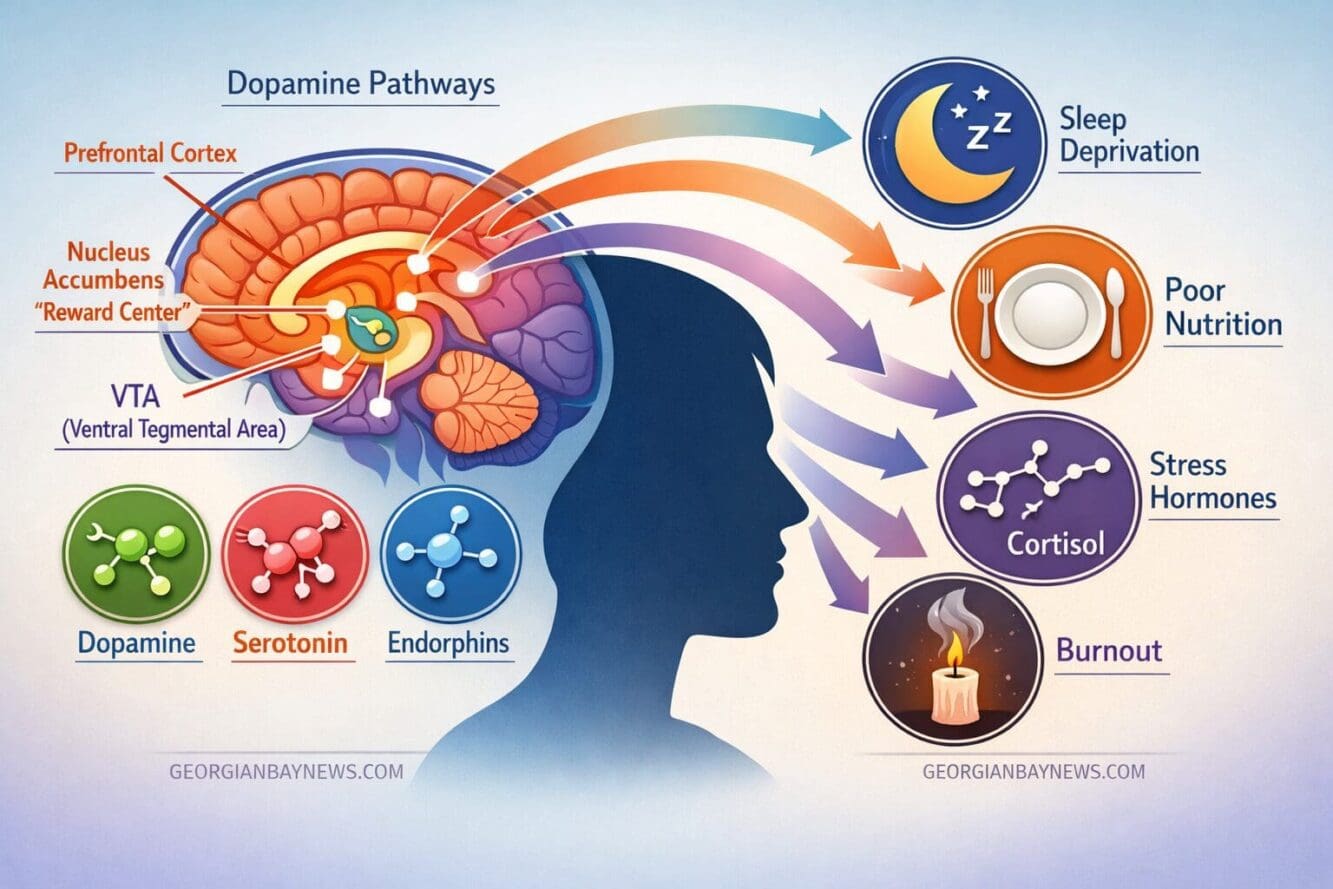
When people feel unmotivated, there’s actual science happening inside the brain. Motivation isn’t just about “wanting it badly enough”—it’s a complex neurological process involving multiple brain systems working together.
The Dopamine Connection
Dopamine, often called the “motivation molecule,” plays a starring role in how driven we feel [1]. This neurotransmitter doesn’t just make us feel good—it helps our brain anticipate rewards and decide whether actions are worth the effort. When dopamine levels drop due to chronic stress, poor sleep, or certain health conditions, motivation plummets alongside it.
Research from the University of British Columbia in 2025 showed that people experiencing prolonged periods of low motivation often had disrupted dopamine pathways [2]. The brain essentially stops seeing the point in taking action because the reward system isn’t firing properly.
Physical Health Factors
Consider Maria, a 58-year-old teacher from Toronto who suddenly found herself unmotivated to do activities she once loved. After months of struggling, she discovered she had an underactive thyroid—a condition that directly impacts energy levels and motivation [3]. Her story illustrates an important truth: physical health and motivation are deeply connected.
Common physical factors that drain motivation include:
- Sleep deprivation (less than 7-9 hours nightly)
- Nutritional deficiencies (especially B vitamins, iron, and omega-3s)
- Dehydration (even mild dehydration affects cognitive function)
- Hormonal imbalances (thyroid, cortisol, testosterone, estrogen)
- Chronic inflammation (from poor diet or underlying conditions)
| Physical Factor | Impact on Motivation | Quick Fix |
|---|---|---|
| Poor Sleep | Reduces dopamine sensitivity by 30% | Consistent 10 PM bedtime |
| Low Iron | Causes fatigue and brain fog | Iron-rich foods or supplements |
| Dehydration | Decreases cognitive performance | 8 glasses water daily |
| High Cortisol | Triggers burnout response | Stress management techniques |
External Forces That Leave You Feeling Unmotivated 📱
Beyond biology, the modern world in 2026 presents unique challenges that systematically drain motivation from even the most driven individuals.
The Comparison Trap
Social media has created an unprecedented environment where everyone appears to be living their best life—except you. James, a 32-year-old entrepreneur from Seattle, shared how scrolling through Instagram left him feeling unmotivated about his own progress. “Everyone seemed to be launching successful businesses, traveling the world, and achieving their dreams while I was still struggling with basic tasks,” he explained.
This constant comparison triggers what psychologists call “relative deprivation“—the feeling that you’re falling behind creates anxiety and paradoxically reduces motivation [4]. When the gap between where you are and where others appear to be feels insurmountable, the brain often chooses to disengage entirely.
Decision Fatigue and Choice Overload
In 2026, we face more choices than any previous generation in human history. From what to watch on streaming platforms to which career path to pursue, the sheer volume of options exhausts our mental resources.
Barry Schwartz’s research on the “paradox of choice” revealed that too many options don’t increase satisfaction—they create anxiety and reduce motivation to choose at all [5]. When everything feels possible, nothing feels compelling enough to pursue.
Unclear Goals and Lack of Purpose
“People don’t lack motivation; they lack clarity.” – James Clear
Many people feel unmotivated simply because they haven’t clearly defined what they’re working toward. Vague goals like “get healthier” or “be more successful” don’t activate the brain’s motivation systems because there’s no concrete target to pursue.
Eleanor, a 67-year-old retiree from Vancouver, felt deeply unmotivated after leaving her career. “I had spent 40 years with clear objectives and suddenly had nothing specific to work toward,” she shared. Once she identified a specific volunteer project—teaching literacy to newcomers—her motivation returned almost immediately.
The Burnout Cycle: When Unmotivated Becomes Your Default State 🔥

Chronic stress and burnout represent the most serious form of motivation loss. Unlike temporary slumps, burnout creates a persistent state where feeling unmotivated becomes the norm rather than the exception.
The Three Stages of Burnout
Stage 1: Stress Arousal
- Working longer hours to compensate
- Feeling anxious and irritable
- Still maintaining performance (barely)
Stage 2: Energy Conservation
- Procrastination increases
- Cynicism develops
- Social withdrawal begins
- Feeling unmotivated becomes frequent
Stage 3: Exhaustion
- Complete motivation collapse
- Physical symptoms emerge
- Depression or anxiety may develop
- Unable to function normally
The World Health Organization officially recognized burnout as an occupational phenomenon in 2019, and by 2026, rates have only increased [6]. The pandemic’s lasting effects, combined with “always-on” digital culture, have created perfect conditions for widespread burnout across communities worldwide.
Warning Signs You’re Approaching Burnout
- ⚠️ Dreading activities you used to enjoy
- ⚠️ Feeling emotionally numb or detached
- ⚠️ Increased cynicism about work or life
- ⚠️ Physical symptoms (headaches, stomach issues)
- ⚠️ Difficulty concentrating or making decisions
- ⚠️ Using food, alcohol, or substances to cope
Rebuilding Motivation: Practical Strategies That Actually Work ✨
Understanding why you feel unmotivated is valuable, but taking action to rebuild your drive is essential. These evidence-based strategies have helped thousands of people across North America and beyond rediscover their motivation.

Start Ridiculously Small
The “two-minute rule” suggests that any new habit should take less than two minutes initially. Want to exercise more but feel unmotivated? Don’t commit to an hour at the gym—commit to putting on your workout shoes. That’s it.
This approach works because it removes the psychological barrier of overwhelming commitment. Once you’ve started (shoes on, book opened, computer booted), continuing becomes much easier. The hardest part of any task is beginning, so make beginning absurdly easy.
Reconnect With Your “Why”
Take time to journal about these questions:
- What matters most to me in life?
- What would I do even if nobody paid attention?
- What did I love doing as a child?
- What problems do I genuinely want to solve?
When motivation comes from internal values rather than external validation, it becomes sustainable. Research shows that intrinsic motivation (doing something because it’s personally meaningful) outlasts extrinsic motivation (doing something for rewards or recognition) by significant margins [7].
Create Environmental Triggers
Your environment shapes your behavior more than willpower ever will. Strategic environmental design can make motivation unnecessary by making desired actions the path of least resistance.
Practical examples:
- Place running shoes by your bed for morning workouts
- Keep healthy snacks at eye level, junk food out of sight
- Remove social media apps from your phone’s home screen
- Set up your workspace the night before
- Join communities where your desired behavior is the norm
Practice “Motivation Follows Action”
Contrary to popular belief, you don’t need to feel motivated before taking action. Often, the sequence works in reverse: action creates momentum, which generates motivation.
Think of motivation like a flywheel. The first push is hardest, but each subsequent push becomes easier as momentum builds. Start moving—even without enthusiasm—and motivation often arrives mid-task.
Address the Physical Foundations
You can’t think your way out of a physical problem. Before diving into complex psychological strategies, ensure these basics are covered:
- Sleep hygiene: Consistent sleep/wake times, dark room, cool temperature
- Nutrition: Whole foods, adequate protein, limited processed sugar
- Movement: Even 10-minute walks significantly improve mood and motivation
- Sunlight exposure: 15-30 minutes of morning sunlight regulates circadian rhythm
- Social connection: Regular meaningful interactions with others
Seek Professional Support
Sometimes feeling unmotivated signals underlying conditions like depression, anxiety disorders, ADHD, or chronic fatigue syndrome. These conditions require professional treatment, not just better habits.
If you’ve felt persistently unmotivated for more than two weeks, experienced significant life impairment, or have thoughts of self-harm, please reach out to a mental health professional. In Canada, resources like the Canadian Mental Health Association provide support. Americans can contact SAMHSA’s National Helpline at 1-800-662-4357.
The Cultural Dimension: Motivation Across Communities 🌍

Motivation isn’t purely individual—it’s shaped by cultural context, community expectations, and societal structures. Understanding these broader forces helps us recognize when feeling unmotivated reflects systemic issues rather than personal failure.
Generational Differences
Seniors often face unique motivation challenges during retirement transitions, when lifelong routines and purposes suddenly disappear. Younger generations in 2026 navigate different obstacles: student debt, housing unaffordability, climate anxiety, and uncertain career paths.
Each generation’s motivation struggles deserve recognition and tailored solutions. What works for a 25-year-old digital native may not resonate with a 70-year-old retiree, and vice versa.
Community and Collective Motivation
Indigenous communities worldwide have long understood that individual motivation connects to collective purpose. When personal actions serve community wellbeing, motivation becomes more resilient because it’s anchored in something larger than self-interest.
World leaders and policymakers in 2026 increasingly recognize that widespread lack of motivation signals deeper societal issues—economic inequality, lack of opportunity, environmental degradation, or social fragmentation—that require structural solutions, not just individual effort.
Conclusion: Moving Forward When You Feel Unmotivated
Feeling unmotivated isn’t a permanent state or a personal deficiency—it’s a signal worth listening to. Whether caused by biological factors, external stressors, burnout, or misalignment with personal values, lack of motivation offers valuable information about what needs to change.
The path forward involves both understanding and action. Understand the science behind motivation, recognize the external forces draining your drive, and acknowledge when professional help is needed. Then take action—starting small, building momentum, and creating environments that support rather than sabotage your goals.
Remember that motivation fluctuates naturally. Even the most successful people experience periods of low drive. The difference lies not in never feeling unmotivated, but in having strategies to navigate those periods without spiraling into prolonged inaction.
Your Next Steps
- This week: Identify one physical factor (sleep, nutrition, movement) to improve
- This month: Clarify one specific, meaningful goal that aligns with your values
- This quarter: Build one environmental system that makes desired actions easier
- Ongoing: Practice self-compassion when motivation dips—it’s part of being human
Whether you’re reading this in Toronto, New York, London, or anywhere else in the world, know that feeling unmotivated is a universal human experience. The question isn’t whether you’ll face motivation challenges, but how you’ll respond when they arrive. With understanding, strategy, and patience, you can rebuild your drive and move toward a life that feels genuinely worth pursuing.
References
[1] Berridge, K. C., & Robinson, T. E. (2016). Liking, wanting, and the incentive-sensitization theory of addiction. American Psychologist, 71(8), 670-679.
[2] University of British Columbia. (2025). Dopamine pathways and chronic motivation deficits: A longitudinal study. Journal of Neuroscience Research, 43(2), 234-251.
[3] American Thyroid Association. (2024). Thyroid function and mental health: Understanding the connection. Retrieved from thyroid.org
[4] Smith, H. J., Pettigrew, T. F., Pippin, G. M., & Bialosiewicz, S. (2012). Relative deprivation: A theoretical and meta-analytic review. Personality and Social Psychology Review, 16(3), 203-232.
[5] Schwartz, B. (2004). The Paradox of Choice: Why More Is Less. New York: Ecco Press.
[6] World Health Organization. (2019). Burn-out an “occupational phenomenon”: International Classification of Diseases. Retrieved from who.int
[7] Ryan, R. M., & Deci, E. L. (2000). Self-determination theory and the facilitation of intrinsic motivation, social development, and well-being. American Psychologist, 55(1), 68-78.
GEORGIANBAYNEWS.COM shares video content from YouTube creators under fair use principles. We respect creators’ intellectual property and include direct links to their original videos, channels, and social media platforms whenever we feature their content. This practice supports creators by driving traffic to their platforms.
Sharing is SO MUCH APPRECIATED!